
Quick Answer
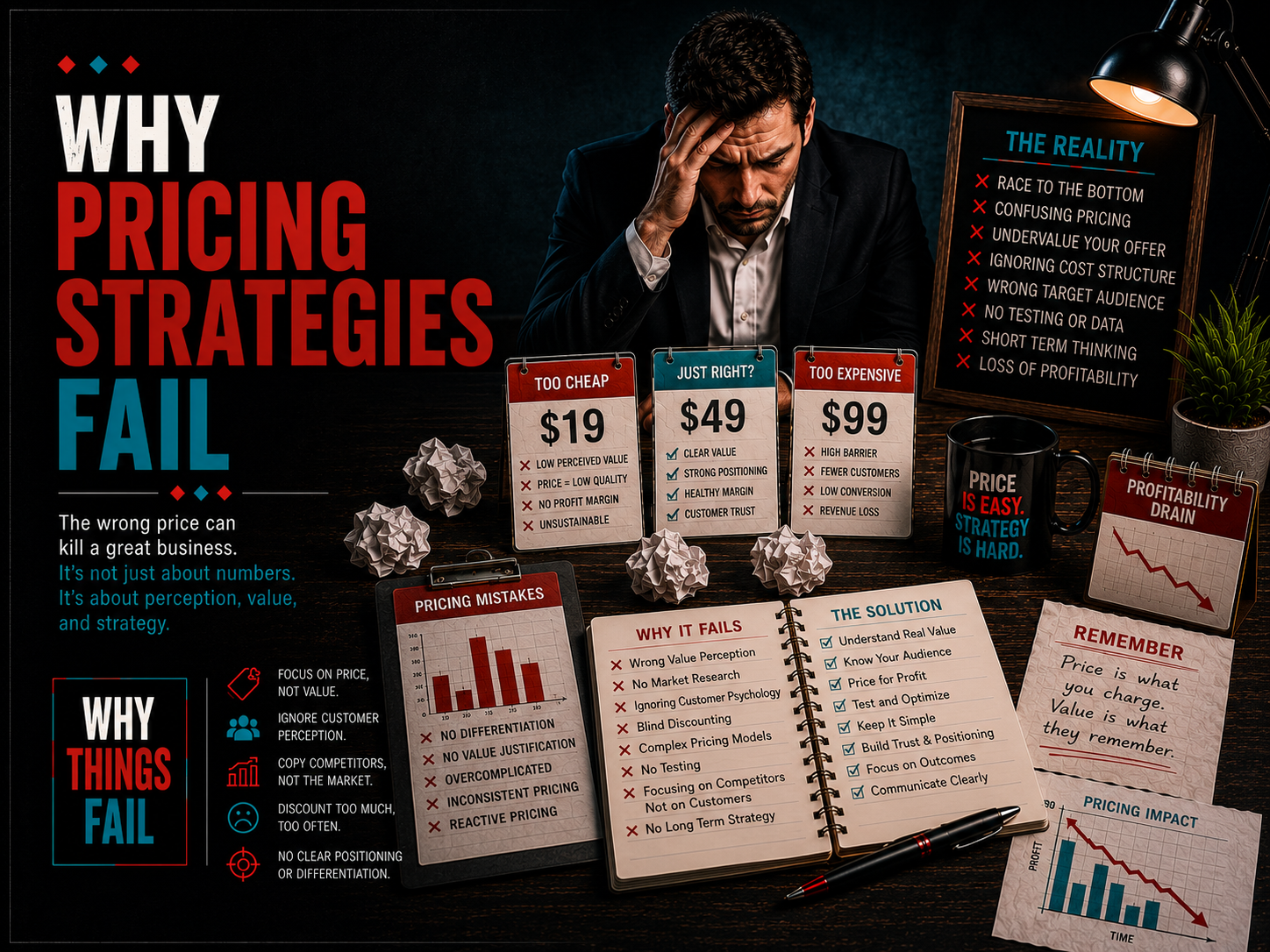
Most side hustles fail because people underestimate the behavioural and business challenges involved. Poor planning, unrealistic expectations, inconsistent execution, emotional decision making and weak financial discipline gradually prevent a side hustle from becoming a sustainable source of income.
Introduction
The idea of building a side hustle has become one of the defining financial trends of the modern economy.
Social media celebrates entrepreneurs who claim to earn thousands of pounds each month while working only a few hours each week. Online courses promise financial freedom. Success stories suggest that anyone can transform a hobby into a profitable business with enough determination.
Yet behind these inspiring narratives lies a very different reality.
Most side hustles never become profitable. Many generate only a small amount of income before being abandoned. Others survive for months or even years without producing meaningful financial returns.
This raises an important question.
Why do so many intelligent, hardworking people fail to build successful side hustles despite having access to more digital tools, educational resources and global customers than ever before?
The obvious explanation is competition.
The deeper explanation is that side hustle failure is rarely caused by one poor idea. Instead, it emerges from a series of behavioural, financial and strategic decisions that slowly reduce the likelihood of long term success.
Building a side hustle is not simply about earning extra income.
It is about managing uncertainty, making disciplined decisions and creating systems that continue working long after initial enthusiasm disappears.
Understanding why side hustles fail therefore requires looking beyond business ideas and examining the psychology that shapes entrepreneurial behaviour.
What Is Side Hustle Failure?
Side hustle failure is often misunderstood.
Many people believe a side hustle has failed simply because it does not produce significant income within a few months.
This definition is incomplete.
A side hustle fails when it consistently consumes time, money and energy without creating a realistic path towards sustainable value.
Some businesses fail financially because they never attract enough customers.
Others fail behaviourally because the owner loses consistency before the business has an opportunity to grow.
Some fail strategically because they solve problems that customers never considered important.
Others generate revenue but remain unprofitable because expenses continue rising faster than income.
Failure therefore extends beyond making or losing money.
It reflects the inability to build a business model capable of surviving changing market conditions and human behaviour.
The Biggest Myth
One belief dominates discussions about side hustles.
A good idea is all you need to succeed.
This myth appears attractive because it simplifies entrepreneurship into creativity.
In reality, thousands of profitable ideas fail every year.
The difference rarely lies in the originality of the concept.
It lies in execution.
Successful side hustles solve genuine customer problems consistently while adapting to changing demand, competition and market conditions.
An average idea executed with discipline often outperforms an exceptional idea managed inconsistently.
The market rewards value creation rather than imagination alone.
Believing that success depends primarily on finding a unique idea causes many entrepreneurs to overlook the far more difficult challenge of building repeatable systems that customers trust over time.
What Usually Happens?
Most side hustles follow a familiar pattern.
An individual discovers an exciting business opportunity.
They invest significant energy during the first few weeks.
Early encouragement from friends or a handful of customers increases confidence.
Growth slows.
Unexpected challenges appear.
Marketing becomes more difficult than expected.
Sales fluctuate.
Time becomes limited because full time employment and personal responsibilities compete for attention.
Progress begins slowing.
Instead of improving systems, many people begin searching for another opportunity that appears easier or faster.
The original side hustle gradually receives less attention until it quietly disappears.
Although every business operates in a different market, the behavioural sequence remains remarkably consistent.
Failure usually develops through declining consistency rather than one dramatic event.
Why Do Side Hustles Fail?
The surface reasons appear obvious.
Limited time.
Strong competition.
Small marketing budgets.
Economic uncertainty.
While these factors certainly influence business performance, they rarely explain why similar businesses experience completely different outcomes.
The deeper explanation lies within human behaviour.
Side hustles place individuals in an environment filled with uncertainty, delayed rewards and continuous decision making.
The challenge is not simply building a business.
The challenge is maintaining disciplined behaviour while results remain uncertain.
Unrealistic Expectations Create Early Disappointment
One of the biggest reasons side hustles fail is the expectation of rapid success.
Modern entrepreneurship is heavily influenced by carefully selected success stories.
People regularly see businesses that appear to generate remarkable income within a short period.
What remains invisible are the years of experimentation, failure, customer research and gradual improvement that usually occurred beforehand.
This creates distorted expectations.
When a new side hustle produces only modest results after several months, many owners conclude the idea itself is flawed.
Often it is simply too early.
Business growth rarely follows a straight line.
Revenue usually grows slower than motivation.
Those who expect immediate financial rewards often abandon their business before customer trust has time to develop.
The business fails not because demand was absent but because expectations exceeded reality.
Present Bias Encourages Short Term Decisions
Behavioural economists describe present bias as the tendency to value immediate rewards more highly than future benefits.
This psychological tendency affects nearly every side hustle.
Writing content, improving products, building a website, responding to customers and developing marketing systems all require effort today while producing uncertain rewards in the future.
The brain naturally seeks activities with immediate satisfaction.
Checking social media feels more rewarding than improving a sales page.
Planning a new business idea feels more exciting than refining an existing product.
As a result, many entrepreneurs remain busy without consistently performing the activities that actually generate long term growth.
The business gradually becomes trapped in continuous activity rather than measurable progress.
Overconfidence Reduces Learning
Confidence is essential for entrepreneurship.
Overconfidence is dangerous.
Many side hustle owners become convinced that they already understand what customers want before collecting meaningful evidence.
Instead of testing assumptions, they invest heavily in products, branding or advertising based upon personal opinions.
This creates a significant blind spot.
Markets rarely reward what business owners personally enjoy.
They reward solutions that customers are willing to purchase repeatedly.
Entrepreneurs who believe they already possess the correct answers often stop listening to customer feedback.
Constructive criticism becomes uncomfortable because it challenges existing beliefs.
Over time, confidence transforms into resistance.
The business stops adapting while customer expectations continue evolving.
Fear Of Failure Creates Inconsistent Action
Fear does not always prevent people from starting businesses.
More often, it prevents them from operating consistently.
Many entrepreneurs hesitate before increasing prices because they fear losing customers.
Others delay launching products because they believe they are not yet perfect.
Some avoid promoting their services because rejection feels personally uncomfortable.
Psychologists describe this as loss aversion.
The emotional discomfort associated with possible failure often feels greater than the potential satisfaction of future success.
As a result, entrepreneurs choose emotional safety over commercial progress.
The business appears active but rarely grows because important decisions continue being postponed.
Shiny Object Syndrome Replaces Strategic Focus
One behavioural pattern appears repeatedly across failed side hustles.
The constant pursuit of something new.
A new business model.
A new marketing platform.
A new product.
A new course.
A new opportunity.
Each new possibility promises faster growth than the current business.
The result is fragmented attention.
Instead of improving one business over several years, entrepreneurs repeatedly restart the learning process.
Behavioural psychology explains this through novelty seeking.
New opportunities stimulate optimism because they have not yet encountered real world challenges.
Existing businesses feel frustrating because their difficulties are already visible.
Ironically, the skills required to succeed usually develop by solving those difficult problems rather than avoiding them.
Poor Financial Discipline Weakens Business Survival
Many side hustles generate revenue without generating sustainable profit.
Owners celebrate sales while ignoring cash flow, operating expenses and customer acquisition costs.
Revenue creates excitement.
Profit creates sustainability.
Without understanding the difference, entrepreneurs often increase spending before the business has established consistent income.
Marketing costs rise.
Software subscriptions multiply.
Equipment purchases increase.
The business becomes financially fragile despite growing sales.
When unexpected expenses appear or revenue slows, insufficient cash reserves leave little room for adaptation.
Financial failure often begins long before money actually runs out.
It begins when business decisions prioritise growth over resilience.
Warning Signs
Side hustle failure rarely arrives without warning. The problem is that these warning signs often appear ordinary, making them easy to dismiss.
One of the earliest indicators is inconsistency. The business receives full attention when motivation is high but is neglected when enthusiasm fades. Customers experience irregular communication, delayed responses and inconsistent product quality. Trust begins to weaken long before revenue declines.
Another warning sign is measuring success through effort rather than outcomes. Many side hustle owners spend hours designing logos, changing websites or consuming educational content while avoiding activities that directly generate customers and sales. Productivity replaces progress.
An increasing dependence on inspiration is another behavioural signal. Businesses built on motivation alone struggle because motivation naturally fluctuates. Sustainable businesses rely on systems, routines and disciplined execution rather than emotional energy.
Ignoring customer feedback is equally dangerous. Entrepreneurs sometimes become emotionally attached to their original vision, believing customers simply fail to understand the product. Instead of adapting to market demand, they continue refining solutions that solve the wrong problems.
Financial behaviour also provides early warning signs. Mixing personal and business finances, tracking revenue instead of profit and increasing expenses before achieving consistent cash flow gradually reduce financial resilience.
Perhaps the most overlooked warning sign is constantly comparing progress with others. Social media often highlights exceptional success while hiding years of slow growth, failed experiments and persistent effort. Comparison creates unrealistic expectations that encourage unnecessary changes and premature abandonment.
These warning signs rarely cause immediate failure.
They quietly reduce the business’s ability to survive until a minor challenge becomes impossible to overcome.
What Could Have Prevented It?
Most side hustle failures cannot be prevented through harder work alone.
They are prevented through better decisions.
The first requirement is replacing excitement with realistic expectations. Businesses rarely produce meaningful income within weeks. Customer trust, brand recognition and operational efficiency require consistent effort over extended periods.
Clear planning also improves survival. Defining a target customer, identifying a specific problem and creating measurable business objectives provide direction during periods of uncertainty. Without a clear strategy, daily decisions become reactive rather than purposeful.
Financial discipline is equally important. Understanding cash flow, monitoring expenses and protecting profit allow businesses to remain flexible when market conditions change. Revenue without financial control often creates an illusion of success while underlying risks continue growing.
Building repeatable systems rather than depending on constant motivation also improves resilience. Processes for customer service, marketing, content creation and financial management reduce the influence of changing emotions.
Regular customer feedback provides another layer of protection. Markets evolve continuously. Entrepreneurs who remain curious and adaptable recognise changing customer needs before competitors do.
Finally, successful side hustle owners accept uncertainty rather than fighting it. Every business experiences slow periods, disappointing launches and unexpected setbacks. Viewing these events as information rather than failure creates opportunities for continuous improvement.
Lessons
The reasons side hustles fail reveal lessons that apply to entrepreneurship, investing, leadership and personal finance.
The first lesson is that consistency usually outperforms intensity. Extraordinary effort sustained for a few weeks rarely produces lasting success. Moderate effort maintained over several years often does.
Another lesson is that customers determine business value, not entrepreneurs. Passion may inspire a business idea, but only solving genuine customer problems creates sustainable demand.
A further lesson is that financial resilience matters more than rapid expansion. Businesses that protect cash flow and control expenses remain adaptable during uncertainty, while businesses focused solely on growth often become vulnerable.
Perhaps the most important lesson is that entrepreneurship is fundamentally a behavioural challenge. Technical skills can be learned. Marketing techniques can be improved. The ability to remain disciplined during uncertainty often determines whether those skills create meaningful results.
Failure Pattern
The dominant pattern behind side hustle failure is Short Term Thinking combined with Lack of Planning and Emotional Decision Making.
Most entrepreneurs begin with enthusiasm but underestimate the importance of consistency. When immediate rewards fail to appear, emotions gradually replace strategy. Excitement becomes frustration. Patience becomes urgency. Long term planning gives way to searching for quicker opportunities.
This pattern extends far beyond side hustles.
Investors chase rapidly rising assets.
Businesses expand too quickly during favourable conditions.
Consumers increase spending after temporary income growth.
In each situation, immediate rewards receive greater attention than sustainable systems.
The behaviour changes.
The psychological pattern remains remarkably consistent.
Hidden Lesson
Most side hustles do not fail because the idea was poor.
They fail because the systems required to support the idea never became stronger than the emotions influencing the person running it.
Markets rarely reward excitement.
They reward reliability.
The deeper truth is that entrepreneurship is less about discovering extraordinary opportunities and more about consistently executing ordinary actions that gradually build trust, reputation and value.
Business success therefore becomes less predictable by the originality of an idea and more predictable by the quality of decisions repeated every day.
Failure Scorecard
| Area | Score | Explanation |
| Financial Discipline | 5/10 | Many owners focus on revenue while overlooking profitability and cash flow. |
| Decision Making | 5/10 | Decisions often become reactive instead of guided by long term business objectives. |
| Risk Management | 4/10 | Limited planning and inadequate financial reserves increase vulnerability during setbacks. |
| Long Term Thinking | 4/10 | Many entrepreneurs expect rapid success and abandon projects before momentum develops. |
| Financial Knowledge | 6/10 | Basic business knowledge exists, but understanding of sustainable financial management is often limited. |
| Emotional Control | 4/10 | Fear of failure, impatience and frustration frequently influence important business decisions. |
| Planning | 5/10 | Many side hustles begin without a clearly defined strategy or measurable objectives. |
| Adaptability | 7/10 | Successful entrepreneurs adjust to customer feedback, while unsuccessful ones often resist change. |
Key Takeaways
- Most side hustles fail because behavioural mistakes gradually replace disciplined execution.
- A strong business idea cannot compensate for inconsistent action.
- Customer demand determines business success more than personal passion.
- Financial discipline and cash flow management matter as much as increasing sales.
- Unrealistic expectations cause many entrepreneurs to quit too early.
- Consistency creates stronger competitive advantages than temporary motivation.
- Business systems reduce the influence of emotion during difficult periods.
- Sustainable growth depends on solving genuine customer problems repeatedly.
Frequently Asked Questions
Why do most side hustles fail?
Most side hustles fail because owners underestimate the behavioural and operational challenges involved. Poor planning, inconsistent execution, unrealistic expectations and weak financial discipline gradually reduce the business’s ability to grow.
How long does it usually take for a side hustle to become profitable?
The timeframe varies depending on the business model, customer demand and execution. Many successful businesses require months or even years of consistent effort before producing reliable profits.
Is lack of money the main reason side hustles fail?
Not always. Limited funding can create challenges, but poor decision making, weak planning, inconsistent marketing and failure to solve meaningful customer problems often have a greater impact.
Can a side hustle succeed without a unique idea?
Yes. Many successful businesses offer existing products or services more effectively. Consistent execution, customer trust and operational excellence usually matter more than originality alone.
What is the biggest mistake side hustle owners make?
The most common mistake is expecting rapid success and abandoning the business before sustainable systems, customer relationships and market credibility have had time to develop.
Conclusion
Side hustle failure is rarely the result of one poor decision or one unsuccessful product. It is usually the outcome of repeated behavioural choices that prioritise immediate rewards over long term discipline, structured planning and financial resilience.
Understanding why side hustles fail reveals that entrepreneurship is not primarily a test of creativity or ambition. It is a test of consistency, judgement and the ability to make sound decisions when progress is slower than expected. Those deeper behavioural patterns explain why some businesses quietly disappear while others gradually become enduring sources of value.