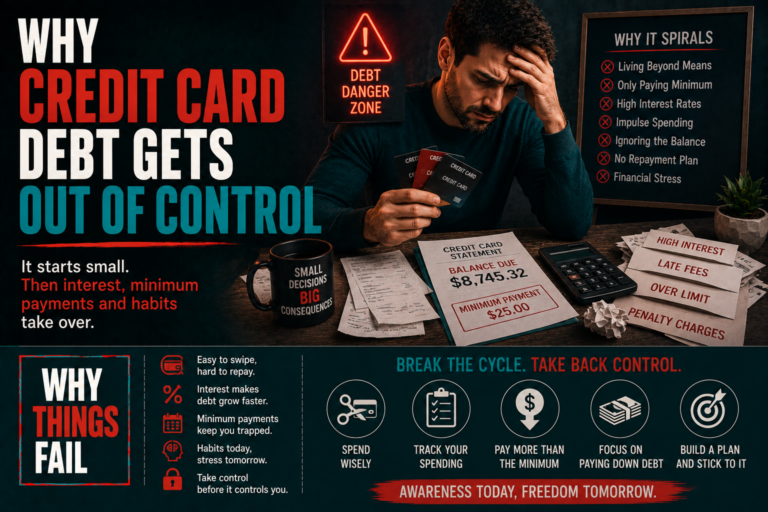
Introduction
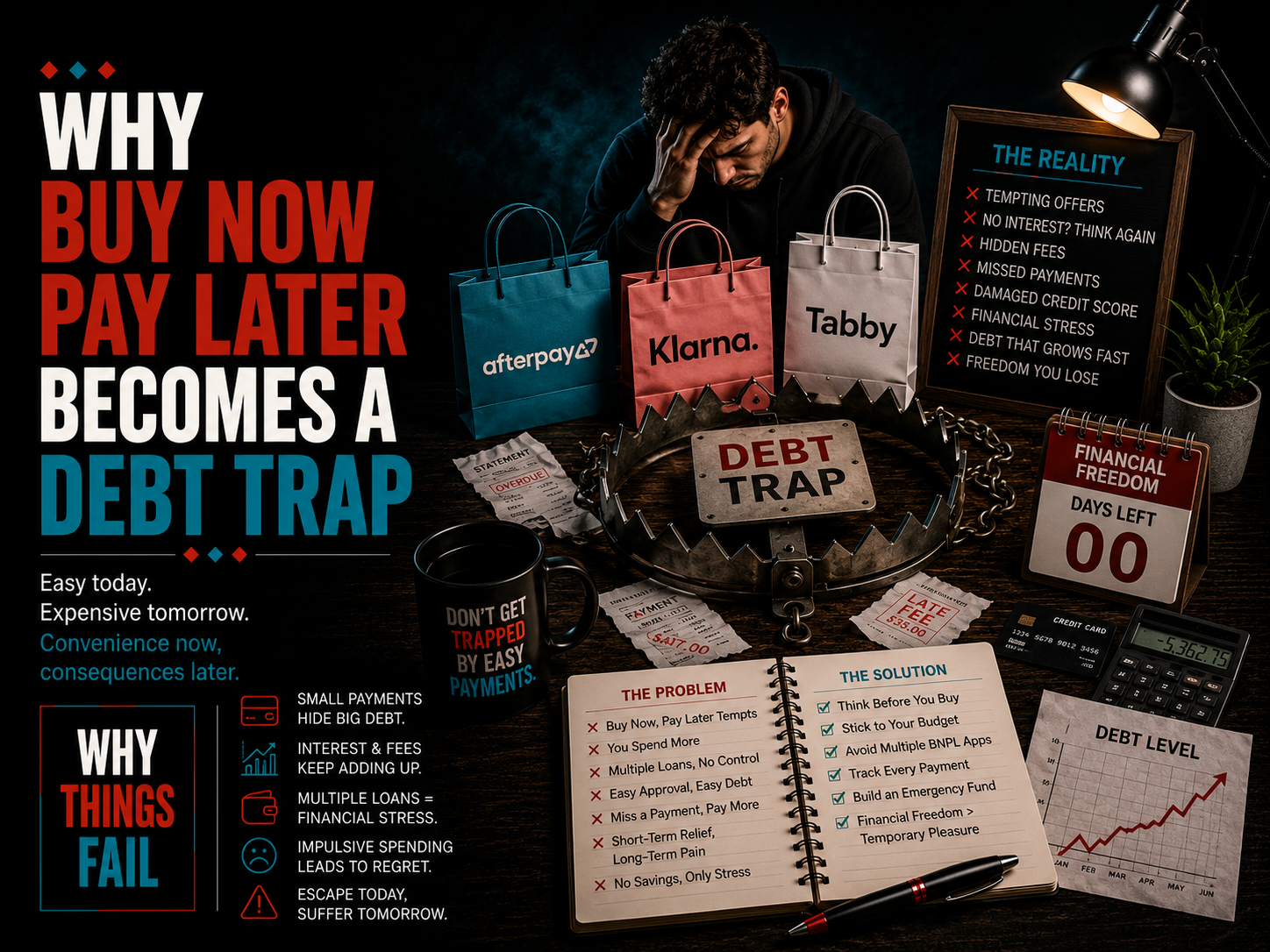
Credit cards are among the most successful financial products ever created. They provide convenience, flexibility and immediate purchasing power. For millions of people, they simplify everyday spending and offer access to credit during unexpected emergencies.
Yet the same financial tool that offers convenience also traps millions of households in long term debt.
Every year, people promise themselves they will pay off their balance next month. Instead, the balance grows. Interest accumulates. Minimum payments become normal. What began as a temporary financial solution slowly becomes a permanent financial burden.
This pattern is remarkably common across different income levels, professions and age groups. High earners, middle income families and young professionals can all experience the same outcome despite having very different financial circumstances.
This raises an important question.
Why does credit card debt become so difficult to control?
The answer extends far beyond spending habits. Credit card debt is not simply a financial problem. It is the result of human behavior interacting with sophisticated financial systems designed to encourage borrowing. Behavioral psychology, consumer behavior, risk perception and delayed consequences all play a significant role in transforming manageable debt into long term financial stress.
Understanding why credit card debt gets out of control requires looking beyond interest rates and monthly statements. It requires examining the decisions, incentives and psychological patterns that quietly shape everyday financial behaviour.
What Is Credit Card Debt That Gets Out Of Control?
Credit card debt becomes out of control when borrowing grows faster than a person’s realistic ability to repay it. At this stage, repayments no longer reduce the balance in a meaningful way because interest charges continue adding to the total amount owed.
The problem is rarely created by one expensive purchase.
Instead, debt usually develops through dozens or even hundreds of everyday decisions that appear harmless when viewed individually.
A meal purchased on credit.
A holiday booked with the intention of paying later.
Several online purchases spread across different months.
Unexpected medical expenses.
Home repairs.
Small subscription payments.
Each decision feels manageable in isolation.
Collectively, they create a financial system where borrowing quietly replaces income as the primary source of spending.
The financial failure is therefore not simply having credit card debt.
It is losing control over the relationship between spending, borrowing and repayment.
The Biggest Myth
The most common belief is that people fall into credit card debt because they lack self control.
This explanation is appealing because it appears simple.
It is also incomplete.
If poor self control were the primary cause, credit card debt would affect only impulsive individuals. Yet research consistently shows that financially educated professionals, experienced business owners and high income households can also accumulate unsustainable credit card balances.
The deeper reality is that credit card debt emerges from the interaction between human psychology and financial incentives.
Credit cards reduce the immediate emotional discomfort associated with spending. They separate consumption from payment, making purchases feel less financially painful at the moment they occur.
Behavioural economists describe this as reducing the pain of paying.
When spending feels psychologically easier, people naturally spend more than they would if they had to hand over physical cash immediately.
This does not make people irresponsible.
It makes them human.
Financial products designed around behavioural psychology often influence decisions in ways consumers rarely recognise.
What Usually Happens?
Most cases of uncontrolled credit card debt follow a familiar pattern.
Borrowing begins for a practical reason.
Perhaps an emergency expense appears.
Perhaps income temporarily falls.
Perhaps a large purchase seems easier to spread across future months.
The initial balance appears manageable.
Minimum payments keep the account in good standing.
Because immediate financial pressure feels low, spending continues.
Interest gradually increases the outstanding balance.
Unexpected expenses appear again.
The available credit limit begins shrinking.
Monthly repayments become larger while reducing less of the original debt.
Eventually, borrowing shifts from funding occasional purchases to covering everyday living expenses.
At this point, debt is no longer solving financial problems.
It has become one.
Why Does Credit Card Debt Get Out Of Control?
The Human Brain Values Today More Than Tomorrow
One of the strongest behavioural forces behind credit card debt is present bias.
People naturally place greater value on immediate rewards than future consequences.
Owning something today often feels more emotionally satisfying than waiting several months until enough money has been saved.
The future repayment appears distant and abstract.
The enjoyment of the purchase feels immediate and certain.
Credit cards magnify this psychological tendency because they remove the need to make an immediate financial sacrifice.
The result is not irrational behaviour.
It is predictable human behaviour operating within a financial system specifically designed to prioritise convenience.
Delayed Consequences Hide The Real Cost
Most financial mistakes create immediate feedback.
Spend cash today and there is less cash available tomorrow.
Credit cards operate differently.
The purchase occurs immediately.
The financial consequences appear weeks later.
Interest charges may not become significant for several billing cycles.
This delay weakens the connection between spending decisions and their long term consequences.
Behavioural psychologists have long recognised that delayed consequences reduce behavioural change.
When the cost of a decision is postponed, people naturally underestimate its significance.
Credit card debt therefore grows quietly.
Each purchase appears affordable because the full financial impact remains hidden until much later.
Lifestyle Inflation Changes Spending Without Being Noticed
Income growth does not always improve financial security.
In many cases, it increases spending at a similar pace.
Behavioral economists refer to this as lifestyle inflation.
As earnings rise, expectations also rise.
Restaurants become more expensive.
Holidays become more luxurious.
Cars become newer.
Homes become larger.
Technology upgrades become more frequent.
Credit cards accelerate this process by allowing spending to increase before income has fully adjusted.
People gradually begin treating higher living costs as necessities rather than choices.
Because these changes occur slowly, they rarely trigger concern.
Debt becomes normal long before it becomes dangerous.
Emotional Spending Creates Temporary Relief
Money decisions are rarely driven by logic alone.
Stress, boredom, anxiety, celebration and social comparison all influence consumer behaviour.
Shopping provides an immediate emotional reward.
Psychologists describe this as reward seeking behaviour, where purchasing activates feelings of pleasure and temporary satisfaction.
Credit cards strengthen this behaviour because they remove the immediate financial sacrifice associated with buying.
The emotional benefit is experienced today.
The financial cost arrives much later.
Over time, spending becomes less about acquiring useful products and more about regulating emotions.
This creates a dangerous cycle.
Stress encourages spending.
Debt increases financial stress.
Greater stress encourages further spending.
The behaviour appears irrational from the outside.
Psychologically, it follows a remarkably consistent pattern.
Social Pressure Quietly Influences Financial Decisions
Few people make financial decisions in complete isolation.
Social media, advertising, colleagues and family all shape expectations about what a successful lifestyle should look like.
People compare holidays, homes, clothing, technology and experiences without always recognising how these comparisons influence spending decisions.
Behavioural economists call this social comparison.
When people measure success against others, spending often becomes a tool for maintaining social identity rather than meeting genuine needs.
Credit cards make this process easier because they provide immediate purchasing power without requiring immediate financial capacity.
The result is a lifestyle that appears affordable while gradually becoming dependent on borrowing.
Financial Complexity Reduces Better Decision Making
Credit card agreements contain interest calculations, billing cycles, minimum payment requirements, promotional offers and multiple fees.
Most consumers understand these features only at a basic level.
Complexity creates confusion.
Confusion encourages short term thinking.
Instead of calculating the total long term cost of borrowing, people focus on whether they can comfortably make the next monthly payment.
This shift changes financial behaviour completely.
The question becomes,
“Can I afford this payment?”
Instead of,
“Can I actually afford this purchase?”
That small psychological difference often determines whether debt remains manageable or gradually becomes overwhelming.
Warning Signs
Credit card debt rarely becomes overwhelming overnight. It usually grows through a series of behavioural changes that appear harmless until they become financially significant.
One of the earliest warning signs is relying on minimum monthly payments. While minimum payments prevent immediate penalties, they often reduce only a small portion of the outstanding balance. Interest continues accumulating, making progress increasingly difficult.
Another warning sign is using one credit card to repay another or depending on new borrowing to cover existing debt. This creates the illusion of financial stability while simply moving debt from one place to another.
Regularly reaching the credit limit is another important indicator. When available credit becomes part of the monthly household budget instead of an emergency resource, borrowing has started replacing income.
Emotional spending is equally significant. If shopping regularly follows periods of stress, frustration or disappointment, financial decisions are no longer being driven primarily by need. They are being influenced by emotional regulation.
Ignoring monthly statements also signals growing financial risk. Many people stop reviewing interest charges, outstanding balances or repayment progress because confronting the numbers creates anxiety. Avoidance provides temporary emotional relief but allows financial problems to grow unnoticed.
These warning signs are often ignored because their consequences are delayed. The financial system continues functioning for months or even years before the full impact becomes visible, giving borrowers a false sense of control.
What Could Have Prevented It?
Most cases of uncontrolled credit card debt could not have been prevented by earning more money alone.
Higher income often delays the problem rather than solving it because spending behaviour frequently grows alongside earnings.
The more effective solution lies in creating financial systems that reduce the influence of emotion on everyday decisions.
One important safeguard is separating essential spending from discretionary spending before using credit. When every purchase is treated equally, it becomes difficult to recognise when borrowing has shifted from necessity to lifestyle.
Understanding the true cost of borrowing is equally important. Viewing purchases in terms of their total repayment rather than the minimum monthly payment changes how people evaluate financial decisions. This encourages longer term thinking instead of immediate gratification.
Building financial resilience also reduces dependence on credit during unexpected events. Households with emergency savings, realistic budgets and clear repayment priorities are less likely to rely on borrowing when income becomes uncertain.
Perhaps the most valuable prevention strategy is recognising that credit cards should support cash flow rather than replace it. Once borrowing becomes essential for maintaining everyday living expenses, the financial system has already become fragile.
Ultimately, preventing excessive debt depends less on willpower and more on creating habits that make better decisions easier to maintain.
Lessons
Credit card debt reveals lessons that extend well beyond personal finance.
The first lesson is that financial decisions are rarely isolated events. Small choices repeated consistently often have a greater impact than occasional major purchases. Behaviour, rather than individual transactions, determines long term financial outcomes.
The second lesson is that convenience changes behaviour. When payment becomes effortless, spending naturally increases because the emotional cost feels smaller than the financial cost.
Another lesson is that delayed consequences weaken decision making. People respond more effectively to immediate feedback than future obligations. Financial products that postpone consequences therefore encourage greater risk taking than many consumers realise.
Perhaps the most important lesson is that financial security depends on systems rather than intentions. Most people never intend to accumulate overwhelming debt. The problem develops because everyday habits quietly move them in that direction long before they recognise the pattern.
Failure Pattern
The dominant pattern behind uncontrolled credit card debt is Lifestyle Inflation combined with Emotional Decision Making and Poor Financial Discipline.
This pattern repeats because modern consumer economies reward spending more visibly than saving. Advertising encourages immediate consumption. Social comparison raises expectations. Credit cards remove immediate financial barriers.
As spending gradually increases, borrowing becomes normal. Individuals begin measuring affordability by monthly payments instead of total financial obligations. This shifts attention away from long term sustainability towards short term comfort.
The same behavioural pattern appears in business borrowing, corporate expansion and household finances. Immediate rewards receive greater attention than delayed costs, creating financial systems that appear stable until accumulated obligations become impossible to ignore.
Hidden Lesson
The greatest danger of credit card debt is not the interest rate.
It is the gradual change in behaviour that borrowing creates.
Debt rarely becomes overwhelming because of one expensive purchase. It becomes overwhelming because repeated borrowing changes how people think about money, affordability and financial responsibility.
The deeper truth is that credit card debt often reflects a behavioural system rather than a mathematical problem. Interest merely exposes decisions that have been accumulating quietly for months or years.
Failure Scorecard
| Area | Score | Explanation |
| Financial Discipline | 4/10 | Spending frequently exceeds planned limits as borrowing becomes routine. |
| Decision Making | 5/10 | Short term satisfaction often outweighs long term financial consequences. |
| Risk Management | 4/10 | Heavy dependence on revolving credit increases financial vulnerability. |
| Long Term Thinking | 3/10 | Immediate affordability often receives greater attention than future repayment obligations. |
| Financial Knowledge | 6/10 | Many consumers understand basic credit concepts but underestimate compound interest and repayment timelines. |
| Emotional Control | 4/10 | Stress, social comparison and impulse purchases regularly influence spending decisions. |
| Planning | 4/10 | Many households lack structured repayment strategies before borrowing begins. |
| Adaptability | 6/10 | Financial behaviour often improves only after debt has already become difficult to manage. |
Key Takeaways
- Credit card debt usually grows through small repeated decisions rather than one major purchase.
- Behavioural psychology plays a greater role than lack of income in many debt problems.
- Delayed consequences make borrowing feel less risky than it actually is.
- Lifestyle inflation quietly increases financial obligations without attracting attention.
- Emotional spending often provides temporary comfort while creating long term financial stress.
- Measuring affordability through monthly payments can hide the true cost of borrowing.
- Financial systems and habits matter more than occasional acts of willpower.
- Long term financial stability depends on controlling behaviour before debt becomes difficult to reverse.
Frequently Asked Questions
Why does credit card debt become difficult to repay?
Credit card debt becomes difficult to repay because interest charges continue increasing the balance while minimum payments reduce only a small portion of the original debt. Behavioural factors such as emotional spending and delayed consequences often make the problem worse.
Is credit card debt caused mainly by low income?
Not always. While financial hardship can contribute, many people with stable or high incomes also accumulate excessive debt. Behavioural patterns, lifestyle inflation and poor financial planning are often equally important factors.
Why do people continue using credit cards even when they already have debt?
Many borrowers use credit cards because they provide immediate financial flexibility. Present bias and emotional decision making encourage short term solutions even when they increase long term financial obligations.
How does lifestyle inflation contribute to credit card debt?
As income rises, spending often rises as well. People gradually adopt more expensive lifestyles without increasing savings at the same pace. Credit cards make this transition easier by allowing spending to grow ahead of available income.
What is the biggest behavioural mistake behind credit card debt?
The biggest behavioural mistake is treating available credit as additional income instead of borrowed money that must eventually be repaid with interest.
Conclusion
Credit card debt gets out of control not because borrowing is inherently dangerous, but because it quietly reshapes financial behaviour. It reduces the immediate pain of spending, delays the visibility of consequences and encourages decisions that feel manageable today while creating obligations that become difficult to escape tomorrow.
Understanding this shifts the discussion away from blame and towards behaviour. The real failure is rarely a single financial mistake. It is a gradual series of ordinary decisions that, when reinforced by human psychology and financial incentives, make excessive debt a predictable outcome rather than an unexpected accident.