Quick Answer
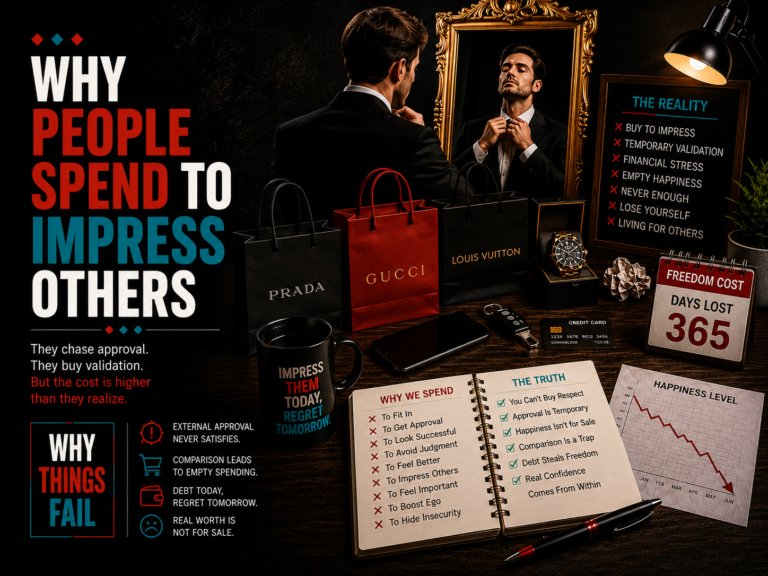
People spend to impress others because money is often used to seek status, approval, belonging and self worth rather than simply to buy products. Behavioural psychology shows that emotional needs, social comparison, lifestyle inflation and identity often influence spending more than financial logic. Over time, these decisions can weaken long term financial security and make financial failure increasingly predictable.
Introduction
Modern consumer culture has made spending easier than ever before.
Luxury products can be purchased with one click. Credit cards remove the immediate pain of paying. Social media constantly displays expensive holidays, designer clothing, luxury cars and carefully curated lifestyles that appear ordinary.
As a result, many people no longer spend money solely to meet practical needs.
They spend to create an image.
The desire to appear successful has become one of the most powerful forces influencing financial behaviour. Expensive purchases often communicate achievement, confidence or social status even when they are funded through debt or financial sacrifice.
This creates an important question.
Why do people willingly damage their financial future to impress individuals who may never notice or remember those purchases?
The answer extends far beyond shopping habits.
It lies in human psychology, behavioural economics, social incentives and the way people evaluate their own success relative to others.
Understanding why people spend to impress others is therefore not simply about consumer behaviour.
It is about understanding why financial decisions are so often driven by emotion instead of long term wellbeing.
What Is Status Spending?
Status spending refers to purchasing goods or experiences primarily to influence how other people perceive us rather than because those purchases improve our quality of life.
The product itself is often secondary.
Its symbolic meaning becomes the real value.
A luxury watch may communicate success.
A premium car may suggest wealth.
Designer clothing may create the appearance of higher social status.
Expensive holidays may signal achievement through carefully selected social media photographs.
None of these purchases are necessarily poor financial decisions on their own.
The problem arises when external approval becomes the primary reason for spending.
At that point, consumption stops serving personal needs and begins serving social expectations.
Financial failure often begins with this subtle shift.
The Biggest Myth
The most common belief is simple.
People spend money because they want expensive things.
Behavioural research suggests something very different.
People often buy expensive products because they want the emotions those products appear to provide.
Respect.
Recognition.
Acceptance.
Confidence.
Belonging.
Status.
The purchase becomes a shortcut to psychological needs that money alone cannot permanently satisfy.
This explains why two people with identical incomes often spend very differently.
One prioritises financial security.
The other prioritises social image.
The difference is rarely income.
It is motivation.
Understanding this distinction changes how we think about consumer behaviour.
The real question is not,
“Why did they buy it?”
The better question becomes,
“What emotional need was that purchase trying to satisfy?”
What Usually Happens?
The pattern is remarkably consistent.
A person compares themselves with others.
They begin believing that appearance reflects success.
Small luxury purchases feel rewarding.
These purchases gradually become normal.
Spending increases.
Savings decline.
Debt quietly grows.
Financial pressure creates stress.
Instead of reducing spending, many people continue consuming because maintaining the appearance of success now feels more important than protecting financial stability.
Eventually the lifestyle becomes financially unsustainable.
What began as occasional status spending develops into a long term financial habit.
Why Do People Spend To Impress Others?
This behaviour cannot be explained by income alone.
Many wealthy individuals live modestly.
Many people with average incomes purchase luxury goods far beyond their financial capacity.
The difference lies in psychology rather than purchasing power.
Social Comparison Changes Financial Decisions
Humans naturally compare themselves with other people.
Psychologists describe this as social comparison theory.
People evaluate their success by observing friends, neighbours, colleagues and increasingly strangers on social media.
This comparison rarely measures financial security.
It measures visible success.
The larger house.
The newer car.
The designer handbag.
The luxury holiday.
The latest smartphone.
Visible wealth becomes the standard by which people judge both themselves and others.
Unfortunately, visible wealth often says very little about actual financial health.
Many outward signs of prosperity are supported by borrowing, credit and long term debt rather than genuine wealth.
Yet comparison continues because people compare appearances instead of financial reality.
Identity Often Becomes More Valuable Than Money
Behavioural economists argue that spending is rarely only an economic decision.
It is also an identity decision.
People purchase products that reinforce how they wish to be seen.
Someone may buy an expensive suit because it represents professionalism.
Another purchases a luxury vehicle because it communicates achievement.
Others choose premium brands because those brands become part of their identity.
The purchase therefore becomes psychological rather than practical.
Owning the product provides reassurance about personal worth.
This explains why criticism of spending habits often feels personal.
People are not simply defending purchases.
They are defending identity.
Lifestyle Inflation Quietly Reshapes Expectations
One of the strongest drivers of financial failure is lifestyle inflation.
As income increases, spending usually increases alongside it.
The problem is not enjoying greater financial comfort.
The problem is allowing every increase in income to create permanent increases in living costs.
A modest apartment becomes a luxury home.
A reliable family vehicle becomes a premium model.
Dining out becomes routine.
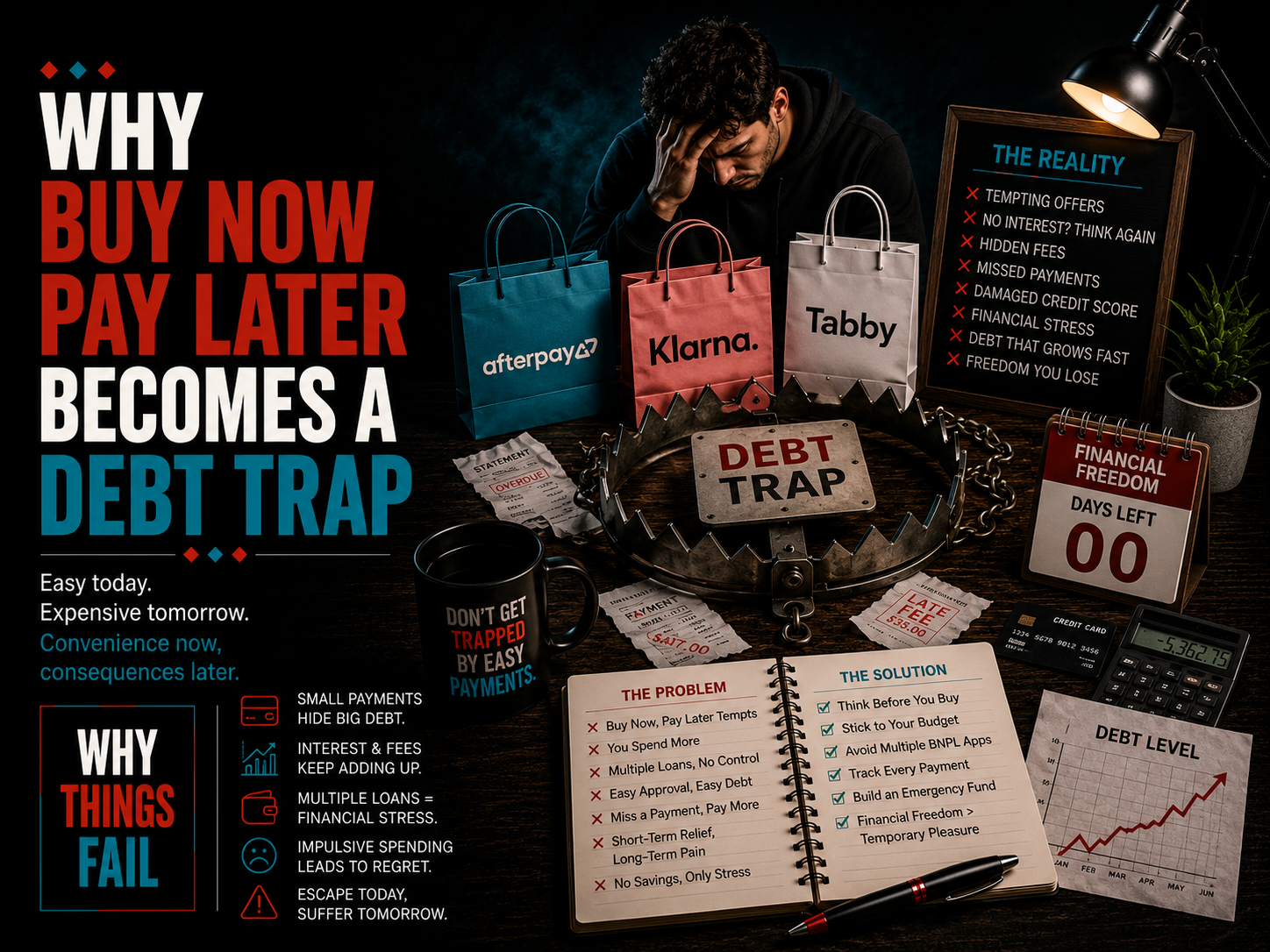
Luxury becomes normal often financed the same way Buy Now Pay Later becomes a debt trap, one small purchase at a time.
Over time these higher living standards stop feeling exceptional.
They become expected.
Psychologists describe this process as hedonic adaptation.
People quickly become accustomed to improved lifestyles, reducing the emotional satisfaction those purchases once created.
To experience the same excitement again, spending must continue increasing.
This creates an endless cycle where financial obligations rise faster than genuine happiness.
Social Media Amplifies Status Competition
Previous generations compared themselves mainly with neighbours and colleagues.
Today people compare themselves with millions of carefully edited lives online.
Social media rarely reflects financial reality.
It displays selected moments designed to create admiration.
Luxury holidays.
Designer fashion.
Fine dining.
High end homes.
Exotic cars.
The audience rarely sees the loans, credit card balances, financial stress or sacrifices supporting those lifestyles.
Behavioural psychologists explain that repeated exposure to these images changes what people consider normal.
Ordinary living begins to feel inadequate.
As expectations rise, spending often follows.
Financial decisions become influenced by digital comparison rather than personal priorities.
This connection is backed by published research. A study in Frontiers in Psychology found that heavier social media use was linked to more frequent impulsive, status-driven purchases, partly because positive feedback on posts boosts self-esteem in ways that further encourage that kind of spending.
Fear Of Being Left Behind
Status spending is not always driven by greed.
Often it is driven by fear.
Fear of appearing unsuccessful.
Fear of social rejection.
Fear of missing opportunities.
Fear of looking different from friends or colleagues.
Behavioural economists call this loss aversion.
People often fear losing social status more than they value improving financial security.
As a result, maintaining appearances can feel emotionally more important than building wealth.
This explains why financially struggling households sometimes continue purchasing luxury products despite increasing debt.
The purchase protects social identity, even while weakening financial resilience.
Overconfidence Encourages Financial Risk
Many consumers believe future income will solve today’s financial decisions.
Salary increases.
Bonuses.
Business growth.
Unexpected opportunities.
These optimistic expectations encourage spending beyond current financial capacity.
Overconfidence reduces attention to risk.
Instead of asking whether an expense is sustainable, people assume future earnings will compensate for present overspending.
When those expectations fail to materialise, debt becomes increasingly difficult to manage.
Financial failure therefore develops gradually through repeated optimistic assumptions rather than one reckless purchase.
Warning Signs
Status spending rarely begins with major financial decisions. It starts with small behavioural changes that gradually reshape financial priorities.
One warning sign is feeling pressure to upgrade possessions that still serve their purpose. A perfectly functional phone, car or wardrobe suddenly feels inadequate because someone else owns a newer version.
Another warning sign is using credit to maintain a lifestyle that current income cannot comfortably support. Debt begins to finance appearance instead of necessity.
People also begin making purchases based on expected reactions rather than personal value. The question quietly changes from “Do I need this?” to “What will other people think if I own this?”
Social comparison becomes increasingly frequent. Every promotion, holiday or purchase made by friends creates pressure to respond with similar spending.
Saving money also becomes emotionally difficult. Money sitting in a savings account provides no immediate social recognition, while visible purchases generate instant attention and approval.
Perhaps the strongest warning sign is believing that appearing wealthy is more important than becoming financially secure.
These behaviours often go unnoticed because they become socially accepted. When everyone around us is consuming in similar ways, excessive spending begins to feel normal rather than risky.
What Could Have Prevented It?
Status spending is rarely prevented by earning more money.
Higher income often increases spending if underlying behaviour remains unchanged.
The real solution begins with changing the purpose of money.
Instead of viewing money as a tool for gaining approval, it becomes a tool for creating freedom, security and future opportunities.
Financial decisions also improve when people separate self worth from material possessions. Identity built upon character, relationships, knowledge and meaningful achievements is far more stable than identity built upon visible consumption.
Another important safeguard is recognising the influence of behavioural biases. Understanding concepts such as social comparison, hedonic adaptation, loss aversion and present bias makes emotional spending easier to recognise before it becomes habitual.
Creating intentional spending rules also reduces impulsive decisions. People who evaluate purchases according to long term financial goals are less likely to sacrifice future security for temporary social approval.
Perhaps the most effective prevention is redefining success.
When success is measured by financial independence rather than visible consumption, spending naturally becomes more deliberate and sustainable.
Lessons
The reasons people spend to impress others reveal broader truths about money and human behaviour.
The first lesson is that financial decisions are often emotional before they are rational. People rarely purchase status symbols because they need them. They purchase the feelings those symbols promise to create.
The second lesson is that comparison has no natural ending. Every higher level of consumption creates another standard against which people compare themselves. Chasing external approval therefore becomes an endless financial commitment.
Another lesson is that wealth and appearance are fundamentally different. Genuine wealth provides options, resilience and financial flexibility. The appearance of wealth often requires continuous spending simply to maintain the image.
Perhaps the most important lesson is that lasting financial success depends more on internal confidence than external validation. When self worth depends upon public approval, spending naturally increases regardless of income.
Failure Pattern
The dominant pattern behind this financial failure is Lifestyle Inflation driven by Social Comparison and Emotional Decision Making.
The cycle begins with comparison.
Comparison creates dissatisfaction.
Dissatisfaction encourages consumption.
Consumption temporarily improves self perception.
That improvement quickly fades because of hedonic adaptation.
A new purchase then becomes necessary to recreate the same emotional reward.
The cycle repeats until spending consistently exceeds financial capacity.
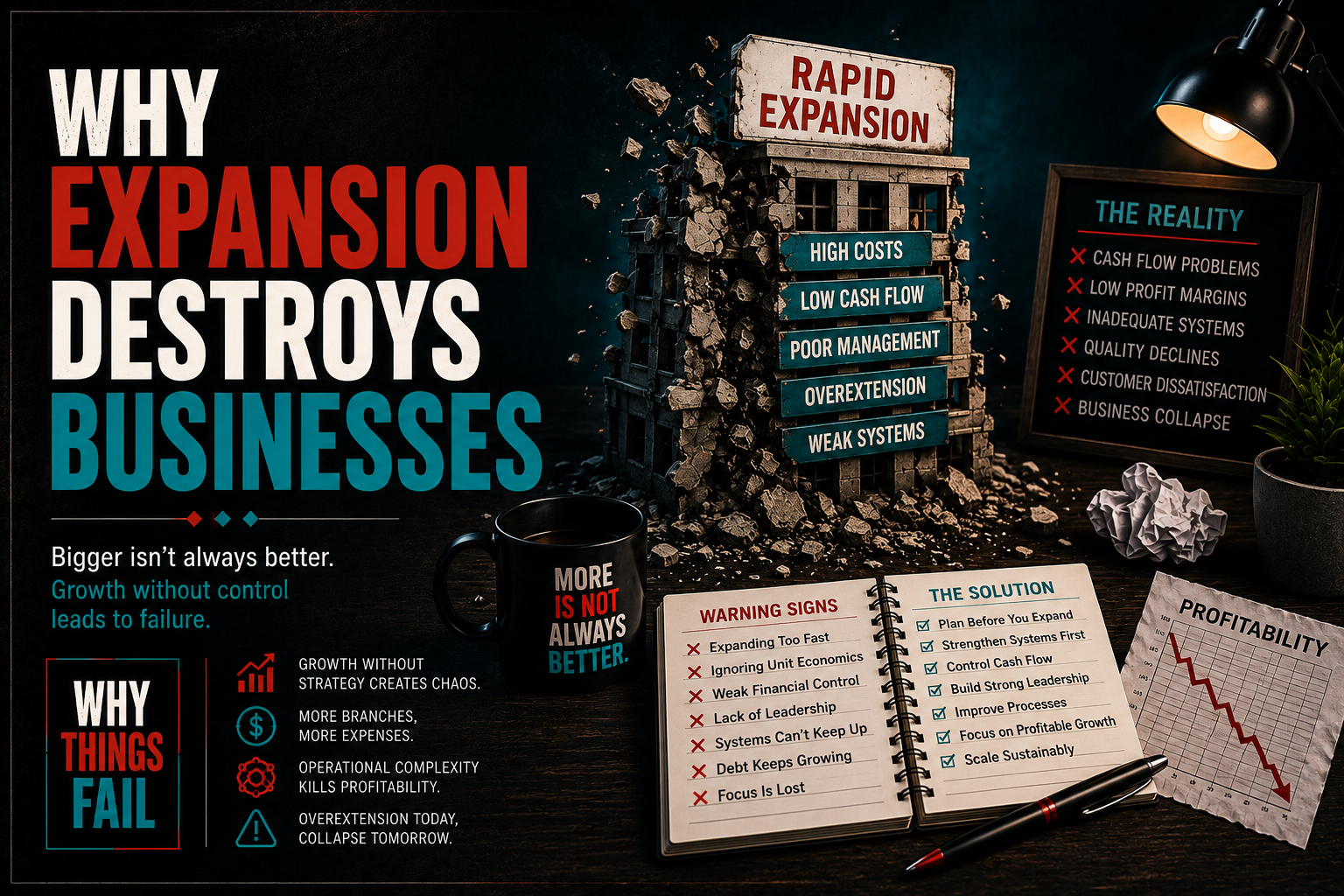
This pattern appears across individuals, families, entrepreneurs and even businesses, it’s part of why expansion destroys businesses that prioritise image and growth over sustainable financial management.
The products change.
The psychology remains remarkably consistent.
Hidden Lesson
People rarely spend money to impress others.
They spend money to change how they feel about themselves.
The approval received from expensive purchases is usually temporary because it depends upon external recognition rather than internal confidence.
This explains why status spending rarely produces lasting satisfaction.
The deeper problem is not excessive consumption.
It is using consumption to solve emotional needs that money was never designed to satisfy.
Financial failure becomes predictable when emotional wellbeing depends upon continuous spending.
Failure Scorecard
| Area | Score | Explanation |
| Financial Discipline | 4/10 | Spending decisions are frequently influenced by emotion rather than financial priorities. |
| Decision Making | 5/10 | Social pressure often replaces objective financial judgement. |
| Risk Management | 4/10 | Credit and debt increase financial vulnerability when used to support lifestyle expectations. |
| Long Term Thinking | 3/10 | Immediate social approval is often valued above future financial security. |
| Financial Knowledge | 6/10 | Many people understand budgeting but underestimate behavioural influences. |
| Emotional Control | 4/10 | Feelings of insecurity, comparison and status frequently influence purchasing decisions. |
| Planning | 5/10 | Financial plans are often disrupted by impulsive lifestyle upgrades. |
| Adaptability | 6/10 | People can change spending habits once underlying psychological triggers are recognised. |
Key Takeaways
- People spend to impress others because status often feels emotionally rewarding.
- Social comparison influences spending more than many people realise.
- Lifestyle inflation quietly increases financial pressure as income grows.
- Social media intensifies unrealistic expectations about success and wealth.
- Debt often finances appearance rather than genuine prosperity.
- Financial security depends more on behaviour than income.
- Lasting wealth comes from disciplined decision making rather than visible consumption.
- External approval creates temporary satisfaction, while financial stability creates long term resilience.
Frequently Asked Questions
Why do people spend money to impress others?
People often spend money to gain social approval, improve self image and signal success. Behavioural psychology shows that emotional needs frequently influence purchasing decisions more than practical needs.
Is status spending always a bad financial decision?
No. Purchasing premium products is not automatically harmful. Problems arise when purchases are driven by comparison, debt or the need for external validation instead of genuine personal value.
How does social media influence spending habits?
Social media increases social comparison by constantly displaying carefully selected lifestyles. This can distort perceptions of normal living standards and encourage unnecessary consumption.
What is lifestyle inflation?
Lifestyle inflation occurs when spending increases alongside income, making higher living costs permanent instead of using additional income to build long term financial security.
Can high income prevent financial failure?
No. Higher income does not guarantee financial stability. Without disciplined behaviour, increasing earnings often lead to increasing expenses rather than increasing wealth.
Conclusion
People do not usually spend to impress others because they misunderstand money. They do so because spending appears to offer status, acceptance and self worth in a society where success is often judged by visible consumption. Financial failure begins when appearance becomes more valuable than resilience.
Understanding this pattern reveals that the true cost of status spending is rarely the purchase itself. It is the gradual shift from using money as a tool for building freedom to using it as a tool for seeking approval, making emotional dependence rather than income the real driver of long term financial vulnerability.