Introduction
Debt has become one of the defining financial challenges of modern life.
Millions of people work full time, earn regular incomes and genuinely want financial stability. Yet many remain trapped in a cycle of borrowing that seems impossible to escape. Every month begins with the intention of making progress, but by the end of the month, balances remain unchanged or have grown even larger.
This pattern is not limited to low income households. High earners, business owners, professionals and entrepreneurs also struggle with persistent debt despite having greater financial resources.
At first glance, the explanation appears simple. People borrow too much and repay too little.
However, this explanation barely scratches the surface.
If escaping debt were simply a mathematical problem, far fewer people would remain trapped for years. Most people understand that spending less than they earn should eventually reduce debt. Yet understanding this principle does not automatically change behaviour.
The real challenge lies beneath the numbers.
Debt is influenced by psychology, behavioural economics, social expectations, financial systems and emotional decision making. Every borrowing decision is shaped by incentives that often encourage immediate consumption while delaying financial consequences.
Understanding why people cannot get out of debt therefore requires more than analysing bank statements or interest rates. It requires examining the hidden behavioural patterns that quietly transform temporary borrowing into long term financial dependence.
What Is Debt Entrapment?
Debt itself is not always a sign of financial failure.
Businesses borrow to expand operations. Homeowners use mortgages to purchase property. Students often rely on education loans to improve future earning potential.
These forms of borrowing can create long term value when managed responsibly.
Debt entrapment is different.
It occurs when borrowing gradually becomes necessary to maintain everyday living rather than to create future opportunities. Instead of reducing debt over time, individuals repeatedly rely on new borrowing to manage previous financial obligations.
This creates a cycle where repayments consume increasing portions of income, leaving less money available for saving, investing or unexpected expenses.
The problem is no longer the original loan.
The problem becomes a financial system where debt continually finances existing debt.
The Biggest Myth
The most common belief about debt is that people remain in debt because they are financially irresponsible.
This explanation is appealing because it appears straightforward.
If people simply spent less money, debt would disappear.
Reality is far more complicated.
Research in behavioural economics shows that financial decisions are rarely driven by logic alone. They are influenced by emotions, habits, social comparison, stress, optimism and present focused thinking.
Many people trapped in debt do not lack intelligence.
They lack financial resilience within systems that constantly encourage spending while making borrowing increasingly convenient.
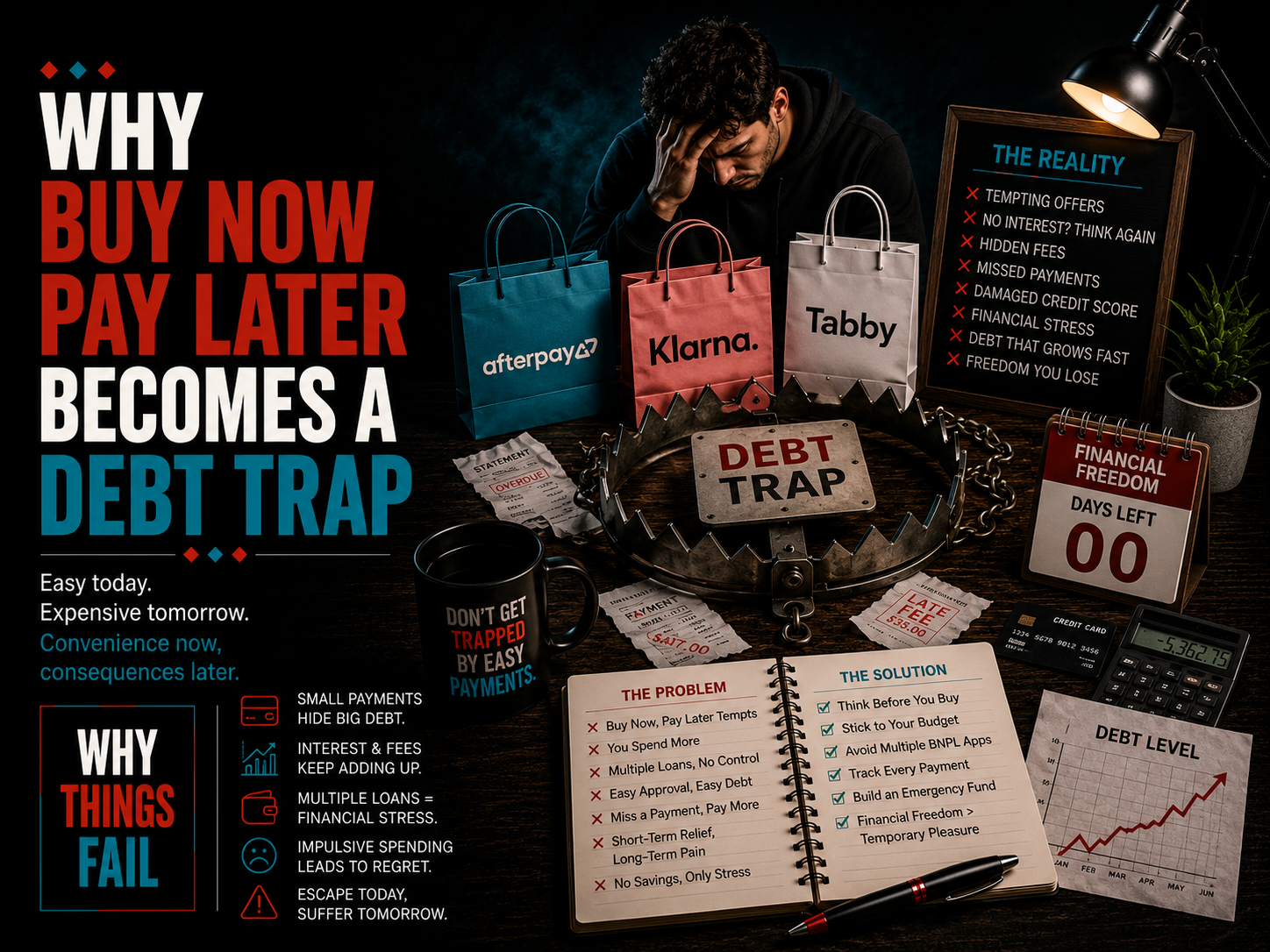
Modern credit markets reduce the immediate pain of spending. Credit cards, personal loans and buy now pay later services allow consumption today while postponing payment until the future.
The human brain naturally places greater value on immediate rewards than future costs.
This psychological tendency explains why intelligent people repeatedly make financial decisions that appear irrational in hindsight.
Debt therefore reflects behavioural patterns more often than personal character.
What Usually Happens?
Debt rarely becomes overwhelming overnight.
The pattern usually begins with manageable borrowing.
A credit card covers an unexpected expense.
A personal loan finances home improvements.
Monthly repayments appear affordable.
As income grows, spending gradually increases.
Unexpected events such as medical bills, job loss, inflation or rising living costs place additional pressure on household finances.
Savings become insufficient.
Borrowing becomes the easiest short term solution.
Over time, repayments consume more income.
New borrowing becomes necessary to meet previous obligations.
Financial flexibility slowly disappears.
By the time people recognise the seriousness of the problem, much of their income is already committed to servicing debt rather than building wealth.
Why Does It Happen?
This is where the investigation begins.
Debt is often viewed as a financial issue.
In reality, it is equally a behavioural issue.
The question is not simply why people borrow.
The more important question is why borrowing continues even when people understand the long term consequences.
The answer begins with human psychology.
Present Bias Makes Future Problems Feel Smaller
Behavioural economists describe one of the strongest decision making biases as present bias.
People naturally place greater importance on immediate comfort than future consequences.
A purchase today provides immediate satisfaction.
The repayment may not begin for several weeks.
The interest may not become noticeable for several months.
The financial burden develops gradually while the emotional reward arrives instantly.
This imbalance encourages borrowing because the brain values what can be enjoyed today far more than what must eventually be repaid.
Debt therefore grows through many individually reasonable decisions rather than one reckless choice.
Emotional Spending Replaces Rational Spending
Money is closely connected to emotion.
People spend to celebrate success.
They spend to reduce stress.
They spend to reward themselves after difficult experiences.
They spend to feel included in social groups.
Behavioural psychology shows that emotional states significantly influence financial decisions.
Stress reduces long term thinking.
Anxiety encourages immediate relief.
Happiness increases confidence.
Loneliness increases consumption.
Retail spending often becomes an emotional coping mechanism rather than a financial decision.
Credit makes this behaviour easier because it removes the immediate financial sacrifice normally associated with spending.
The purchase feels affordable today while the emotional cost of repayment remains distant.
Lifestyle Inflation Quietly Expands Financial Commitments
One of the least recognised causes of persistent debt is lifestyle inflation.
As income increases, spending usually increases alongside it.
People move into larger homes.
They finance newer vehicles.
They purchase premium subscriptions.
They travel more frequently.
Individually, none of these decisions appear excessive.
Collectively, they increase fixed monthly expenses.
Higher income therefore fails to improve financial resilience because every additional pound earned is already committed to maintaining a more expensive lifestyle.
When unexpected expenses appear, borrowing becomes the only available option.
The problem is not insufficient income.
It is the absence of financial margin.
Social Comparison Changes Spending Behaviour
Human beings rarely evaluate success in isolation.
People naturally compare themselves with friends, neighbours, colleagues and increasingly with carefully curated lives displayed across social media.
These comparisons quietly reshape financial expectations.
A lifestyle that once felt comfortable begins to appear inadequate simply because someone else appears to have more.
Consumer behaviour research consistently shows that status driven spending increases when individuals compare themselves with higher income groups.
Borrowing often becomes a tool for maintaining social identity rather than meeting genuine needs.
The financial cost remains hidden until repayments begin limiting future choices.
Financial Education Alone Does Not Solve The Problem
Many people believe better financial education would eliminate debt.
Education certainly helps.
However, knowledge alone rarely changes behaviour.
People understand that credit card interest is expensive.
They understand the importance of saving.
They understand that unnecessary borrowing creates future obligations.
Yet these facts often fail to influence real world decisions.
Why?
Because financial decisions occur under emotional pressure rather than in calm classroom environments.
Knowledge competes against stress, uncertainty, optimism and immediate gratification.
Behaviour usually wins.
Financial literacy remains valuable, but lasting change depends on designing systems that support disciplined behaviour rather than relying entirely on willpower.
Why Does It Happen?
Poor Financial Planning Creates Invisible Risk
Debt rarely becomes overwhelming because of one expensive purchase. It grows when financial decisions are made without considering their long term consequences.
Many households focus on whether they can afford the monthly repayment instead of asking whether the debt improves their overall financial position. This mindset shifts attention away from the total cost of borrowing and towards immediate affordability.
Small monthly commitments gradually accumulate.
A credit card payment.
A car loan.
A personal loan.
A subscription financed through instalments.
Each commitment appears manageable in isolation. Together, they reduce financial flexibility. When an unexpected expense arrives, there is no room left within the budget, making additional borrowing feel unavoidable.
The absence of financial planning therefore increases dependence on debt long before people recognise the danger.
Delayed Consequences Encourage Poor Decisions
One of the strongest forces behind persistent debt is delayed consequences.
The benefits of borrowing are immediate.
The costs appear slowly.
A purchase can be enjoyed today.
Interest charges arrive later.
Minimum repayments seem small.
The full financial impact may take years to become obvious.
Behavioural economists explain that people consistently underestimate costs that occur in the future. This tendency causes borrowing decisions to appear far less risky than they actually are.
The problem is not that people ignore the consequences completely.
The problem is that future consequences feel psychologically distant compared with immediate rewards.
By the time repayments become difficult, the decisions that created the problem have already become permanent.
Financial Stress Weakens Decision Making
Debt creates stress.
Stress then creates poorer financial decisions.
This creates one of the most damaging feedback loops in personal finance.
Research in psychology shows that financial pressure reduces cognitive capacity. People become more focused on solving immediate problems while paying less attention to long term planning.
Someone struggling to pay next month’s bills is less likely to compare interest rates, build emergency savings or develop a realistic repayment strategy.
Instead, immediate survival becomes the priority.
This explains why people already trapped in debt often continue borrowing even when they know it increases future financial pressure.
The behaviour appears irrational from the outside.
From inside the situation, it often feels like the only available option.
Easy Access To Credit Changes Behaviour
Modern financial systems have made borrowing faster than ever.
Credit cards are approved within minutes.
Personal loans require minimal paperwork.
Digital payment services allow purchases without immediate payment.
These innovations improve convenience, but they also reduce the psychological barrier associated with spending.
Paying with cash creates an immediate sense of loss.
Borrowing separates consumption from payment.
This separation weakens the natural caution that once limited unnecessary spending.
The easier borrowing becomes, the easier it is to underestimate its long term consequences.
The financial system therefore shapes behaviour as much as individual discipline.
Warning Signs
Debt rarely becomes unmanageable without early warning signs.
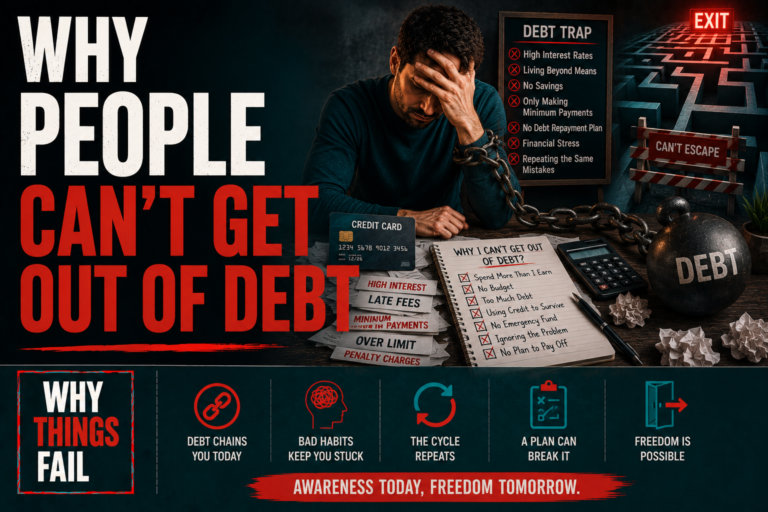
One of the clearest indicators is relying on credit to pay for everyday living expenses rather than unexpected emergencies.
Another warning sign is making only minimum repayments while total balances continue growing each month.
People also begin borrowing from one source to repay another. This creates the illusion of progress while total debt continues increasing.
Avoiding bank statements, delaying conversations about money or feeling anxious whenever bills arrive are equally important behavioural warning signs. These reactions often indicate that emotional stress has replaced objective financial decision making.
Many people ignore these signals because no immediate crisis exists. Income continues arriving. Monthly repayments are made. Daily life appears normal.
The deeper problem remains hidden until financial flexibility has almost disappeared.
What Could Have Prevented It?
Most debt problems cannot be prevented through perfect financial decisions.
Life contains uncertainty that nobody can predict.
Unexpected illness, unemployment, inflation and family emergencies will always affect household finances.
The objective is therefore not eliminating uncertainty.
It is building systems that reduce vulnerability when uncertainty appears.
Clear budgeting creates visibility before financial pressure becomes overwhelming.
Emergency savings reduce dependence on borrowing during unexpected events.
Carefully evaluating whether debt creates future value or simply finances present consumption improves decision quality.
Financial systems also matter.
Transparent lending practices, stronger financial education and responsible credit assessment reduce the likelihood that temporary borrowing becomes permanent debt.
Ultimately, preventing debt requires recognising that financial resilience is built gradually through consistent decisions rather than dramatic changes.
Lessons
The reasons people cannot get out of debt reveal lessons that extend well beyond personal finance.
The first lesson is that financial problems rarely begin with major mistakes. They usually develop through many small decisions that appear reasonable when viewed individually.
The second lesson is that behaviour often matters more than income. Higher earnings do not automatically create financial security if spending expands at the same pace.
Another lesson is that financial systems influence behaviour. Easy access to credit, social pressure and delayed consequences shape decisions in ways many people fail to recognise.
Perhaps the most important lesson is that lasting financial stability depends on creating habits and systems that remain effective during periods of stress rather than relying on willpower alone.
Failure Pattern
The dominant pattern behind persistent debt is Lifestyle Inflation combined with Poor Financial Discipline and Short Term Thinking.
People increase spending as income grows. Borrowing gradually replaces saving. Immediate comfort receives greater priority than future flexibility.
The same pattern appears in households, businesses and governments.
Short term decisions repeatedly solve today’s problem while quietly creating tomorrow’s financial burden.
Debt therefore becomes the result of accumulated behavioural choices rather than one unfortunate event.
Hidden Lesson
The greatest cause of persistent debt is not borrowing itself.
It is the gradual loss of financial flexibility.
Every unnecessary financial commitment reduces future choices.
When flexibility disappears, even minor financial setbacks require additional borrowing.
The deeper lesson is that debt traps are created long before people recognise they are trapped. Financial failure begins when short term convenience consistently outweighs long term resilience.
Failure Scorecard
| Area | Score | Explanation |
| Financial Discipline | 4/10 | Spending often exceeds long term financial capacity. |
| Decision Making | 5/10 | Immediate needs frequently outweigh future consequences. |
| Risk Management | 4/10 | Limited emergency savings increase reliance on borrowing. |
| Long Term Thinking | 3/10 | Present focused decisions dominate financial planning. |
| Financial Knowledge | 6/10 | Many people understand debt but struggle to change behaviour. |
| Emotional Control | 4/10 | Stress and anxiety frequently influence spending decisions. |
| Planning | 4/10 | Weak budgeting and limited preparation increase financial vulnerability. |
| Adaptability | 6/10 | Many households eventually adjust, but often only after significant financial pressure. |
Key Takeaways
- Debt is usually a behavioural problem before it becomes a financial problem.
- Present bias encourages borrowing by making future costs feel less important.
- Emotional spending quietly increases long term financial pressure.
- Lifestyle inflation prevents higher income from improving financial security.
- Easy access to credit changes spending behaviour.
- Financial stress often leads to poorer financial decisions.
- Small borrowing decisions accumulate into long term financial dependence.
- Financial resilience depends on maintaining flexibility rather than maximising consumption.
Frequently Asked Questions
Why do people struggle to get out of debt?
People often remain in debt because behavioural patterns such as emotional spending, present bias, lifestyle inflation and weak financial planning continue even after debt becomes stressful.
Does earning more money solve debt problems?
Not always. If spending increases alongside income, higher earnings may fail to improve financial stability. Behaviour often determines whether additional income creates wealth or larger financial commitments.
Why do people keep borrowing when they already have debt?
Borrowing frequently becomes a response to financial stress. Immediate needs appear more urgent than long term consequences, especially when existing repayments leave little financial flexibility.
What is the biggest psychological cause of debt?
Present bias is one of the strongest psychological drivers. People naturally value immediate rewards more than future costs, making borrowing feel less risky than it truly is.
Is debt always a sign of financial failure?
No. Debt used responsibly for productive purposes such as education, housing or business investment can create long term value. Financial failure occurs when borrowing becomes necessary to maintain everyday living rather than build future opportunities.
Conclusion
People cannot get out of debt simply because they lack financial knowledge or discipline. They remain trapped because human psychology, social expectations, modern credit systems and behavioural biases combine to make short term borrowing feel easier than long term financial resilience.
Understanding debt through this broader lens changes the conversation. Persistent debt is rarely the result of one poor decision. It is the predictable outcome of repeated behavioural choices, delayed consequences and financial systems that reward immediate consumption while quietly transferring the cost into the future.