Introduction
Every January, millions of people begin a new fitness journey.
They buy gym memberships, download workout applications, purchase fitness equipment and promise themselves that this year will be different.
For a few weeks, motivation appears strong. Gyms become crowded, healthy meals replace fast food and exercise feels like the beginning of a new identity.
Yet within a few months, the enthusiasm fades.
Workouts become less frequent.
Healthy eating becomes inconsistent.
Excuses gradually replace commitment.
Eventually, many people return to the same habits they hoped to leave behind.
This cycle repeats every year across different countries, age groups and lifestyles.
The obvious explanation is that people lack discipline.
The deeper explanation is far more interesting.
Fitness plans rarely fail because people do not understand exercise. Most adults already know that regular movement, balanced nutrition and adequate sleep improve health. The real challenge lies in consistently making decisions that support those goals despite stress, uncertainty, competing priorities and immediate temptations.
Understanding why fitness plans fail requires looking beyond exercise programmes and diet plans. It requires examining how human behaviour, psychology and decision making influence daily actions.
Only then does fitness failure become predictable rather than mysterious.
What Is Fitness Plan Failure?
Fitness plan failure is often misunderstood as failing to lose weight or achieve a particular physical goal.
That definition is incomplete.
A fitness plan fails when someone cannot consistently follow behaviours that support long term health, regardless of whether the goal involves weight loss, muscle growth, endurance or general wellbeing.
Missing a workout does not represent failure.
Eating an unhealthy meal does not represent failure.
Failure develops when temporary setbacks become permanent behavioural patterns.
Many people begin with realistic intentions but gradually abandon the routines that once supported progress. The outcome is rarely caused by one poor decision. It usually reflects hundreds of small decisions that slowly move behaviour away from long term objectives.
Fitness failure therefore reflects a breakdown in consistency rather than a lack of knowledge.
The Biggest Myth
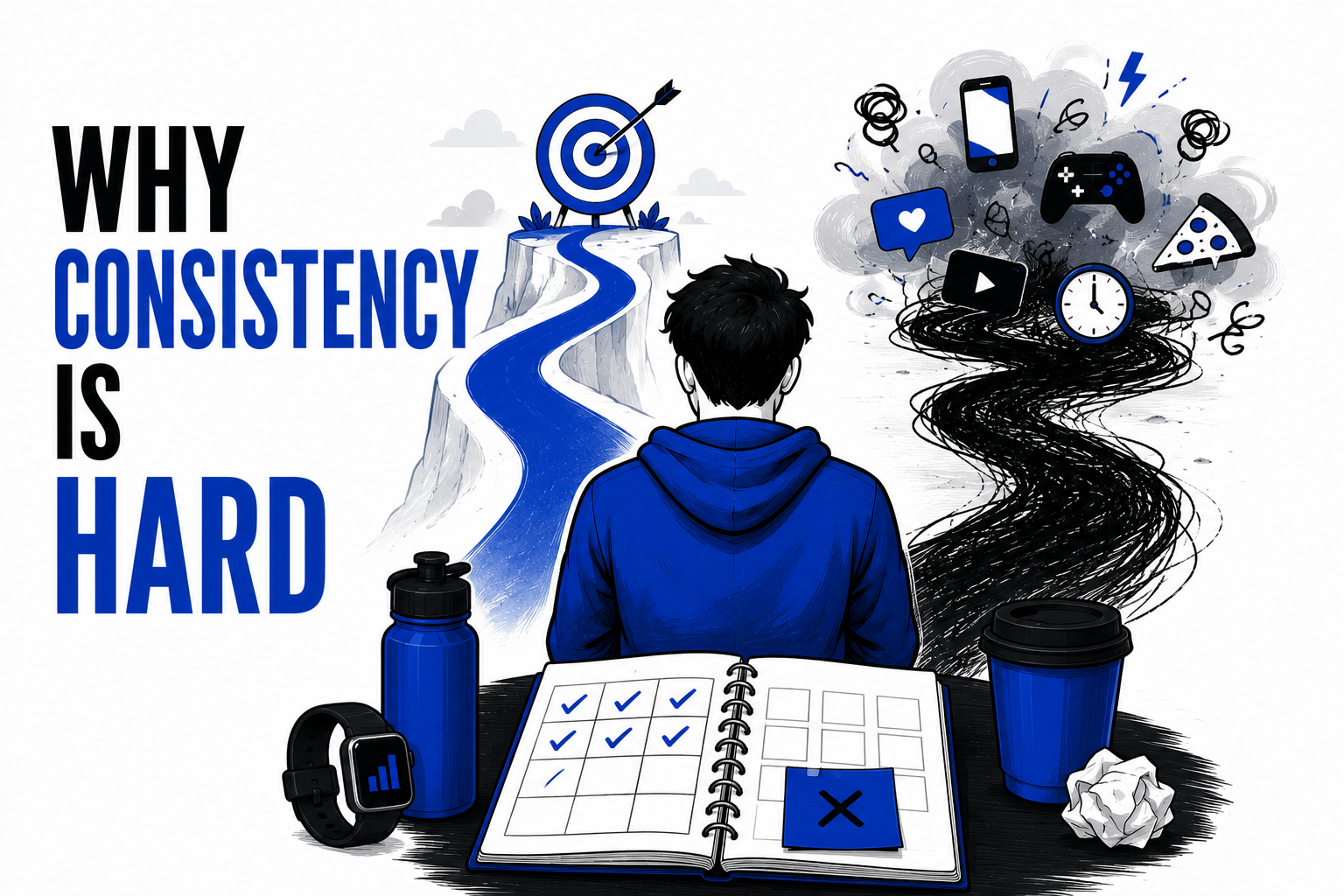
The most common belief is that successful fitness depends on motivation.
This idea dominates social media, advertising and the fitness industry.
People are encouraged to become more motivated, watch inspirational videos and wait until they feel ready to change.
Motivation certainly helps people begin.
It rarely helps them continue.
Behavioural scientists have repeatedly found that motivation fluctuates naturally. It increases after positive experiences and decreases during periods of stress, fatigue and disappointment.
If fitness depends entirely on motivation, success becomes unpredictable because emotions constantly change.
People who achieve lasting results usually rely less on motivation and more on habits, routines and environments that make healthy choices easier to repeat.
The biggest misconception is therefore believing that motivation creates consistency.
In reality, consistency gradually creates motivation.
What Usually Happens?
Most failed fitness plans follow a familiar pattern.
Someone becomes dissatisfied with their health or appearance.
They set ambitious goals.
They immediately attempt to change everything.
Daily exercise replaces inactivity.
Strict diets replace familiar meals.
Sleep routines change overnight.
For a short period, rapid progress creates excitement.
Eventually work becomes stressful.
Family responsibilities increase.
Social events interrupt routines.
Fatigue begins to accumulate.
Missing one workout leads to missing another.
Healthy eating gradually disappears.
The individual concludes that the plan has failed and waits for another opportunity to start again.
Although every situation differs, the behavioural pattern remains remarkably similar.
Fitness plans rarely collapse because of one missed workout.
They collapse because temporary interruptions gradually become permanent habits.
Why Do Fitness Plans Fail?
This is where the investigation begins.
Exercise programmes, nutrition guides and training methods have improved dramatically over recent decades.
Scientific understanding of health has never been greater.
If knowledge continues increasing, why do so many people struggle to maintain healthy routines?
The answer begins with human psychology rather than physical ability.
People Prioritise Immediate Rewards Over Future Benefits
One of the strongest behavioural biases affecting fitness is present bias.
The human brain naturally values immediate comfort more than future benefits.
Skipping today’s workout provides immediate relief.
Completing today’s workout provides benefits that may not become visible for weeks or months.
Choosing highly processed food often creates instant satisfaction.
Choosing balanced meals produces gradual improvements that accumulate slowly.
Because the rewards of unhealthy behaviour are immediate while the rewards of healthy behaviour are delayed, many people repeatedly choose what feels better today instead of what benefits them tomorrow.
Fitness plans therefore compete against human biology as much as poor decision making.
Unrealistic Expectations Create Predictable Disappointment
Many fitness plans begin with expectations that cannot be maintained.
People expect dramatic physical changes within a few weeks.
Social media reinforces these beliefs by highlighting rapid transformations while hiding months or years of consistent effort.
When progress slows, people assume the plan is no longer working.
Behavioural economists describe this as an expectation gap.
Reality improves gradually.
Expectations demand immediate results.
The wider the gap becomes, the more likely people are to abandon the process entirely.
Progress has not stopped.
Belief has.
Identity Conflict Prevents Lasting Change
Most fitness plans focus on changing behaviour without changing identity.
Someone attempts to exercise regularly while continuing to see themselves as someone who dislikes exercise.
They try eating healthier while believing they have no self control around food.
This creates continuous psychological conflict.
Every healthy decision feels unnatural because it contradicts existing self beliefs.
People often return to familiar habits not because those habits are enjoyable but because they feel consistent with their identity.
Long term behavioural change becomes much easier when healthy actions support how someone sees themselves rather than challenge it.
Decision Fatigue Gradually Weakens Discipline
Every day requires hundreds of decisions.
Work responsibilities.
Family commitments.
Financial concerns.
Social obligations.
By the evening, mental energy has often declined significantly.
Fitness decisions made during this period become increasingly difficult.
People begin negotiating with themselves.
They promise to exercise tomorrow.
They choose convenience over preparation.
They rely on willpower that has already been exhausted by other responsibilities.
Decision fatigue explains why many people begin the day with healthy intentions but struggle to maintain them consistently.
Successful fitness routines reduce unnecessary decisions by creating habits that require less mental effort.
All Or Nothing Thinking Creates Failure
One missed workout becomes a failed week.
One unhealthy meal becomes a failed diet.
One interruption becomes a reason to abandon the entire plan.
Psychologists describe this as all or nothing thinking.
Instead of viewing setbacks as normal, people interpret them as evidence that they lack discipline or ability.
This thinking pattern transforms small mistakes into complete behavioural collapse.
The most successful individuals rarely avoid setbacks.
They simply recover from them more quickly.
Social Environment Shapes Behaviour More Than Motivation
Fitness decisions rarely occur in isolation.
Family eating habits.
Workplace culture.
Friendship groups.
Daily routines.
These environmental influences shape behaviour long before conscious decision making begins.
Someone attempting to build healthier habits while surrounded by unhealthy routines faces constant friction.
Behavioural research consistently shows that environments often influence behaviour more powerfully than intentions.
People frequently blame themselves for lacking discipline when the real challenge lies in repeatedly resisting environments designed around convenience and immediate gratification.
A successful fitness plan therefore depends not only on individual determination but also on creating surroundings that make healthy choices easier than unhealthy ones.
Warning Signs
Fitness plans rarely fail without warning. The earliest signs usually appear long before someone stops exercising altogether. The problem is that these signals often seem too small to matter.
One warning sign is relying entirely on motivation. When someone exercises only when they feel inspired, consistency becomes dependent on emotion rather than routine. Since motivation naturally rises and falls, the fitness plan becomes unstable from the beginning.
Another warning sign is setting unrealistic goals. Wanting rapid weight loss, dramatic muscle growth or immediate physical transformation creates pressure that few people can sustain. When results fail to match expectations, disappointment replaces commitment.
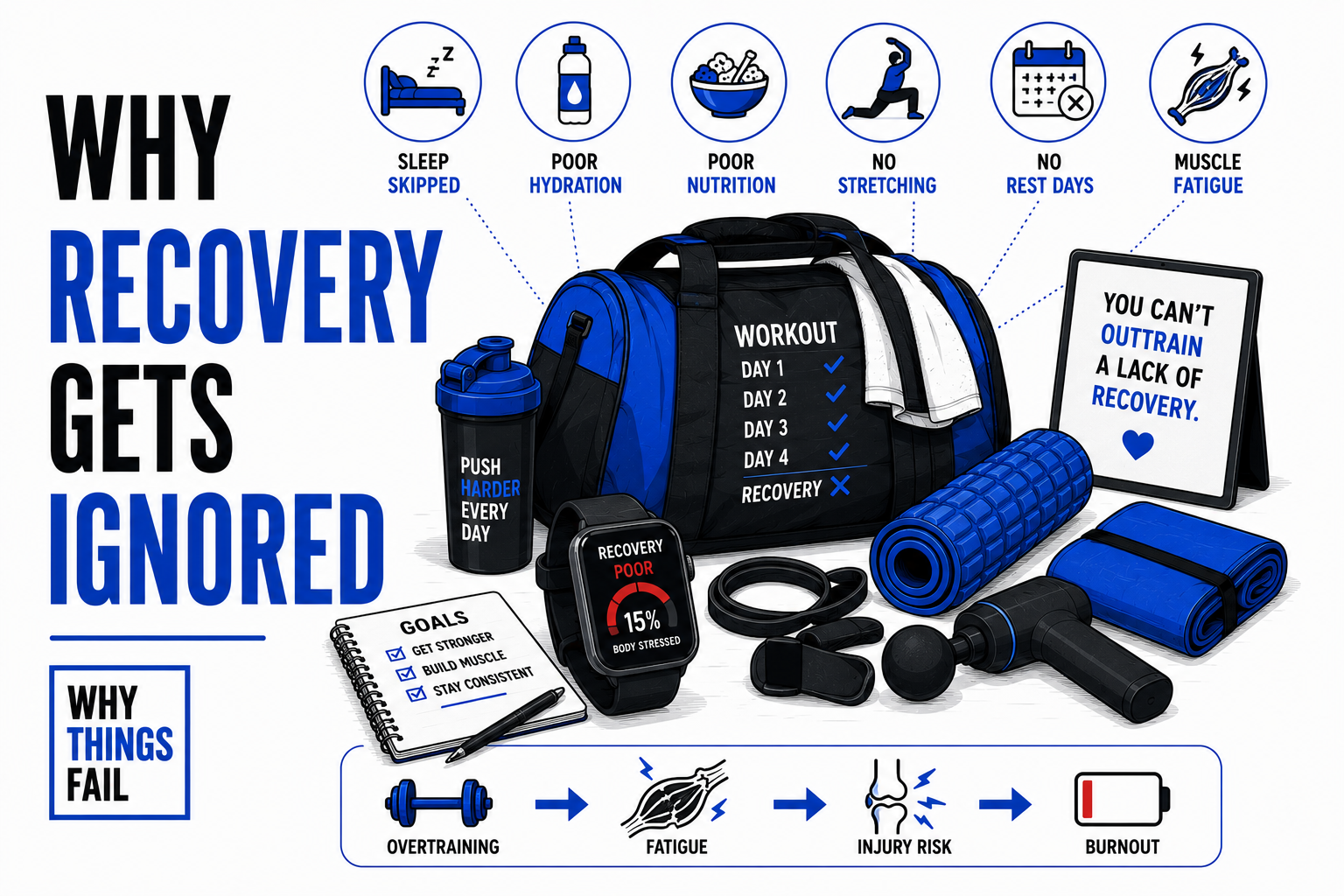
Skipping workouts without a recovery plan is another indicator. Missing one session is normal. Missing several because there is no clear routine for restarting often marks the beginning of long term inconsistency.
People also begin making decisions based on convenience rather than priorities. Exercise becomes optional while work, entertainment and social activities become non negotiable. This shift happens gradually, making it difficult to recognise until healthy habits have almost disappeared.
Perhaps the clearest warning sign is measuring progress only by appearance. Physical changes often occur slowly, while improvements in energy, strength, mobility and mental wellbeing appear much earlier. People who ignore these less visible improvements frequently conclude that their efforts are producing no results.
These warning signs are easy to ignore because they develop quietly. Behaviour changes long before outcomes change.
What Could Have Prevented It?
Most failed fitness plans could not have been prevented by finding a better workout or a stricter diet.
They could have been prevented by creating better behavioural systems.
Successful fitness depends on designing routines that remain practical during busy weeks, stressful periods and unexpected life events. Plans that only work under perfect conditions are unlikely to survive ordinary life.
Setting realistic expectations is equally important. Sustainable progress is often slower than people expect but far more durable. Accepting gradual improvement reduces frustration and encourages consistency.
Building habits instead of relying on motivation creates another layer of protection. When exercise becomes part of a daily routine rather than a daily decision, consistency requires less mental effort.
Planning also matters. Preparing meals, scheduling workouts and identifying potential obstacles before they occur reduces the number of decisions that must be made under pressure.
The social environment should not be overlooked. Surrounding yourself with people who support healthy habits makes consistency easier because positive behaviour becomes normal rather than exceptional.
Ultimately, successful fitness plans are not built on extraordinary determination. They are built on systems that make healthy choices easier to repeat than unhealthy ones.
Lessons
The reasons fitness plans fail extend far beyond health.
They reveal how people respond to delayed rewards, competing priorities and uncertainty.
One important lesson is that knowledge alone rarely changes behaviour. Most people already understand the value of exercise and balanced nutrition. The challenge lies in applying that knowledge consistently when motivation declines.
Another lesson is that habits outperform willpower. Decisions repeated automatically require far less mental energy than decisions requiring constant self control.
Fitness also demonstrates that long term success depends more on consistency than intensity. Small improvements repeated for months often produce greater results than extreme effort sustained for only a few weeks.
Perhaps the most valuable lesson is that lasting change begins with behaviour rather than outcomes. Focusing on daily actions creates progress that eventually produces meaningful results.
Failure Pattern
The dominant pattern behind failed fitness plans is Short Term Thinking combined with Emotional Decision Making.
People pursue immediate comfort while sacrificing future wellbeing. Temporary motivation encourages ambitious goals, but everyday stress gradually shifts attention towards easier choices.
This pattern appears because the human brain naturally prefers immediate rewards over delayed benefits. Rest feels better than exercise today. Fast food feels more satisfying than preparing balanced meals today. Skipping one workout seems insignificant today.
The consequences appear much later.
The same behavioural pattern exists in personal finance, investing and business. Small decisions that favour short term comfort gradually create long term failure.
Fitness simply provides one of the clearest examples of this universal pattern.
Hidden Lesson
The greatest obstacle to physical fitness is not a lack of exercise knowledge.
It is believing that success depends on finding the perfect workout plan.
In reality, almost every well designed fitness programme can produce results when followed consistently.
What determines success is not the quality of the programme alone.
It is the quality of the behaviours supporting it.
Fitness plans rarely fail because the plan was wrong.
They fail because the behaviours required to sustain the plan gradually disappeared.
The real challenge is therefore behavioural consistency rather than physical capability.
Failure Scorecard
| Area | Score | Explanation |
| Financial Discipline | 7/10 | Most fitness plans require modest financial commitment, but unnecessary spending on equipment and programmes often replaces consistent action. |
| Decision Making | 4/10 | Daily choices are frequently influenced by convenience rather than long term health goals. |
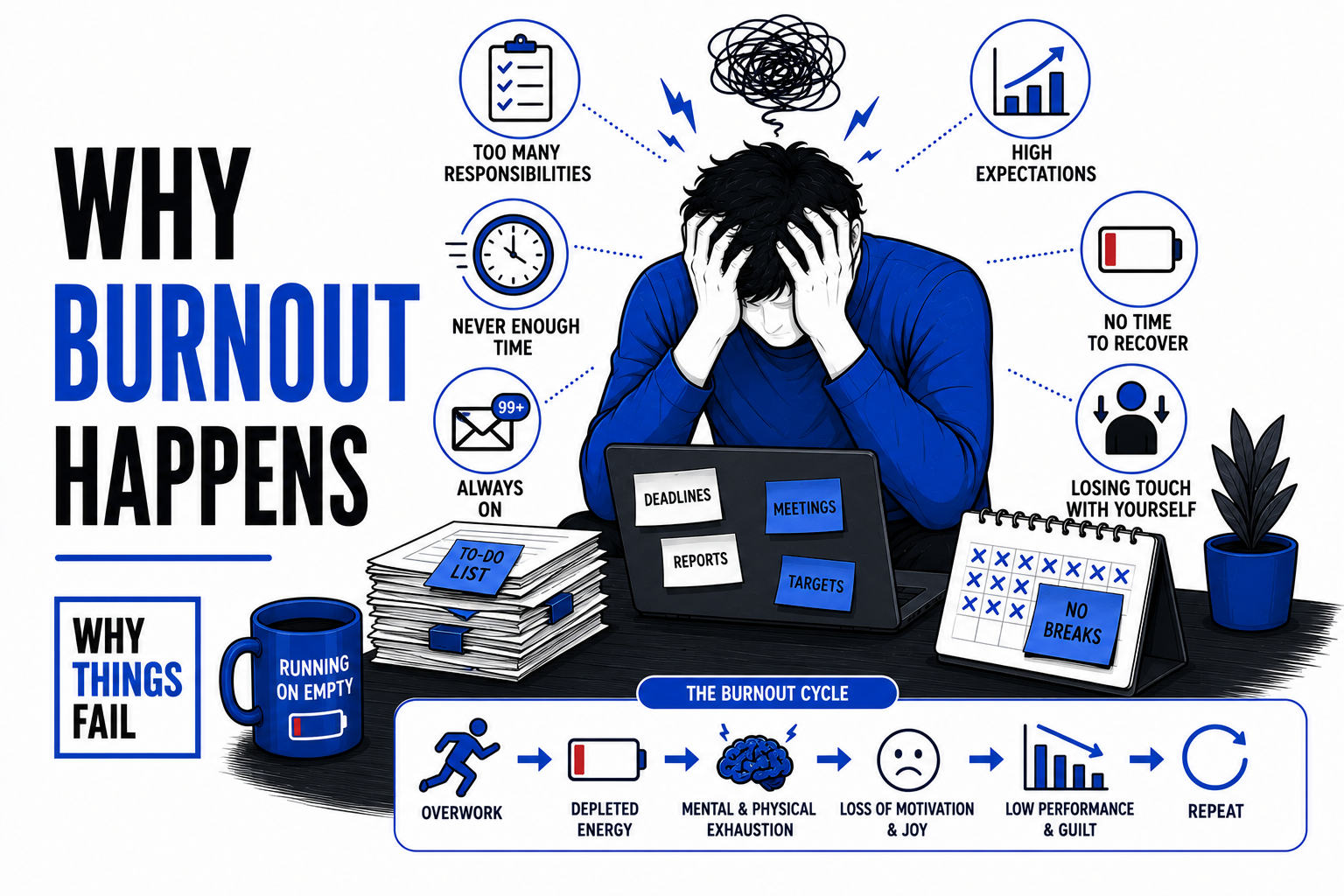
| Risk Management | 5/10 | Many people ignore recovery, sleep and gradual progression, increasing the likelihood of injury or burnout. |
| Long Term Thinking | 3/10 | Immediate results are often prioritised over sustainable lifestyle changes. |
| Health Knowledge | 7/10 | Information is widely available, but applying it consistently remains difficult. |
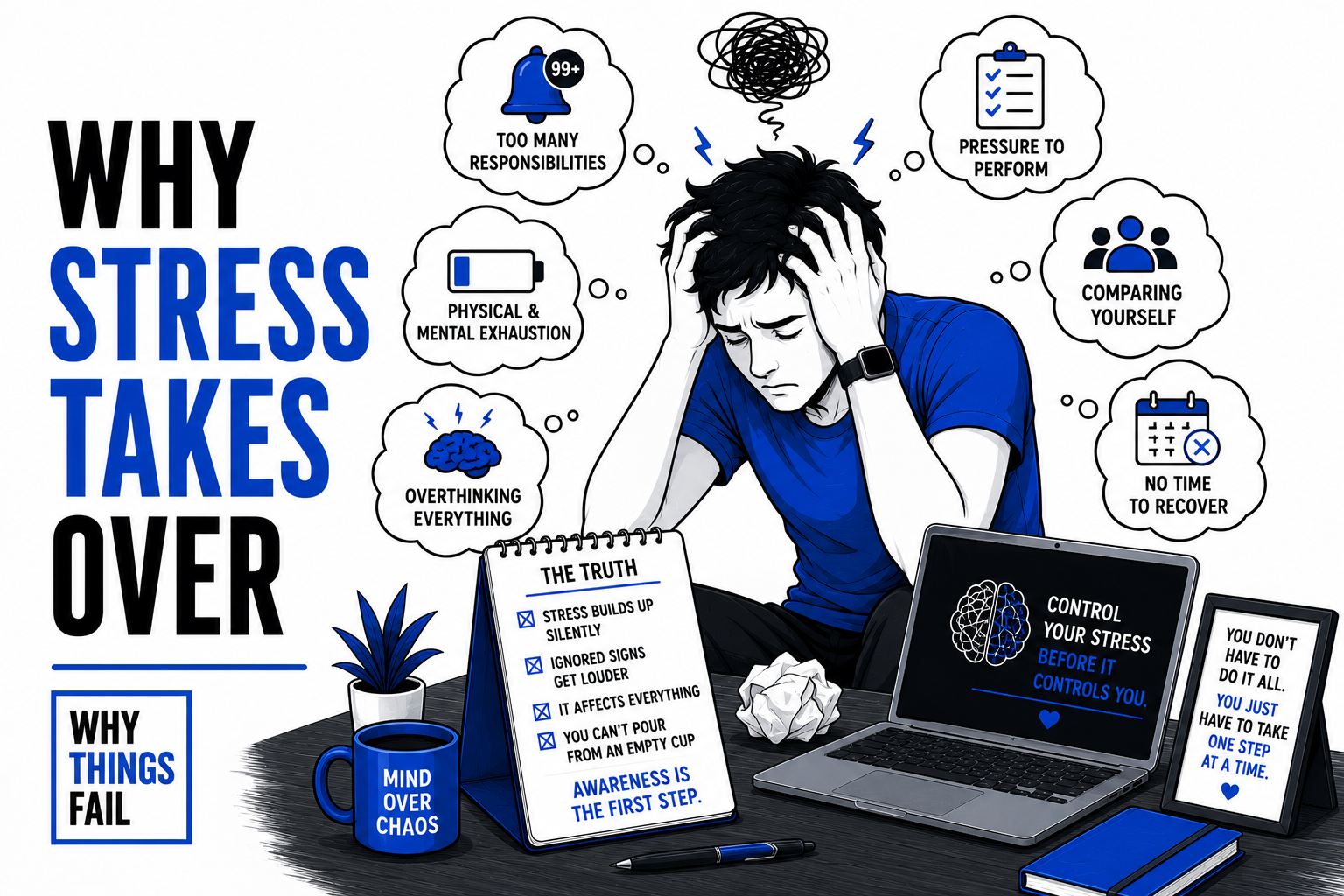
| Emotional Control | 4/10 | Stress, frustration and disappointment frequently influence eating and exercise habits. |
| Planning | 5/10 | Many fitness plans begin without realistic schedules or contingency plans. |
| Adaptability | 6/10 | Successful individuals adjust routines when circumstances change, while others abandon the plan completely. |
Key Takeaways
- Fitness plans usually fail because behaviour changes before motivation disappears.
- Long term consistency is more valuable than short periods of extreme effort.
- Present bias encourages immediate comfort over future health.
- Habits produce more reliable results than motivation alone.
- Unrealistic expectations create unnecessary disappointment.
- Environment influences behaviour more than most people realise.
- Missing one workout does not create failure. Failing to restart often does.
- Sustainable routines outperform perfect plans that cannot be maintained.
- Behaviour determines outcomes more consistently than knowledge.
- Lasting fitness is built through systems rather than willpower.
Frequently Asked Questions
Why do most fitness plans fail?
Most fitness plans fail because people rely on motivation instead of sustainable habits. Unrealistic expectations, poor planning and emotional decision making gradually reduce consistency.
Is motivation enough to stay fit?
No. Motivation helps people begin, but habits, routines and supportive environments help them continue over the long term.
Why do people quit exercising after a few weeks?
Many people expect rapid results. When progress slows or life becomes busy, motivation declines and routines are abandoned because they were never fully integrated into daily life.
What is the biggest mistake people make with fitness plans?
The biggest mistake is trying to change everything at once. Extreme routines often create short term success but rarely produce lasting behavioural change.
How can fitness plans become more sustainable?
Fitness plans become more sustainable when they focus on realistic routines, gradual progress, consistent habits, effective planning and environments that encourage healthy behaviour.
Conclusion
Fitness plans rarely fail because people are incapable of becoming healthier. They fail because human behaviour naturally favours immediate comfort over delayed rewards, making consistency difficult without supportive systems.
Understanding this changes the conversation from blaming individuals to recognising the psychological patterns that influence everyday choices. Physical fitness is therefore not simply a test of strength or determination. It is a reflection of how people manage habits, decisions and behaviour over time.