Quick Answer
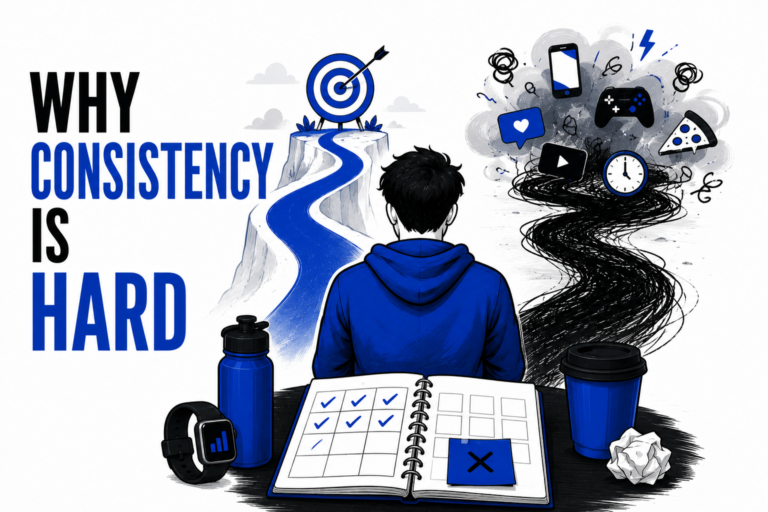
Consistency is hard because the human brain naturally prefers immediate rewards over delayed results. Emotional decision making, present bias, poor habit formation, changing motivation and cognitive overload make it difficult to repeat the same productive behaviours long enough to achieve meaningful success.
Introduction
Consistency is one of the most admired qualities in business, investing, entrepreneurship, health and personal development.
People often believe success belongs to those with exceptional intelligence, talent or opportunity. Yet history repeatedly shows that long term success is more often built through ordinary actions performed consistently over long periods.
Despite understanding this principle, most people struggle to remain consistent.
Businesses abandon successful strategies after temporary setbacks.
Investors stop investing during market downturns.
Entrepreneurs constantly change direction before previous ideas have time to mature.
Individuals begin new habits with enthusiasm only to abandon them weeks later.
The pattern appears everywhere.
The question is not whether people understand the value of consistency.
The question is why maintaining consistency proves so difficult despite knowing it leads to better outcomes.
The answer extends far beyond motivation.
Consistency is ultimately a behavioural challenge shaped by psychology, incentives, emotions and the way the human brain evaluates effort and reward.
Understanding why consistency is hard requires examining these deeper forces rather than assuming people simply lack discipline.
What Is Consistency?
Consistency is often misunderstood as repeating the same action every day without interruption.
That definition is too simplistic.
True consistency is the ability to continue making decisions that support a long term objective despite uncertainty, boredom, setbacks and delayed rewards.
It is not perfection.
It is repeated commitment despite imperfect circumstances.
Whether someone is building wealth, growing a business, learning a skill or improving physical health, consistency requires making the same high quality decisions long before visible results appear.
Failure therefore occurs not because people are incapable of consistency, but because they gradually stop repeating behaviours that once moved them towards their objectives.
The Biggest Myth
The most common belief is that consistency depends primarily on motivation.
This idea dominates social media, self improvement content and popular business advice.
People wait until they feel inspired before taking action.
When motivation disappears, progress usually disappears with it.
Behavioural psychology suggests a different explanation.
Motivation is temporary.
It changes according to mood, environment, stress, sleep, financial pressure and countless other influences.
Consistency cannot depend upon something so unpredictable.
People who remain consistent rarely possess endless motivation.
Instead, they reduce the number of decisions required to continue productive behaviour.
They rely on routines, systems and habits that continue functioning even when motivation declines.
The greatest misconception is therefore believing that motivated people become consistent.
More often, consistent people create environments where motivation becomes less necessary.
What Usually Happens?
Most attempts at consistency follow a familiar pattern.
People begin with enthusiasm.
Goals feel exciting.
Progress appears rapid.
Confidence increases.
As time passes, improvement slows.
Results become less visible.
Daily effort begins feeling repetitive.
Unexpected responsibilities compete for attention.
Eventually, productive habits are interrupted.
Missing one day becomes missing one week.
The original objective quietly disappears.
Many people believe failure occurred when they stopped.
In reality, failure usually began much earlier when short term emotions gradually replaced long term thinking.
Why Does It Happen?
Consistency is difficult because it conflicts with several natural tendencies of the human mind.
The brain evolved to seek immediate rewards, conserve energy and avoid uncertainty.
Long term goals require precisely the opposite behaviour.
They demand repeated effort today for benefits that may not appear for months or even years.
This conflict explains why consistency feels mentally exhausting despite understanding its value.
The Brain Prefers Immediate Rewards
Behavioural economists describe this tendency as present bias.
People naturally assign greater value to immediate rewards than future rewards.
The benefits of saving money, exercising regularly or building a business are delayed.
The benefits of comfort, entertainment and avoiding effort are immediate.
Each individual decision appears insignificant.
Watching one more episode.
Skipping one workout.
Postponing one important task.
Delaying one investment.
None of these choices creates failure by itself.
Together, however, they gradually weaken consistency until long term objectives become increasingly difficult to achieve.
The problem is not laziness.
It is the way the brain evaluates short term satisfaction against future benefits.
Delayed Results Reduce Motivation
Human beings respond strongly to visible progress.
When effort produces immediate improvement, motivation increases.
Consistency becomes easier because actions feel meaningful.
Many valuable activities do not provide this feedback.
Investing may take years before wealth compounds significantly a dynamic covered in Why Startups Burn Through Cash
Businesses often require long periods before becoming profitable.
Learning complex skills involves extended periods where improvement appears almost invisible.
This creates a psychological challenge known as delayed gratification.
People begin questioning whether their effort is producing results.
Uncertainty replaces confidence.
Without immediate evidence of progress, many abandon behaviours that were actually working.
Ironically, they stop shortly before consistent effort would have produced meaningful outcomes.
A landmark University College London study by Phillippa Lally and colleagues tracked 96 people forming a new daily habit and found it took an average of 66 days — and as long as 254 days for some — before a behaviour felt automatic. The popular “21 days” claim has no basis in that research; it originated from an unrelated 1960 observation about cosmetic surgery recovery. A 2024 meta-analysis of 20 studies since then confirmed similar ranges, with average automaticity taking anywhere from roughly two to five months. That gap between effort and automaticity is exactly where most people quit.
Decision Fatigue Gradually Weakens Discipline
Every decision consumes mental energy.
Throughout the day people make hundreds of choices involving work, family, finances and personal responsibilities.
As mental resources decline, decision quality often declines with them.
Behavioural researchers describe this as decision fatigue.
Consistency suffers because productive behaviours usually require deliberate effort.
Choosing healthy meals.
Following a business strategy.
Reviewing investments.
Completing difficult work.
These actions demand self control.
When cognitive resources become depleted, the brain seeks easier alternatives that require less effort.
This explains why consistency often breaks during periods of stress rather than periods of comfort.
The challenge is rarely lack of knowledge.
It is reduced mental capacity to execute good decisions repeatedly.
Emotional Decision Making Overrides Long Term Goals
Emotions play a greater role in consistency than most people recognise.
Fear encourages avoiding difficult tasks.
Frustration encourages changing strategies too quickly.
Excitement encourages taking unnecessary risks.
Boredom encourages seeking novelty instead of persistence.
Each emotional state influences behaviour differently.
Together they create instability.
Rather than evaluating decisions according to long term objectives, people begin responding to temporary feelings.
Consistency gradually disappears because emotional reactions become stronger than carefully planned intentions.
The Desire For Quick Results Encourages Constant Change
Modern society rewards speed.
Businesses pursue rapid growth.
Investors search for instant returns.
Entrepreneurs seek overnight success.
Social media celebrates dramatic transformations rather than gradual improvement.
These incentives shape expectations.
When consistent effort produces ordinary progress, many assume something is wrong.
Instead of improving execution, they replace the strategy entirely.
New productivity systems.
New business ideas.
New investment approaches.
New routines.
The pursuit of better methods quietly replaces commitment to existing ones.
Consistency becomes impossible because the direction changes before meaningful progress has time to develop.
Overconfidence Can Also Destroy Consistency
Inconsistency is not always caused by discouragement.
Sometimes it is created by early success.
Small achievements increase confidence.
Confidence creates the belief that discipline is no longer necessary.
People begin relaxing routines that originally created progress.
Investors stop reviewing risk.
Business owners ignore operational systems.
Professionals reduce preparation because previous success appears to guarantee future performance.
This reflects overconfidence bias, one of the most studied concepts in behavioural economics.
Success changes behaviour.
Changed behaviour often reduces the very consistency responsible for creating success in the first place.
Warning Signs
Consistency rarely disappears overnight. It declines gradually through small behavioural changes that seem harmless in isolation but become damaging when repeated over time.
One warning sign is relying entirely on motivation. When productive actions only occur during periods of enthusiasm, consistency becomes unpredictable. Temporary emotions begin controlling long term progress.
Another warning sign is constantly changing direction before previous efforts have produced measurable results. Whether it involves investing, business, fitness or learning, abandoning one approach for another often reflects impatience rather than poor strategy.
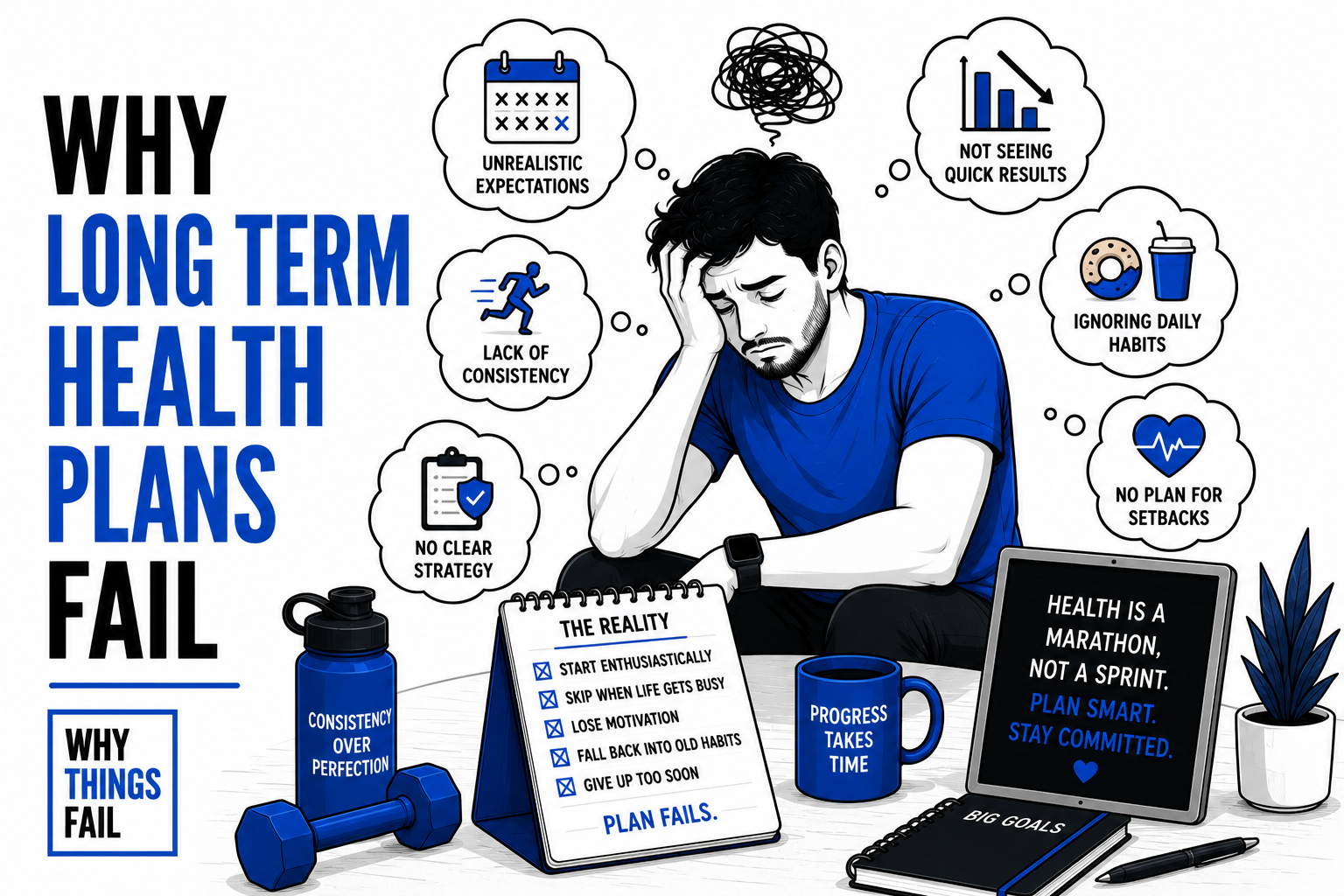
Perfectionism is another overlooked indicator. Some people believe missing one day means they have completely failed. Instead of returning to their routine, they abandon it altogether because it no longer feels perfect.
A growing preference for immediate rewards is equally revealing. Choosing comfort instead of effort, entertainment instead of learning or short term satisfaction instead of future benefits gradually weakens productive habits.
Perhaps the most significant warning sign is losing sight of the original purpose. When people focus only on daily effort without understanding why they started, consistency begins feeling like repetitive work instead of meaningful progress.
These warning signs are often ignored because they develop slowly. No single decision appears important enough to cause failure. The cumulative effect only becomes visible months or years later.
What Could Have Prevented It?
Consistency cannot be maintained through willpower alone.
It requires systems that reduce dependence on emotion and increase the likelihood of repeating productive behaviour.
One effective approach is reducing unnecessary decisions. Fixed routines, scheduled reviews and clearly defined priorities minimise the mental effort required each day. When productive behaviour becomes automatic, emotional fluctuations have less influence.
Breaking long term objectives into smaller milestones also improves consistency. Visible progress provides psychological reinforcement, making delayed rewards feel more achievable. Small wins strengthen commitment because they provide evidence that effort is producing results.
Another important safeguard is accepting temporary setbacks. Missing one day should not become abandoning an entire process. Viewing consistency as a long term pattern rather than daily perfection allows people to recover quickly after interruptions.
Regular reflection is equally valuable. Reviewing progress, identifying behavioural patterns and adjusting systems encourages continuous improvement without constantly changing direction.
Most importantly, successful individuals separate outcomes from identity. A temporary setback does not mean the person has failed. This mindset encourages learning instead of emotional reactions, making consistency easier to sustain during difficult periods.
Lessons
Consistency teaches lessons that extend far beyond personal productivity.
The first lesson is that sustainable success depends more on repeated behaviour than extraordinary effort. One exceptional performance rarely changes long term outcomes, while small daily improvements often compound into remarkable results.
The second lesson is that systems consistently outperform motivation. Motivation may inspire action, but structured routines and disciplined processes determine whether progress continues when enthusiasm fades.
Another lesson is that patience creates competitive advantage. Many people abandon worthwhile efforts because results arrive more slowly than expected. Those who remain consistent often succeed simply because they continue while others stop.
Perhaps the most important lesson is that consistency is ultimately a decision making skill. Every day presents opportunities to choose between immediate comfort and long term value. Those repeated decisions shape outcomes more than occasional moments of inspiration.
Failure Pattern
The dominant pattern behind inconsistency is Short Term Thinking reinforced by Emotional Decision Making.
People naturally seek immediate gratification while avoiding uncertainty and delayed rewards. This encourages decisions that feel satisfying today but undermine future progress.
Impatience encourages changing direction before meaningful results appear.
Fear encourages avoiding difficult work.
Overconfidence encourages abandoning routines after early success.
Perfectionism encourages giving up after minor setbacks.
Together these behaviours create a cycle where individuals repeatedly restart instead of steadily progressing.
The same pattern appears across investing, entrepreneurship, education, health and business. Human behaviour changes far less than circumstances, which explains why inconsistency remains one of the most common causes of long term failure.
Hidden Lesson
Consistency is not difficult because people lack ability.
It is difficult because the rewards of consistency and the costs of inconsistency occur at different times.
The effort is immediate.
The reward is delayed.
The comfort of stopping is immediate.
The consequences are delayed.
This difference creates a psychological imbalance where the brain repeatedly chooses what feels better today over what creates better outcomes tomorrow.
The deeper truth is that success rarely depends on extraordinary talent. More often, it depends on continuing ordinary actions after the initial excitement has disappeared.
Failure Scorecard
| Area | Score | Explanation |
| Financial Discipline | 6/10 | Many people understand the importance of consistency but struggle to maintain disciplined behaviour over time. |
| Decision Making | 5/10 | Short term emotions frequently influence choices that should support long term objectives. |
| Risk Management | 6/10 | Inconsistent behaviour increases personal and financial uncertainty by disrupting long term plans. |
| Long Term Thinking | 4/10 | Immediate rewards often receive greater attention than future benefits. |
| Financial Knowledge | 7/10 | Knowledge is usually sufficient, but applying it consistently remains the challenge. |
| Emotional Control | 4/10 | Motivation, frustration and impatience regularly influence behaviour. |
| Planning | 6/10 | Plans often exist but lack systems that encourage consistent execution. |
| Adaptability | 7/10 | Successful people adapt without abandoning their long term direction. |
Key Takeaways
- Consistency is a psychological challenge rather than a knowledge problem.
- Present bias encourages immediate comfort over future success.
- Systems create greater consistency than motivation alone.
- Delayed rewards make productive habits difficult to maintain.
- Small behavioural choices accumulate into significant long term outcomes.
- Emotional decision making weakens consistency more than lack of ability.
- Patience often becomes a competitive advantage because most people quit too early.
- Sustainable success depends on repeating high quality decisions over long periods.
Frequently Asked Questions
Why is consistency so difficult to maintain?
Consistency is difficult because the human brain naturally prefers immediate rewards over delayed benefits. Behavioural biases, emotional decision making and changing motivation often interrupt productive habits before meaningful results appear.
Is consistency more important than talent?
In many situations, yes. Talent creates potential, but consistency determines whether that potential develops into lasting success through repeated action and continuous improvement.
Why do people lose motivation so quickly?
Motivation declines because it is influenced by emotions, stress, environment and visible progress. When results are delayed, enthusiasm naturally decreases unless supported by strong routines and systems.
Can systems improve consistency?
Yes. Systems reduce the number of decisions required each day and make productive behaviour easier to repeat. They provide stability even when motivation fluctuates.
What is the biggest mistake people make when trying to stay consistent?
The biggest mistake is expecting immediate results. Many people abandon effective habits simply because progress appears slower than expected, even though meaningful outcomes often require sustained effort over long periods.
Conclusion
Consistency remains difficult because it challenges fundamental aspects of human psychology. It asks people to value future outcomes over immediate comfort, maintain discipline without constant rewards and continue acting despite uncertainty.
Understanding this changes the conversation. Consistency is not simply a matter of determination or willpower. It is the result of systems, behavioural choices and psychological patterns that either support long term progress or quietly undermine it. Those who recognise these hidden forces understand that lasting success is rarely created by extraordinary moments, but by ordinary decisions repeated long after the initial excitement has faded. For more on how these same behavioural patterns show up elsewhere, explore Human Psychology or Money Failures.