Introduction
Building muscle appears straightforward.
Lift weights consistently, eat enough protein and repeat the process until results appear.
This simple formula has fuelled an industry worth billions. Fitness influencers, supplement companies and social media platforms constantly promote workout plans, transformation stories and promises of rapid muscle growth. Yet despite having more information than any previous generation, many people struggle to build noticeable muscle.
Some train for months without visible progress. Others achieve early gains before reaching a frustrating plateau. Many eventually abandon resistance training altogether, convinced that they simply have poor genetics or the wrong body type.
This raises an important question.
Why does muscle building fail for so many people?
The obvious explanation is often poor training or inadequate nutrition.
The deeper explanation is far more complex.
Muscle growth is not determined by effort alone. It depends on a system that combines effective training, sufficient recovery, proper nutrition, consistent habits and informed decision making. When one part of this system breaks down, progress slows. When several parts fail simultaneously, muscle growth often stops completely.
Understanding why muscle building fails therefore requires looking beyond workouts and examining the behavioural patterns, psychological barriers and physiological processes that make failure predictable.
What Is Muscle Building Failure?
Muscle building failure does not mean failing to gain muscle after a few weeks of exercise.
Muscle growth is naturally slow and influenced by factors such as age, genetics, nutrition, recovery and training experience.
Failure occurs when repeated decisions prevent the body from adapting over time.
A person may train intensely but recover poorly.
Another may consume enough protein but never challenge their muscles with progressive overload.
Others follow inconsistent workout routines that never provide enough stimulus for muscle protein synthesis.
The common factor is not a lack of effort.
It is a failure to create the conditions required for consistent adaptation.
Muscle building is therefore less about isolated workouts and more about maintaining a system that repeatedly supports growth.
The Biggest Myth
One belief dominates the fitness industry.
The harder you train, the more muscle you build.
This idea encourages people to spend hours in the gym, complete excessive sets and constantly search for more demanding workouts.
The reality is very different.
Muscles do not grow during exercise.
They grow during recovery.
Resistance training provides the stimulus for adaptation, but nutrition, sleep and recovery provide the resources that make adaptation possible.
Training beyond the body’s ability to recover often produces the opposite result. Fatigue accumulates, performance declines and muscle growth slows.
The most successful training programmes are not necessarily the most intense.
They are the most sustainable.
What Usually Happens?
The pattern is remarkably consistent.
A beginner starts training with enthusiasm.
Motivation is high.
Workouts become longer and more frequent.
Early progress creates confidence.
After several weeks, improvements begin to slow.
Instead of reviewing recovery, nutrition or training quality, many people simply increase exercise volume.
They add more sets.
More exercises.
More training days.
Eventually fatigue exceeds recovery.
Performance stagnates.
Motivation declines.
The individual begins changing programmes, buying supplements or searching for another training method that promises faster results.
Months later, visible progress remains limited despite significant effort.
Although each person’s experience is different, the underlying pattern rarely changes.
Muscle building does not usually fail because people stop trying.
It fails because they respond to slower progress with decisions that further disrupt the adaptation process.
Why Does Muscle Building Fail?
Most people assume muscle building is limited by physical ability.
In reality, behavioural patterns often become the greatest obstacle.
The body responds predictably to resistance training when the necessary conditions exist.
The challenge is maintaining those conditions long enough for adaptation to occur.
Poor Consistency Prevents Progressive Overload
The human body adapts through repetition.
Progressive overload requires gradually increasing the demands placed upon muscles over weeks and months.
Many people interrupt this process.
They skip workouts because motivation declines.
They change training programmes every few weeks.
They miss entire weeks before restarting with renewed enthusiasm.
Each interruption reduces the continuity needed for muscle adaptation.
Consistency, rather than occasional intense effort, becomes the foundation of long term muscle growth.
Short Term Thinking Creates Long Term Failure
Modern fitness culture encourages immediate results.
Transformation videos often compress years of progress into a few seconds.
Social media rewards dramatic before and after images rather than realistic expectations.
This creates distorted perceptions of how quickly muscle develops.
When visible changes fail to appear after several weeks, disappointment replaces patience.
People begin searching for faster methods rather than trusting gradual progress.
Behavioural psychologists describe this as present bias, where immediate outcomes are valued more highly than future rewards.
Muscle building depends on delayed gratification.
The human brain naturally prefers immediate evidence that effort is working.
This conflict explains why many people abandon effective routines long before meaningful physical changes become visible.
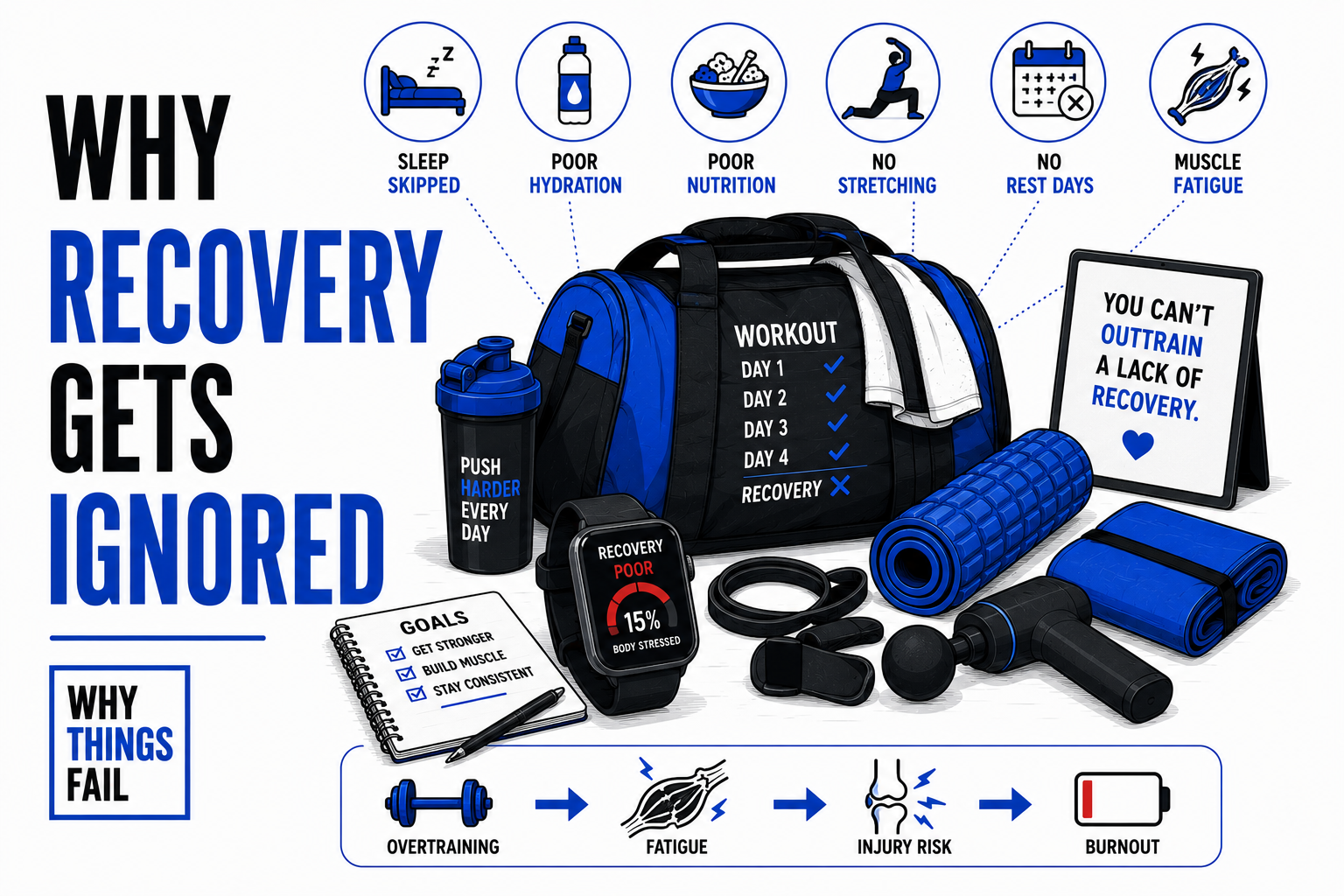
Training Without Recovery Creates Chronic Fatigue
Exercise breaks down muscle tissue.
Recovery rebuilds it.
This balance is often misunderstood.
Many people believe that increasing training frequency automatically increases muscle growth.
Instead, excessive training without adequate recovery gradually reduces the body’s ability to adapt.
Sleep quality declines.
Performance decreases.
Training intensity falls.
Muscle protein synthesis becomes less effective because the body remains in a prolonged state of fatigue.
Recovery is therefore not the opposite of training.
It is part of the training process itself.
Ignoring this principle creates a system where effort increases while progress declines.
Nutrition Often Becomes The Hidden Limiting Factor
Many individuals train consistently yet fail to provide the nutritional support required for muscle growth.
Protein intake remains insufficient.
Daily calorie intake fluctuates significantly.
Meals lack consistency.
Hydration receives little attention.
Without adequate energy and amino acids, the body cannot efficiently repair and enlarge muscle fibres regardless of training quality.
This explains why exercise alone rarely produces maximum muscle growth.
Training provides the signal.
Nutrition provides the building materials.
Removing either element weakens the entire system.
Information Overload Creates Poor Decisions
Fitness information has never been more accessible.
Thousands of workout plans, nutrition guides and expert opinions are available within seconds.
Paradoxically, this abundance of information often creates confusion rather than clarity.
People constantly compare different training philosophies.
One expert recommends high volume.
Another promotes low volume.
Some advocate training each muscle once per week.
Others recommend greater frequency.
Instead of following one structured programme long enough to evaluate its effectiveness, many individuals continually switch methods.
This behaviour creates inconsistency disguised as optimisation.
The problem is not a lack of information.
It is an inability to filter information and commit to a sustainable process.
Motivation Is Less Reliable Than Habit
Many people believe successful muscle building depends on remaining motivated.
Motivation is valuable, but it fluctuates.
Some days enthusiasm is naturally high.
Other days it disappears completely.
Those who rely exclusively on motivation often train inconsistently because their behaviour changes with their emotions.
Habit formation creates a more reliable system.
When exercise becomes part of a structured routine rather than an emotional decision, consistency improves.
Over time, disciplined habits produce far greater results than occasional bursts of motivation.
This explains why muscle building often succeeds for individuals who appear ordinary but remain remarkably consistent.
They rely less on inspiration and more on repetition.
Their success reflects behavioural systems rather than exceptional genetics or extraordinary willpower.
Warning Signs
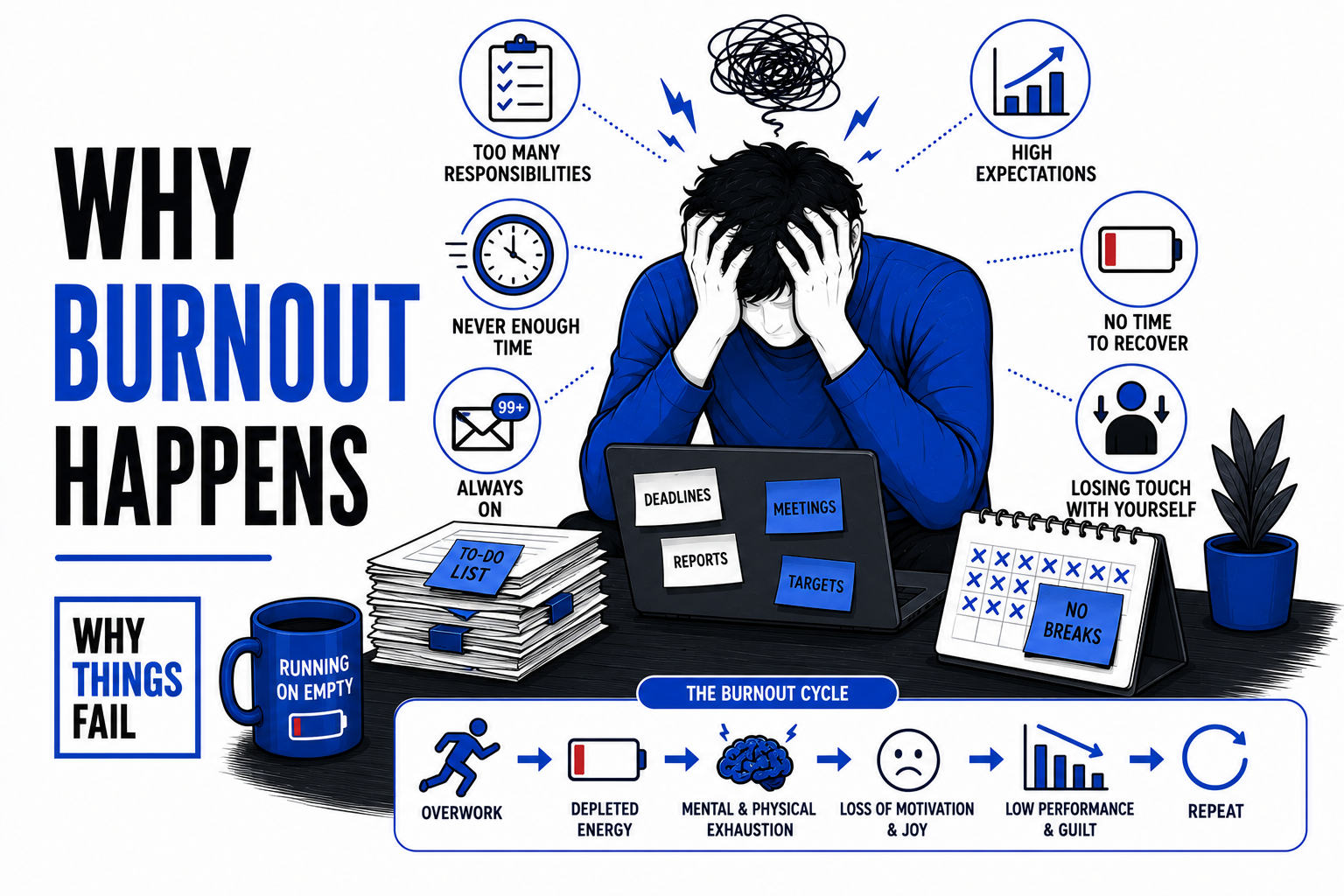
Muscle building rarely fails without warning. The signs usually appear long before progress completely stops, but they are often dismissed because they develop gradually rather than suddenly.
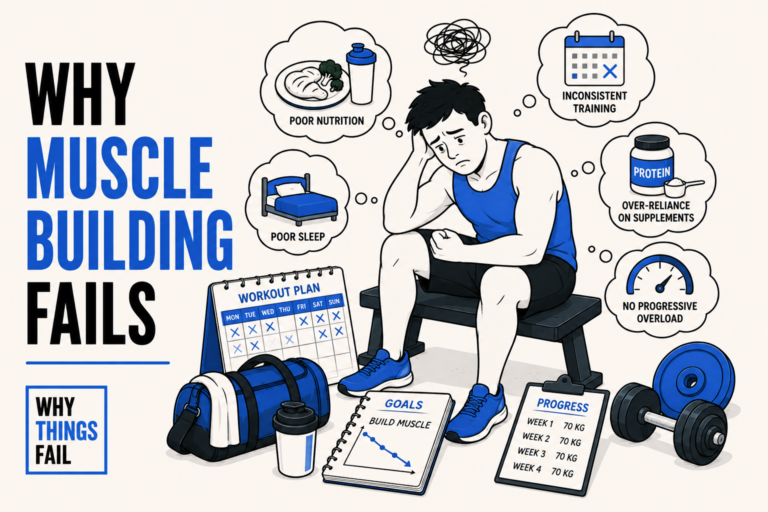
One warning sign is lifting the same weights for months without measurable improvement. This suggests that progressive overload has stalled, meaning the muscles are no longer receiving a stronger stimulus to adapt.
Another warning sign is constant muscle soreness and declining workout performance. Many people mistake persistent fatigue for productive training, when it often indicates inadequate recovery rather than effective exercise.
Inconsistent eating habits also signal future problems. Missing protein targets, frequently skipping meals or eating too few calories limits the body’s ability to repair damaged muscle tissue after resistance training.
Another overlooked indicator is constantly changing workout programmes. People often believe variety produces better results, but frequent changes prevent the body from adapting to a consistent training stimulus.
Perhaps the clearest warning sign is becoming obsessed with quick results. When every workout is judged by immediate physical changes, frustration replaces patience and short term decisions begin replacing long term planning.
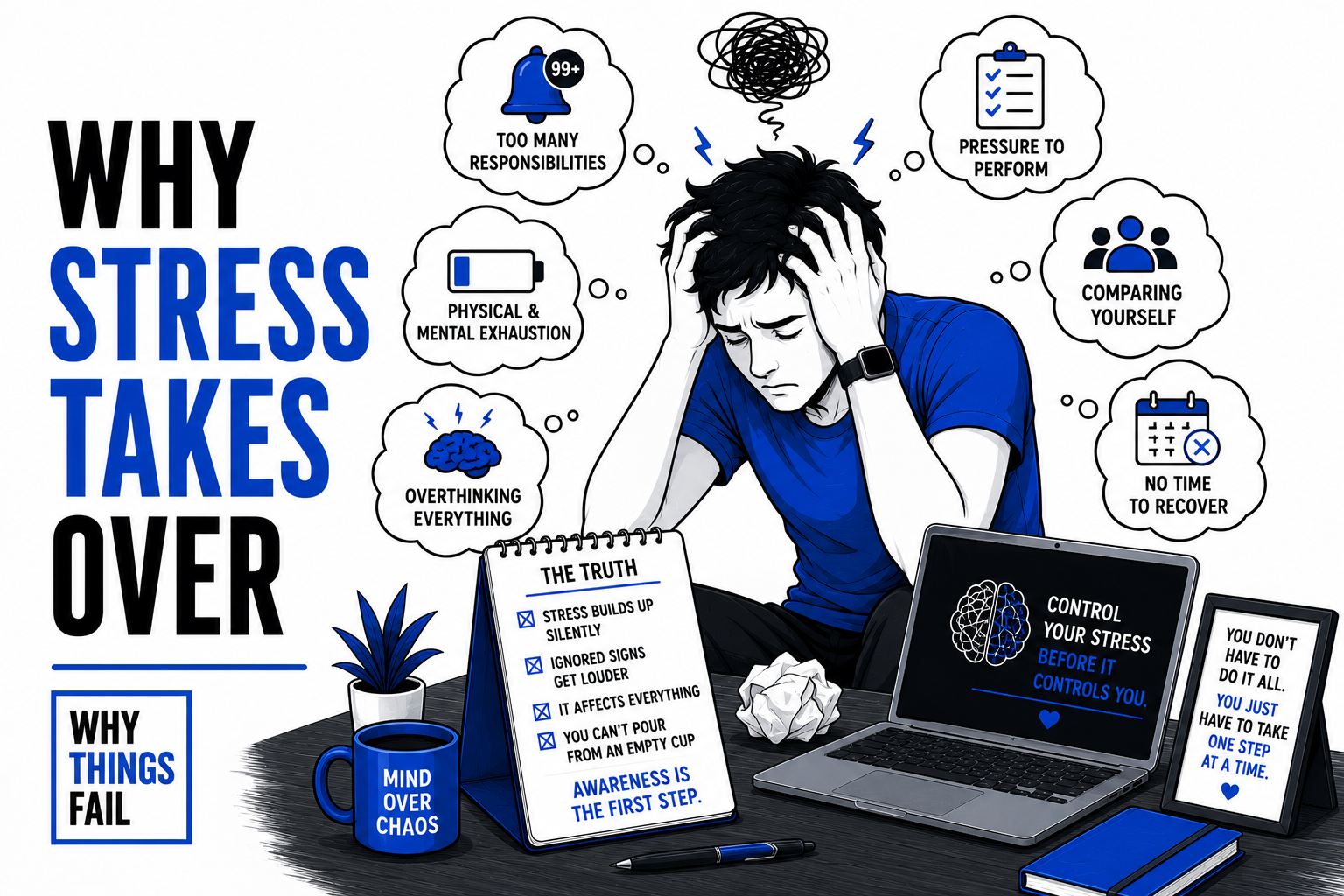
These warning signs are ignored because they rarely produce immediate consequences. Small mistakes accumulate quietly until muscle growth slows enough for people to believe that training no longer works.
What Could Have Prevented It?
Most cases of failed muscle building could have been prevented through better systems rather than greater effort.
The first requirement is consistency. A structured resistance training programme followed for several months produces better results than repeatedly changing routines in search of faster progress.
Progressive overload should guide every training decision. Gradually increasing training intensity, repetitions or total training volume provides muscles with a clear reason to adapt while avoiding unnecessary fatigue.
Recovery deserves equal attention. High quality sleep, adequate rest days and managing overall stress create the biological environment required for muscle protein synthesis and physical adaptation.
Nutrition must support the demands created by training. Consuming sufficient protein, maintaining an appropriate calorie intake and eating consistently provide the raw materials muscles require to recover and grow.
Finally, expectations should reflect biological reality. Muscle growth is measured over months and years rather than days and weeks. Accepting this timeline reduces emotional decision making and encourages long term adherence.
Muscle building succeeds when training, recovery, nutrition and behaviour function as one connected system.
Lessons
Muscle building offers lessons that extend well beyond fitness.
The first lesson is that consistency almost always outperforms intensity. Extraordinary effort applied occasionally produces fewer results than disciplined effort repeated over time.
Another lesson is that visible outcomes often lag behind invisible progress. Strength, movement quality and physiological adaptation frequently improve before significant physical changes become obvious. Those who judge progress too early often abandon effective habits before they produce meaningful results.
The process also demonstrates that systems outperform motivation. Habits built around structured routines continue working when enthusiasm fades, while motivation alone often disappears during difficult periods.
Perhaps the most valuable lesson is that growth depends on balance rather than extremes. Training harder cannot compensate for poor recovery, just as perfect nutrition cannot compensate for inconsistent exercise. Sustainable progress emerges when every part of the system supports the others.
Failure Pattern
The dominant pattern behind muscle building failure is Short Term Thinking combined with Poor Planning and Inconsistent Behaviour.
Most people begin with ambitious goals but underestimate the time required for meaningful muscle growth. As progress naturally slows, impatience encourages unnecessary changes in training, nutrition and expectations.
This pattern mirrors many forms of personal and professional failure. People abandon effective processes because immediate results do not match unrealistic expectations. They seek new methods rather than improving execution.
Muscle building therefore becomes less a test of physical ability and more a test of behavioural consistency.
Hidden Lesson
The greatest obstacle to building muscle is rarely weak genetics.
It is the expectation that visible progress should arrive faster than human biology allows.
Muscle growth is an adaptation to repeated stress applied consistently over time. The body rewards patience rather than urgency. Those who continually interrupt the process through inconsistency, unrealistic expectations or emotional decisions prevent the very adaptation they seek.
The hidden truth is that muscle building often fails because people stop trusting the process long before the process has had enough time to work.
Failure Scorecard
| Area | Score | Explanation |
| Financial Discipline | 7/10 | Consistent investment in quality nutrition and training is often overlooked. |
| Decision Making | 5/10 | Many decisions are influenced by social media trends instead of evidence. |
| Risk Management | 6/10 | Excessive training and inadequate recovery increase the risk of injury and stagnation. |
| Long Term Thinking | 4/10 | Unrealistic expectations often replace patience and consistency. |
| Knowledge | 6/10 | Information is abundant, but understanding is frequently incomplete. |
| Emotional Control | 5/10 | Frustration and impatience often lead to abandoning effective routines. |
| Planning | 5/10 | Many people train without structured progression or measurable goals. |
| Adaptability | 7/10 | Successful individuals adjust intelligently without constantly changing direction. |
Key Takeaways
- Muscle building fails because systems fail, not because effort is lacking.
- Progressive overload is impossible without consistent training.
- Recovery is an essential part of muscle growth rather than a break from progress.
- Nutrition supplies the resources that training alone cannot provide.
- Short term thinking encourages poor decisions that interrupt long term adaptation.
- Habit formation creates more reliable progress than motivation.
- Sustainable muscle growth depends on balancing training, recovery and nutrition.
- Patience is a biological requirement rather than a personality trait.
Frequently Asked Questions
Why does muscle building fail even when I train regularly?
Training alone is not enough. Inadequate recovery, insufficient protein intake, inconsistent calorie consumption, poor sleep and lack of progressive overload can all prevent muscle growth despite regular exercise.
What is the biggest mistake people make when trying to build muscle?
The most common mistake is expecting rapid results. This often leads to constantly changing workout programmes, increasing training volume unnecessarily or abandoning effective routines before meaningful adaptation occurs.
How important is nutrition for muscle growth?
Nutrition is fundamental. Resistance training creates the stimulus for growth, while protein, calories and essential nutrients provide the resources required for muscle repair and muscle protein synthesis.
Does lifting heavier weights always build more muscle?
Not necessarily. Progressive overload is important, but proper exercise technique, sufficient training volume, recovery and consistency all influence muscle hypertrophy. Simply lifting heavier without a structured approach may increase fatigue without improving results.
Can poor sleep affect muscle building?
Yes. Sleep plays a critical role in recovery, hormone regulation and muscle protein synthesis. Chronic sleep deprivation reduces the body’s ability to recover from resistance training and slows long term muscle growth.
Conclusion
Muscle building does not usually fail because the human body is incapable of change. It fails because biological adaptation depends on a series of connected behaviours that are easy to interrupt but difficult to maintain. Training, nutrition, recovery and consistency must work together for growth to occur.
Understanding this shifts the focus away from searching for perfect workouts and towards building sustainable systems. The body responds remarkably well to repeated quality decisions, revealing that lasting muscle growth is determined less by extraordinary effort and more by the discipline to repeat ordinary actions for an extraordinary length of time.