Quick Answer
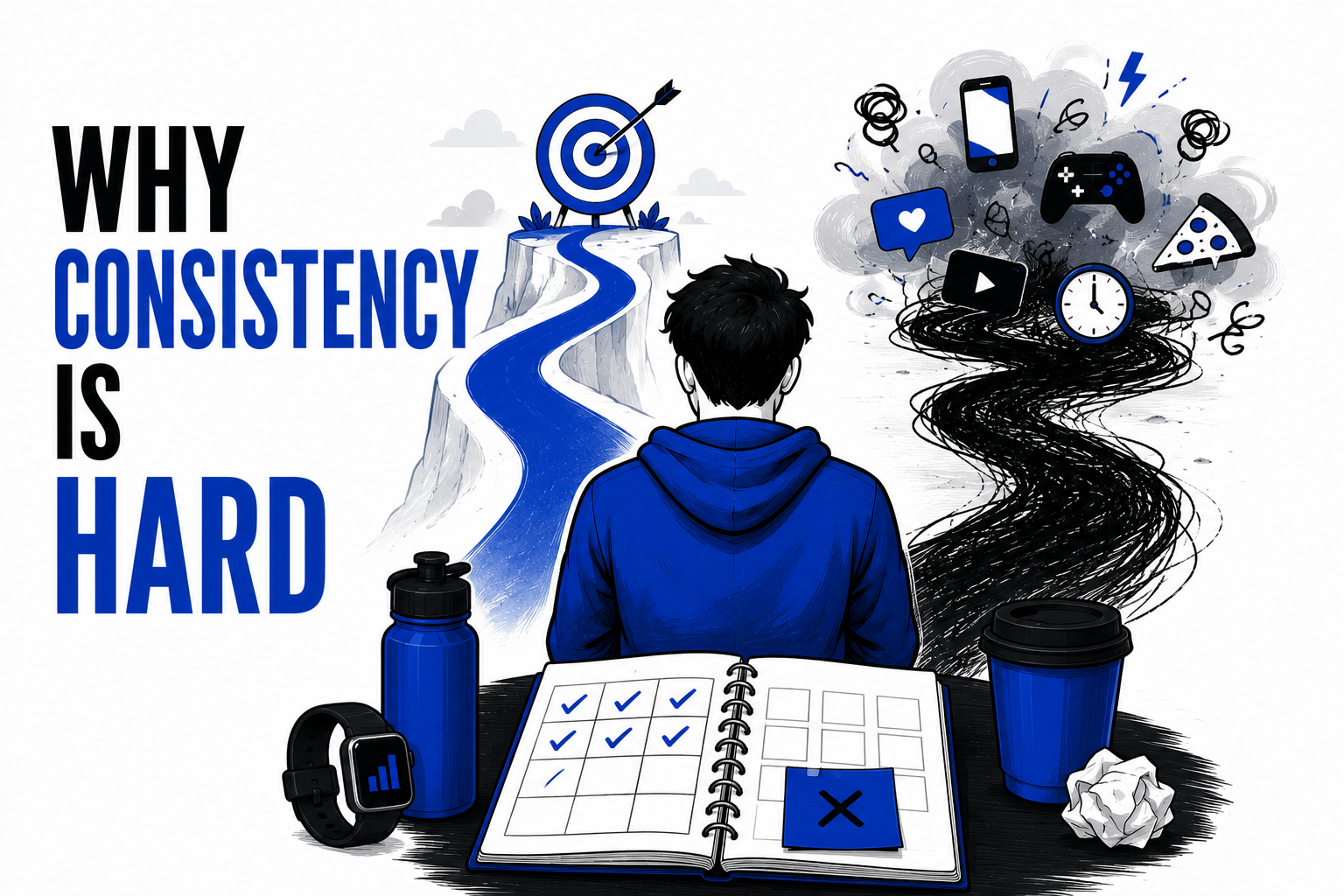
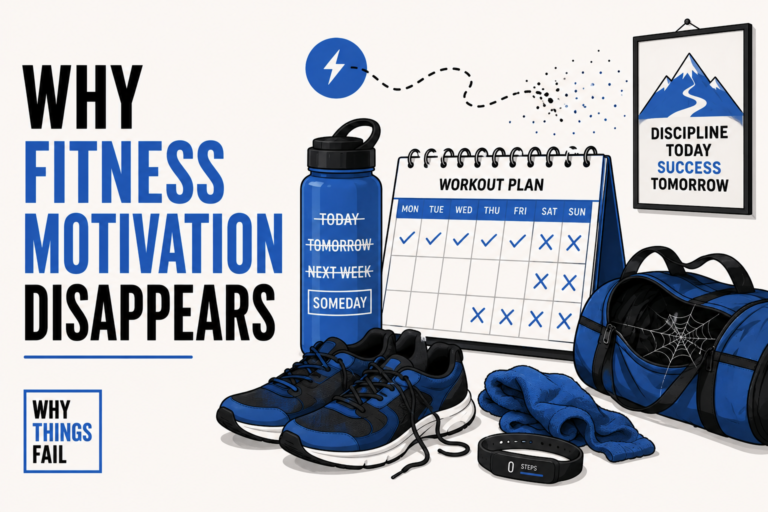
Fitness motivation disappears because motivation is an emotion rather than a reliable system. Most people stop exercising when novelty fades, immediate results fail to appear and daily decisions become influenced by stress, habits, environment and short term thinking instead of consistent routines.
Introduction
Every January, millions of people join gyms, buy workout equipment and promise themselves that this year will be different.
For a few weeks, motivation feels effortless. Workouts become a priority. Healthy meals seem easier to prepare. The future appears full of possibilities.
Then something changes.
The gym visits become less frequent.
One missed workout turns into several.
Healthy eating becomes an occasional choice rather than a daily habit.
Eventually, many people stop exercising altogether, convincing themselves that they simply lacked motivation.
This pattern repeats every year across different countries, age groups and fitness levels.
The question is not whether motivation disappears.
The question is why.
If people genuinely want to become healthier, stronger and more energetic, why do they abandon goals that clearly benefit them?
The common explanation is a lack of discipline.
Behavioural science suggests something far more complex.
Fitness failure is rarely caused by laziness.
It is usually the result of predictable psychological patterns, unrealistic expectations, poorly designed habits and environments that make unhealthy choices easier than healthy ones.
Understanding why fitness motivation disappears requires looking beyond exercise programmes and diet plans.
It requires understanding how the human brain makes decisions under stress, uncertainty and delayed rewards.
What Is Fitness Motivation?
Fitness motivation is the emotional drive that encourages people to begin or continue physical activity.
It is often mistaken for commitment.
The two are not the same.
Motivation is temporary.
It rises after watching an inspiring video, reading a success story or imagining a healthier future.
Commitment depends on behaviour rather than emotion.
People who remain physically active for years are rarely motivated every day.
Instead, they rely on routines, habits and systems that continue functioning even when motivation declines.
Fitness failure therefore is not the disappearance of motivation itself.
It is the inability to continue healthy behaviour once emotional excitement fades.
The Biggest Myth
The biggest myth is simple.
Successful people stay motivated all the time.
This belief creates unrealistic expectations.
When motivation naturally declines, many people assume something is wrong with them.
They believe disciplined individuals wake up every morning excited to exercise.
Research into behavioural psychology shows the opposite.
Even elite athletes experience days when motivation is low.
The difference is not stronger willpower.
The difference is that successful individuals depend less on emotion and more on structured habits, clear routines and consistent decision making.
Motivation may start the journey.
It rarely finishes it.
What Usually Happens?
The pattern is remarkably predictable.
Someone decides to improve their health.
They purchase new training clothes.
They join a gym.
They follow an ambitious workout plan.
The first few weeks feel exciting because progress appears rapid and the experience is new.
Eventually, soreness increases.
Results slow down.
Work becomes busier.
Family responsibilities compete for attention.
Missing one workout no longer feels significant.
Soon another workout is missed.
Without a consistent routine, exercise gradually disappears from daily life.
Most people believe motivation vanished suddenly.
In reality, it declined through dozens of small decisions that slowly weakened the habit.
Why Does Fitness Motivation Disappear?
This is where the real investigation begins.
People rarely quit exercising because they stop wanting better health.
They quit because the human brain naturally prefers immediate comfort over delayed rewards.
Exercise asks the brain to accept discomfort today for benefits that may not become visible for weeks or months.
Human psychology is not naturally designed for that kind of decision.
The Brain Prefers Immediate Rewards
Behavioural economists describe this tendency as present bias.
People naturally place greater value on immediate pleasure than future benefits.
Choosing to remain on the sofa provides instant comfort.
Completing a difficult workout provides immediate fatigue while delaying the reward.
Although exercise improves health, strength, mood and longevity, those benefits accumulate gradually.
The brain struggles to prioritise rewards that cannot be experienced immediately.
This explains why people repeatedly choose short term comfort even when they fully understand the long term consequences.
The problem is not intelligence.
It is how the brain evaluates time.
Motivation Is An Emotion Rather Than A System
One of the biggest mistakes people make is relying entirely on motivation.
Emotions constantly change.
Stress, poor sleep, work pressure and unexpected responsibilities all influence emotional energy.
When motivation becomes the only reason to exercise, every difficult day becomes a reason to skip training.
Successful long term behaviour rarely depends on how people feel.
It depends on systems that reduce the need for daily decision making.
Habits remove negotiation.
Motivation encourages negotiation.
Every time exercise becomes optional, the brain searches for reasons to delay it.
Over months, these small delays become permanent habits.
Unrealistic Expectations Create Disappointment
Modern fitness culture often promises dramatic transformations within a short period.
Social media reinforces this expectation by highlighting extraordinary success stories while hiding years of consistent effort.
People begin exercising expecting rapid weight loss, visible muscle growth or dramatic physical changes.
When progress slows after the first few weeks, disappointment replaces excitement.
Behavioural psychologists refer to this as an expectation gap.
The difference between expected progress and actual progress determines emotional satisfaction.
When expectations become unrealistic, even meaningful progress begins to feel like failure.
People stop because reality does not match the story they imagined.
Identity Is Stronger Than Goals
Many people attempt to change behaviour without changing identity.
They set goals such as losing weight or exercising four times each week.
Goals create direction.
Identity creates consistency.
Someone who still sees themselves as an inactive person must continually force themselves to exercise.
Someone who identifies as an active person experiences less internal resistance because healthy behaviour matches their self image.
Behavioural science consistently shows that identity based habits remain more durable than motivation based habits.
Long term fitness therefore depends less on setting ambitious goals and more on gradually becoming the type of person who naturally values movement, health and consistency.
Decision Fatigue Quietly Reduces Motivation
Every decision consumes mental energy.
By the end of a demanding day, many people have already made hundreds of decisions involving work, family, finances and responsibilities.
Exercise then becomes one more difficult choice.
Decision fatigue makes immediate comfort increasingly attractive.
Skipping one workout appears harmless.
Preparing convenient food feels easier than cooking a balanced meal.
These choices are rarely deliberate acts of giving up.
They are responses to mental exhaustion.
The problem grows because repeated decisions gradually become habits.
Over time, the habit of postponing exercise becomes stronger than the original intention to remain healthy.
Social Environment Shapes Behaviour
People often believe fitness depends entirely on personal determination.
Behavioural research suggests that environment frequently matters more.
Friends who avoid exercise.
Workplaces encouraging long periods of sitting.
Easy access to highly processed food.
Busy schedules.
Poor sleep.
Constant digital distractions.
Each factor slightly increases the effort required to maintain healthy habits.
Individually, these influences appear insignificant.
Together, they create an environment where unhealthy behaviour becomes the easiest option.
This explains why two people with similar motivation often achieve very different outcomes.
The difference is not always determination.
It is often the environment surrounding daily decisions.
Warning Signs
Fitness motivation rarely disappears overnight. It fades through small behavioural changes that gradually weaken commitment until exercise no longer feels like part of daily life.
One warning sign is constantly waiting to “feel motivated” before exercising. This places behaviour under the control of emotion instead of routine. Since emotions naturally fluctuate, consistency becomes impossible.
Another warning sign is setting goals without creating a realistic plan. Many people know what they want to achieve but have no fixed schedule, no defined routine and no system for dealing with busy days. Without structure, exercise becomes optional rather than expected.
Comparing progress with others is another early indicator. Social media often presents unrealistic body transformations and carefully selected success stories. Constant comparison creates frustration, making personal progress appear insignificant even when meaningful improvements are taking place.
All or nothing thinking also signals future failure. Missing one workout leads people to believe the entire routine has failed. Instead of resuming the next day, they wait for another perfect beginning, allowing temporary interruptions to become permanent habits.
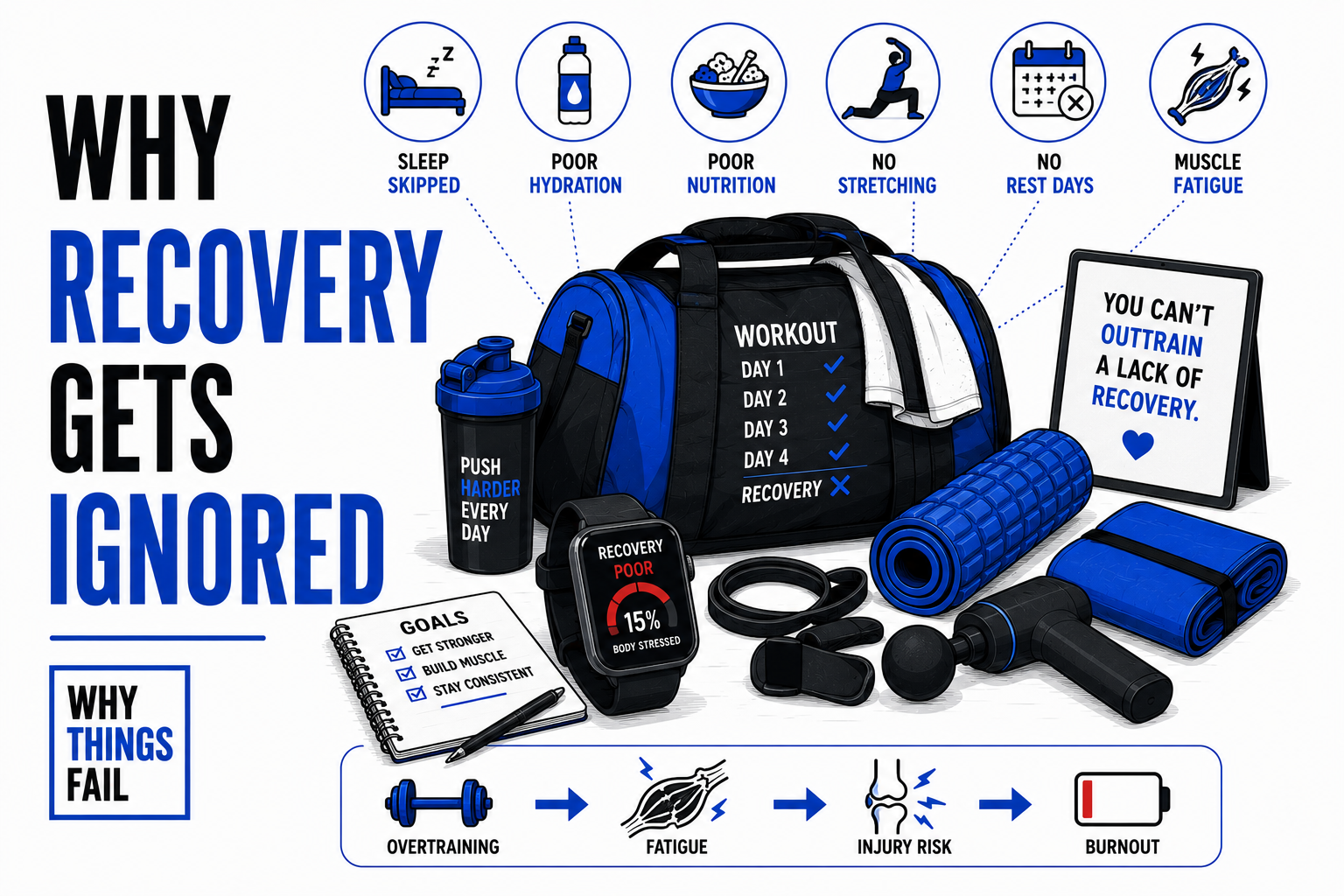
Ignoring recovery is another overlooked warning sign. Poor sleep, chronic stress and physical exhaustion reduce both physical performance and mental energy. Many people interpret this fatigue as a lack of motivation when it is actually a lack of recovery.
These warning signs are often ignored because they appear ordinary. People assume motivation will eventually return without recognising that behaviour is gradually changing in the opposite direction.
What Could Have Prevented It?
Fitness success depends less on increasing motivation and more on reducing the number of decisions required to remain consistent.
Creating fixed routines removes daily negotiation. When exercise occurs at the same time and place, it gradually becomes an automatic behaviour rather than a daily choice.
Setting realistic expectations also prevents disappointment. Sustainable physical change develops gradually. Understanding this reduces frustration during periods when visible progress slows.
Environment plays an equally important role. Preparing healthy meals in advance, reducing distractions, organising workout equipment and surrounding oneself with supportive people all reduce friction. When healthy choices become easier, consistency improves naturally.
Tracking behaviour instead of immediate results also strengthens long term commitment. Weight, body composition and physical appearance change slowly. Daily behaviours such as completing workouts, walking regularly and eating balanced meals provide immediate evidence of progress that remains within personal control.
Perhaps the most important prevention strategy is recognising that missed workouts are normal. Successful people do not remain consistent because they never fail. They remain consistent because temporary setbacks do not become permanent excuses.
Long term health is built through repeated recovery rather than perfect performance.
Lessons
The disappearance of fitness motivation reveals broader lessons about human behaviour and decision making.
The first lesson is that emotion is an unreliable foundation for lasting change. Motivation naturally rises and falls, making habits far more dependable than feelings.
The second lesson is that people rarely fail because they lack knowledge. Most individuals understand that regular exercise, nutritious food and quality sleep improve health. The challenge lies in translating knowledge into consistent behaviour.
Another lesson is that small decisions matter more than dramatic actions. Daily routines shape long term outcomes far more effectively than occasional bursts of intense motivation.
Perhaps the most valuable lesson is that successful behaviour depends on systems rather than willpower. People who create environments supporting healthy choices require less mental effort to remain consistent over time.
Failure Pattern
The dominant pattern behind disappearing fitness motivation is Short Term Thinking combined with Emotional Decision Making.
People begin with excitement and ambitious goals. Early progress reinforces confidence. As novelty fades and results become slower, emotional enthusiasm declines. Without structured habits, exercise gradually loses priority.
This pattern appears far beyond fitness.
Investors abandon long term strategies after temporary losses.
Entrepreneurs quit promising businesses before meaningful growth occurs.
Students stop learning difficult skills when immediate progress slows.
In every situation, short term emotions override long term objectives.
The pattern is remarkably consistent because human psychology naturally values immediate comfort over delayed rewards.
Hidden Lesson
The biggest obstacle to lasting fitness is not a lack of motivation.
It is believing that motivation was ever supposed to carry the journey.
Motivation begins behaviour.
Systems sustain behaviour.
People who depend entirely on emotional enthusiasm unknowingly build routines that disappear as soon as life becomes difficult. Those who build habits, structure and identity continue making healthy decisions even when motivation is absent.
The deeper truth is that successful fitness is not a reflection of stronger willpower.
It is evidence of better behavioural design.
Failure Scorecard
| Area | Score | Explanation |
| Self Discipline | 5/10 | Many people begin strongly but struggle to remain consistent once enthusiasm declines. |
| Decision Making | 6/10 | Daily choices are often influenced by emotion rather than long term priorities. |
| Risk Management | 5/10 | Poor planning increases the risk of abandoning healthy routines during stressful periods. |
| Long Term Thinking | 4/10 | Immediate comfort frequently outweighs future health benefits. |
| Health Knowledge | 7/10 | Most people understand what improves health but struggle to apply that knowledge consistently. |
| Emotional Control | 5/10 | Stress, frustration and disappointment often influence behaviour more than objective progress. |
| Planning | 5/10 | Goals are common but structured systems are often missing. |
| Adaptability | 6/10 | Successful individuals adjust routines when circumstances change instead of abandoning them completely. |
Key Takeaways
- Fitness motivation naturally declines because emotions constantly change.
- Habits are more reliable than motivation for maintaining long term consistency.
- Present bias encourages immediate comfort over future health benefits.
- Unrealistic expectations create disappointment and increase the likelihood of quitting.
- Identity based habits last longer than goal based motivation.
- Environment influences behaviour more than most people realise.
- Missing one workout does not cause failure. Repeatedly abandoning routines does.
- Long term health is created through consistent daily decisions rather than occasional intense effort.
Frequently Asked Questions
Why does fitness motivation disappear after a few weeks?
Motivation often disappears because the excitement of starting something new fades while the rewards of exercise remain delayed. Without strong habits, people naturally return to more comfortable behaviours.
Is it normal to lose motivation to exercise?
Yes. Motivation is an emotion that changes over time. Long term fitness depends on routines and habits rather than feeling motivated every day.
Why do people quit exercising even when they know it is good for them?
Knowledge alone rarely changes behaviour. Stress, present bias, unrealistic expectations, poor planning and environmental influences often outweigh logical understanding.
How can someone stay consistent without motivation?
Consistency improves by creating routines, reducing daily decisions, tracking behaviour instead of immediate results and accepting that occasional setbacks are a normal part of long term progress.
Is discipline more important than motivation?
Discipline supported by simple systems is generally more reliable than motivation because it continues functioning even when emotional enthusiasm disappears.
Conclusion
Fitness motivation disappears not because people stop wanting better health, but because human behaviour naturally favours immediate comfort over distant rewards. The challenge is rarely physical ability. It is the gradual shift from intentional choices to automatic habits that no longer support the original goal.
Understanding this changes the conversation. Lasting fitness is not built by finding endless motivation. It is built by recognising the psychological patterns that cause motivation to fade and replacing them with systems that continue working long after the initial excitement has disappeared.