Quick Answer
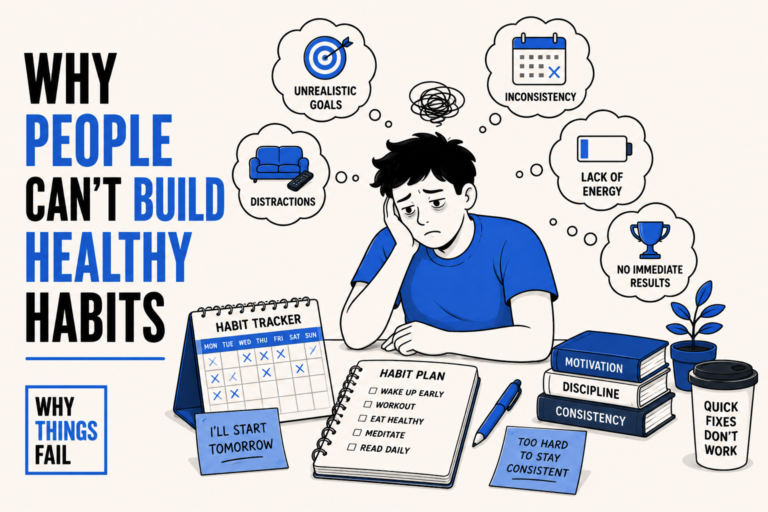
People struggle to build healthy habits because the problem is rarely a lack of motivation. It is usually the result of behavioural biases, emotional decision making, inconsistent routines, poor environmental design and short term thinking. Healthy habits become sustainable when people change the systems that shape their behaviour rather than relying on willpower alone.
Introduction
Almost everyone wants healthier habits.
People want to exercise regularly, eat nutritious food, sleep better, reduce screen time and become more productive. Every year millions promise themselves that this time will be different. They buy fitness equipment, download habit tracking apps, join gyms and create ambitious daily routines.
Yet within weeks many abandon those plans.
This pattern has repeated across generations despite greater access to health information, scientific research and digital tools than ever before.
The obvious explanation is that people lack discipline.
The deeper explanation is far more complex.
Healthy habits are not simply the result of good intentions. They emerge from a combination of psychology, environment, incentives and repeated decision making. Human behaviour is influenced by emotions, social expectations, cognitive biases and immediate rewards that often conflict with long term wellbeing.
Understanding why people cannot build healthy habits requires moving beyond motivation. It requires examining why intelligent people repeatedly choose short term comfort over long term health even when they understand the consequences.
The question is not why people know what to do.
The question is why they struggle to do what they already know.
What Is Habit Failure?
Habit failure does not mean occasionally missing a workout or eating an unhealthy meal.
Everyone experiences setbacks.
Habit failure occurs when healthy behaviours never become consistent enough to form part of everyday life. People repeatedly start strong but gradually return to old routines despite genuine intentions to change.
This is not simply a health problem.
It is a behavioural problem.
Whether someone is trying to exercise, save money, improve productivity or reduce stress, the underlying challenge remains remarkably similar. Long term success depends on consistently repeating small actions despite uncertainty, discomfort and delayed rewards.
The failure is therefore not the absence of knowledge.
It is the inability to convert knowledge into sustained behaviour.
The Biggest Myth
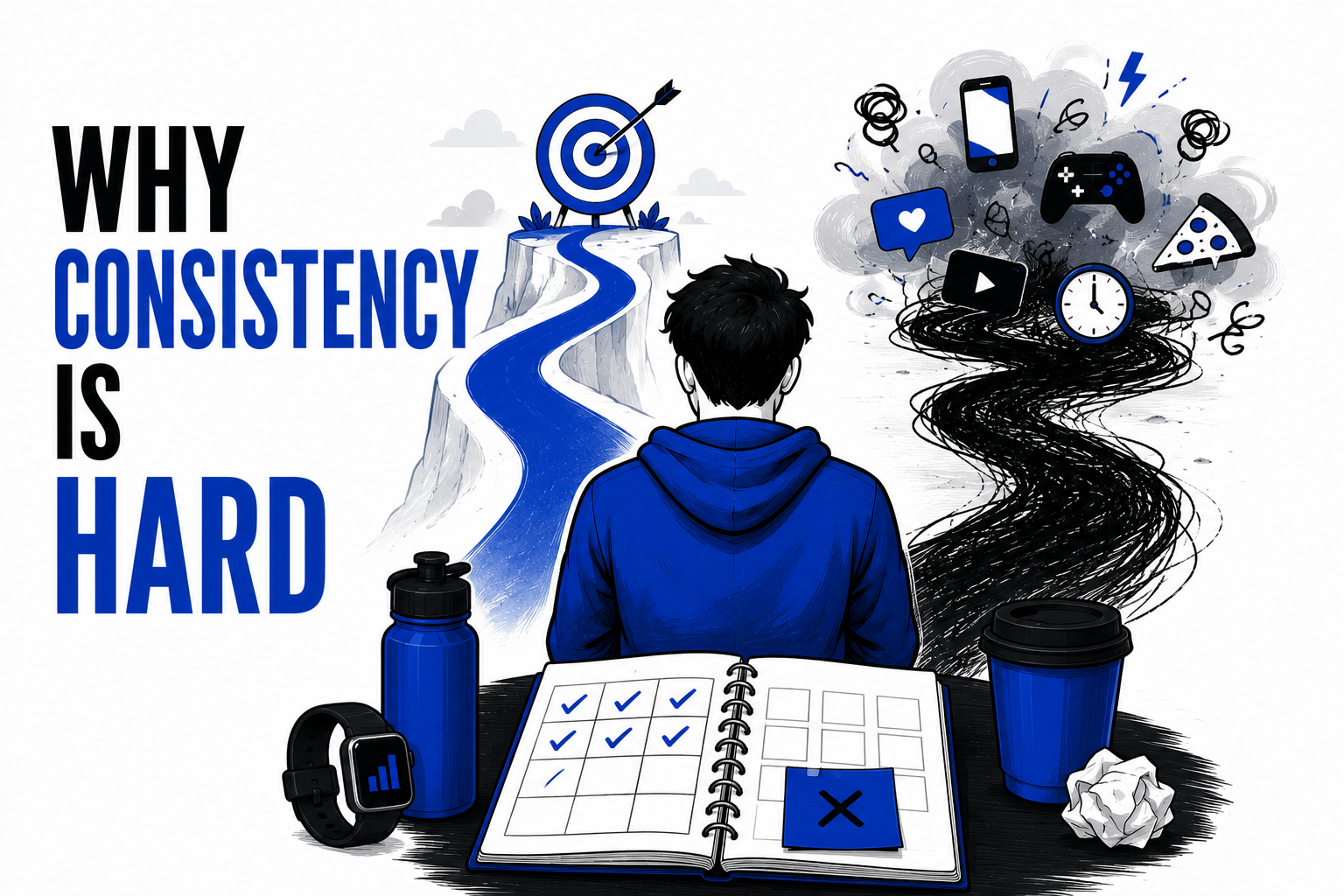
The most common belief is that people fail to build healthy habits because they lack willpower.
This explanation is appealing because it appears simple.
If someone repeatedly skips exercise or chooses unhealthy food, it is easy to conclude that they simply need greater self discipline.
Behavioural science suggests otherwise.
Willpower is a limited mental resource that changes throughout the day. Stress, fatigue, emotional pressure and decision overload all reduce the ability to make consistent choices.
People do not fail because they are weak.
They often fail because they expect motivation to remain constant while their environment continuously encourages the opposite behaviour.
Healthy habits are rarely built through extraordinary determination.
They are built through systems that make positive choices easier and unhealthy choices more difficult.
What Usually Happens?
The pattern is surprisingly predictable.
Someone becomes inspired by a new year, a health scare or an important life event.
They create ambitious goals.
They decide to wake up early, exercise every day, eliminate processed food and completely transform their lifestyle.
The first week feels exciting.
Progress creates optimism.
Soon daily responsibilities return.
Work becomes stressful.
Energy declines.
One missed workout becomes two.
Healthy meals become convenient takeaway food.
Eventually guilt replaces enthusiasm.
The person concludes that they lacked motivation and promises to try again later.
The cycle repeats because the strategy focused on enthusiasm rather than sustainable behaviour.
Why Does It Happen?
Healthy habits rarely fail because people make one poor decision.
They fail because many small psychological forces gradually pull behaviour away from long term goals.
The human brain evolved to prioritise immediate survival rather than distant rewards. As a result, choices that provide instant comfort often feel more attractive than behaviours whose benefits may not appear for weeks or months.
Understanding these psychological mechanisms reveals why habit failure is so common.
Present Bias Prioritises Immediate Rewards
One of the strongest behavioural biases affecting habit formation is present bias.
People naturally place greater value on immediate rewards than future benefits.
Eating unhealthy food provides pleasure within minutes.
Regular exercise may require weeks before noticeable improvements appear.
Watching another episode of a television series delivers immediate entertainment.
Going to bed earlier offers benefits that may only become visible the following day.
The brain consistently favours choices that produce instant satisfaction.
This does not indicate poor character.
It reflects how human decision making has evolved.
Healthy habits ask people to invest effort today for rewards that remain uncertain and delayed. That makes unhealthy alternatives feel disproportionately attractive even when people understand the long term consequences.
Habit Formation Depends More On Environment Than Motivation
Many people believe successful individuals possess extraordinary self control.
Research into behavioural psychology suggests something different.
Environment often influences behaviour more powerfully than motivation.
A kitchen filled with unhealthy snacks increases temptation regardless of personal intentions.
A mobile phone beside the bed encourages late night scrolling.
A workplace that rewards long hours while ignoring recovery discourages healthy routines.
People frequently blame themselves for lacking discipline when the real problem is that their environment constantly promotes unhealthy choices.
Behaviour follows the path of least resistance.
If unhealthy behaviour requires less effort than healthy behaviour, consistency becomes increasingly difficult.
Emotional Decision Making Overrides Rational Intentions
Most healthy habits are planned during calm moments.
They are abandoned during emotional ones.
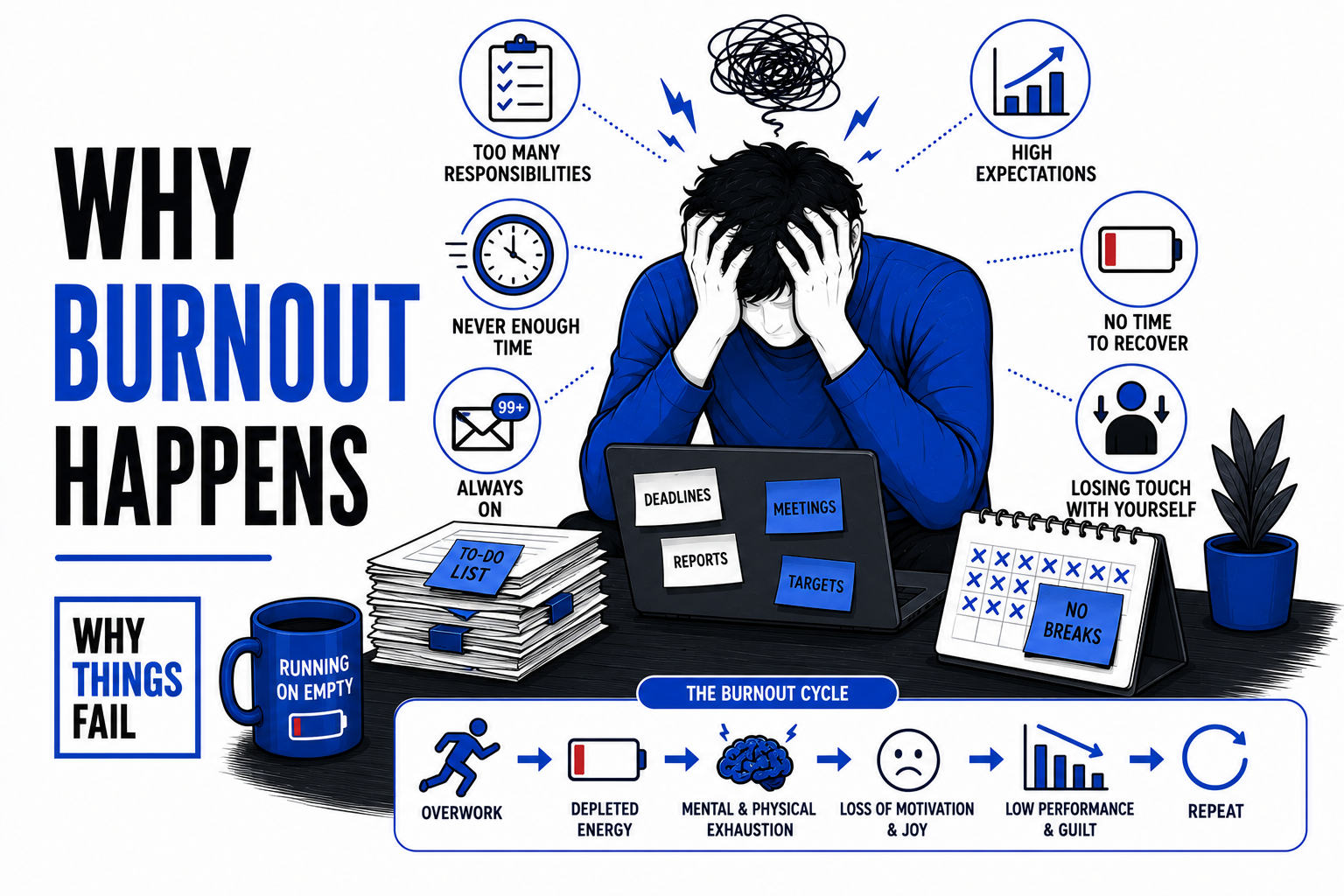
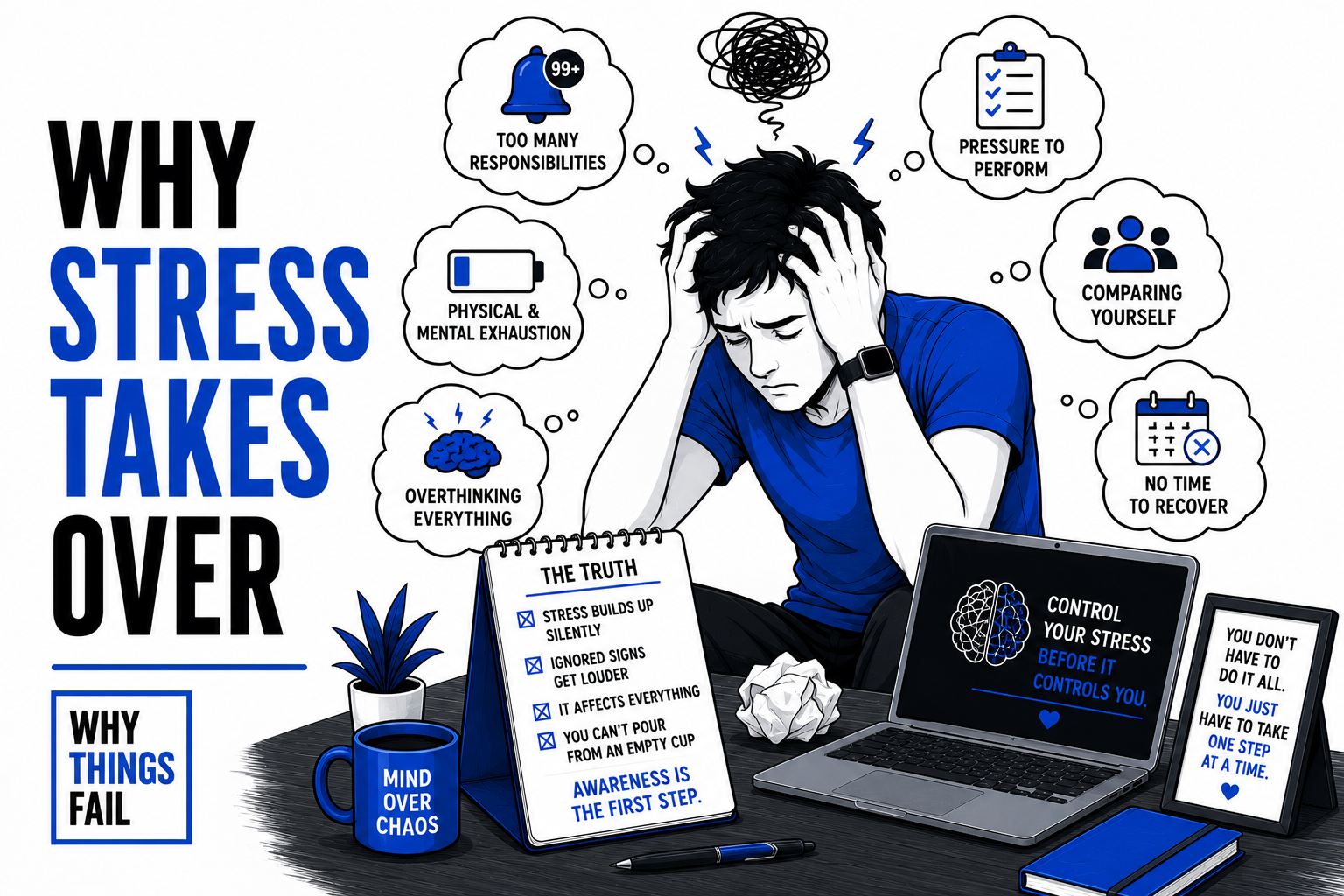
Stress, anxiety, frustration and mental exhaustion change how people evaluate decisions.
After a demanding day, the brain seeks relief rather than improvement.
Comfort food appears more appealing.
Exercise feels less important.
Sleep is delayed in favour of entertainment because it provides immediate emotional escape.
These decisions rarely result from logical analysis.
They are attempts to regulate emotions.
This explains why habit formation cannot be understood purely through nutrition, exercise science or productivity advice.
Emotional regulation plays an equally important role.
Decision Fatigue Weakens Consistency
Every day requires hundreds of decisions.
People choose what to wear, what to eat, how to respond to messages, which tasks deserve attention and how to manage competing responsibilities.
As mental energy declines, decision quality often declines with it.
Behavioural economists describe this as decision fatigue.
Healthy habits become vulnerable because they require repeated conscious choices.
The person who intended to cook a healthy dinner in the morning may order fast food in the evening simply because making another decision feels mentally exhausting.
The problem is rarely knowledge.
It is depleted cognitive capacity.
Short Term Thinking Creates Long Term Failure
Healthy habits produce gradual results.
Modern life rewards immediate outcomes.
Social media celebrates rapid transformations.
Marketing promotes quick solutions.
Many people therefore expect visible progress within days.
When results develop slowly, motivation declines.
Behaviour becomes inconsistent.
The irony is that healthy habits often fail just before meaningful progress would have become noticeable.
Impatience therefore becomes one of the greatest obstacles to long term change.
People abandon systems that are quietly working because the rewards have not yet become obvious.
Social Influence Shapes Behaviour More Than People Realise
Human behaviour rarely develops in isolation.
Family traditions, workplace culture, friendships and online communities all influence daily choices.
If social gatherings revolve around unhealthy food, maintaining healthy eating becomes more difficult.
If colleagues celebrate working late instead of prioritising sleep and recovery, unhealthy routines become normal.
People naturally adapt to the expectations of those around them because belonging has always been a powerful human need.
This explains why habit failure is often a social problem rather than an individual one.
Behaviour spreads through groups.
Healthy habits become easier when supportive environments reinforce positive choices instead of resisting them.
Warning Signs
Habit failure rarely begins with a dramatic event. It develops through small behavioural shifts that slowly weaken consistency until healthy routines disappear altogether.
One early warning sign is relying entirely on motivation. Motivation naturally rises and falls, yet many people expect it to remain constant. When enthusiasm fades, healthy behaviours stop because no supporting system exists.
Another warning sign is setting unrealistic expectations. People often attempt to transform every aspect of their lifestyle at once. They change their diet, exercise routine, sleep schedule and productivity habits within the same week. This creates mental overload instead of sustainable progress.
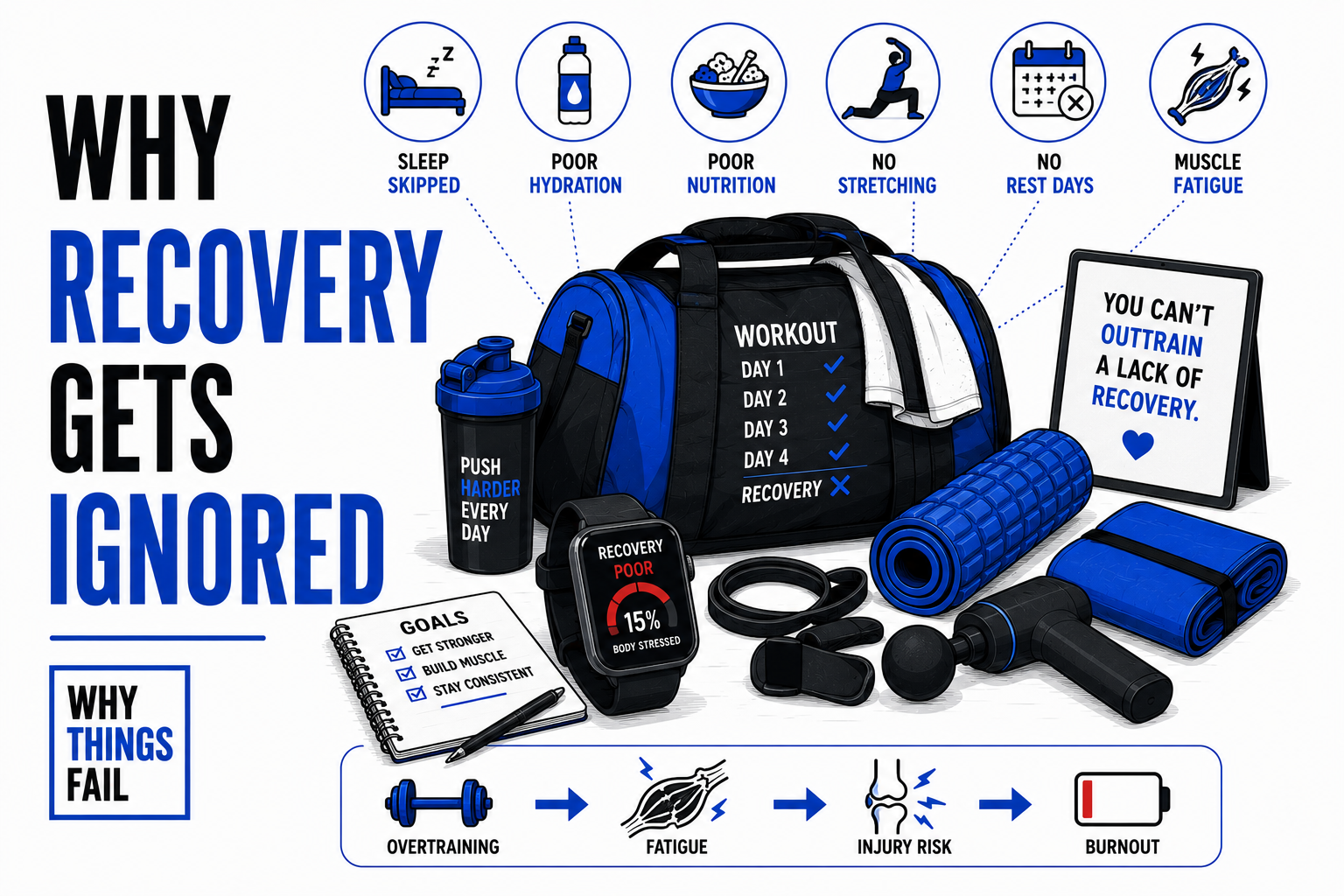
Ignoring the environment is another common mistake. Keeping unhealthy food within easy reach, spending excessive time on distracting digital platforms or remaining in environments that encourage poor choices makes healthy habits unnecessarily difficult.
Negative self talk is equally damaging. Missing one workout or eating one unhealthy meal becomes evidence that the entire effort has failed. This mindset encourages people to abandon long term goals because they mistake temporary setbacks for permanent failure.
Perhaps the clearest warning sign is inconsistency without reflection. When people repeatedly stop and restart the same habits without asking why, they continue repeating the same behavioural patterns while expecting different outcomes.
These warning signs are often ignored because they produce no immediate consequences. The effects accumulate quietly until unhealthy routines become deeply established.
What Could Have Prevented It?
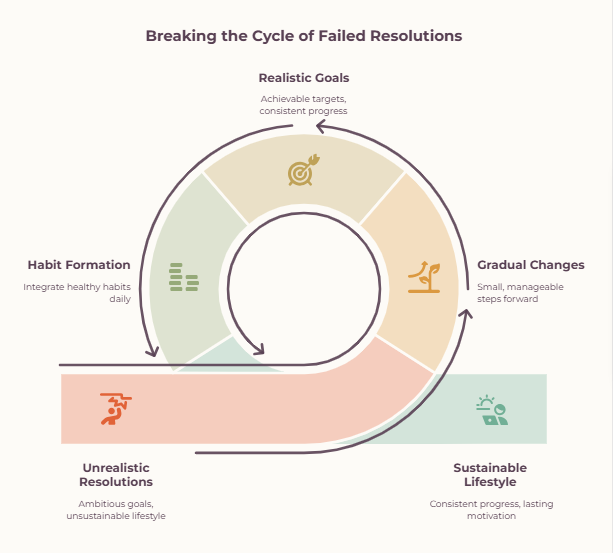
Healthy habits are rarely built through stronger willpower alone.
They are built through better systems.
One realistic improvement is reducing the number of decisions required each day. Preparing meals in advance, scheduling exercise at a fixed time and creating consistent morning and evening routines remove unnecessary choices that often lead to inconsistency.
Designing environments that encourage healthy behaviour is equally important. People naturally repeat behaviours that are convenient. Making healthy food easily available, reducing digital distractions and surrounding themselves with supportive social influences increases the likelihood of consistent action.
Another important change is focusing on identity instead of outcomes. People who view themselves as healthy individuals tend to make decisions that reinforce that identity. Behaviour becomes an expression of who they believe they are rather than a temporary challenge requiring constant motivation.
Accepting gradual progress also prevents disappointment. Healthy habits rarely produce dramatic results within days. Sustainable improvement comes from repeated small actions whose benefits become visible over months rather than weeks.
Finally, reviewing behaviour instead of judging it encourages continuous learning. Instead of asking why they failed, people benefit more from asking what interrupted their routine and how their environment or decision making process can improve.
The objective is not perfection.
It is consistency that survives ordinary life.
Lessons
Healthy habits reveal an important truth about human behaviour.
People rarely fail because they do not understand what is healthy.
They fail because knowing and consistently doing are fundamentally different challenges.
Another lesson is that behaviour follows systems more reliably than intentions. Good intentions disappear under stress unless supported by routines that reduce dependence on motivation.
The investigation also shows that immediate rewards frequently overpower distant benefits. Human psychology naturally favours present comfort over future wellbeing, making healthy habits difficult unless immediate behaviour aligns with long term goals.
Perhaps the most valuable lesson is that lasting change depends on improving decision making rather than increasing effort. Small improvements repeated consistently often create greater results than ambitious plans that cannot be maintained.
Failure Pattern
The dominant pattern behind habit failure is Short Term Thinking combined with Emotional Decision Making.
People repeatedly choose immediate comfort over delayed benefits because the human brain naturally responds more strongly to present rewards than future outcomes.
Stress encourages emotional eating.
Mental fatigue encourages inactivity.
Social pressure encourages unhealthy choices.
Each decision appears insignificant on its own, yet together they create behavioural patterns that gradually shape long term health.
This pattern extends beyond physical wellbeing. The same psychological tendencies influence personal finance, investing, education and business. Individuals frequently sacrifice future benefits for immediate satisfaction because short term rewards feel more certain than distant outcomes.
The behaviour changes.
The underlying psychology remains remarkably consistent.
Hidden Lesson
The greatest obstacle to healthy habits is not laziness.
It is the expectation that motivation should carry people through everyday life.
Motivation is temporary.
Systems endure.
People often believe they failed because they lacked discipline. The deeper reality is that their daily environment, emotional state and decision making process quietly shaped behaviour long before they noticed the outcome.
Healthy habits are therefore less about becoming a different person and more about creating conditions where good decisions become the easiest decisions.
Failure Scorecard
| Area | Score | Explanation |
| Financial Discipline | 7/10 | People often invest in health but struggle to maintain consistent behaviour. |
| Decision Making | 5/10 | Short term comfort frequently outweighs long term wellbeing. |
| Risk Management | 6/10 | Many underestimate the cumulative risk of repeated unhealthy choices. |
| Long Term Thinking | 4/10 | Immediate gratification often takes priority over future health benefits. |
| Knowledge | 8/10 | Most people understand basic health principles but struggle with consistent execution. |
| Emotional Control | 4/10 | Stress and emotional pressure regularly influence daily habits. |
| Planning | 5/10 | Goals are often ambitious, but practical systems are missing. |
| Adaptability | 6/10 | Many people restart after failure but rarely adjust the systems causing repeated setbacks. |
Key Takeaways
- Healthy habits fail because systems are weaker than intentions.
- Motivation is temporary, while routines create lasting behaviour.
- Present bias encourages immediate comfort over future wellbeing.
- Emotional decision making often overrides logical planning.
- Small daily choices create long term outcomes.
- Environment influences behaviour more than willpower alone.
- Consistency matters more than occasional perfection.
- Sustainable habits develop through systems that reduce unnecessary decisions.
- Understanding behaviour is more valuable than blaming yourself.
Frequently Asked Questions
Why can’t people build healthy habits?
People struggle because behaviour is influenced by psychology, emotions, environment and present bias rather than knowledge alone. Long term consistency requires effective systems instead of relying only on motivation.
Is lack of motivation the biggest reason habits fail?
No. Motivation naturally changes over time. Most healthy habits fail because they depend entirely on motivation instead of structured routines and supportive environments.
Why do people return to unhealthy habits?
Old habits usually provide immediate comfort, require less effort and are reinforced by familiar environments. Without changing those conditions, previous behaviours often return.
How does psychology affect healthy habits?
Psychological factors such as present bias, emotional regulation, decision fatigue and social influence shape daily behaviour. These factors frequently encourage short term comfort over long term wellbeing.
Why is consistency more important than intensity?
Healthy habits create results through repetition. Small behaviours performed consistently over months usually produce greater lasting benefits than intense efforts that cannot be maintained.
Conclusion
People cannot build healthy habits because human behaviour is shaped by far more than knowledge or determination. Every daily decision reflects the interaction between psychology, environment, emotion and immediate incentives, making lasting change far more complex than simply trying harder.
Understanding habit failure through this deeper perspective shifts the focus away from blaming individuals and towards improving the systems that influence behaviour. Lasting health is rarely determined by one powerful decision. It is quietly built or gradually lost through the ordinary choices that become routine long before their consequences become visible.