Quick Answer
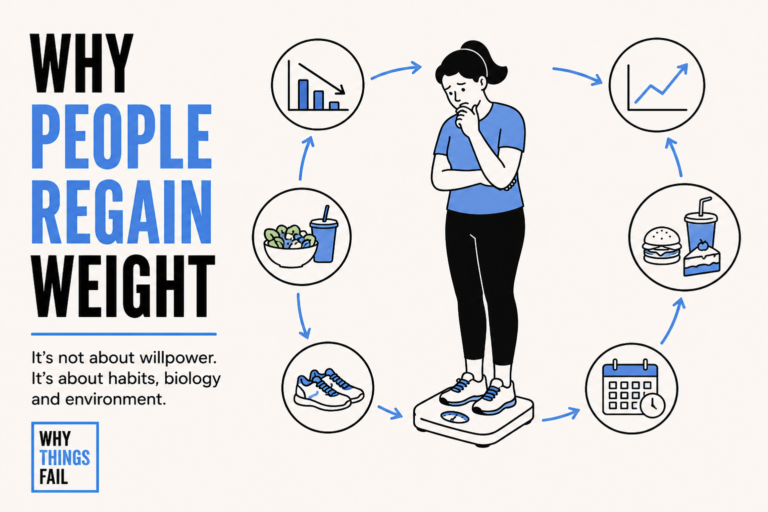
People regain weight because lasting weight management depends on behaviour, biology and sustainable habits rather than temporary diets. Emotional eating, unrealistic expectations, metabolic adaptation, poor planning and returning to old routines make weight regain far more predictable than most people realise.
Introduction
Losing weight is often celebrated as the hardest part of improving health.
Yet research and real world experience suggest something far more surprising.
For many people, losing weight is only the beginning of the challenge.
Months or even years after reaching their target weight, many gradually regain some or all of the weight they worked so hard to lose. Some even become heavier than they were before starting their weight loss journey.
This repeated pattern has created a common belief that diets simply do not work.
The reality is far more complex.
Weight regain is rarely caused by one poor decision or one unhealthy meal. Instead, it develops through a combination of biological responses, psychological habits, environmental influences and behavioural patterns that quietly accumulate over time.
Understanding why people regain weight requires looking beyond calories and exercise. It requires examining how the human brain responds to reward, stress, routine and long term change.
The question is not simply why people lose motivation.
The deeper question is why lasting weight management proves so difficult even for people who genuinely want to succeed.
What Is Weight Regain?
Weight regain occurs when a person recovers body weight after successfully losing it through dieting, exercise or another weight management programme.
Some fluctuation is completely normal. Body weight naturally changes because of hydration, muscle mass and daily eating patterns.
The concern begins when temporary weight loss gradually reverses until previous habits and previous weight return.
This does not necessarily mean the original weight loss method failed.
More often, it means the behaviours responsible for losing weight were difficult to maintain once everyday life resumed.
Weight regain is therefore less about one event and more about the gradual return of old routines that slowly outweigh healthier ones.
The Biggest Myth
One of the most common beliefs is that people regain weight because they lack willpower.
This explanation sounds simple.
It is also incomplete.
If willpower alone determined long term success, most people who lost significant weight would maintain it permanently.
Human behaviour rarely works that way.
Weight management depends on hundreds of decisions made every week. Food choices, sleep quality, stress levels, physical activity, social situations and daily routines all influence those decisions.
Willpower is a limited mental resource.
Habits, routines and environments influence behaviour far more consistently than motivation alone.
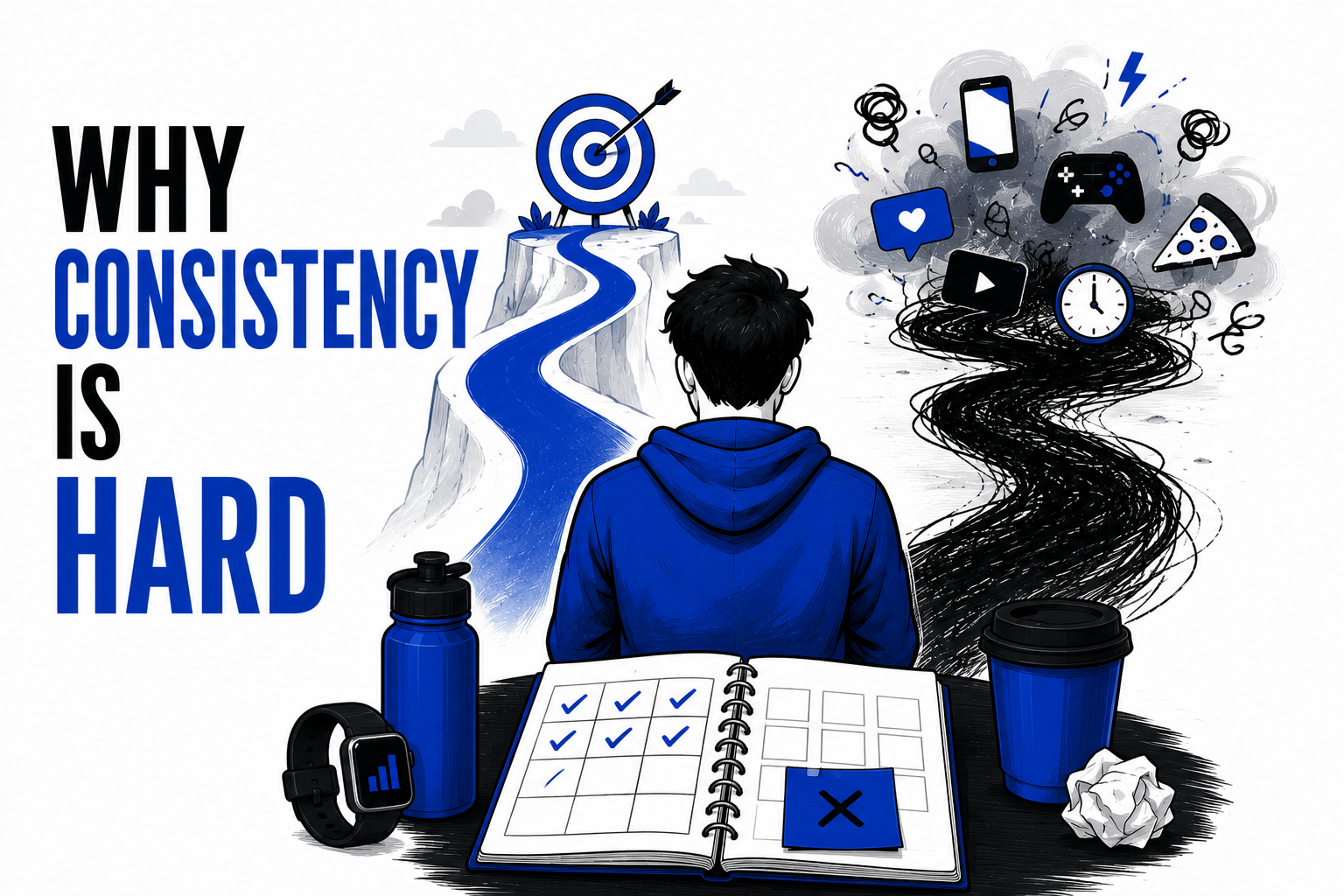
People rarely regain weight because they suddenly stop caring about their health.
More often, they return to familiar behaviours that gradually become automatic again.
What Usually Happens?
The pattern is remarkably consistent.
A person decides to lose weight after a health concern, major life event or personal goal.
They follow a strict diet.
Exercise increases.
Weight begins to fall.
Early success creates excitement and confidence.
Eventually the target weight is reached.
At this point something changes.
The urgency that supported the original effort begins to disappear.
Strict eating habits gradually become more flexible.
Exercise becomes less consistent.
Busy schedules return.
Old food choices quietly reappear.
Small increases in daily calorie intake seem harmless because they produce no immediate consequences.
Weeks become months.
Months become years.
Without noticing the gradual change, body weight slowly returns.
The process rarely feels dramatic.
It feels ordinary.
That is precisely why it is so difficult to recognise before significant weight has already been regained.
Why Do People Regain Weight?
Understanding weight regain requires moving beyond the traditional explanation of eating too much and exercising too little.
Those behaviours matter.
The deeper question is why they return after people have already demonstrated they can successfully lose weight.
The answer lies in the interaction between biology, psychology and environment.
The Brain Prefers Familiar Habits
Human behaviour is strongly influenced by habits.
Every repeated action creates mental shortcuts that reduce the effort required to make decisions.
For years, many people develop routines around eating, physical activity, work schedules and social occasions.
These routines become deeply established.
A temporary diet changes behaviour.
It does not automatically replace old habits.
Once the structured programme ends, the brain naturally returns to familiar routines because familiar behaviours require less mental effort.
This explains why maintaining weight loss often feels more difficult than achieving it.
The challenge is no longer losing weight.
The challenge is replacing years of automatic behaviour with healthier routines that become equally automatic.
Emotional Eating Solves Feelings Rather Than Hunger
Food provides more than nutrition.
It also provides comfort, celebration, distraction and stress relief.
Many people unknowingly develop emotional relationships with food long before they become concerned about their weight.
Stress at work.
Family conflict.
Loneliness.
Boredom.
Anxiety.
Celebrations.
Each emotional state becomes associated with eating.
During weight loss, strict dietary rules often suppress these behaviours.
The emotional triggers remain.
When stress eventually increases again, the brain remembers the quickest source of comfort.
Food.
This explains why emotional eating often returns even when people fully understand healthy nutrition.
Knowledge cannot automatically replace emotional coping mechanisms.
Short Term Motivation Cannot Sustain Long Term Behaviour
Many weight loss journeys begin with powerful motivation.
A holiday.
A wedding.
A medical diagnosis.
A personal milestone.
These events create urgency.
Urgency encourages action.
The problem is that urgency naturally declines after the immediate goal is achieved.
Behavioural scientists distinguish between motivation and identity.
Motivation changes constantly.
Identity changes much more slowly.
People who view healthy eating as something they temporarily do often return to previous habits after achieving their goal.
Those who gradually see themselves as people who consistently make healthier choices are more likely to maintain those behaviours over time.
The difference is subtle.
Its long term impact is significant.
Metabolic Adaptation Makes Maintenance More Difficult
The human body is remarkably efficient at protecting itself against prolonged energy shortages.
During weight loss, the body often responds by reducing energy expenditure.
Metabolism becomes more efficient.
Appetite hormones increase.
Feelings of hunger become stronger.
These biological responses developed over thousands of years to improve survival during periods of food scarcity.
Modern weight loss programmes cannot simply override these biological systems.
This means maintaining weight loss often requires continued awareness even after the desired weight has been reached.
The body is not working against health.
It is responding according to biological mechanisms designed for survival.
Modern Environments Encourage Overeating
The environment surrounding food has changed far more rapidly than human biology.
Highly processed foods are inexpensive, widely available and carefully designed to maximise taste and convenience.
Large portion sizes have become normal.
Food delivery services reduce effort.
Advertising constantly promotes indulgence.
Social gatherings frequently revolve around eating.
These environmental incentives encourage consumption throughout the day.
Maintaining healthy habits therefore requires repeatedly making decisions that often conflict with the surrounding environment.
This is not simply a personal challenge.
It is a systems challenge where biology, psychology and modern lifestyles continuously interact.
Success Can Create Complacency
One of the least discussed reasons people regain weight is early success itself.
Reaching a target weight often creates confidence.
Confidence reduces vigilance.
People begin believing occasional unhealthy choices will have little impact.
One dessert becomes several.
One missed workout becomes a missed week.
Small behavioural changes appear insignificant because they produce no immediate consequences.
Behavioural economists describe this as delayed consequences.
The cost of today’s decision is rarely visible tomorrow.
By the time gradual weight gain becomes noticeable, months of small decisions have already accumulated.
Weight regain therefore rarely begins with one unhealthy habit.
It begins with many small compromises that individually appear harmless but collectively change long term outcomes.
Warning Signs
Weight regain rarely happens suddenly. It usually begins with subtle behavioural changes that appear harmless in isolation but gradually reverse months of progress.
One of the earliest warning signs is treating healthy habits as temporary rather than permanent. Once the target weight has been reached, structured meal planning, regular physical activity and mindful eating often become less consistent. The belief that the difficult part is over creates a false sense of security.
Another warning sign is eating in response to emotions instead of physical hunger. Stress, boredom, loneliness and frustration slowly replace genuine hunger as the main reason for eating. Because emotional eating often provides immediate comfort, people rarely recognise it until it becomes a repeated habit.
Reduced self monitoring is another common indicator. Many people stop paying attention to portion sizes, physical activity or body weight after achieving success. Without regular feedback, small behavioural changes remain unnoticed until they produce visible weight gain.
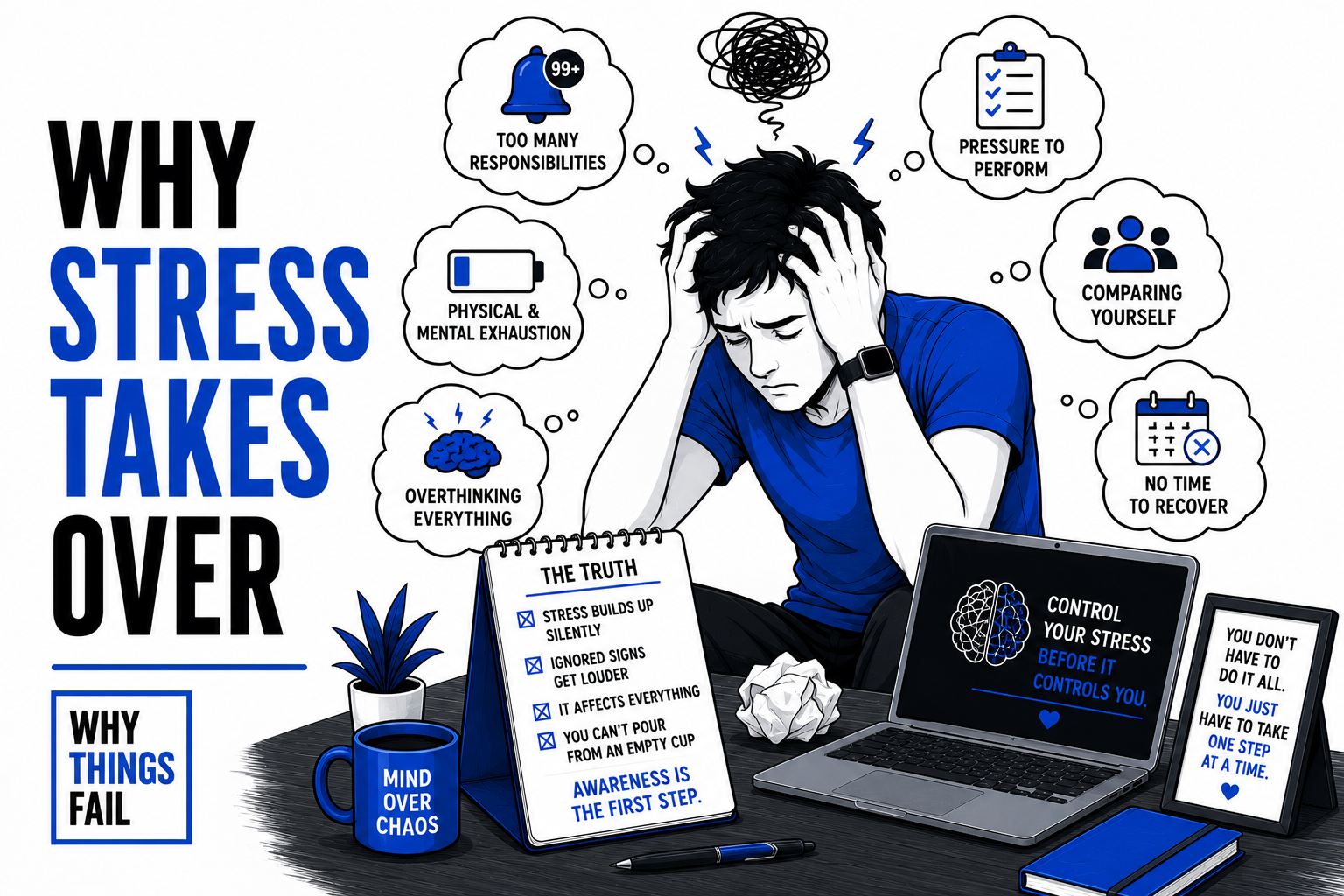
Sleep deprivation and chronic stress also deserve attention. Poor sleep influences hunger hormones, increases cravings for energy dense foods and reduces self control. At the same time, chronic stress encourages comfort eating while making healthy decisions feel mentally exhausting.
Perhaps the most overlooked warning sign is believing that occasional unhealthy choices do not matter. Individually they rarely do. Collectively they create a gradual shift back towards the behaviours that caused weight gain in the first place.
These warning signs are frequently ignored because they develop slowly. The consequences appear months later, making it difficult to connect present results with past decisions.
What Could Have Prevented It?
Preventing weight regain is not about finding a perfect diet.
It is about creating a lifestyle that remains realistic after motivation fades.
One of the most effective approaches is replacing temporary goals with permanent routines. Healthy eating should gradually become part of everyday life rather than a short term project with a fixed end date.
Planning also plays a critical role. Preparing meals, maintaining regular exercise schedules and anticipating challenging situations reduce the number of decisions that depend entirely on willpower. Systems consistently outperform motivation because they continue working even when enthusiasm declines.
Developing healthier responses to emotional stress is equally important. Many people address food choices without addressing the emotions that influence those choices. Learning alternative coping strategies such as walking, journalling, social support or relaxation techniques reduces dependence on food for emotional relief.
Regular self monitoring also helps maintain awareness. Tracking body weight periodically, reviewing eating habits and recognising early behavioural changes allow small problems to be corrected before they become significant setbacks.
Most importantly, successful weight management requires accepting that maintenance is an ongoing process rather than a destination. Long term health depends on consistent behaviours that continue long after initial weight loss has been achieved.
Lessons
Weight regain offers lessons that extend far beyond nutrition.
The first lesson is that behaviour is more sustainable than motivation. Motivation inspires change, but habits maintain it. Lasting success depends on creating routines that continue when enthusiasm naturally declines.
The second lesson is that small decisions matter more than dramatic actions. Weight regain rarely results from one unhealthy meal. It develops through repeated everyday choices that gradually reshape behaviour.
Another lesson is that environment influences behaviour more than most people realise. Food availability, social expectations, work schedules and stress all affect decision making. Creating supportive environments often proves more effective than relying solely on self discipline.
Finally, success should never be measured only by reaching a target weight. The greater achievement is building a lifestyle capable of maintaining that result over many years.
Failure Pattern
The dominant pattern behind weight regain is Short Term Thinking combined with Emotional Decision Making and Poor Planning.
Many people approach weight loss as a temporary challenge rather than a permanent lifestyle adjustment. Once the immediate objective has been achieved, previous routines quietly return.
Emotional eating, inconsistent planning and declining self awareness gradually replace structured habits. The process is slow enough to avoid immediate concern but consistent enough to produce long term consequences.
This same behavioural pattern appears in personal finance, business and investing. People often succeed through intense short term effort but struggle to maintain the systems required for lasting results. Sustainable success depends less on achieving change and more on preserving it.
Hidden Lesson
The greatest reason people regain weight is not that they forget how to lose it.
It is that lasting change requires becoming a different decision maker rather than simply following a different diet.
The body reflects repeated behaviours.
When old behaviours return, previous results eventually return as well.
The deeper truth is that weight regain begins long before the scale changes. It begins when sustainable habits are replaced by familiar routines that once again become automatic.
Failure Scorecard
| Area | Score | Explanation |
| Personal Discipline | 5/10 | Healthy routines often become inconsistent after the initial goal is achieved. |
| Decision Making | 5/10 | Daily food choices are frequently influenced by convenience and emotion rather than long term health. |
| Risk Management | 4/10 | Early behavioural changes are often ignored until significant weight regain occurs. |
| Long Term Thinking | 4/10 | Many people focus on losing weight rather than maintaining healthier habits permanently. |
| Health Knowledge | 7/10 | Most people understand healthy eating principles but struggle with consistent implementation. |
| Emotional Control | 4/10 | Stress, boredom and anxiety commonly trigger emotional eating. |
| Planning | 5/10 | Meal preparation and lifestyle planning often decline after successful weight loss. |
| Adaptability | 6/10 | People who adjust habits to changing life circumstances are more likely to maintain long term results. |
Key Takeaways
- Weight regain is usually caused by behavioural patterns rather than lack of knowledge.
- Motivation starts change, but habits sustain it.
- Emotional eating often reflects unmet psychological needs rather than physical hunger.
- Small daily compromises accumulate into significant long term results.
- Modern food environments encourage overeating through convenience and constant availability.
- Sustainable routines are more effective than restrictive diets.
- Long term success depends on maintaining healthy behaviours after the target weight has been reached.
- Weight management is a continuous process rather than a temporary achievement.
Frequently Asked Questions
Why do most people regain weight after dieting?
Most people regain weight because temporary diets change behaviour for a short period without permanently changing habits, emotional responses or daily routines.
Is weight regain caused by a slow metabolism?
Metabolic adaptation contributes to weight regain by reducing energy expenditure and increasing hunger, but behaviour, lifestyle and environment usually have a greater influence over the long term.
Why does emotional eating lead to weight regain?
Emotional eating uses food to manage stress, anxiety, boredom or sadness rather than physical hunger. Unless these emotional triggers are addressed, previous eating habits often return.
Can people maintain weight loss permanently?
Yes. Long term success is more likely when healthy behaviours become part of everyday identity and routine instead of remaining temporary dieting strategies.
What is the biggest mistake after losing weight?
The biggest mistake is returning to the same behaviours that caused weight gain while assuming the achieved result will remain unchanged.
Conclusion
People regain weight not because they suddenly lose determination but because lasting health depends on changing deeply established behavioural systems rather than temporarily changing eating habits. Biology, psychology and environment work together to pull people back towards familiar routines unless those routines are consciously replaced.
Understanding this transforms the conversation around weight regain. It is no longer a story of failed willpower but a predictable interaction between human behaviour, biological adaptation and everyday decisions. The real challenge is not learning how to lose weight. It is learning how to build a lifestyle that no longer depends on constantly fighting against old habits.