Introduction
Every year, millions of people begin a weight loss journey with genuine determination. They purchase gym memberships, download fitness apps, follow strict diets and promise themselves that this time will be different.
For a while, many succeed.
The numbers on the scale begin to fall. Clothes fit differently. Confidence grows. Friends notice the change.
Then something unexpected happens.
Progress slows. Motivation fades. Old eating habits return. Exercise becomes less frequent. Within months, many people regain some or all of the weight they worked so hard to lose.
This pattern is so common that it raises an important question.
Why does weight loss fail even when people genuinely want to become healthier?
The easy explanation is that people lack willpower.
The evidence tells a different story.
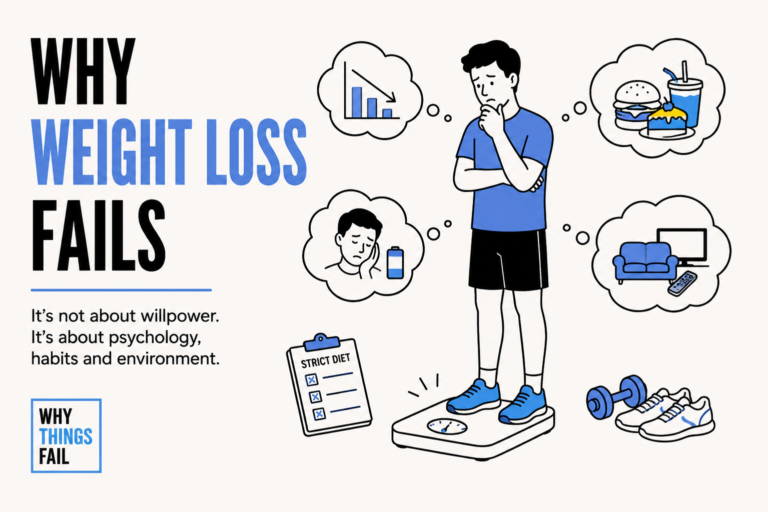
Research in behavioural science, psychology and nutrition suggests that lasting weight loss is rarely determined by motivation alone. It is shaped by habits, emotions, biological responses, environmental influences and decision making systems that operate every day.
Understanding why weight loss fails therefore requires looking beyond calories and exercise. It requires understanding why human behaviour repeatedly conflicts with long term health goals.

What Is Weight Loss Failure?
Weight loss failure does not simply mean gaining weight.
Nor does it mean that a particular diet failed to produce short term results.
Weight loss failure occurs when someone repeatedly loses weight but cannot maintain those changes over the long term. The problem is not the initial effort. The problem is the inability to create behaviours that remain sustainable after motivation declines.
Many people successfully lose weight for a holiday, a wedding or another important event. Yet months later, they often return to previous eating patterns and previous body weight.
The cycle repeats itself.
Each attempt begins with optimism and ends with frustration.
Over time, repeated failure can reduce confidence and create the belief that lasting weight loss is impossible.
In reality, the failure usually lies within the process rather than the person.
This isn’t just a behavioural theory, it’s a well-documented research finding. A comprehensive UCLA analysis of 31 long-term diet studies found that the majority of dieters regained all the weight they lost, and often more, within a few years, regardless of which specific diet they followed. The consistency of that pattern across so many different diets points squarely at the process, not personal failure.
The Biggest Myth
The most common belief about weight loss is simple.
People fail because they lack self control.
This explanation appears logical because eating and exercise seem like personal choices.
However, behavioural psychology paints a far more complex picture.
Human behaviour is influenced by habits, stress, sleep, emotions, environment, food availability, social relationships and biological signals that regulate hunger and satiety.
Willpower is only one small part of this system.
Even highly disciplined people experience decision fatigue after making hundreds of choices throughout the day. As mental energy declines, the brain naturally begins choosing options that require less effort and provide immediate rewards.
Highly processed foods are specifically designed to satisfy these reward systems.
This means many food choices are influenced by biology and psychology rather than conscious intention.
The question therefore changes.
Instead of asking why people lack discipline, it becomes more useful to ask why modern environments make disciplined behaviour so difficult to maintain.
What Usually Happens?
Most unsuccessful weight loss journeys follow a familiar pattern.
A person becomes dissatisfied with their weight.
They choose an aggressive diet.
Early results create excitement.
Restrictions become increasingly difficult to maintain.
Social occasions become challenging.
Cravings become stronger.
Small exceptions become regular habits.
Exercise becomes inconsistent.
Eventually the diet ends.
Old routines quietly return.
Weight gradually increases until another attempt begins.
Although different diets promise different results, the behavioural pattern remains remarkably consistent.
The cycle is rarely caused by one poor decision.
It develops through hundreds of small decisions that slowly move behaviour away from long term goals.
Why Does It Happen?
Understanding why weight loss fails requires examining the interaction between biology, psychology and behaviour.
Losing weight is not simply a mathematical calculation involving calories consumed and calories burned.
It is a continuous process of making decisions in environments that constantly encourage the opposite behaviour.
The greatest challenge is therefore not understanding what to do.
It is consistently doing it despite competing psychological and environmental pressures.
Motivation Is Temporary But Habits Are Permanent
Many people begin losing weight after an emotional event.
A medical diagnosis.
An unflattering photograph.
Difficulty fitting into favourite clothes.
These experiences create powerful motivation.
Unfortunately, motivation naturally fades with time.
Life returns to normal.
Work becomes busy.
Family responsibilities increase.
Stress returns.
Without strong daily habits, behaviour gradually follows the path requiring the least effort.
This explains why people often regain weight after achieving early success.
They relied on temporary motivation instead of building permanent systems.
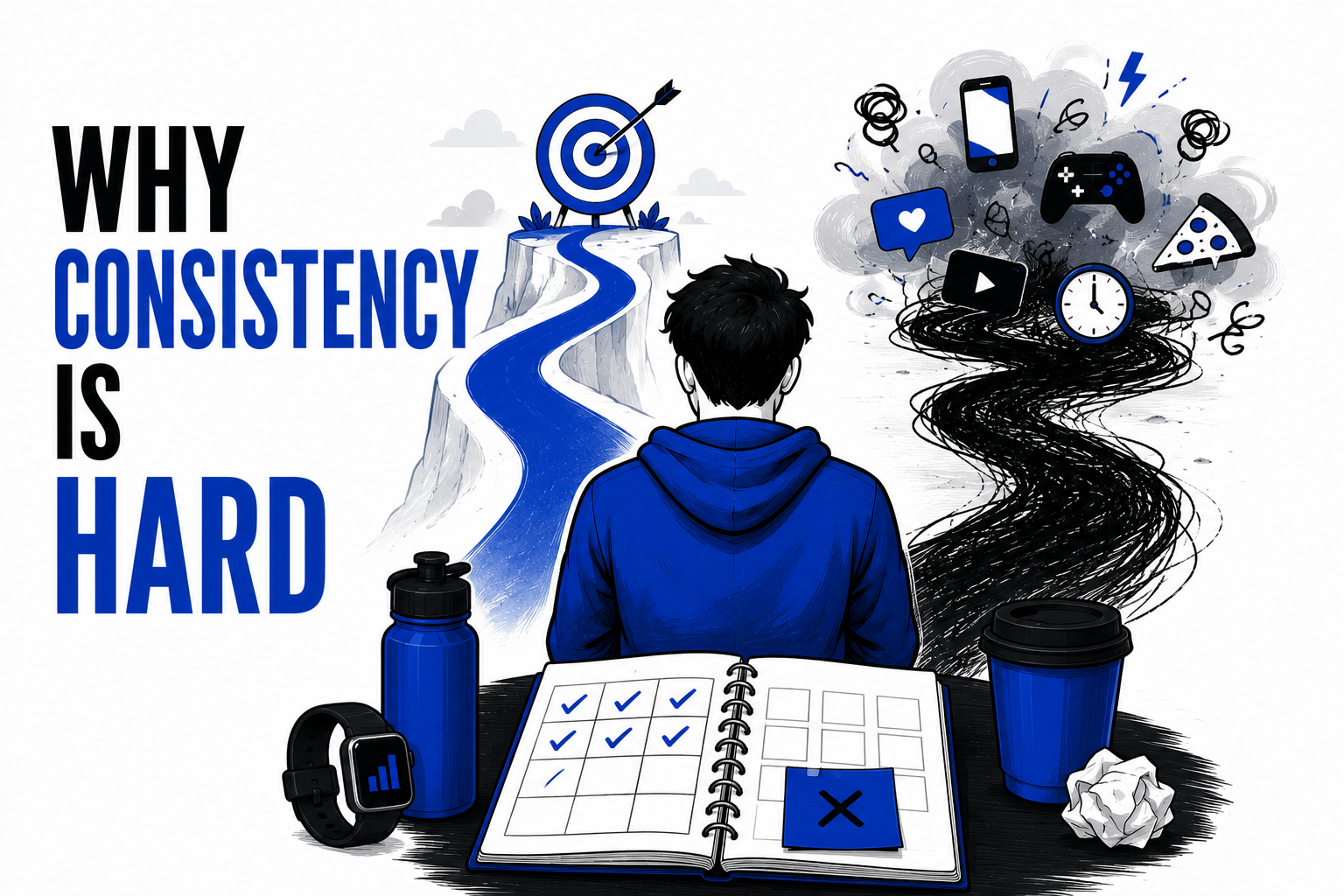
Behavioural scientists consistently find that habits outperform motivation because habits require less conscious decision making the same reason consistency is so hard to build in any area of life.
Emotional Eating Replaces Physical Hunger
One of the strongest predictors of unsuccessful weight loss is emotional eating.
Many people eat without experiencing genuine physical hunger.
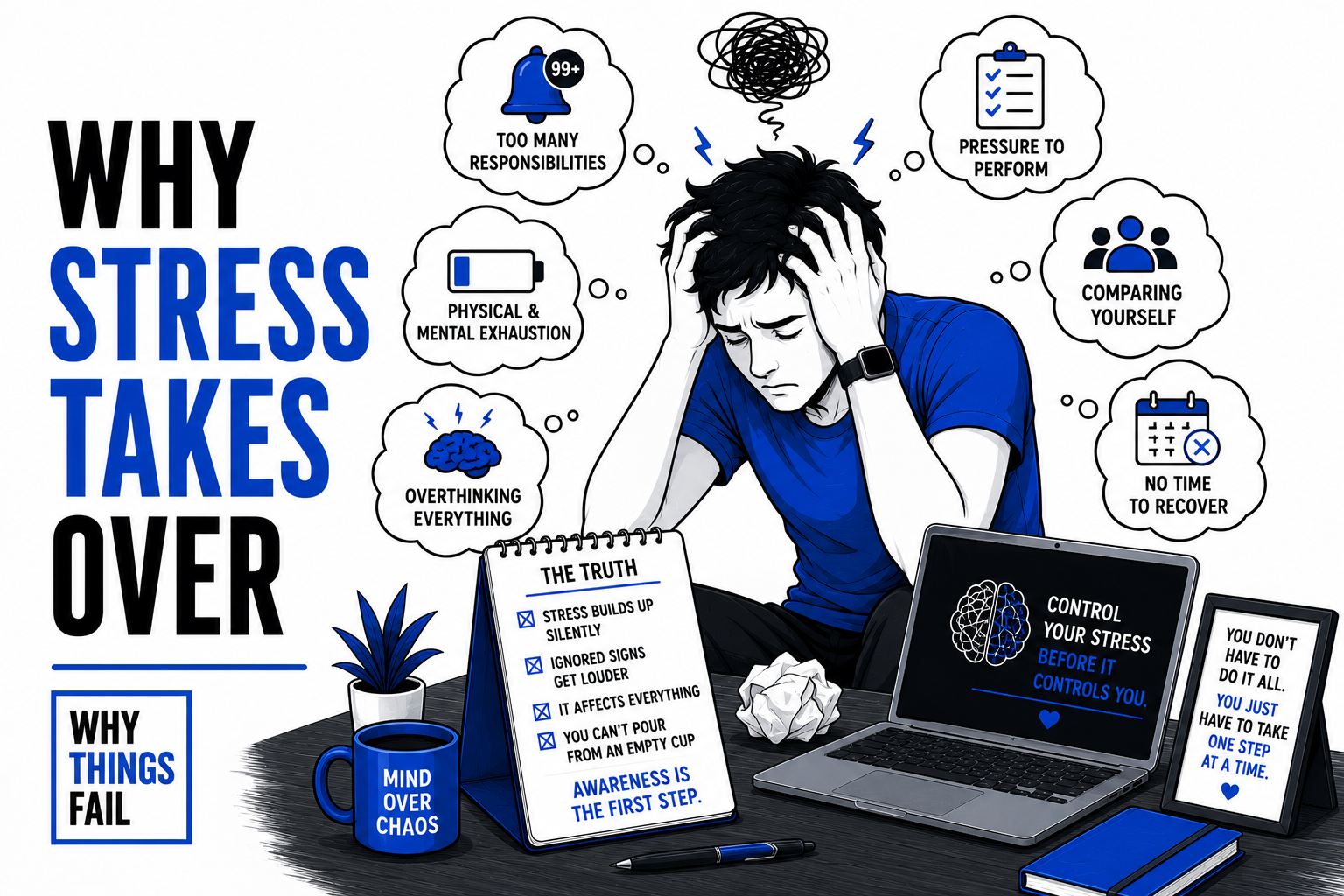
Stress encourages comfort eating.
Boredom encourages snacking.
Loneliness increases cravings for rewarding foods.
Celebrations often revolve around excessive eating.
Food becomes more than nutrition.
It becomes emotional regulation.
The brain quickly learns that sweet and highly processed foods temporarily reduce emotional discomfort by activating reward pathways.
This creates a behavioural loop.
Stress increases eating.
Eating provides temporary relief.
The relief disappears.
Stress returns.
The behaviour repeats.
Breaking this cycle requires addressing emotional triggers rather than focusing only on food itself.
The Brain Prefers Immediate Rewards
Behavioural economists describe this tendency as present bias.
People naturally value immediate pleasure more than future benefits.
The health benefits of weight loss may take months to appear.
The enjoyment of eating a favourite dessert is immediate.
The brain therefore assigns greater value to the present reward despite understanding the future consequences.
This explains why knowledge alone rarely changes behaviour.
Most people already understand the importance of healthy eating.
The challenge lies in competing against immediate gratification.
The human brain evolved to seek calorie rich foods because food scarcity once threatened survival.
Modern food environments exploit this biological preference by making highly rewarding foods inexpensive, convenient and constantly available.
Decision Fatigue Weakens Healthy Choices
Every day involves hundreds of decisions.
Work.
Family.
Finances.
Responsibilities.
By evening, mental energy is often depleted.
Decision fatigue makes convenient options increasingly attractive.
Preparing a balanced meal requires planning and effort.
Ordering fast food requires almost none.
This is not simply laziness.
It is a predictable psychological response to cognitive overload.
The quality of dietary decisions often declines as mental fatigue increases.
Understanding this explains why many people eat well during the morning yet struggle to maintain those choices later in the day.
Modern Environments Encourage Overeating
Human biology has changed very little during the past several thousand years.
Food environments have changed dramatically.
Large portion sizes.
Constant advertising.
Food delivery services.
Highly processed snacks.
Sugary drinks.
These factors increase food consumption without requiring conscious intention.
People are surrounded by environmental cues encouraging eating even when hunger is absent.
The issue therefore extends beyond individual responsibility.
Modern environments continuously reward behaviours that conflict with long term health.
All Or Nothing Thinking Creates Repeated Failure
Many people approach weight loss with perfectionist thinking.
One unhealthy meal becomes a failed diet.
Missing one workout becomes abandoning exercise entirely.
Behavioural psychology refers to this as all or nothing thinking.
Instead of viewing setbacks as temporary interruptions, people interpret them as complete failure.
This mindset transforms small mistakes into prolonged periods of unhealthy behaviour.
Ironically, lasting weight loss is usually achieved by people who recover quickly from setbacks rather than those who never experience them.
Social Pressure Quietly Influences Behaviour
Eating is rarely an isolated activity.
Families share meals.
Friends celebrate with food.
Workplaces provide snacks.
Social gatherings often encourage overconsumption.
Declining food can sometimes feel socially uncomfortable.
People naturally seek acceptance within their social groups.
As a result, immediate social harmony frequently outweighs distant health goals.
The challenge is not simply resisting food.
It is balancing personal health decisions with powerful social expectations that shape behaviour every day.
Warning Signs
Weight loss rarely fails without warning. The earliest signs often appear long before weight begins to increase again. Unfortunately, they are easy to dismiss because progress during the early stages creates confidence.
One warning sign is relying entirely on motivation. People who only exercise or eat well when they feel inspired usually struggle once daily life becomes demanding. Motivation naturally rises and falls, making it an unreliable foundation for lasting behaviour.
Another warning sign is treating healthy eating as a temporary project rather than a permanent lifestyle. When someone frequently says they will return to normal eating after reaching a target weight, they are preparing to return to the very habits that caused the problem.
Emotional dependence on food is another indicator. Eating to cope with stress, boredom, loneliness or disappointment may provide temporary comfort, but it gradually strengthens unhealthy behavioural patterns.
Extreme restriction is equally concerning. Eliminating entire food groups, following unrealistic meal plans or expecting perfect behaviour every day often creates psychological exhaustion. The more restrictive a plan becomes, the more difficult it is to sustain.
Perhaps the most overlooked warning sign is measuring success only by the number on the scale. Weight naturally fluctuates because of hydration, hormones and other biological factors. People who judge every day by a single measurement often become discouraged despite making meaningful progress.
These warning signs are frequently ignored because short term results create the illusion that the current approach will continue working indefinitely. By the time motivation fades, the underlying behavioural weaknesses have already begun to emerge.
What Could Have Prevented It?
Most unsuccessful weight loss journeys could not have been prevented by finding another diet. They could have been prevented by creating systems that made healthy behaviour easier to maintain.
One important change is replacing temporary goals with sustainable routines. Instead of asking how to lose weight quickly, a more useful question is how daily habits can remain realistic for years rather than weeks.
Planning also plays an essential role. Preparing meals, creating regular eating patterns and reducing exposure to highly processed foods decreases the number of difficult decisions that must be made each day.
Understanding emotional triggers is equally important. Stress, anxiety and boredom should be recognised as behavioural signals rather than reasons to eat. Addressing these emotions directly often produces more lasting change than focusing exclusively on calorie intake.
Supportive environments also matter. Families, workplaces and social circles influence behaviour far more than most people recognise. Surrounding healthy choices with fewer obstacles reduces the dependence on willpower.
Finally, progress should be measured through consistent behaviour instead of immediate outcomes. Maintaining healthy routines despite temporary setbacks creates resilience, while obsessing over daily weight changes often encourages frustration and abandonment.
Lessons
Weight loss reveals important truths about human behaviour that extend beyond health.
The first lesson is that people rarely fail because they lack knowledge. Most understand the principles of healthy eating and physical activity. The greater challenge is maintaining those behaviours when daily pressures compete for attention.
Another lesson is that habits consistently outperform motivation. Short bursts of enthusiasm produce temporary results, but repeated routines create lasting change because they require less mental effort.
The investigation also shows that environments influence behaviour as much as personal determination. When unhealthy choices are convenient and healthy choices require greater effort, behaviour naturally follows the easier path.
Perhaps the most valuable lesson is that lasting success depends on building systems that continue functioning after motivation disappears. Whether the objective involves health, business or finance, sustainable outcomes are created through consistent behaviour rather than temporary determination.
Failure Pattern
The dominant pattern behind unsuccessful weight loss is Emotional Decision Making combined with Short Term Thinking.
People focus on immediate discomfort instead of long term wellbeing. Temporary cravings become more influential than future health. Emotional stress encourages comfort eating. Social pressure encourages overconsumption. Small setbacks become reasons to abandon the entire process.
This behavioural pattern appears in many areas of life. Investors chase quick profits. Businesses pursue rapid growth without sustainable systems. Individuals overspend despite understanding long term consequences.
In every case, immediate rewards gradually replace disciplined decision making until failure becomes increasingly predictable.
Hidden Lesson
The greatest obstacle to lasting weight loss is not food.
It is the belief that changing behaviour requires stronger willpower rather than better systems.
Most people blame themselves when they regain weight. In reality, they are often relying on motivation to overcome biological instincts and environments specifically designed to encourage overeating.
The deeper truth is that weight loss usually fails long before the scale begins to increase. Failure begins when temporary effort replaces permanent behavioural change. The scale simply reveals what daily decisions have already been creating.
Failure Scorecard
| Area | Score | Explanation |
| Financial Discipline | Not Applicable | This investigation focuses on health rather than financial behaviour. |
| Decision Making | 5/10 | Healthy choices are often replaced by emotional reactions and immediate gratification. |
| Risk Management | 5/10 | Many people underestimate the long term impact of repeated unhealthy habits. |
| Long Term Thinking | 4/10 | Immediate comfort frequently outweighs future health benefits. |
| Health Knowledge | 7/10 | Most people know what supports weight loss but struggle to apply that knowledge consistently. |
| Emotional Control | 4/10 | Stress, boredom and anxiety often drive eating behaviours. |
| Planning | 5/10 | Lack of meal preparation and structured routines increases reliance on convenience foods. |
| Adaptability | 6/10 | Successful individuals adjust their routines after setbacks instead of abandoning them completely. |
Key Takeaways
- Weight loss usually fails because behaviour changes are temporary while old habits remain permanent.
- Motivation begins the journey, but habits determine the outcome.
- Emotional eating is often a response to stress rather than physical hunger.
- Modern food environments encourage overeating through convenience and constant availability.
- Small daily decisions have a greater long term impact than occasional large efforts.
- Perfectionism increases the likelihood of abandoning healthy routines.
- Sustainable systems produce better results than restrictive diets.
- Long term success depends on changing behaviour rather than chasing rapid results.
Frequently Asked Questions
Why does weight loss fail even after early success?
Early success is often driven by motivation, while long term success depends on sustainable habits. When motivation declines and habits remain unchanged, previous behaviours gradually return.
Is lack of willpower the main reason people regain weight?
No. Research in behavioural psychology shows that habits, environment, stress, sleep, emotional regulation and food availability influence behaviour as much as willpower.
Why do restrictive diets often fail?
Restrictive diets can produce rapid results, but they are difficult to maintain over long periods. When people return to previous eating patterns, weight regain often follows.
Does emotional eating affect weight loss?
Yes. Emotional eating encourages food consumption without physical hunger. Unless emotional triggers are addressed, the behaviour often continues regardless of dieting efforts.
What is the biggest psychological barrier to lasting weight loss?
The tendency to seek immediate comfort over future benefits is one of the strongest behavioural barriers. Present focused decision making often overrides long term health goals.
Conclusion
Weight loss fails not because people are incapable of changing, but because lasting behavioural change is far more complex than following a diet or exercising for a few weeks. Biology, psychology, environment and daily decision making continuously interact, making temporary motivation an unreliable foundation for permanent results.
Understanding this changes the conversation. Lasting weight loss is not primarily a test of willpower. It is a reflection of whether daily systems, habits and environments consistently support the behaviour required for long term health. When those systems fail, the outcome becomes predictable long before the scale reveals it.