Quick Answer
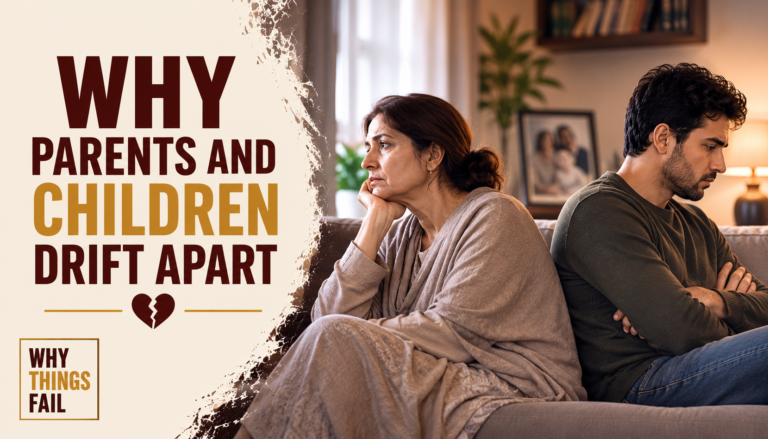
Parents and children rarely drift apart because of one major disagreement. Emotional distance usually develops through years of unmet expectations, poor communication, unresolved conflict, changing identities and repeated misunderstandings. Most broken family relationships are the result of small decisions and emotional patterns that gradually replace trust with distance.
Introduction
Few relationships shape human life more profoundly than the relationship between parents and their children.
It is the first relationship people experience, the foundation upon which trust, communication and emotional security are often built. Yet despite its importance, many families eventually find themselves emotionally distant from one another.
Some parents wonder why their children rarely call or visit. Adult children struggle to understand why conversations with their parents always end in frustration. Others maintain contact but feel emotionally disconnected despite speaking regularly.
These situations are becoming increasingly common across different cultures, generations and family structures.
Technology has made communication easier than ever, yet emotional connection often feels more difficult to maintain.
This raises an important question.
Why do parents and children drift apart even when both genuinely care about one another?
Many people assume the answer lies in one dramatic event such as an argument, a family dispute or a difficult life decision.
The reality is usually far more complex.
Relationships rarely collapse overnight.
They weaken through repeated patterns of behaviour, unmet emotional needs and decisions that seem insignificant in the moment but become meaningful over time.
Understanding why parents and children drift apart requires looking beyond individual disagreements. It requires examining psychology, communication, family dynamics and the hidden emotional systems that influence relationships for decades.
What Is Emotional Distance Between Parents And Children?
Emotional distance does not necessarily mean parents and children stop speaking.
Many families remain in regular contact while feeling emotionally disconnected.
Conversations become polite rather than meaningful.
Important feelings remain unspoken.
Visits become obligations instead of opportunities to reconnect.
Over time, trust gives way to caution and genuine conversations are replaced by superficial interactions.
Emotional distance develops when family members no longer feel understood, emotionally safe or accepted for who they have become.
This process often occurs gradually, making it difficult to recognise until the relationship has already changed significantly.
The Biggest Myth
The most common belief is that parents and children drift apart because one person stopped caring.
In reality, this explanation is rarely accurate.
Most parents continue loving their children long into adulthood.
Most children continue caring deeply about their parents even when they choose to create emotional distance.
The problem is not usually the absence of love.
It is the gradual breakdown of emotional understanding.
Love alone does not guarantee healthy communication.
It does not automatically resolve resentment.
It does not remove unrealistic expectations.
It does not eliminate years of unresolved conflict.
Strong relationships require more than affection.
They require trust, mutual respect, emotional safety and the ability to adapt as people change throughout life.
What Usually Happens?
The pattern is surprisingly consistent.
Children grow older and begin developing their own beliefs, values and identities.
Parents often continue viewing them through the lens of childhood.
Small disagreements become more frequent.
Communication becomes defensive.
Both sides begin protecting themselves emotionally.
Important conversations are postponed because they feel uncomfortable.
Months gradually become years.
Neither side believes they intended to create distance, yet both begin accepting emotional separation as normal.
By the time the relationship feels broken, neither parent nor child can identify exactly when it started.
That is because emotional distance is usually the result of hundreds of small interactions rather than one defining moment.
Why Does It Happen?
Understanding why parents and children drift apart requires examining human behaviour rather than simply family disagreements.
Relationships do not fail because people suddenly stop caring.
They fail because emotional needs, expectations and communication gradually fall out of balance.
The deeper causes often remain hidden because both parents and children interpret the same experiences very differently.
Changing Identity Creates Emotional Tension
One of the most overlooked reasons families drift apart is identity.
Parents spend years protecting, teaching and guiding their children.
This role becomes central to how many parents understand themselves.
As children become independent adults, that role naturally changes.
For some parents, accepting this transition is emotionally difficult.
Advice becomes criticism.
Protection becomes control.
Concern becomes interference.
Adult children, meanwhile, are trying to establish independence.
They want their decisions respected even when those decisions differ from family expectations.
Neither side necessarily intends conflict.
They simply respond to different emotional needs.
Parents seek continued connection.
Children seek greater autonomy.
Without open communication, these needs begin competing instead of supporting one another.
Expectations Replace Understanding
Many family relationships are quietly shaped by expectations that are never openly discussed.
Parents may expect frequent visits, regular phone calls or particular life choices.
Children may expect unconditional acceptance, emotional support and respect for personal boundaries.
Problems begin when expectations remain unspoken.
Each disappointment becomes evidence that the other person no longer understands or values the relationship.
Behavioural psychology suggests that people naturally judge others according to expectations they believe are reasonable.
The difficulty is that parents and children often develop completely different expectations without recognising the difference.
Over time, disappointment gradually replaces curiosity.
Instead of asking why someone behaved differently, both sides assume negative intentions.
Misunderstanding becomes easier than conversation.
Emotional Safety Gradually Disappears
Healthy relationships depend on emotional safety.
People speak honestly when they believe they will be heard rather than judged.
Once emotional safety weakens, communication changes dramatically.
Children stop discussing personal struggles because they expect criticism.
Parents stop expressing disappointment because previous conversations ended in arguments.
Important emotions remain hidden.
Only practical topics remain.
Birthdays.
Work.
Health.
Weather.
The relationship continues, but emotional intimacy quietly disappears.
Ironically, silence is often mistaken for peace.
In reality, silence frequently signals unresolved emotional tension.
Unresolved Conflict Never Truly Disappears
Many families believe avoiding difficult conversations protects relationships.
In the short term, this may reduce conflict.
In the long term, unresolved issues rarely disappear.
They simply become part of the relationship.
Small disappointments accumulate.
Apologies remain unspoken.
Assumptions replace clarification.
Years later, seemingly minor disagreements trigger emotional reactions that appear completely disproportionate.
The immediate disagreement is rarely the true issue.
It simply activates years of unresolved experiences that were never fully understood.
Different Generations Often Speak Different Emotional Languages
Parents and children are shaped by different historical, social and cultural experiences.
One generation may value duty, obedience and sacrifice.
Another may prioritise emotional wellbeing, personal fulfilment and independence.
Neither perspective is necessarily wrong.
The difficulty arises when each assumes its own worldview is universally correct.
Instead of recognising different life experiences, conversations become debates about who is right.
Over time, repeated misunderstandings create emotional fatigue.
Eventually, avoiding difficult conversations feels easier than continuing them.
Pride Often Prevents Reconciliation
Perhaps the deepest reason relationships remain distant is pride.
Parents may believe children should take the first step because they are younger.
Children may believe parents should apologise because they held greater authority.
Both wait.
Neither moves.
Time gradually strengthens emotional distance.
Behavioural economists describe this as escalation through inaction.
The longer a problem remains unresolved, the more emotionally difficult it becomes to address.
Eventually, silence itself becomes a habit.
Neither side remembers exactly how the distance began.
They only recognise that rebuilding the relationship now feels far more complicated than maintaining the distance that already exists.
Warning Signs
Emotional distance rarely appears without warning. The challenge is that these warning signs often seem too small to matter until they become established patterns.
One warning sign is that conversations become increasingly practical and less personal. Parents and children still discuss work, health or daily responsibilities, but they stop talking about fears, hopes, disappointments and important life decisions.
Another warning sign is avoiding honest conversations to prevent conflict. While this may create temporary peace, it often allows misunderstandings to grow. Silence begins to replace trust.
Defensiveness is another early indicator. Simple questions are interpreted as criticism. Genuine concern feels like control. Advice sounds like judgement. Each conversation becomes an exercise in self protection rather than understanding.
A decline in shared experiences is equally important. Families stop creating meaningful memories together. Visits become shorter. Messages become less frequent. Special occasions feel more like obligations than opportunities to reconnect.
Perhaps the strongest warning sign is emotional indifference. Arguments may decrease, but so does genuine interest in one another’s lives. This absence of emotional engagement often signals that distance has already become normal.
These warning signs are frequently ignored because both parents and children assume there will always be another opportunity to repair the relationship. Time creates a false sense of security, even though emotional distance usually becomes more difficult to reverse as years pass.
What Could Have Prevented It?
Most fractured family relationships cannot be repaired through one emotional conversation because they were not created by one emotional conversation.
They are prevented through consistent patterns of communication, respect and emotional awareness.
One important safeguard is recognising that relationships must evolve as children become adults. Parents who adapt from directing to supporting often maintain stronger emotional connections because they acknowledge changing roles rather than resisting them.
Listening with the intention of understanding rather than correcting also strengthens relationships. Many family disagreements continue because each person focuses on defending their own perspective instead of exploring the other’s experience.
Clear emotional boundaries are equally important. Respecting personal choices does not weaken family relationships. It often strengthens trust because people feel accepted rather than controlled.
Addressing conflict early also prevents resentment from accumulating. Honest conversations held with empathy are usually less damaging than years of silence followed by emotional confrontation.
Perhaps the most effective prevention is expressing appreciation before relationships become strained. Small moments of gratitude, encouragement and understanding reinforce emotional security long before problems become serious.
Healthy relationships are rarely built through dramatic gestures. They are built through ordinary conversations repeated consistently over many years.
Lessons
The reasons parents and children drift apart reveal lessons that extend far beyond family relationships.
The first lesson is that love alone does not guarantee emotional closeness. Relationships require communication, mutual respect and the willingness to adapt as people change.
The second lesson is that assumptions often create greater damage than disagreements. Families frequently stop asking questions because they believe they already understand one another. Curiosity disappears and misunderstanding grows.
Another lesson is that emotional safety encourages honesty. People share difficult thoughts only when they believe they will be heard with compassion rather than judgement.
Perhaps the most enduring lesson is that relationships weaken through neglect more often than conflict. Consistent emotional investment matters more than occasional grand gestures.
Failure Pattern
The dominant pattern behind parents and children drifting apart is Poor Communication combined with Emotional Avoidance and Unspoken Expectations.
This pattern repeats across families because people naturally avoid conversations that feel uncomfortable. Parents avoid discussing disappointment because they fear damaging the relationship. Children avoid expressing frustration because they fear rejection or criticism.
Over time, silence replaces openness. Assumptions replace understanding. Emotional distance grows while both sides continue believing the other person should make the first move.
The same behavioural pattern appears in friendships, marriages, workplaces and business partnerships. Relationships rarely fail because people stop caring. They fail because communication gradually becomes less honest and less frequent.
Hidden Lesson
Parents and children rarely drift apart because love disappears.
They drift apart because understanding slowly disappears.
Every relationship is shaped by countless ordinary conversations, small acts of empathy and moments of emotional availability. When these become less frequent, affection alone cannot prevent distance.
The deeper truth is that relationships are sustained not by shared history but by continued emotional presence. The past creates a bond, but only present actions keep that bond alive.
Failure Scorecard
| Area | Score | Explanation |
| Emotional Communication | 4/10 | Honest conversations are often replaced by assumptions or silence. |
| Decision Making | 5/10 | Emotional reactions frequently outweigh thoughtful responses during conflict. |
| Conflict Management | 4/10 | Difficult conversations are commonly delayed until resentment has accumulated. |
| Long Term Thinking | 5/10 | Many families underestimate how repeated small interactions shape future relationships. |
| Emotional Understanding | 6/10 | Love is usually present, but empathy and active listening may decline over time. |
| Emotional Control | 5/10 | Pride, frustration and defensiveness often influence conversations. |
| Planning For Relationships | 3/10 | Few families intentionally nurture relationships as life circumstances change. |
| Adaptability | 5/10 | Parents and children often struggle to adjust to changing roles as children become adults. |
Key Takeaways
- Parents and children usually drift apart through gradual emotional distance rather than one major event.
- Unspoken expectations often create disappointment on both sides.
- Emotional safety is essential for honest communication.
- Pride frequently delays reconciliation until relationships become more difficult to repair.
- Small conversations have a greater long term impact than occasional dramatic discussions.
- Relationships require adaptation as children become independent adults.
- Avoiding conflict often strengthens resentment rather than resolving it.
- Understanding another person’s perspective is more valuable than winning an argument.
Frequently Asked Questions
Why do parents and children drift apart?
Parents and children usually drift apart because of changing expectations, poor communication, unresolved conflict and emotional distance that develops gradually over time.
Is drifting apart a normal part of adulthood?
Some increase in independence is normal. Emotional distance becomes a problem when communication, trust and mutual understanding continue declining despite both people valuing the relationship.
Can a broken parent and child relationship be repaired?
Many relationships can improve when both people are willing to communicate honestly, acknowledge past experiences and build new patterns of trust. The process usually requires patience rather than one conversation.
Why do small disagreements become major family conflicts?
Small disagreements often activate years of unresolved emotions. The visible argument is rarely the true cause. It usually reflects deeper patterns that have accumulated over time.
Why do parents and adult children misunderstand each other?
Different generations are shaped by different experiences, values and expectations. Without open communication, these differences are easily interpreted as rejection rather than perspective.
Conclusion
Parents and children rarely become strangers because of one painful moment. Emotional distance is usually created through years of unspoken expectations, misunderstood intentions and conversations that never happened. The relationship weakens long before anyone recognises the extent of the separation.
Understanding why parents and children drift apart reveals that the greatest threat to family relationships is not the absence of love. It is the gradual loss of understanding, reminding us that lasting relationships depend less on shared history and more on the willingness to keep understanding one another as life continues to change.