
Quick Answer
Boundaries fail in relationships because they are often treated as rules for controlling other people instead of standards for protecting emotional wellbeing. Fear of rejection, poor communication, people pleasing, unresolved childhood experiences and inconsistent behaviour gradually weaken healthy boundaries until resentment replaces trust.
Introduction
Healthy relationships are often described as being built on love, trust and communication.
While each of these qualities is important, they depend upon something even more fundamental.
Boundaries.
Whether in romantic relationships, friendships or families, boundaries define what people are willing to accept, what they need to feel respected and how they protect their emotional wellbeing. They create clarity where assumptions might otherwise lead to confusion.
Yet despite widespread discussions about healthy boundaries, many relationships continue to struggle with the same problems.
One partner repeatedly ignores personal limits.
A friend demands constant emotional support without offering the same in return.
Family members interfere in decisions that should remain private.
Resentment slowly replaces affection, often leaving both people wondering what went wrong.
The common explanation is that one person simply failed to respect the other.
That explanation tells only part of the story.
Boundaries rarely collapse because of one conversation or one disagreement. More often, they fail because of repeated behavioural patterns, emotional habits and unspoken expectations that gradually weaken mutual respect.
Understanding why boundaries fail requires looking beyond communication techniques. It requires examining human behaviour, emotional needs and the psychological forces that influence how people relate to one another.
What Are Boundaries in Relationships?
Boundaries are the personal limits people establish to protect their emotional, physical and psychological wellbeing within a relationship.
They communicate what behaviour feels respectful, what behaviour feels harmful and what each person considers acceptable.
Healthy boundaries are not walls that keep people apart.
They create conditions where trust can develop because expectations become clear.
Boundaries may involve privacy, emotional availability, personal space, financial responsibilities, communication or time.
When they are respected, relationships often become more secure because both people understand where responsibility begins and ends.
When they are repeatedly ignored or inconsistently enforced, confusion replaces clarity and emotional safety gradually declines.
Boundary failure therefore is not simply about saying “no.”
It reflects the gradual breakdown of mutual respect, accountability and healthy communication.
The Biggest Myth
Perhaps the most common misunderstanding is that boundaries are designed to control other people’s behaviour.
They are not.
Boundaries define what an individual will accept and how they will respond when those limits are crossed.
This distinction is important because many conflicts begin when people attempt to change another person’s behaviour instead of managing their own responses.
For example, demanding that a partner never speak to certain friends is an attempt to control.
Explaining that dishonesty damages trust and deciding how to respond if it continues is a boundary.
When boundaries become tools for control, they often create resistance.
When they become expressions of self respect, they create clarity.
The difference explains why some relationships strengthen after difficult conversations while others become increasingly confrontational.
What Usually Happens?
Boundary failure rarely happens suddenly.
It usually develops through small compromises.
Someone ignores a request once.
The behaviour is excused.
It happens again.
The issue feels too uncomfortable to discuss.
Silence becomes easier than confrontation.
Over time, small disappointments become repeated patterns.
One person begins feeling unheard.
The other becomes accustomed to behaviour that was never truly accepted.
Eventually, resentment replaces open communication.
By the time conflict becomes visible, the breakdown has often been developing for months or even years.
Why Do Boundaries Fail?
The failure of boundaries is rarely caused by poor communication alone.
Communication reflects deeper emotional patterns that influence how people think, respond and protect themselves.
To understand why boundaries repeatedly fail, it is necessary to examine the psychological forces operating beneath everyday conversations.
Fear Of Rejection Weakens Personal Limits
Many people know when a boundary has been crossed.
The difficulty lies in responding.
Fear of rejection often encourages people to remain silent rather than risk conflict.
They worry that expressing disappointment may damage the relationship.
They fear appearing demanding, selfish or difficult.
As a result, uncomfortable situations are tolerated repeatedly.
Each moment of silence reinforces the belief that personal needs are less important than preserving harmony.
Ironically, this attempt to protect the relationship often produces the opposite outcome.
Unspoken frustration gradually develops into resentment, making genuine emotional connection increasingly difficult.
People Pleasing Creates Hidden Resentment
People pleasing is frequently mistaken for kindness.
In reality, it often reflects anxiety about disappointing others.
Individuals who constantly prioritise another person’s comfort above their own needs may appear generous on the surface.
Internally, however, they often experience exhaustion, frustration and emotional imbalance.
Because their boundaries remain unclear, other people cannot accurately recognise where emotional limits exist.
The resulting imbalance creates relationships based on assumptions rather than mutual understanding.
Over time, generosity becomes obligation.
Obligation becomes resentment.
Resentment eventually damages the very relationship the individual hoped to protect.
Childhood Experiences Shape Adult Boundaries
Boundary patterns often begin long before adulthood.
Children raised in environments where emotions were dismissed, criticism was constant or personal privacy was limited may struggle to recognise healthy boundaries later in life.
Some learn that expressing needs creates conflict.
Others learn that approval depends upon constant self sacrifice.
These experiences gradually become internal beliefs that continue influencing adult relationships.
Without recognising these early emotional patterns, people often repeat familiar behaviours even when those behaviours consistently damage their wellbeing.
The challenge is not simply learning new communication skills.
It is recognising that present behaviour may be shaped by emotional experiences from many years earlier.
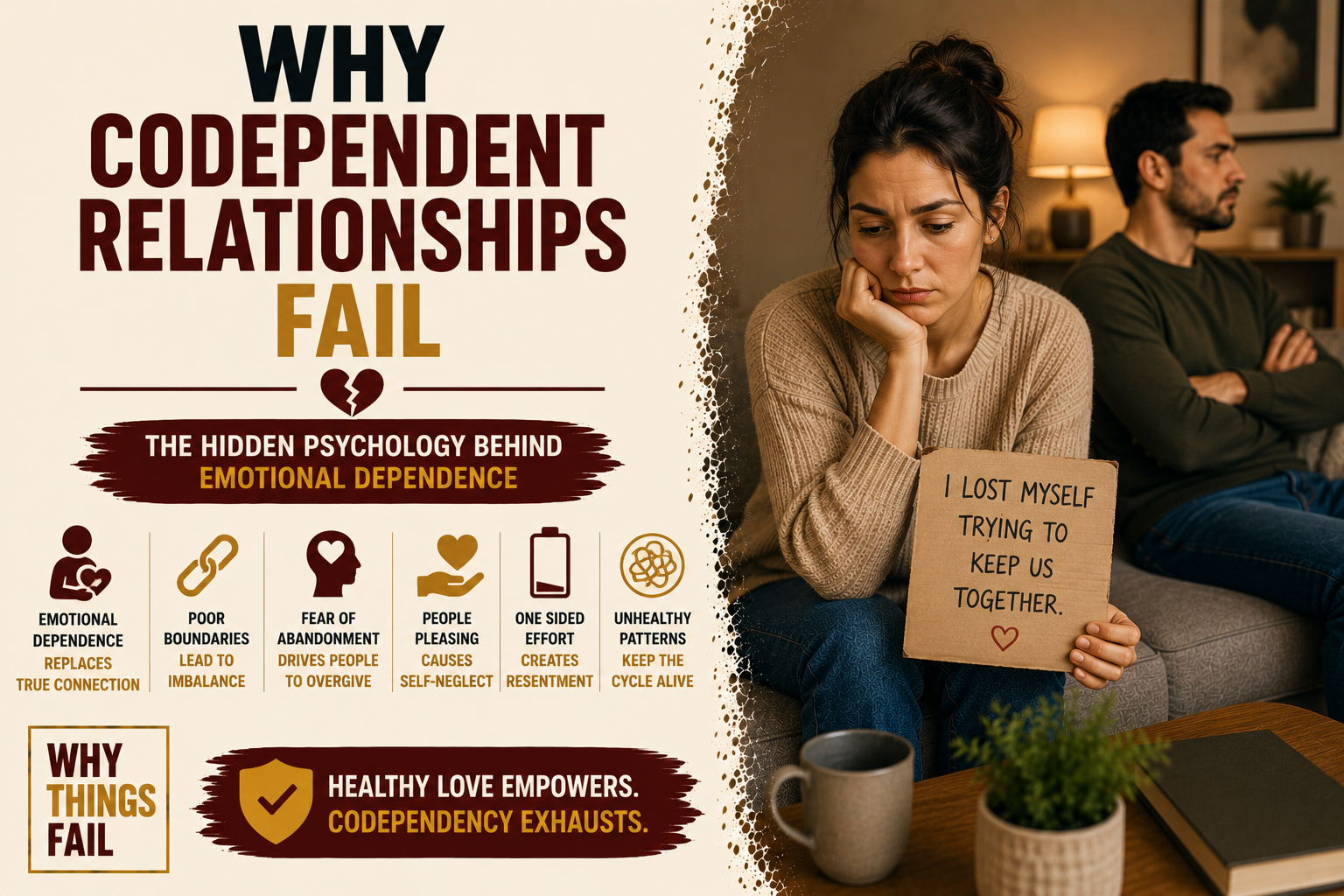
Emotional Dependence Makes Boundaries Feel Dangerous
Healthy relationships encourage connection while preserving individuality.
Emotionally dependent relationships often blur that distinction.
When one person’s emotional stability becomes entirely dependent upon another, boundaries begin feeling like rejection rather than healthy separation.
A request for personal space may be interpreted as emotional distance.
A desire for independent interests may be viewed as lack of commitment.
Simple differences become personal threats because emotional security depends upon constant reassurance.
This explains why some individuals react defensively when healthy boundaries are introduced.
The issue is rarely the boundary itself.
The issue is the fear that the boundary represents abandonment.
Inconsistent Behaviour Confuses Expectations
Boundaries require consistency to remain effective.
When someone sometimes accepts disrespectful behaviour and other times objects strongly, expectations become unclear.
Inconsistent responses unintentionally teach others that boundaries are negotiable.
The result is confusion rather than accountability.
Consistency does not require harshness.
It requires predictable responses that allow trust to develop over time.
Relationships become emotionally safer when actions consistently reflect stated values.
Avoiding Difficult Conversations Delays Bigger Problems
Many people delay boundary conversations because they hope problems will resolve naturally.
Unfortunately, unresolved issues rarely disappear.
They usually become more emotionally significant.
Small frustrations accumulate quietly.
Assumptions replace honest discussion.
By the time concerns are finally expressed, months of disappointment may already exist beneath the surface.
The conversation becomes more difficult because it is no longer about one event.
It becomes about every previous moment that remained unspoken.
People often believe avoiding conflict protects relationships.
In reality, avoiding necessary conversations frequently protects temporary comfort while increasing future conflict.
Boundaries Fail When Identity Depends Upon Approval
Perhaps the deepest explanation lies in identity.
Individuals who measure their self worth through external approval often experience boundaries as personal risk.
Saying no threatens acceptance.
Expressing disappointment threatens belonging.
Requesting respect threatens emotional security.
As a result, boundaries become increasingly difficult to maintain because identity depends upon keeping other people satisfied.
Healthy boundaries become possible only when self respect becomes more stable than the desire for constant approval.
At that point, boundaries stop feeling like acts of conflict.
They become expressions of emotional maturity and mutual respect.
Warning Signs
Boundary failure rarely begins with obvious conflict. It usually starts with subtle behavioural changes that gradually become normal within the relationship.
One warning sign is feeling uncomfortable expressing personal needs. When someone repeatedly chooses silence over honest communication, emotional pressure begins building beneath the surface.
Another warning sign is making excuses for behaviour that consistently causes distress. Occasional mistakes are part of every relationship. Repeated disrespect that is continually justified often indicates that healthy boundaries are already weakening.
Feeling responsible for another person’s emotions is another important indicator. While empathy strengthens relationships, believing that another person’s happiness depends entirely upon your decisions creates emotional imbalance.
Constant guilt after saying no also deserves attention. Healthy boundaries may create temporary disappointment, but they should not create persistent shame. When guilt becomes automatic, it often reflects deeper fears about rejection rather than genuine wrongdoing.
Perhaps the clearest warning sign is growing resentment. Resentment rarely appears without reason. It usually develops when personal limits are repeatedly ignored while difficult conversations continue to be avoided.
These warning signs are frequently overlooked because they emerge gradually. People adapt to small compromises until unhealthy patterns begin feeling normal.
What Could Have Prevented It?
Boundary failure is rarely prevented through one important conversation.
It is prevented through consistent behaviour, emotional awareness and mutual accountability.
The first step is recognising that boundaries exist to protect relationships rather than threaten them. Honest conversations create temporary discomfort, but unresolved issues often create lasting emotional distance.
Clear communication also plays a critical role. Healthy boundaries are specific rather than vague. They explain expectations calmly and respectfully instead of assuming another person should automatically understand them.
Emotional self awareness is equally important. Understanding personal fears, attachment patterns and emotional triggers helps individuals distinguish between genuine boundary violations and emotional reactions rooted in past experiences.
Relationships also require shared responsibility. Respect cannot depend upon one individual constantly defending personal limits while the other repeatedly ignores them. Mutual respect develops when both people recognise that healthy boundaries protect trust instead of limiting it.
Finally, consistency strengthens credibility. Boundaries become meaningful only when actions match expectations. Predictable responses create emotional security because both individuals understand where responsibility begins and ends.
Lessons
The failure of boundaries teaches lessons that extend beyond relationships.
One lesson is that avoiding discomfort today often creates greater pain tomorrow. Difficult conversations may feel uncomfortable, but silence frequently allows unhealthy patterns to become deeply established.
Another lesson is that respect cannot exist without clarity. People cannot consistently honour expectations that have never been communicated honestly.
The investigation also demonstrates that emotional maturity involves balancing compassion with self respect. Supporting others should never require abandoning personal wellbeing.
Perhaps the most valuable lesson is that healthy relationships depend less upon perfect compatibility and more upon mutual accountability. Trust grows when both individuals consistently respect emotional limits rather than assuming love alone will solve every conflict.
Failure Pattern
The dominant pattern behind boundary failure is People Pleasing combined with Emotional Decision Making and Conflict Avoidance.
This pattern repeats because many individuals prioritise immediate emotional comfort over long term relationship health.
Fear of rejection encourages silence.
Silence creates misunderstanding.
Misunderstanding weakens trust.
Weakened trust increases resentment.
Eventually the relationship begins responding to accumulated frustration rather than present circumstances.
The same behavioural pattern appears in friendships, families, workplaces and business partnerships because it reflects universal aspects of human psychology. Whenever people avoid necessary conversations in order to preserve temporary harmony, unresolved problems continue growing beneath the surface.
Hidden Lesson
The greatest threat to healthy boundaries is not disrespect from other people.
It is the belief that maintaining peace requires abandoning personal needs.
Relationships rarely fail because boundaries exist.
They fail because boundaries remain unspoken, inconsistent or driven by fear instead of self respect.
The deeper truth is that healthy boundaries do not reduce emotional connection.
They create the conditions that allow genuine trust, honesty and long term respect to develop.
Failure Scorecard
| Area | Score | Explanation |
| Self Discipline | 5/10 | Many people recognise unhealthy patterns but struggle to respond consistently. |
| Decision Making | 5/10 | Emotional discomfort often influences decisions more than long term wellbeing. |
| Emotional Risk Management | 4/10 | Fear of rejection frequently outweighs healthy self protection. |
| Long Term Thinking | 5/10 | Immediate harmony is often prioritised over lasting relationship health. |
| Relationship Knowledge | 6/10 | Many people understand boundaries conceptually but struggle to apply them consistently. |
| Emotional Control | 4/10 | Guilt, anxiety and fear regularly influence communication. |
| Planning | 5/10 | Healthy relationship expectations are often assumed rather than discussed. |
| Adaptability | 7/10 | Individuals who recognise unhealthy patterns can improve through greater self awareness and consistent communication. |
Key Takeaways
- Boundaries fail because of repeated behavioural patterns rather than isolated events.
- Fear of rejection often prevents honest communication.
- People pleasing creates hidden resentment over time.
- Healthy boundaries protect relationships instead of damaging them.
- Consistency gives boundaries credibility.
- Emotional awareness is just as important as communication skills.
- Temporary discomfort often prevents long term emotional damage.
- Respect grows when expectations are clearly expressed and consistently maintained.
Frequently Asked Questions
Why do boundaries fail in relationships?
Boundaries usually fail because people avoid difficult conversations, fear rejection or enforce personal limits inconsistently. Emotional habits often weaken boundaries long before conflict becomes obvious.
What is the biggest mistake people make with boundaries?
The biggest mistake is expecting others to recognise unspoken limits. Healthy boundaries require clear communication and consistent behaviour.
Can healthy boundaries strengthen a relationship?
Yes. Healthy boundaries increase trust by creating clear expectations, reducing misunderstandings and encouraging mutual respect.
Why do people feel guilty when setting boundaries?
Guilt often develops because individuals associate saying no with selfishness or rejection. These beliefs are frequently shaped by earlier emotional experiences rather than present circumstances.
What is the difference between a boundary and controlling behaviour?
A boundary defines what someone will accept and how they will respond. Controlling behaviour attempts to dictate another person’s choices. Healthy boundaries focus on personal responsibility rather than controlling others.
Conclusion
Boundary failure is rarely the result of one argument or one misunderstanding. It is usually the outcome of repeated emotional decisions that prioritise short term comfort over long term honesty. Every avoided conversation, every unspoken expectation and every compromised personal limit gradually weakens the foundation of trust.
Understanding why boundaries fail changes the conversation from blaming individuals to recognising predictable psychological patterns. Strong relationships are not built because conflict never occurs. They endure because both people are willing to protect respect with the same consistency that they protect affection.