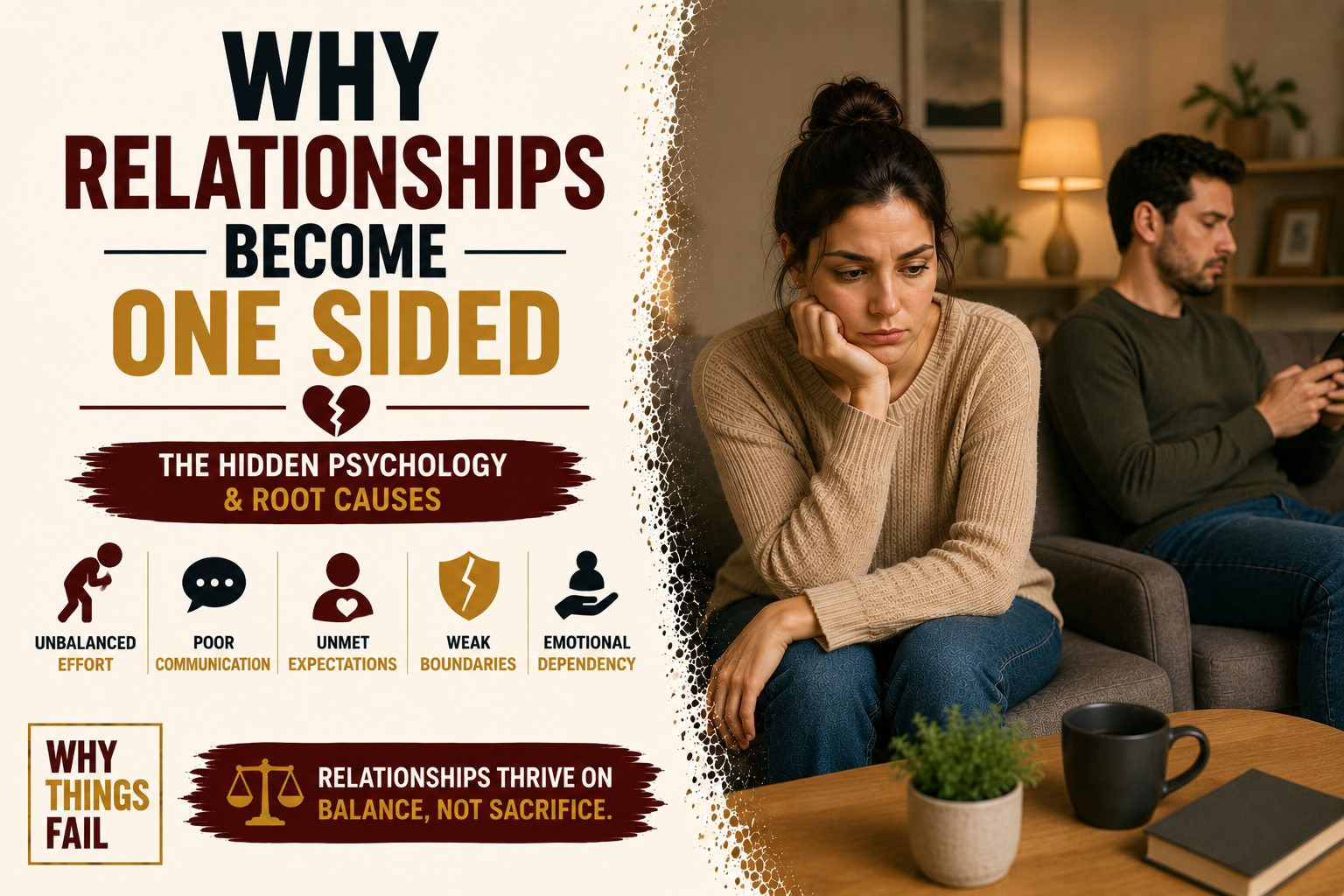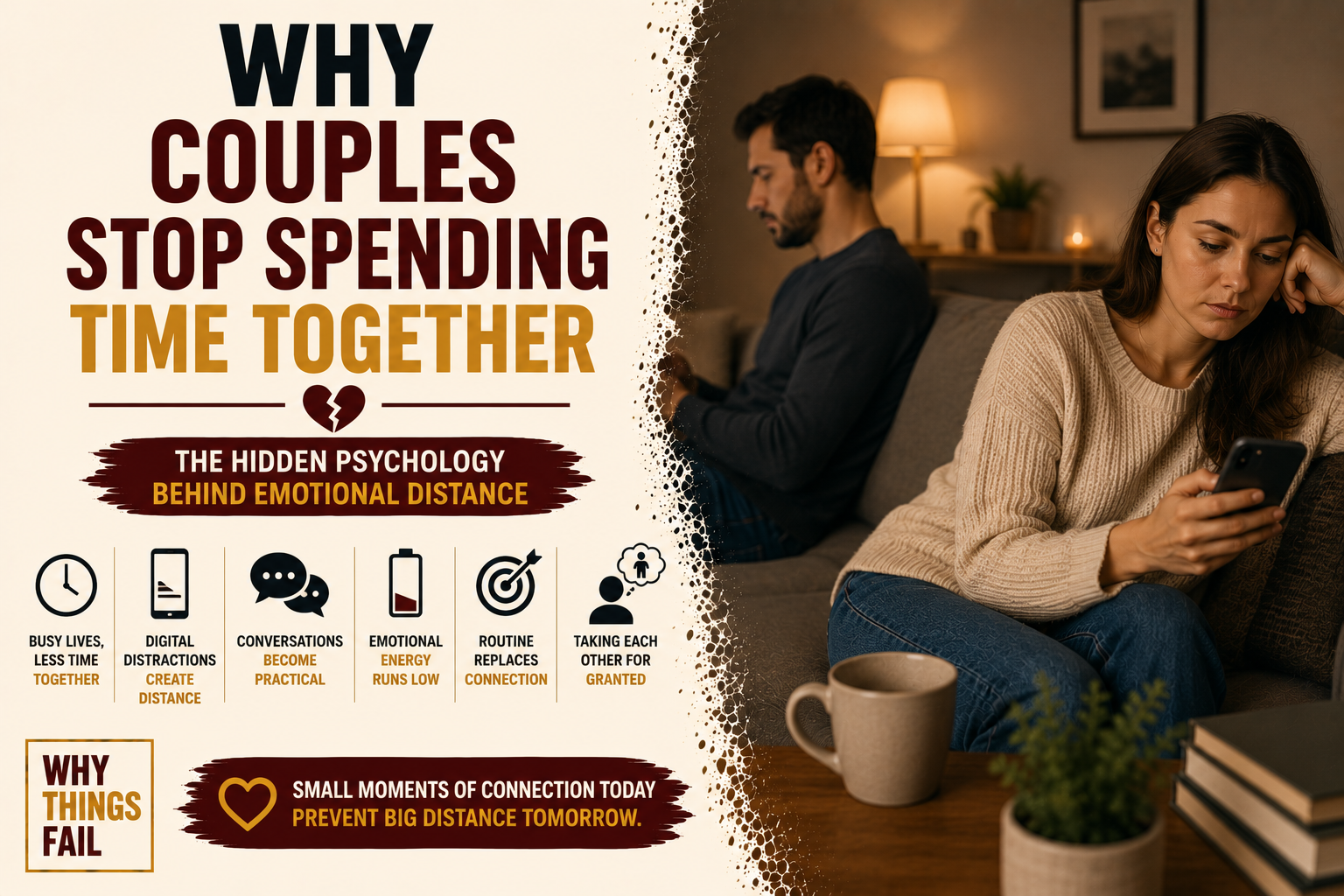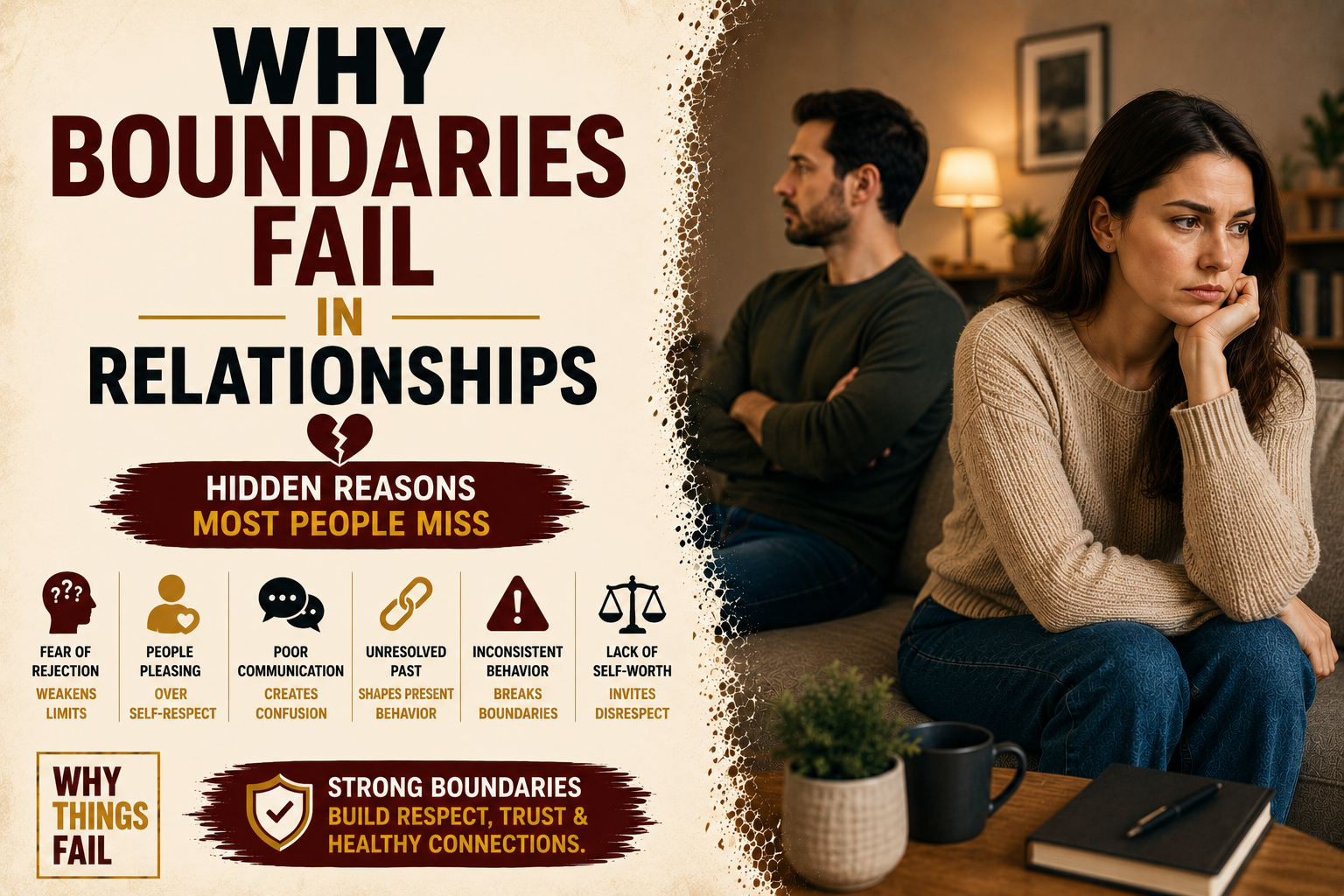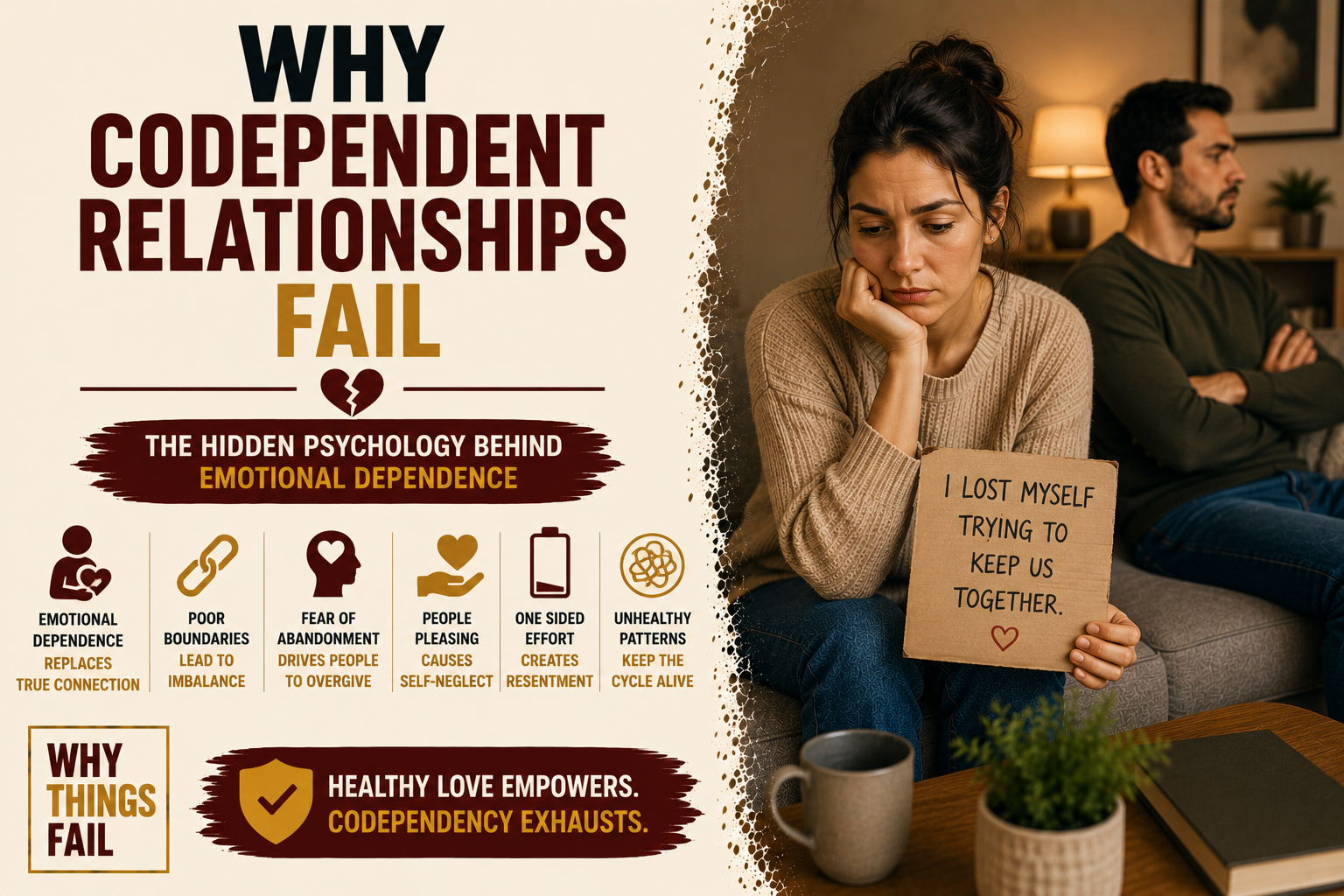
Quick Answer
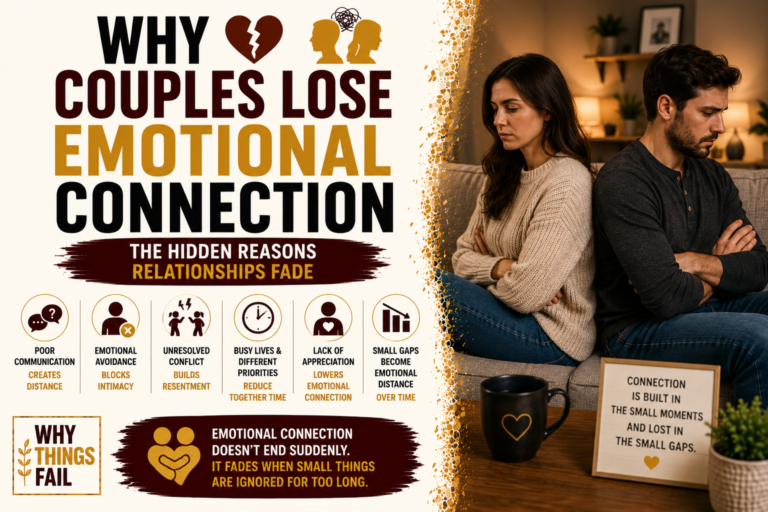
Couples rarely lose emotional connection because love suddenly disappears. Emotional distance usually develops through repeated small behaviours, poor communication, emotional avoidance, unresolved conflict and changing priorities. The relationship weakens gradually until both partners feel disconnected without fully understanding why.
Introduction
Most relationships do not end because of one dramatic argument or a single act of betrayal.
Instead, emotional connection often fades quietly.
Two people who once shared every thought, celebrated small victories together and looked forward to spending time with each other slowly become strangers living under the same roof.
They continue talking, but their conversations become practical instead of personal.
They continue living together, but emotional intimacy begins to disappear.
This gradual disconnection explains why many couples describe the end of a relationship as unexpected, even though the process may have been unfolding for years.
The important question is not why relationships sometimes fail.
The more revealing question is why emotional connection slowly disappears even when both partners still care about each other.
Understanding this matters because emotional connection forms the foundation of trust, intimacy, communication and long term relationship satisfaction. When it weakens, every other part of the relationship becomes more fragile.
What Is Emotional Disconnection?
Emotional disconnection occurs when partners no longer feel deeply understood, emotionally supported or psychologically close to one another.
This does not necessarily mean they no longer love each other.
Many emotionally disconnected couples remain committed to the relationship.
They continue raising children, managing finances and sharing responsibilities.
The difference is that emotional safety begins to disappear.
Conversations become shorter.
Curiosity about each other declines.
Affection becomes less frequent.
Shared experiences gradually give way to separate routines.
Emotional disconnection is therefore not defined by physical distance.
It is defined by the gradual loss of emotional intimacy.
The Biggest Myth
The most common belief is that couples lose emotional connection because they simply fall out of love.
This explanation is appealing because it is simple.
Unfortunately, it is rarely accurate.
Love is not usually lost overnight.
Connection weakens through hundreds of small interactions.
Psychologists studying long term relationships consistently find that emotional intimacy depends less on dramatic romantic gestures and more on everyday behaviour.
Small moments of appreciation.
Genuine curiosity.
Emotional availability.
Respect during disagreement.
Consistent communication.
When these behaviours gradually disappear, emotional closeness declines long before either partner recognises what is happening.
Love often survives much longer than emotional connection.
The real challenge is not preserving feelings.
It is preserving the habits that allow those feelings to remain visible.
What Usually Happens?
Most emotionally disconnected relationships follow a familiar pattern.
Life becomes busier.
Work demands increase.
Children require attention.
Financial responsibilities grow.
Stress becomes normal.
Couples spend less time having meaningful conversations.
Communication shifts towards daily responsibilities.
Minor disappointments remain unresolved.
Small misunderstandings accumulate.
Emotional distance slowly replaces emotional closeness.
Neither partner intends to create this outcome.
Both often believe they will reconnect when life becomes less demanding.
Unfortunately, emotional connection rarely returns automatically.
Like trust, it weakens through neglect and strengthens through intentional effort.
Why Do Couples Lose Emotional Connection?
This is where the deeper investigation begins.
Emotional disconnection is rarely caused by one event.
It develops through the interaction of psychology, behaviour, communication and changing priorities.
Relationships do not suddenly become emotionally distant.
They gradually lose the conditions that once supported emotional closeness.
Emotional Safety Begins To Disappear
Every healthy relationship depends upon emotional safety.
People naturally share fears, hopes and personal struggles only when they believe they will be understood rather than criticised.
When conversations repeatedly lead to judgement, dismissal or defensiveness, emotional openness declines.
Partners begin protecting themselves.
They share less.
They avoid vulnerable conversations.
Silence slowly replaces honesty.
Over time, this creates emotional loneliness even while living together.
The relationship becomes functionally successful but emotionally empty.
Familiarity Reduces Curiosity
One of the most overlooked psychological changes in long term relationships is the assumption that partners already know everything about each other.
Early in a relationship, curiosity is constant.
Questions feel natural.
People actively explore each other’s dreams, opinions and experiences.
Years later, many couples stop asking.
They assume nothing has changed.
In reality, people continue evolving throughout life.
New ambitions develop.
Priorities change.
Personal challenges emerge.
Without continued curiosity, partners slowly stop understanding who the other person is becoming.
Emotional connection weakens because knowledge becomes outdated.
Stress Changes Emotional Priorities
Behavioural psychology shows that chronic stress changes how people communicate.
When individuals feel mentally exhausted, the brain prioritises solving immediate problems rather than building emotional closeness.
Work pressure.
Financial concerns.
Parenting responsibilities.
Health issues.
These challenges consume emotional energy.
Conversations become centred on tasks instead of connection.
Partners begin discussing schedules rather than feelings.
Problems rather than possibilities.
Responsibilities rather than relationships.
The absence of emotional investment is rarely intentional.
It is often the consequence of limited emotional capacity.
Unresolved Conflict Creates Emotional Distance
Many people believe conflict destroys relationships.
Research suggests something different.
Healthy couples also disagree.
The difference lies in how disagreements are managed.
When conflict remains unresolved, emotional trust gradually declines.
Small disappointments accumulate.
Resentment quietly replaces empathy.
Instead of discussing concerns openly, partners begin avoiding uncomfortable conversations.
Avoidance creates temporary peace.
It does not solve underlying issues.
Eventually, emotional withdrawal becomes easier than emotional honesty.
The relationship appears calm on the surface while emotional intimacy continues weakening beneath it.
Emotional Needs Become Unspoken
Every individual has emotional needs.
Some seek appreciation.
Others value reassurance.
Some need quality time.
Others feel connected through meaningful conversation.
Problems arise when these needs remain unspoken.
Partners often expect emotional understanding without clear communication.
When expectations remain invisible, disappointment becomes inevitable.
Repeated disappointment slowly changes perception.
Instead of believing their partner is unaware, people begin believing their partner no longer cares.
This interpretation changes behaviour.
Affection decreases.
Patience declines.
Emotional investment weakens.
The original problem was communication.
The lasting consequence becomes emotional disconnection.
Small Habits Shape Relationship Quality
Relationships are rarely strengthened by extraordinary moments alone.
They are shaped by repeated daily behaviours.
Listening without distraction.
Expressing appreciation.
Showing affection.
Being emotionally present.
Responding with empathy.
Behavioural scientists describe these as relationship habits.
Individually they appear insignificant.
Collectively they determine whether emotional connection grows or gradually disappears.
Many couples focus on solving major problems while overlooking the everyday interactions that quietly define the emotional health of the relationship.
Those small moments become the invisible system that either strengthens intimacy or slowly allows it to fade.
Warning Signs
Emotional disconnection rarely appears without warning. The difficulty is that most warning signs seem ordinary when they first emerge. Couples often dismiss them as temporary consequences of stress, busy schedules or changing responsibilities.
One of the earliest warning signs is the disappearance of meaningful conversation. Discussions become limited to household responsibilities, work commitments or parenting decisions. Personal thoughts, emotions and aspirations gradually disappear from everyday communication.
Another warning sign is emotional indifference. Arguments become less frequent, not because problems have been resolved, but because both partners no longer believe discussing them will make a difference. Silence replaces disagreement, creating the illusion of stability while emotional distance continues to grow.
Reduced curiosity is another important indicator. Partners stop asking about each other’s experiences, ambitions and feelings because they assume they already know the answers. As personal growth continues, this assumption creates an increasing emotional gap.
Affection also begins to decline. Physical closeness, thoughtful gestures and spontaneous expressions of appreciation become less common. Emotional intimacy weakens because positive interactions gradually become less frequent than routine obligations.
Perhaps the clearest warning sign is emotional loneliness within the relationship. A person may feel unsupported despite sharing a home with someone they love. When emotional needs remain consistently unmet, people often stop expressing them altogether.
These warning signs are frequently ignored because they develop slowly. Human beings naturally adapt to gradual change, making emotional decline difficult to recognise until the relationship feels fundamentally different.
What Could Have Prevented It?
Most emotionally disconnected relationships could not have been saved by one grand romantic gesture.
They could have been strengthened through consistent daily behaviour.
The first requirement is intentional communication. Meaningful conversations should not be reserved for moments of crisis. Regular discussions about emotions, concerns, personal goals and changing priorities help couples remain psychologically connected as life evolves.
Emotional safety is equally important. Partners who feel heard without judgement are more willing to express vulnerability before problems become resentment. Listening with empathy often strengthens connection more than offering immediate solutions.
Conflict should also be viewed differently. Avoiding disagreement may preserve temporary peace, but unresolved issues quietly weaken trust. Healthy relationships allow difficult conversations without threatening emotional security.
Another important safeguard is maintaining curiosity. People continue changing throughout adulthood. Couples who remain interested in each other’s evolving thoughts, ambitions and experiences are more likely to maintain emotional intimacy over many years.
Finally, relationships require deliberate investment. Careers, finances and family responsibilities naturally compete for attention. Without intentional effort, emotional connection gradually becomes another neglected priority rather than the foundation supporting every other aspect of life.
Lessons
Emotional connection is not sustained by love alone.
It is sustained by repeated behaviours that communicate safety, appreciation and understanding.
One important lesson is that neglect often causes greater damage than conflict. Relationships usually weaken because positive interactions gradually become less frequent, not because dramatic events suddenly destroy trust.
Another lesson is that communication is less about speaking and more about understanding. Partners who consistently seek to understand each other’s emotional experience develop stronger resilience during periods of stress.
Relationships also demonstrate an important principle found throughout psychology and behavioural economics. Small repeated actions create greater long term consequences than occasional significant events. Tiny moments of kindness, curiosity and empathy accumulate into lasting emotional security.
Perhaps the most valuable lesson is that emotional connection requires continuous adaptation. People change throughout life. Successful relationships grow because partners remain committed to understanding those changes instead of assuming they already know one another completely.
Failure Pattern
The dominant pattern behind emotional disconnection is Emotional Neglect combined with Poor Communication and Short Term Priorities.
This pattern develops because immediate responsibilities consistently receive greater attention than long term relationship health. Work deadlines appear urgent. Financial pressures demand action. Family obligations require constant effort.
Emotional connection, however, depends upon activities whose benefits appear gradually.
Meaningful conversations.
Shared experiences.
Active listening.
Emotional reassurance.
Because these behaviours do not produce immediate visible results, they are often postponed until a more convenient time.
Unfortunately, that time rarely arrives.
The same behavioural pattern appears in friendships, family relationships, leadership and business partnerships. Systems weaken when consistent maintenance is replaced by reactive problem solving.
Hidden Lesson
Most couples do not lose emotional connection because they stop loving each other.
They lose it because they stop making each other feel emotionally understood.
Love is often treated as a feeling.
In reality, emotional connection is maintained through behaviour.
Every conversation, every response, every expression of appreciation either strengthens psychological safety or gradually weakens it.
By the time couples recognise emotional distance, the behaviours responsible for creating it have often become normal routines.
The relationship did not suddenly change.
The invisible habits supporting emotional intimacy quietly disappeared.
Failure Scorecard
| Area | Score | Explanation |
| Emotional Communication | 4/10 | Conversations often become practical rather than emotionally meaningful. |
| Decision Making | 5/10 | Daily priorities frequently outweigh relationship needs. |
| Conflict Management | 4/10 | Difficult conversations are often avoided instead of resolved. |
| Long Term Thinking | 5/10 | Many couples focus on immediate responsibilities rather than maintaining emotional intimacy. |
| Relationship Knowledge | 6/10 | Partners understand each other’s history but often overlook personal growth and changing emotional needs. |
| Emotional Awareness | 4/10 | Feelings remain unspoken until emotional distance has already developed. |
| Planning | 5/10 | Relationships rarely include intentional habits that protect emotional connection. |
| Adaptability | 6/10 | Strong relationships evolve with changing life circumstances, while weaker relationships resist necessary change. |
Key Takeaways
- Emotional connection usually fades gradually rather than disappearing suddenly.
- Small daily interactions shape relationship quality more than occasional romantic gestures.
- Emotional safety encourages honesty, vulnerability and lasting intimacy.
- Curiosity helps partners grow together instead of growing apart.
- Avoiding conflict often increases emotional distance rather than reducing it.
- Stress explains some relationship difficulties but does not fully explain emotional disconnection.
- Unspoken expectations frequently become unspoken disappointments.
- Lasting relationships depend on consistent emotional investment rather than temporary emotional intensity.
Frequently Asked Questions
Why do couples lose emotional connection?
Couples usually lose emotional connection because meaningful communication, emotional safety and shared experiences gradually decline. Stress, routine and unresolved conflict often accelerate this process.
Can emotional connection return after it has been lost?
Yes. Emotional connection can be rebuilt when both partners consistently restore trust, communication, curiosity and emotional availability. The process requires behavioural change rather than isolated romantic gestures.
What is the biggest cause of emotional disconnection?
The biggest cause is gradual emotional neglect. Small moments of appreciation, empathy and meaningful conversation become less frequent until emotional intimacy weakens over time.
Does arguing mean a relationship is failing?
Not necessarily. Healthy disagreement can strengthen understanding when handled respectfully. Emotional withdrawal and avoidance often present a greater long term risk than constructive conflict.
How can couples recognise emotional distance early?
Warning signs include fewer meaningful conversations, reduced curiosity, declining affection, unresolved resentment and feeling emotionally alone despite spending time together.
Conclusion
Couples rarely lose emotional connection because affection suddenly disappears. More often, emotional intimacy fades through repeated behavioural patterns that slowly replace curiosity with assumption, empathy with routine and meaningful conversation with practical communication.
Understanding this changes how relationship failure is viewed. Emotional disconnection is rarely the result of one decisive moment. It is the predictable outcome of small habits repeated over time, reminding us that the strongest relationships are not preserved by extraordinary acts of love but by ordinary behaviours that consistently make each partner feel seen, heard and understood.