Quick Answer
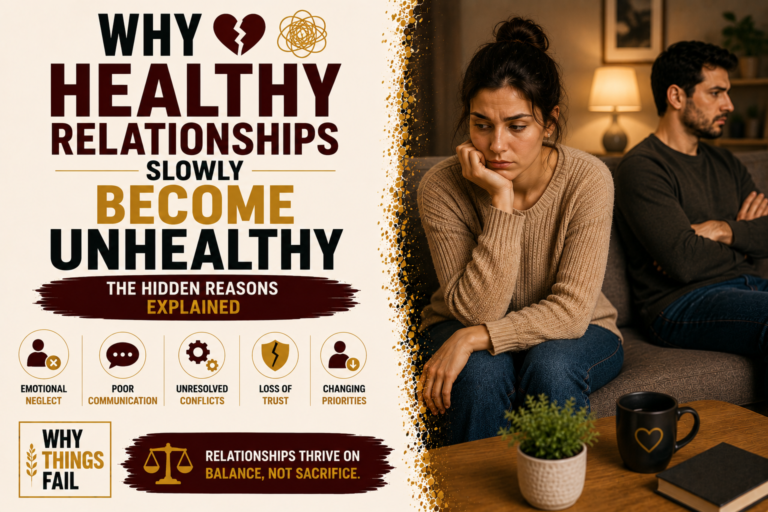
Healthy relationships rarely become unhealthy because of one major event. They usually deteriorate through small behavioural changes, emotional neglect, poor communication, unresolved conflict and unconscious habits that gradually weaken trust, respect and emotional safety.
Introduction
Most unhealthy relationships do not begin that way.
They often start with affection, trust, excitement and genuine commitment. Both people invest time, communicate openly and make each other feel valued. The relationship appears strong because both partners naturally prioritise one another.
Yet many relationships that once seemed healthy slowly become emotionally distant, frustrating and exhausting.
Conversations become shorter.
Arguments become more frequent.
Affection becomes less natural.
Understanding slowly gives way to misunderstanding.
Neither person may remember exactly when things began to change.
This gradual decline raises an important question.
Why do relationships that begin with love and good intentions often become unhealthy over time?
Many people blame one dramatic event such as infidelity, financial stress or betrayal.
Although these events can certainly damage a relationship, they are often the visible outcome rather than the original cause.
Healthy relationships usually decline because of small decisions, repeated behaviours and emotional patterns that quietly reshape the relationship long before either partner recognises the problem.
Understanding these hidden patterns matters because unhealthy relationships affect far more than emotional wellbeing. They influence mental health, family stability, parenting, career performance, financial decisions and overall quality of life.
To understand why relationships fail, we must look beyond conflict itself and examine the psychology, behaviour and systems that quietly change healthy relationships into unhealthy ones.
What Is An Unhealthy Relationship?
An unhealthy relationship is not simply one where disagreements occur.
Conflict exists in every healthy relationship because two different people naturally have different opinions, expectations and experiences.
The difference lies in how conflict is managed.
Healthy relationships strengthen trust after disagreements because both partners remain committed to understanding each other.
Unhealthy relationships gradually weaken trust because conflicts become opportunities to defend, criticise, withdraw or control rather than communicate.
The decline is rarely immediate.
Instead, emotional safety slowly decreases while frustration quietly increases.
Partners may still love one another, yet they begin feeling less understood, less appreciated and less emotionally connected.
Relationship failure therefore begins long before separation.
It begins when emotional connection is gradually replaced by emotional distance.
The Biggest Myth
One of the most common beliefs is that healthy relationships become unhealthy because people stop loving each other.
Research in relationship psychology suggests something more complex.
Love often remains present long after relationship quality begins to decline.
The real problem is that emotional habits change.
People become busy.
Responsibilities increase.
Stress accumulates.
Communication becomes functional rather than meaningful.
Small emotional disconnections begin replacing daily moments of appreciation and understanding.
Eventually the relationship no longer feels like the safe place it once was.
The absence of love is rarely the starting point.
The absence of consistent emotional investment usually is.
What Usually Happens?
Most unhealthy relationships follow a remarkably similar progression.
The relationship begins with strong emotional connection.
Partners communicate openly.
They show curiosity about each other’s lives.
Small acts of appreciation occur naturally.
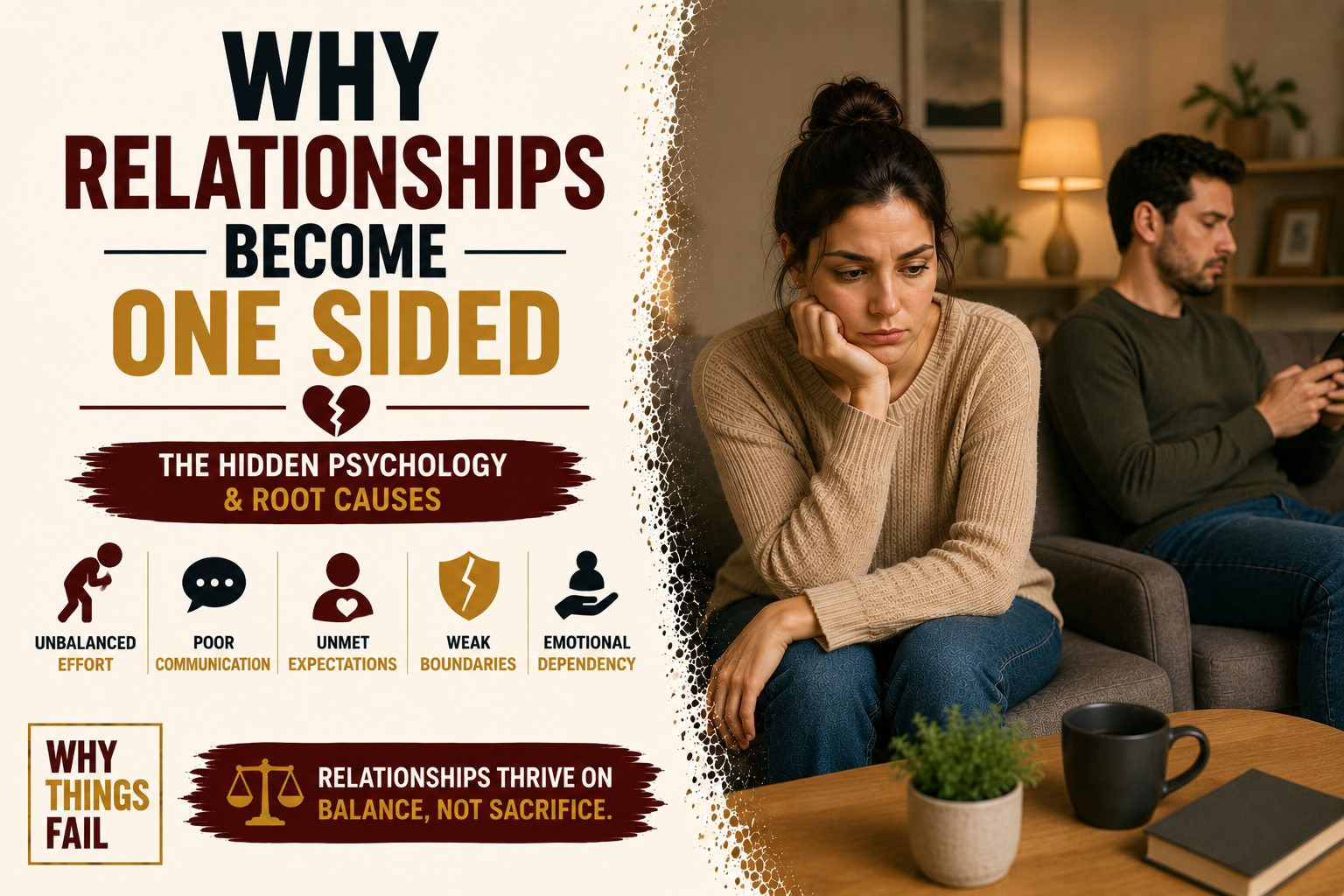
Over time, familiarity replaces intentional effort.
Daily routines become more important than emotional connection.
Conversations become shorter and increasingly focused on responsibilities instead of feelings.
Minor disappointments remain unresolved.
Small frustrations accumulate.
Emotional distance gradually develops.
Arguments become less about the original issue and more about years of unresolved emotions.
Eventually both partners believe the relationship changed suddenly.
In reality, the decline often began months or even years earlier through small behavioural changes that neither person considered significant at the time.
Why Do Healthy Relationships Slowly Become Unhealthy?
This is where the deeper investigation begins.
Relationships rarely fail because of one conversation.
They fail because repeated behavioural patterns quietly reshape the emotional environment in which both people live.
The relationship itself becomes a system.
Every interaction either strengthens that system or weakens it.
Emotional Neglect Is Usually Unintentional
Most partners do not intentionally ignore one another.
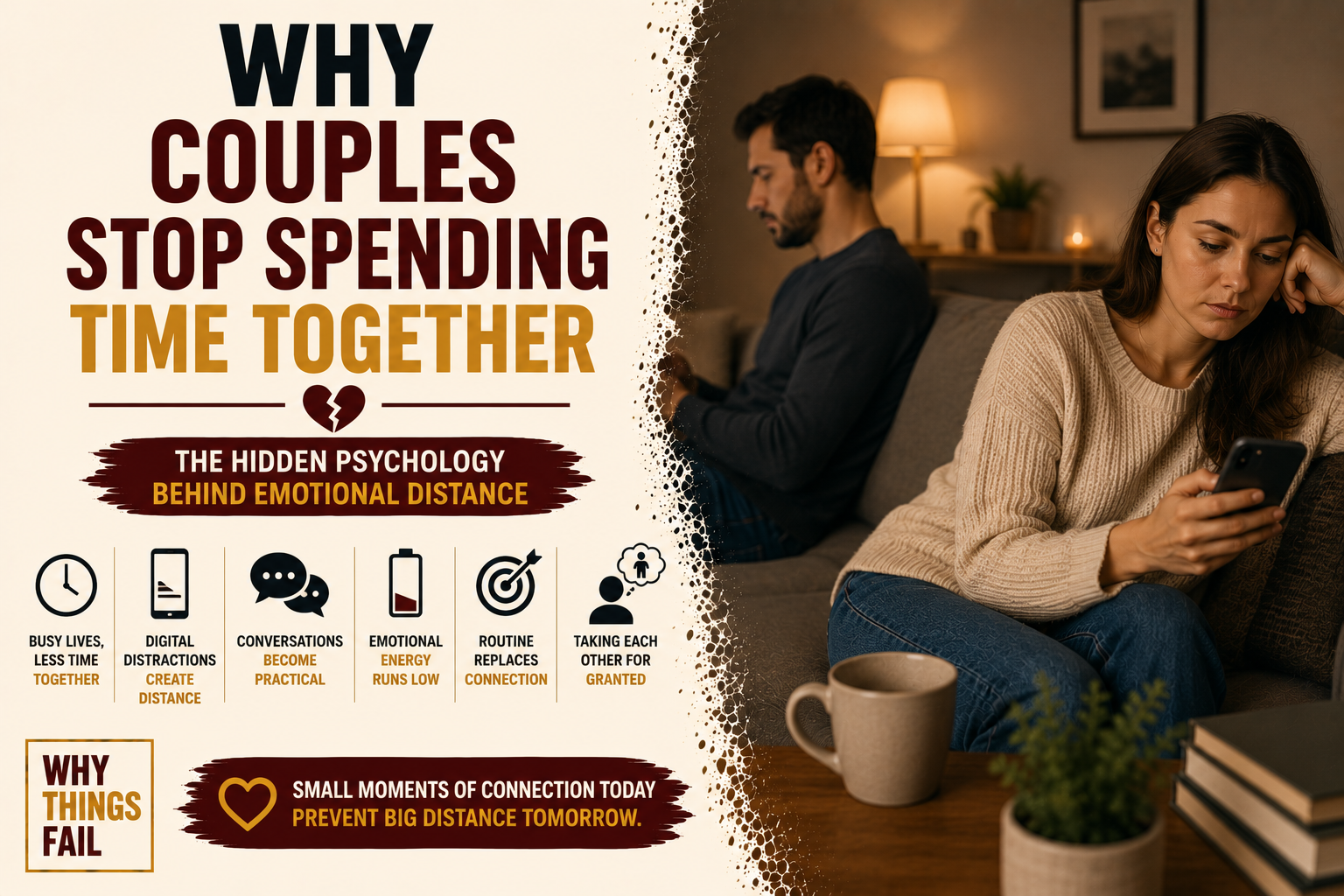
Emotional neglect often develops because life becomes increasingly demanding.
Careers require more attention.
Children introduce new responsibilities.
Financial pressure increases.
Daily routines become dominated by practical tasks.
Conversations begin focusing on schedules, bills, work and household responsibilities.
Emotional connection slowly receives less attention.
The danger is that emotional neglect is almost invisible while it develops.
No single conversation appears damaging.
No single week feels dramatically different.
Yet months of limited emotional connection quietly change how both partners experience the relationship.
Eventually they stop feeling emotionally understood.
The relationship becomes efficient rather than emotionally fulfilling.
Familiarity Reduces Appreciation
Human psychology naturally adapts to positive experiences.
Behavioural scientists describe this process as hedonic adaptation.
The excitement people experience during the early stages of a relationship gradually becomes normal.
Acts of kindness that once felt deeply meaningful become expected.
Expressions of gratitude become less frequent.
Compliments become less common.
Neither partner intentionally becomes less caring.
Instead, familiarity reduces awareness of each other’s value.
This creates an important psychological shift.
People begin noticing what is missing rather than appreciating what already exists.
Small disappointments receive greater attention than everyday acts of support.
Over time, emotional satisfaction gradually declines despite neither person intentionally changing their commitment.
Poor Communication Is Usually A Symptom Rather Than The Cause
Communication problems are frequently blamed for unhealthy relationships.
However, communication often reflects deeper emotional processes rather than creating them.
People communicate poorly when they no longer feel psychologically safe.
Fear of criticism encourages silence.
Fear of rejection discourages vulnerability.
Fear of conflict encourages avoidance.
Instead of expressing emotions honestly, partners begin protecting themselves emotionally.
Important conversations are postponed.
Feelings remain unspoken.
Assumptions replace curiosity.
Misunderstanding gradually becomes normal.
Communication breaks down because emotional safety has already begun disappearing.
Small Resentments Create Long Term Distance
Few relationships end because of one major disappointment.
More commonly, they deteriorate through accumulated resentment.
One forgotten promise.
One unresolved disagreement.
One repeated criticism.
One moment of emotional absence.
Each event appears insignificant on its own.
Together they begin changing how partners interpret each other’s behaviour.
Acts that were once viewed generously become interpreted negatively.
Patience decreases.
Defensiveness increases.
The relationship slowly shifts from cooperation towards self protection.
This transformation rarely happens consciously.
It develops because unresolved emotions accumulate faster than they are repaired.
Stress Changes Human Behaviour
External stress rarely remains outside the relationship.
Financial uncertainty.
Career pressure.
Health concerns.
Parenting responsibilities.
Family conflict.
These pressures reduce emotional capacity.
Psychologists explain that chronic stress limits cognitive resources needed for empathy, patience and thoughtful communication.
People become more reactive.
Listening becomes less effective.
Small disagreements feel larger than they actually are.
Stress therefore does not simply create conflict.
It reduces the emotional resources required to manage conflict well.
The relationship becomes another source of pressure rather than a place of emotional recovery.
Expectations Quietly Change
Every relationship contains expectations.
Some are spoken.
Many remain completely unspoken.
Partners expect appreciation.
Support.
Respect.
Attention.
Affection.
As life changes, expectations also change.
Problems begin when expectations evolve without communication.
One partner believes nothing has changed.
The other believes their emotional needs are no longer recognised.
This creates disappointment without either person fully understanding why.
Expectation gaps often remain invisible because neither partner realises they are living according to different emotional assumptions.
The Desire To Be Right Becomes Stronger Than The Desire To Understand
One of the most damaging behavioural changes occurs during conflict.
The purpose of disagreement quietly changes.
Instead of solving problems together, each partner begins defending their own position.
Conversations become debates.
Listening becomes preparation for the next argument.
Winning the discussion becomes more important than understanding the other person’s experience.
This shift transforms conflict from a tool for growth into a source of emotional separation.
The relationship no longer feels like two people solving one problem.
It feels like two people competing against each other.
Warning Signs
Healthy relationships rarely become unhealthy without warning. The challenge is that the warning signs often appear ordinary. They develop gradually and are easily dismissed as temporary stress or part of everyday life.
One of the earliest warning signs is emotional withdrawal. Conversations become shorter and less meaningful. Partners continue discussing responsibilities, work and family matters, but they stop sharing thoughts, worries and personal experiences. The relationship continues functioning, yet emotional intimacy quietly fades.
Another warning sign is the loss of curiosity. Healthy relationships are sustained because partners continue learning about one another as they grow. When curiosity disappears, assumptions replace genuine understanding. People begin believing they already know what the other person thinks or feels, reducing meaningful communication.
Defensiveness is another important indicator. Instead of viewing disagreements as opportunities to solve problems together, each conversation becomes an attempt to protect personal pride. Responsibility shifts towards blaming rather than understanding.
Small acts of appreciation also become less frequent. Expressions of gratitude, affection and encouragement gradually disappear because both partners assume they no longer need to be expressed. Appreciation becomes replaced by expectation.
Perhaps the most significant warning sign is emotional indifference. Arguments may become less frequent, but this does not necessarily indicate improvement. Sometimes people stop arguing because they no longer believe change is possible. Emotional silence often represents resignation rather than peace.
These warning signs are frequently ignored because they rarely appear dramatic. They resemble normal life pressures, making it difficult for either partner to recognise that the relationship itself is slowly changing.
What Could Have Prevented It?
Most unhealthy relationships could not have been prevented through one perfect conversation or one grand gesture. They could have been strengthened through consistent attention to small behaviours that preserve emotional connection over time.
One of the most effective safeguards is intentional communication. Conversations should not focus only on responsibilities and daily routines. Partners also need opportunities to discuss emotions, expectations, concerns and personal growth before misunderstandings accumulate.
Emotional appreciation is equally important. Gratitude reinforces positive behaviour and reminds both people that they remain valued despite the familiarity that naturally develops over time.
Conflict should also be viewed differently. Healthy couples recognise that disagreement itself is not dangerous. The real danger appears when disagreements become competitions instead of opportunities for understanding. Approaching conflict with curiosity rather than judgement allows problems to strengthen trust instead of weakening it.
Managing external stress is another important protective factor. Financial pressure, career demands and family responsibilities cannot always be avoided, but recognising their emotional impact prevents partners from directing unrelated frustration towards one another.
Finally, healthy relationships require intentional maintenance rather than passive hope. Just as physical health depends upon consistent habits rather than occasional effort, emotional health depends upon regular investment in trust, communication and mutual respect.
Lessons
The gradual decline of healthy relationships offers lessons that extend beyond personal partnerships. They reveal how trust develops, how systems weaken and how small behavioural choices shape long term outcomes.
The first lesson is that relationships are influenced more by consistency than intensity. Grand romantic gestures cannot compensate for months of emotional neglect. Daily habits shape relationship quality far more than occasional extraordinary moments.
The second lesson is that emotional safety is one of the most valuable forms of trust. People communicate honestly only when they believe they will be heard without judgement, criticism or dismissal. Once emotional safety weakens, communication naturally becomes defensive.
Another lesson is that successful relationships depend upon adaptation. People change throughout life because careers, families, health and personal experiences continually reshape priorities. Relationships remain healthy when partners continue understanding each other instead of assuming nothing has changed.
Perhaps the most enduring lesson is that healthy relationships rarely survive through love alone. They survive because both people repeatedly choose behaviours that protect trust even when life becomes demanding.
Failure Pattern
The dominant pattern behind unhealthy relationships is Emotional Neglect combined with Poor Communication and Short Term Thinking.
This pattern appears repeatedly because emotional needs rarely disappear. They simply remain unspoken until disappointment gradually replaces connection.
Stress encourages emotional withdrawal.
Familiarity reduces appreciation.
Unresolved conflict creates resentment.
Resentment reduces empathy.
Reduced empathy weakens communication.
Poor communication increases misunderstanding.
The cycle repeats until both partners feel disconnected despite sharing the same relationship.
This behavioural pattern also appears within friendships, families, business partnerships and professional teams. Trust weakens whenever communication declines, assumptions increase and unresolved problems accumulate over time.
Hidden Lesson
Healthy relationships rarely collapse because love suddenly disappears.
They weaken because people slowly stop protecting the conditions that allowed love to thrive.
The deepest lesson is that relationships do not fail through one decisive moment. They fail through hundreds of ordinary moments where emotional connection is replaced by distraction, assumptions, defensiveness or neglect.
By the time serious problems become visible, the behaviours responsible for those problems have often existed for much longer than either person realised.
Failure Scorecard
| Area | Score | Explanation |
| Emotional Communication | 4/10 | Important conversations gradually become less open and more defensive. |
| Decision Making | 5/10 | Many relationship decisions are influenced by assumptions instead of honest discussion. |
| Conflict Management | 4/10 | Disagreements often become personal rather than collaborative. |
| Long Term Thinking | 5/10 | Immediate pressures frequently receive greater attention than relationship maintenance. |
| Relationship Awareness | 6/10 | Many couples recognise problems only after emotional distance has already developed. |
| Emotional Control | 5/10 | Stress, frustration and disappointment frequently influence communication. |
| Planning | 4/10 | Few couples intentionally plan time for emotional connection as life becomes busier. |
| Adaptability | 6/10 | Strong relationships adjust to changing circumstances instead of relying on old expectations. |
Key Takeaways
- Healthy relationships usually decline through repeated small behaviours rather than one dramatic event.
- Emotional neglect is often unintentional but still produces lasting consequences.
- Communication problems usually reflect deeper emotional disconnection rather than causing it.
- Unresolved resentment gradually changes how partners interpret each other’s behaviour.
- Stress influences relationship quality by reducing patience, empathy and emotional availability.
- Appreciation must continue even after familiarity develops.
- Emotional safety encourages honest communication and strengthens trust.
- Long term relationship health depends upon consistent daily investment rather than occasional effort.
Frequently Asked Questions
Why do healthy relationships become unhealthy over time?
Healthy relationships usually become unhealthy because emotional neglect, unresolved conflict, changing expectations and poor communication gradually weaken trust. The process is often slow enough that neither partner notices until emotional distance has already developed.
Can love alone keep a relationship healthy?
Love is important, but it is rarely sufficient on its own. Healthy relationships also require communication, trust, emotional safety, mutual respect and consistent effort to adapt as both people grow and change.
What is the earliest warning sign of an unhealthy relationship?
One of the earliest warning signs is emotional withdrawal. Conversations become increasingly practical while emotional sharing, curiosity and appreciation become less frequent.
Why do couples ignore warning signs?
People often attribute relationship changes to temporary stress, work or family responsibilities. Because the decline is gradual, behavioural changes feel normal rather than alarming until they become deeply established.
Can an unhealthy relationship become healthy again?
Many relationships can improve when both partners recognise the underlying behavioural patterns, rebuild emotional safety and consistently change the habits that created emotional distance. Improvement depends upon mutual willingness rather than isolated effort.
Conclusion
Healthy relationships rarely become unhealthy because of one dramatic failure. They change because countless ordinary behaviours quietly reshape trust, communication and emotional connection until the relationship no longer feels like the place where it once began.
Understanding this process reveals that relationship failure is rarely unpredictable. It follows behavioural patterns that develop slowly, making them difficult to notice but not impossible to change. The strongest relationships are not those that avoid every challenge, but those that continually protect the small daily behaviours that allow trust, respect and emotional safety to endure.