Quick Answer
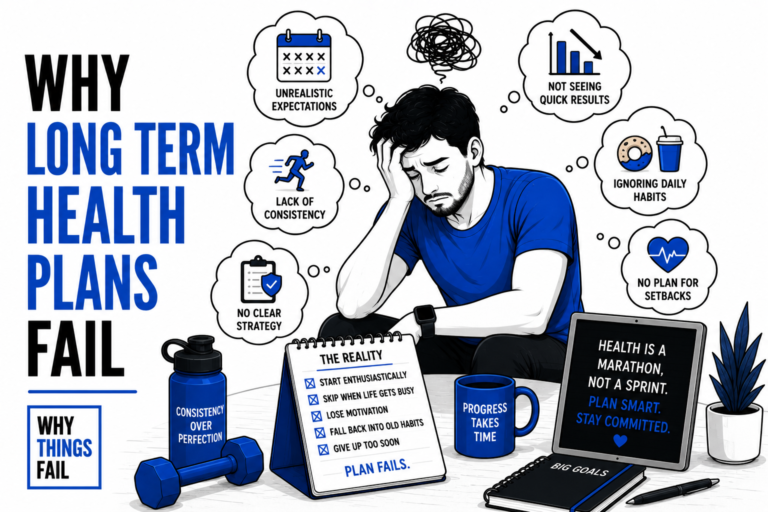
Long term health plans fail because people struggle to maintain consistent behaviours over time rather than lacking knowledge about healthy living. Emotional decision making, unrealistic expectations, poor planning, environmental influences and behavioural biases gradually replace disciplined habits, making failure predictable long before visible results disappear.
Introduction
Every January, millions of people promise themselves that this year will be different.
They buy gym memberships, download fitness applications, prepare healthy meal plans and set ambitious weight loss goals. For a few weeks, motivation feels limitless. Workouts become routine, unhealthy foods disappear from the kitchen and progress appears inevitable.
Yet within months, many of these plans quietly fade away.
Exercise becomes less frequent. Healthy meals are replaced by convenient alternatives. Missed workouts become missed weeks. Eventually, the health plan that once felt life changing becomes another abandoned commitment.
This pattern repeats across every age group, income level and profession. It affects individuals trying to lose weight, improve fitness, manage chronic illness or simply live healthier lives.
The obvious explanation is a lack of willpower.
The deeper explanation is far more complex.
Long term health plans do not usually fail because people do not understand what healthy living requires. Most adults already know that regular exercise, balanced nutrition, sufficient sleep and stress management improve health.
The real challenge lies in sustaining those behaviours when motivation fades, routines are disrupted and everyday life competes for attention.
Understanding why long term health plans fail requires looking beyond diets and exercise programmes. It requires examining the psychology of habits, the economics of decision making and the systems that shape everyday behaviour.
What Is A Long Term Health Plan?
A long term health plan is a structured commitment to improving physical or mental wellbeing through consistent behaviours maintained over months or years.
It may involve improving nutrition, increasing physical activity, managing body weight, reducing stress, improving sleep quality or preventing chronic disease.
Unlike short term challenges, a long term health plan depends on sustainable habits rather than temporary effort.
Failure does not occur because someone eats an unhealthy meal or misses a workout.
Failure occurs when repeated behavioural patterns gradually replace healthy routines until the original objective becomes increasingly difficult to achieve.
This distinction is important.
Temporary setbacks are normal.
Behavioural collapse is what ultimately causes long term health plans to fail.
The Biggest Myth
The most common belief is simple.
People fail because they lack motivation.
This explanation appears convincing because motivation often feels powerful at the beginning of every health journey.
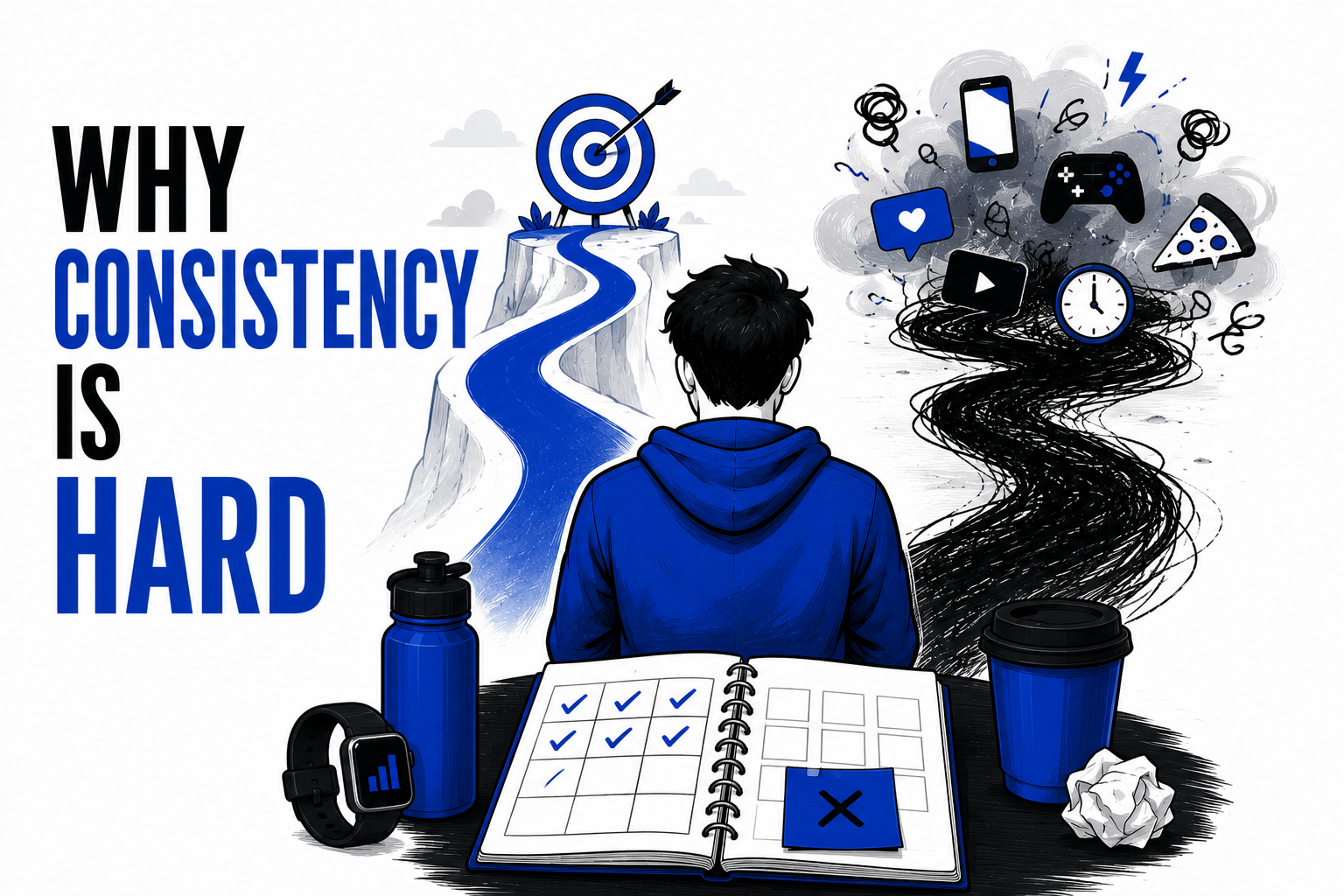
Unfortunately, motivation is one of the least reliable foundations for lasting behavioural change.
Motivation is emotional.
Habits are behavioural.
Emotions naturally rise and fall depending on stress, workload, sleep, family responsibilities and countless other influences.
If healthy living depends entirely on feeling motivated, consistency becomes impossible.
Behavioural scientists consistently find that successful long term change depends less on motivation and more on creating systems that make healthy decisions easier than unhealthy ones.
The most successful people are not necessarily the most motivated.
They are often the ones whose daily environments support consistent behaviour even when motivation disappears.
What Usually Happens?
Most long term health plans follow a familiar pattern.
The journey begins with enthusiasm.
Goals are ambitious.
Progress during the first few weeks creates excitement.
Visible improvements increase confidence.
Eventually, everyday responsibilities begin competing with the health plan.
Work becomes busier.
Family commitments increase.
Unexpected events interrupt routines.
Small compromises begin appearing.
One missed workout becomes several.
Healthy eating gradually becomes occasional healthy eating.
Progress slows.
Disappointment replaces excitement.
Many people interpret slower progress as failure, even though behavioural change naturally becomes more difficult over time.
Eventually, the health plan is abandoned.
Although the circumstances differ, the behavioural pattern remains remarkably consistent.
The plan rarely fails because one major event occurred.
It fails because small decisions accumulate until consistency disappears.
Why Does It Happen?
This is where the real investigation begins.
Long term health plans are often presented as nutritional or fitness challenges.
In reality, they are behavioural challenges.
Every healthy decision competes against immediate comfort, convenience and existing habits.
The conflict is not between knowing and not knowing.
It is between short term satisfaction and long term wellbeing.
Present Bias Makes Immediate Rewards More Attractive
Behavioural economists describe one of the strongest influences on health decisions as present bias.
People naturally value immediate rewards more than future benefits.
The benefits of exercise may appear months later.
The pleasure of skipping today’s workout appears immediately.
Healthy eating may reduce future health risks.
Fast food provides immediate convenience and satisfaction.
The human brain evolved to prioritise immediate outcomes because immediate survival once mattered more than distant rewards.
Modern environments exploit this tendency.
Highly processed foods are easily available.
Digital entertainment requires little physical effort.
Convenience frequently defeats long term planning because the brain perceives immediate comfort as more valuable than future health.
Habit Loops Often Defeat Good Intentions
Many people attempt to change behaviour without changing the routines that created the behaviour.
Habits develop through repeated cycles involving a cue, a routine and a reward.
Stress may trigger emotional eating.
Boredom may encourage excessive screen time.
Fatigue may reduce the likelihood of exercising.
Unless these underlying habit loops are understood, simply deciding to become healthier rarely produces lasting change.
People continue responding automatically to familiar situations because the brain prefers efficient routines over constant decision making.
Changing behaviour therefore requires redesigning routines rather than relying solely on determination.
Unrealistic Expectations Create Early Disappointment
Many health plans fail because expectations are disconnected from biological reality.
Social media frequently celebrates dramatic transformations achieved within weeks.
Marketing campaigns promise rapid weight loss and immediate fitness improvements.
These messages encourage unrealistic standards.
When progress naturally slows, many individuals conclude that the plan is no longer working.
Behavioural psychologists describe this as an expectation gap.
The greater the gap between expected progress and actual progress, the greater the likelihood of abandoning the goal.
Ironically, slow progress often represents sustainable progress.
Rapid results are usually far more difficult to maintain.
Decision Fatigue Gradually Weakens Discipline
Healthy living requires hundreds of small decisions every week.
Choosing nutritious meals.
Preparing food.
Making time for physical activity.
Sleeping consistently.
Managing stress.
Avoiding unhealthy habits.
Each decision consumes mental energy.
Psychologists refer to this gradual reduction in mental capacity as decision fatigue.
As mental energy declines, people increasingly choose convenient options instead of beneficial ones.
This explains why many people maintain healthy routines during weekends or holidays but struggle during demanding work periods.
The issue is not a lack of knowledge.
It is the cumulative burden of repeated decision making.
Social Environments Shape Behaviour More Than Willpower
Health decisions rarely occur in isolation.
Family habits, workplace culture, friendship groups and community environments all influence behaviour.
Choosing healthier meals becomes more difficult when unhealthy food dominates social gatherings.
Maintaining regular exercise becomes challenging when work schedules reward long hours rather than personal wellbeing.
Behavioural scientists describe this as environmental influence.
People often believe health outcomes depend entirely on personal responsibility.
In reality, behaviour is continuously shaped by surrounding incentives.
When environments encourage unhealthy choices, maintaining healthy habits requires constant resistance.
Few people can sustain that effort indefinitely.
Identity Often Matters More Than Information
One of the deepest reasons long term health plans fail has little to do with nutrition or exercise.
It relates to identity.
Many people view healthy behaviours as temporary tasks rather than permanent aspects of who they are.
They think,
“I am following a diet.”
Instead of,
“I am someone who eats nutritious food.”
This distinction appears subtle but produces profound behavioural differences.
Identity based behaviours require less daily motivation because they become part of self perception.
When behaviour aligns with identity, consistency becomes easier.
When behaviour conflicts with identity, every healthy decision feels like a sacrifice.
This explains why lasting health transformation rarely begins with changing food or exercise alone.
It begins with changing how individuals see themselves.
Warning Signs
Long term health plans rarely fail without warning. The early signs often appear so gradually that they seem insignificant. Over time, however, these small behavioural changes accumulate until the entire system begins to collapse.
One of the first warning signs is relying on motivation instead of routine. Healthy behaviours only occur when people feel inspired, energetic or optimistic. As soon as stress, illness or busy schedules appear, those behaviours disappear because they were never supported by consistent systems.
Another warning sign is adopting an all or nothing mindset. Missing one workout or eating one unhealthy meal is viewed as complete failure. Instead of returning to healthy habits the following day, many people abandon the entire plan because they believe they have already failed.
Constantly changing diets or exercise programmes is another indication that progress is being judged emotionally rather than objectively. Every new approach promises faster results, but frequent changes prevent habits from becoming permanent.
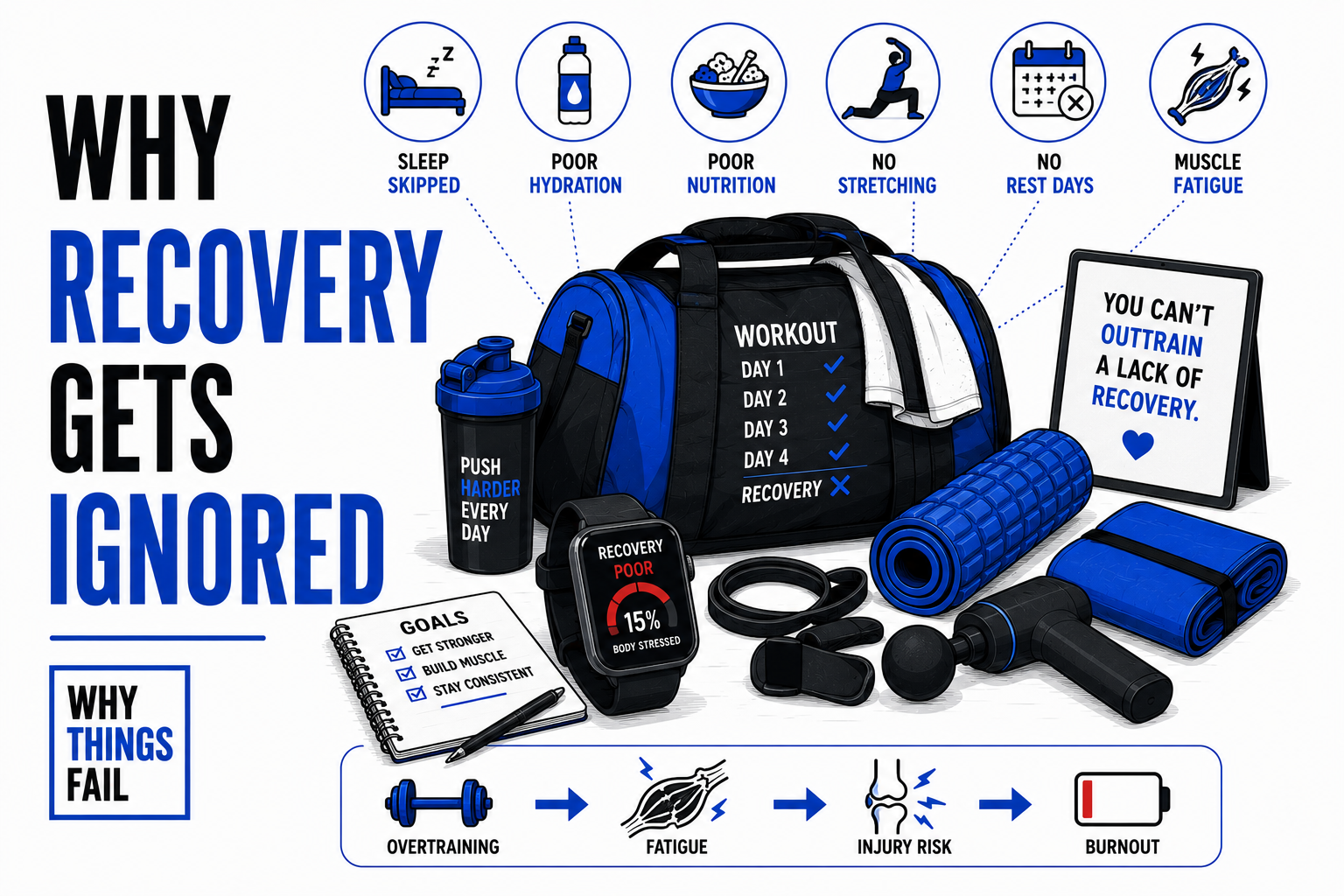
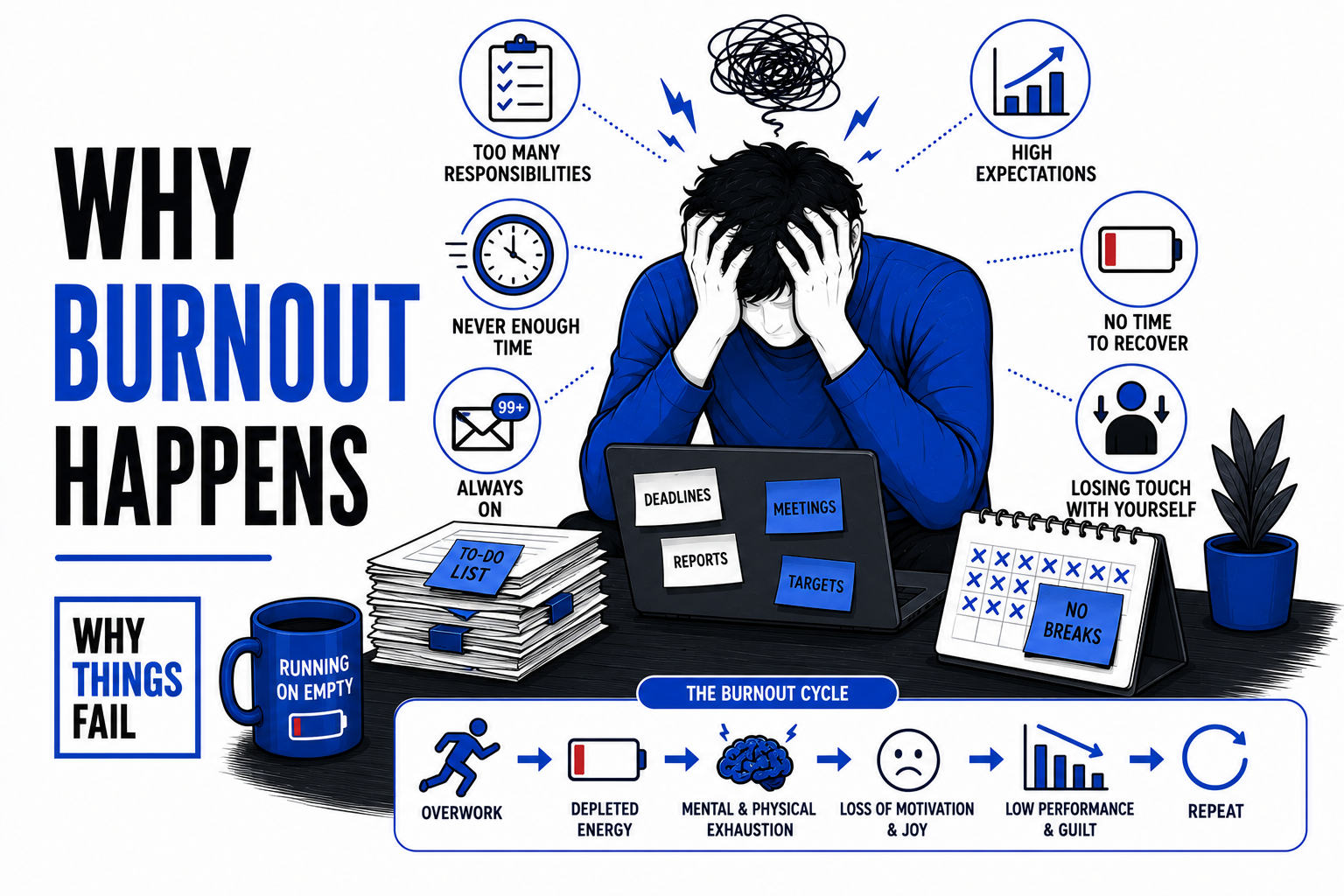
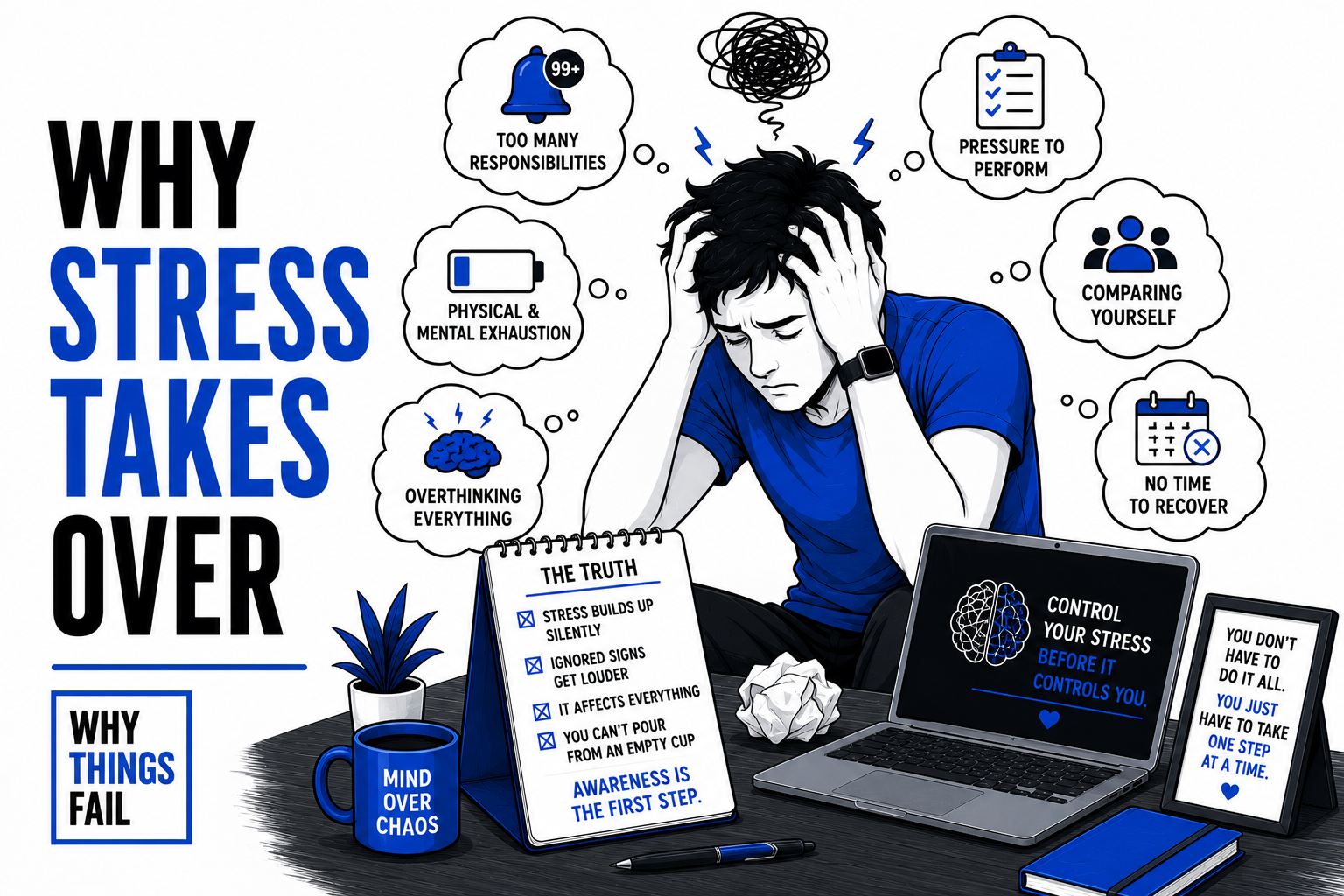
Ignoring recovery is equally damaging. Poor sleep, chronic stress and mental exhaustion reduce the ability to make good decisions. Many people continue focusing on exercise and nutrition while overlooking the psychological factors that determine whether healthy behaviours remain sustainable.
Perhaps the clearest warning sign is losing sight of the original purpose. Health plans gradually become focused on appearance, body weight or social comparison rather than improving long term wellbeing. Once external validation replaces personal health, consistency becomes increasingly difficult to maintain.
These warning signs are often ignored because they do not produce immediate consequences. Behaviour slowly deteriorates while individuals continue believing they can regain control at any time.
What Could Have Prevented It?
Most long term health plans do not require greater determination.
They require better systems.
Sustainable health begins with realistic expectations rather than ambitious promises. Small improvements repeated consistently over months create stronger outcomes than dramatic changes maintained for only a few weeks.
Healthy behaviours should also be designed to fit everyday life instead of depending on ideal circumstances. Plans that require perfect schedules, unlimited energy or constant motivation rarely survive unexpected disruptions.
Reducing unnecessary decisions can significantly improve consistency. Preparing meals in advance, scheduling exercise, improving sleep routines and removing unhealthy temptations from daily environments reduce reliance on willpower.
Behavioural accountability also strengthens long term commitment. Regular progress reviews, supportive communities and realistic performance measures encourage consistency even when visible results develop slowly.
Most importantly, health should become part of personal identity rather than a temporary project. Individuals who view healthy living as part of who they are tend to make decisions that naturally reinforce those beliefs.
Lasting health is rarely created through extraordinary effort.
It is usually created through ordinary behaviours repeated with remarkable consistency.
Lessons
The failure of long term health plans reveals lessons that extend beyond physical wellbeing.
The first lesson is that knowledge rarely changes behaviour by itself. Most people understand what healthy living requires, yet understanding alone cannot overcome deeply established habits.
Another lesson is that systems consistently outperform motivation. Motivation creates momentum, but systems create consistency. Long term success depends on behaviours that continue even when enthusiasm fades.
Health also demonstrates the importance of delayed rewards. Many valuable outcomes require sustained effort before meaningful results appear. Those who expect immediate success often abandon worthwhile goals before benefits become visible.
Perhaps the most important lesson is that lasting change begins internally. Behaviour becomes sustainable when it reflects personal identity rather than temporary ambition.
These lessons apply equally to personal finance, investing, entrepreneurship and leadership because every long term achievement depends on consistent behaviour under changing circumstances.
Failure Pattern
The dominant pattern behind failed health plans is Short Term Thinking combined with Emotional Decision Making.
People naturally choose immediate comfort over distant rewards. Convenience often defeats preparation. Temporary emotions replace structured routines. Small compromises gradually become permanent habits.
This behavioural pattern appears repeatedly because the human brain evolved to prioritise immediate satisfaction rather than long term wellbeing.
The same cycle can be observed in saving money, investing, building businesses and managing careers. Immediate gratification consistently competes against future success.
The problem is rarely the objective itself.
The problem is the inability to sustain behaviours that support the objective.
Hidden Lesson
The greatest obstacle to better health is rarely a lack of information.
It is the expectation that lasting change should feel easy.
Healthy living often appears difficult because it requires acting today for benefits that may not appear for months or years. Human psychology naturally resists this delay.
The deeper truth is that long term health plans usually fail before the plan itself fails.
Failure begins when consistent behaviours are replaced by occasional exceptions. Those exceptions gradually become normal routines until the original plan quietly disappears.
Health outcomes simply reveal behavioural patterns that have already been established.
Failure Scorecard
| Area | Score | Explanation |
| Financial Discipline | 7/10 | Many people invest in health programmes but fail to sustain the behaviours required to benefit from them. |
| Decision Making | 4/10 | Daily choices are frequently influenced by convenience, stress and emotion rather than long term wellbeing. |
| Risk Management | 5/10 | Long term health risks are often underestimated because consequences develop gradually. |
| Long Term Thinking | 3/10 | Immediate comfort consistently outweighs future health benefits for many individuals. |
| Health Knowledge | 7/10 | Most people understand healthy habits but struggle to apply them consistently. |
| Emotional Control | 4/10 | Stress, frustration and disappointment frequently influence eating, exercise and recovery habits. |
| Planning | 5/10 | Many plans begin with enthusiasm but lack realistic systems for long term sustainability. |
| Adaptability | 6/10 | Successful individuals adjust routines when circumstances change instead of abandoning them completely. |
Key Takeaways
- Long term health plans usually fail because of behavioural patterns rather than lack of knowledge.
- Motivation starts change, but consistent systems sustain it.
- Present bias encourages immediate comfort over future wellbeing.
- Unrealistic expectations create unnecessary disappointment.
- Identity influences behaviour more deeply than temporary goals.
- Healthy environments make consistent decisions easier.
- Small daily habits shape long term health outcomes more than occasional intense effort.
- Sustainable progress depends on consistency rather than perfection.
Frequently Asked Questions
Why do long term health plans fail?
Most long term health plans fail because people rely on motivation instead of building sustainable habits. Behavioural biases, unrealistic expectations and inconsistent routines gradually replace healthy behaviours.
Is lack of motivation the main reason people fail?
No. Motivation naturally changes over time. Successful health plans depend more on structured systems and consistent routines than on feeling motivated every day.
Why is consistency more important than intensity?
Intense effort produces temporary results, while consistent behaviour creates lasting habits. Long term health is built through repeated daily actions rather than occasional periods of extreme discipline.
How does psychology influence health plans?
Psychology affects decision making through present bias, emotional eating, habit formation, stress responses and identity. These factors often determine whether healthy behaviours continue over the long term.
Can small habits really improve long term health?
Yes. Behavioural research consistently shows that small sustainable habits are more likely to become permanent. Over time, these habits compound into meaningful improvements in physical and mental wellbeing.
Conclusion
Long term health plans rarely fail because people do not know what to do. They fail because human behaviour naturally favours immediate rewards over distant benefits, making consistency far more difficult than good intentions.
Understanding this changes the conversation from blaming willpower to understanding behavioural systems. Better health is not simply the result of stronger motivation. It is the outcome of environments, habits and decisions that quietly shape behaviour long before the results become visible.