Quick Answer
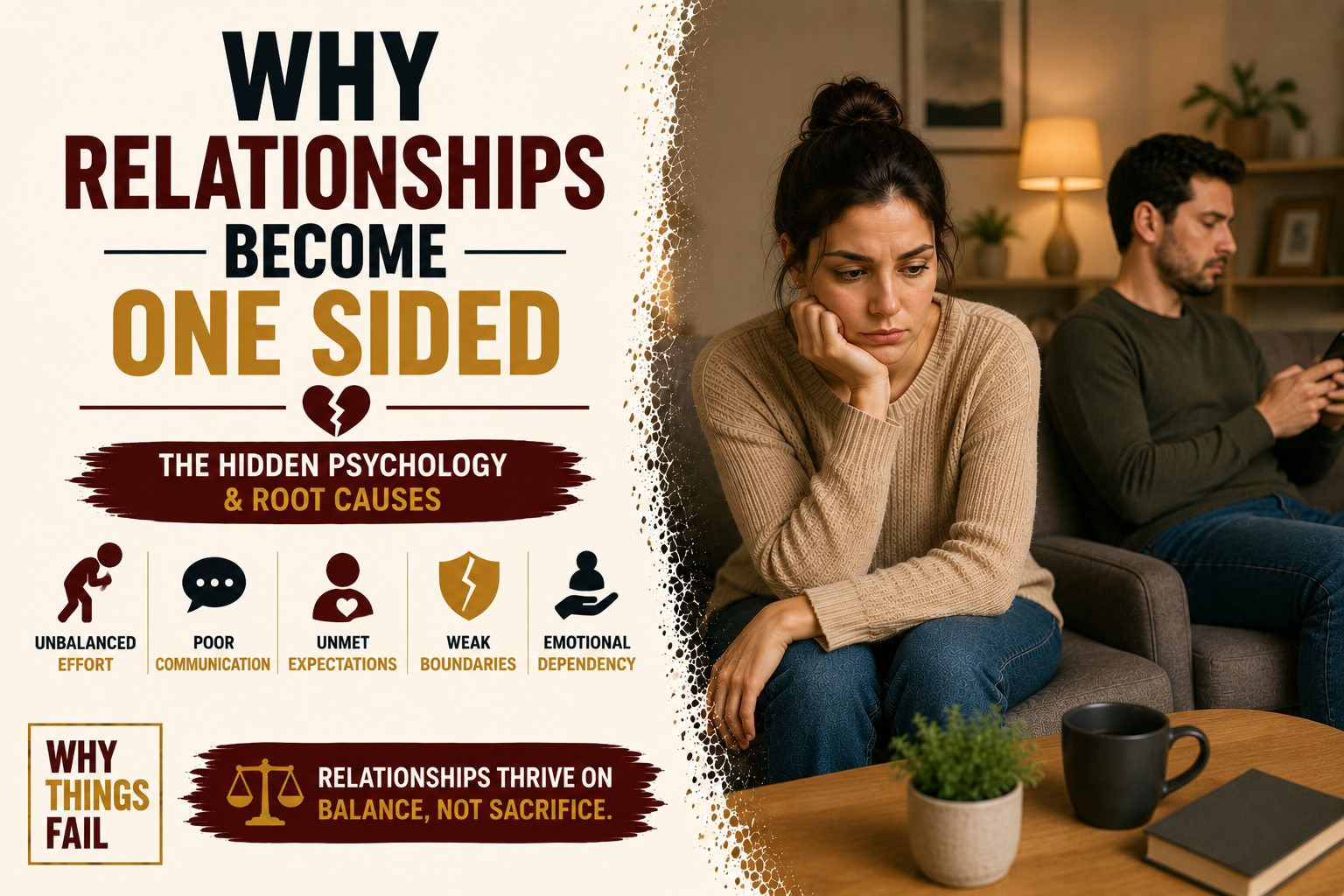
Relationships rarely fail because of one argument or one mistake. They usually break down through repeated patterns of poor communication, emotional disconnection, unmet expectations, weak conflict resolution and behavioural habits that slowly erode trust over time.
Introduction
Every relationship begins with hope.
Two people believe they have found someone who understands them, supports them and shares their vision of the future. In the early stages, differences often appear small, conflicts seem manageable and optimism outweighs uncertainty.
Yet many relationships that begin with genuine love eventually end in disappointment.
Some end after months.
Others survive for decades before gradually falling apart.
This raises an important question.
Why do relationships fail even when both people once cared deeply about one another?
Many people blame a single event such as infidelity, financial problems or constant arguments.
These explanations only describe the final chapter.
Relationship failure usually begins much earlier through a series of small decisions, emotional reactions and communication patterns that slowly weaken the foundation of trust and connection.
Relationship breakdown is rarely sudden.
It is usually the result of behavioural patterns repeated so often that they eventually become normal.
Understanding why relationships fail requires looking beyond dramatic events.
It requires understanding how people think, communicate, respond to conflict and manage emotional needs over time.
Only by examining these deeper causes can we understand why healthy relationships remain resilient while others gradually collapse.
What Is Relationship Failure?
Relationship failure is often misunderstood as the moment a couple separates or files for divorce.
In reality, the relationship usually begins failing long before either person decides to leave.
Relationship failure occurs when trust, emotional safety, mutual respect and effective communication gradually decline until maintaining the relationship becomes increasingly difficult.
Some couples remain together despite experiencing relationship failure.
Others separate before permanent damage occurs.
The outcome differs.
The underlying process is remarkably similar.
Healthy relationships are built through repeated positive interactions.
Unhealthy relationships decline through repeated negative interactions that remain unresolved.
Failure therefore is not defined by separation alone.
It is defined by the gradual loss of emotional connection that once held the relationship together.
The Biggest Myth
The most common belief is that successful relationships never experience conflict.
This idea creates unrealistic expectations.
Disagreements are inevitable whenever two individuals with different personalities, experiences and expectations share their lives.
Research in relationship psychology consistently shows that conflict itself is not the primary predictor of relationship success.
The way couples manage conflict matters far more than how often disagreements occur.
Some couples argue frequently while maintaining strong emotional bonds because they communicate respectfully, listen carefully and repair misunderstandings quickly.
Others avoid arguments entirely but slowly become emotionally distant because important issues remain unspoken.
The real danger is therefore not conflict.
It is unresolved conflict that quietly damages trust over time.
Successful relationships are not free from problems.
They develop healthier ways of responding to them.
What Usually Happens?
Most failing relationships follow a predictable pattern.
Communication becomes less open.
Small disappointments remain unresolved.
Assumptions replace honest conversations.
Emotional distance gradually increases.
Trust weakens.
Resentment quietly accumulates.
Eventually one significant disagreement appears to end the relationship.
In reality, that final disagreement rarely caused the failure.
It simply exposed emotional damage that had been developing for months or even years.
Relationship endings often appear sudden from the outside.
From within, they are usually the result of a long process of gradual emotional separation.
Why Does It Happen?
Emotional Needs Are Often Assumed Rather Than Communicated
Many relationships begin with the belief that genuine love should naturally create understanding.
Partners expect the other person to recognise their emotional needs without clearly expressing them.
When those expectations remain unmet, disappointment gradually replaces appreciation.
Instead of discussing these feelings openly, many people remain silent.
Silence creates assumptions.
Assumptions create misunderstandings.
Misunderstandings create emotional distance.
Over time both partners begin interpreting ordinary behaviour through increasingly negative assumptions.
The problem is no longer poor communication.
It becomes the absence of meaningful communication altogether.
Expectations Quietly Become Unrealistic
Every person enters a relationship carrying expectations shaped by childhood experiences, family relationships, culture, social media and previous partners.
Many of these expectations remain unspoken.
One partner may expect constant emotional support.
The other may express love through practical actions rather than verbal reassurance.
Neither expectation is necessarily wrong.
The difficulty arises when each person believes their own expectations are obvious.
Behavioural psychology shows that disappointment often results not from reality itself but from the gap between expectation and reality.
The larger that gap becomes, the greater the emotional frustration.
Without honest conversations, both partners continue judging each other against invisible standards that neither fully understands.
Emotional Decision Making Replaces Rational Communication
Strong emotions influence judgement.
When people feel criticised, ignored or misunderstood, the brain naturally shifts towards self protection.
Listening becomes more difficult.
Defensiveness increases.
The objective quietly changes.
Instead of solving the problem, each person begins protecting their own perspective.
Behavioural psychologists describe this as an emotional response overriding reflective thinking.
Conversations become competitions.
Each person focuses on proving their own point instead of understanding the other person’s experience.
This explains why many couples repeatedly have the same argument without reaching meaningful resolution.
The issue is rarely the subject being discussed.
It is the emotional state in which the discussion takes place.
Small Problems Become Larger Through Delayed Consequences
One overlooked reason relationships fail is delayed consequences.
Many harmful behaviours appear insignificant in isolation.
A forgotten promise.
An ignored message.
A dismissive comment.
An apology that never arrives.
Each event seems too small to threaten the relationship.
Yet relationships operate as systems rather than isolated moments.
Trust is built through consistent positive experiences.
It is weakened through repeated negative experiences.
Because emotional damage develops gradually, both partners often underestimate its cumulative effect.
By the time they recognise the seriousness of the situation, resentment has already become deeply rooted.
Trust Declines Long Before Love Disappears
Many people assume relationships end because love fades.
In reality, trust often weakens first.
Trust allows people to feel emotionally safe.
It encourages vulnerability, honesty and cooperation.
When trust declines, people become cautious.
They share less.
They protect themselves emotionally.
They avoid difficult conversations.
Eventually emotional intimacy begins disappearing even though genuine affection may still exist.
This explains why some couples continue loving one another while feeling increasingly disconnected.
The relationship has not failed because love disappeared.
It has failed because trust gradually stopped supporting that love.
Poor Conflict Resolution Creates Emotional Debt
Every relationship experiences conflict. The difference between healthy and unhealthy relationships lies in what happens after the disagreement.
Some couples resolve conflict by listening, accepting responsibility and rebuilding trust. Others avoid difficult conversations, assign blame or refuse to acknowledge each other’s feelings.
Every unresolved disagreement creates emotional debt.
Like financial debt, emotional debt accumulates interest over time. One unresolved issue makes the next disagreement more intense because previous frustrations are carried into every conversation.
Eventually, partners stop arguing about the original issue. They begin arguing about years of accumulated disappointment.
The final argument often appears to end the relationship, but it is only the moment when emotional debt becomes impossible to ignore.
People Stop Growing Together
Relationships are dynamic systems.
People change through careers, parenthood, financial pressures, health challenges and personal experiences. Growth itself is not the problem.
The problem begins when partners stop adapting to each other’s growth.
One person develops new ambitions while the other remains emotionally attached to an earlier version of the relationship. Communication decreases and assumptions increase.
Instead of evolving together, both people begin living parallel lives.
Behavioural science suggests that shared experiences strengthen emotional bonds because they reinforce a common identity. When couples stop creating new shared experiences, emotional distance quietly replaces emotional closeness.
External Pressure Exposes Existing Weaknesses
Many relationships appear stable until external pressure arrives.
Financial stress, career uncertainty, illness, parenting responsibilities or family conflict do not usually create relationship failure.
They expose weaknesses that already exist.
Strong relationships use adversity to strengthen cooperation.
Weak relationships use adversity to magnify existing communication problems.
The crisis is rarely the root cause.
It simply accelerates behavioural patterns that were already developing beneath the surface.
Warning Signs
Relationship failure rarely begins with dramatic events.
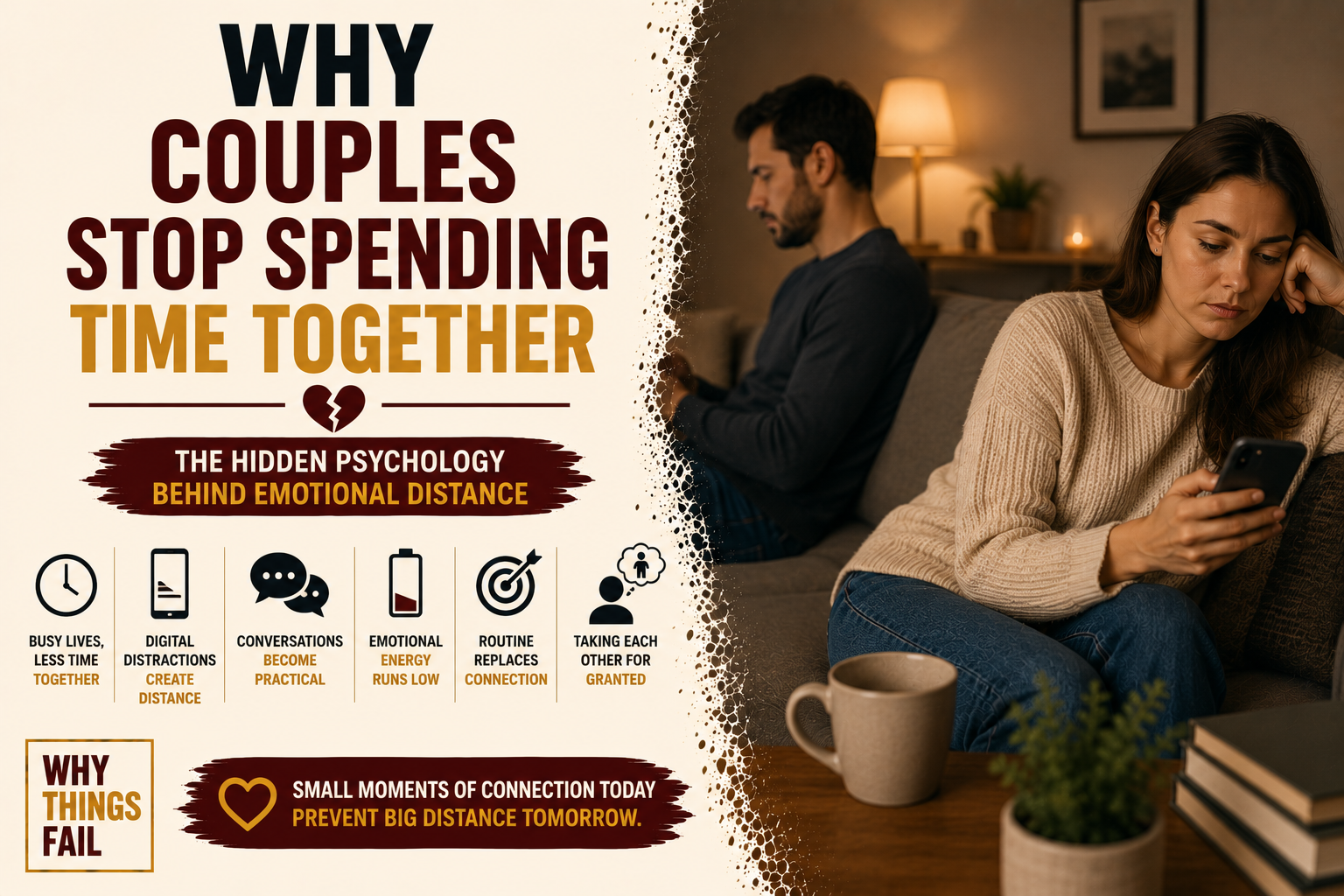
The earliest warning sign is reduced communication. Conversations become practical rather than meaningful. Partners discuss responsibilities but avoid discussing emotions.
Another warning sign is emotional withdrawal. One or both partners stop sharing thoughts, concerns or future plans because they no longer expect to feel understood.
Growing defensiveness is equally significant. Simple feedback is interpreted as criticism, making honest conversations increasingly difficult.
Small acts of appreciation also begin disappearing. Gratitude is replaced by routine. Positive behaviour becomes expected rather than recognised.
Perhaps the clearest warning sign is indifference.
Arguments may decrease, but emotional investment also declines. The absence of conflict does not always indicate a healthy relationship. Sometimes it reflects emotional disengagement.
These warning signs are frequently ignored because they develop gradually. People adapt to declining emotional connection without recognising how much has changed.
What Could Have Prevented It?
Most relationship failures cannot be prevented by avoiding conflict.
They are prevented by improving the quality of communication before conflict becomes destructive.
Honest conversations about expectations, emotional needs and future goals reduce misunderstandings before resentment develops.
Regular communication creates opportunities to identify small issues while they remain manageable.
Emotional accountability is equally important. Accepting responsibility for mistakes strengthens trust more effectively than defending personal behaviour.
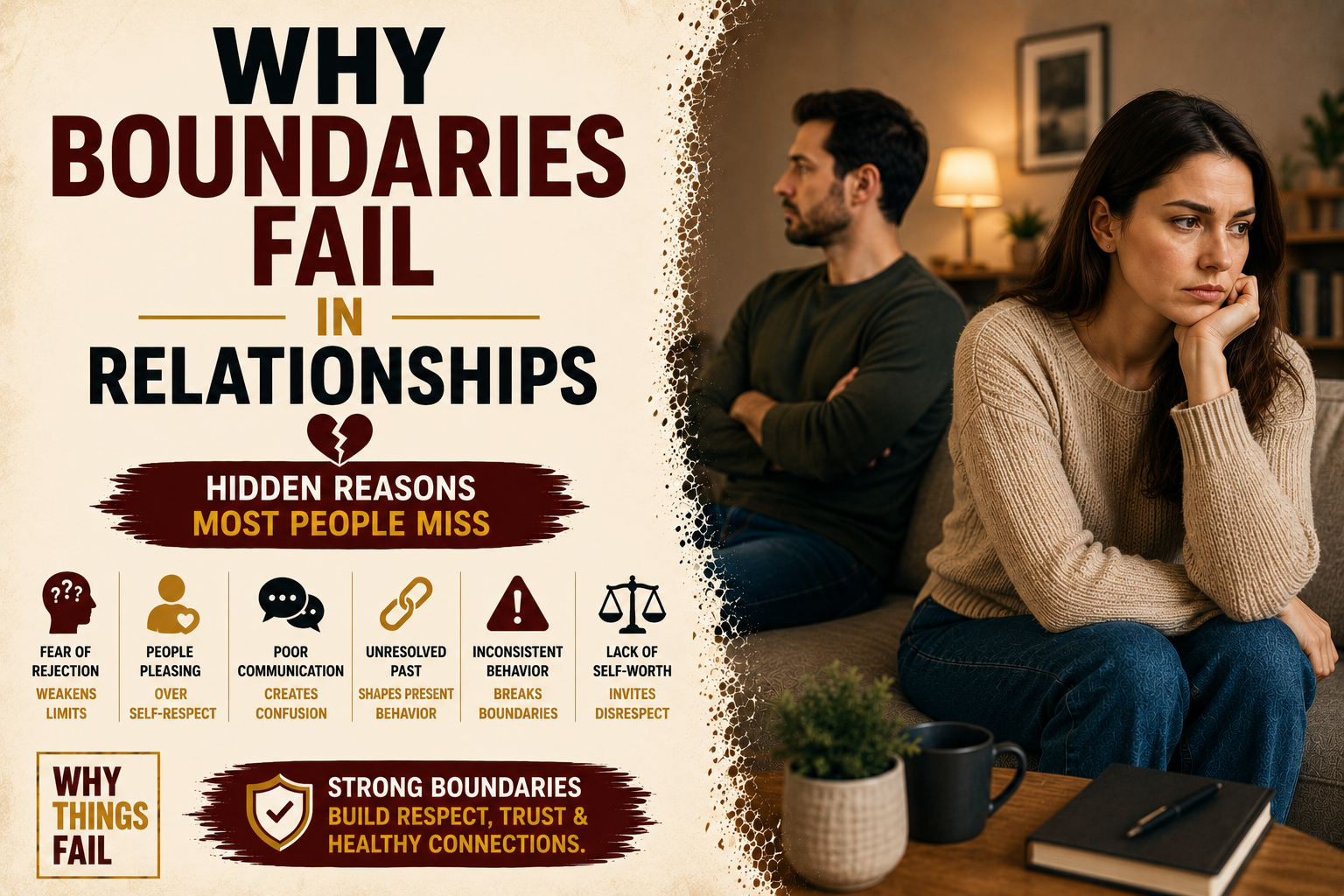
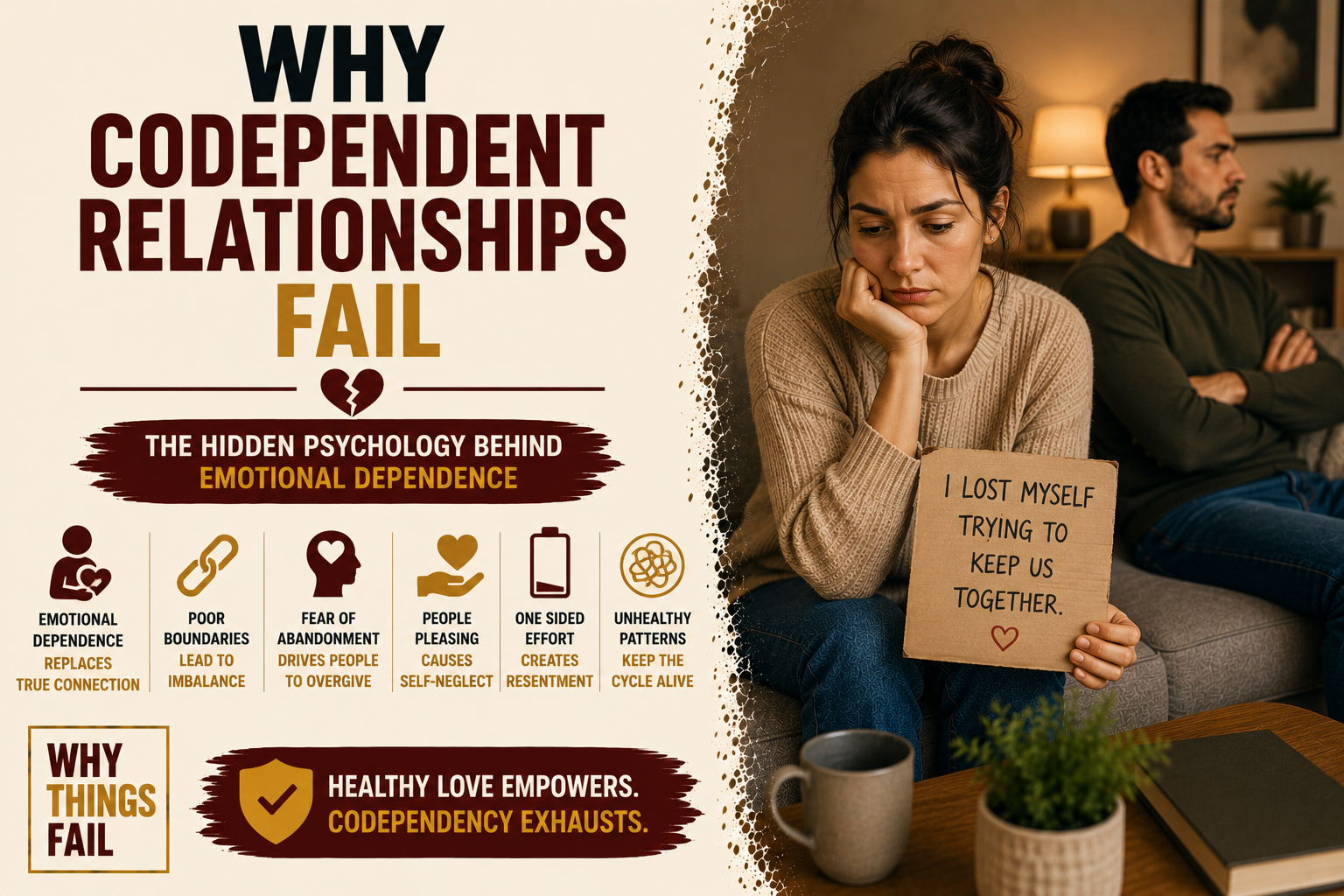
Healthy boundaries also protect relationships. Respecting individuality while maintaining emotional connection prevents dependence from replacing partnership.
Perhaps the most important safeguard is recognising that trust requires continuous investment. Like any valuable asset, trust grows through consistent actions rather than occasional gestures.
Relationships remain resilient when both people view maintenance as an ongoing responsibility rather than something that only becomes important during crises.
Lessons
Relationship failure offers lessons that extend far beyond personal relationships.
The first lesson is that communication is not measured by how much people speak but by how well they understand one another.
The second lesson is that assumptions quietly damage relationships because they replace curiosity with certainty.
Another lesson is that emotional safety allows honesty to exist. When people fear judgement, criticism or rejection, they gradually stop expressing their authentic thoughts.
Perhaps the most important lesson is that healthy relationships are built through small daily behaviours rather than occasional grand gestures.
Respect, consistency, trust and accountability create strong relationships because they accumulate over time.
Failure Pattern
The dominant pattern behind relationship failure is Emotional Disconnection caused by Poor Communication and Unresolved Conflict.
This pattern appears repeatedly because human psychology naturally avoids uncomfortable conversations.
People delay difficult discussions to preserve temporary peace.
Unfortunately, delayed conversations rarely eliminate problems.
They simply allow those problems to become larger.
Over time, emotional distance replaces emotional intimacy.
Trust weakens.
Communication declines.
Eventually the relationship reaches a point where repairing years of accumulated disappointment becomes extremely difficult.
The same behavioural pattern appears in business partnerships, leadership teams and family relationships because it reflects universal principles of human behaviour.
Hidden Lesson
Relationships rarely fail because people stop loving each other.
They fail because they gradually stop understanding each other.
Love creates connection.
Understanding preserves it.
Without continuous communication, trust and emotional curiosity, even genuine affection struggles to survive changing circumstances.
The deeper truth is that relationship failure is rarely one decision.
It is thousands of small moments in which opportunities to strengthen trust are ignored until emotional distance quietly becomes normal.
Failure Scorecard
| Area | Score | Explanation |
| Emotional Discipline | 5/10 | Emotions often influence reactions more than thoughtful communication. |
| Decision Making | 6/10 | Important relationship decisions are frequently delayed until problems become serious. |
| Conflict Management | 4/10 | Many couples avoid resolving disagreements effectively. |
| Long Term Thinking | 5/10 | Daily frustrations often overshadow long term relationship health. |
| Emotional Awareness | 6/10 | Many people recognise their own feelings but struggle to understand their partner’s perspective. |
| Trust Building | 5/10 | Trust usually declines gradually through repeated small behaviours. |
| Planning | 6/10 | Couples often plan careers and finances more carefully than the relationship itself. |
| Adaptability | 6/10 | Healthy relationships require both partners to grow together rather than separately. |
Key Takeaways
- Relationships usually fail because of repeated behavioural patterns rather than one major event.
- Communication problems often begin with assumptions rather than intentional neglect.
- Emotional safety encourages honesty and strengthens trust.
- Unresolved conflict creates emotional debt that grows over time.
- Trust declines gradually through repeated small disappointments.
- Healthy relationships require continuous adaptation as people change.
- External stress exposes existing weaknesses rather than creating them.
- Consistent respect and understanding matter more than occasional romantic gestures.
Frequently Asked Questions
Why do most relationships fail?
Most relationships fail because communication, trust and emotional connection gradually weaken over time. Small unresolved issues accumulate until they become difficult to repair.
What is the biggest reason relationships break down?
Poor communication is one of the most common causes. When partners stop expressing their needs honestly, misunderstandings and resentment gradually replace emotional closeness.
Can love alone save a relationship?
No. Love is important, but lasting relationships also require trust, mutual respect, emotional maturity and healthy conflict resolution.
Why do couples ignore warning signs?
Warning signs usually develop slowly. People adapt to declining communication and emotional distance without recognising that the relationship is gradually becoming less healthy.
Can failing relationships recover?
Yes, when both people recognise the underlying behavioural patterns early and commit to rebuilding trust through honest communication, accountability and consistent effort.
Conclusion
Relationships rarely collapse because of one unforgettable moment. They usually decline through countless ordinary moments where communication is avoided, trust is weakened and emotional connection is taken for granted.
Understanding this changes the way relationship failure is viewed. Instead of seeing the ending as the cause, we begin recognising it as the final consequence of behavioural patterns that quietly shaped the relationship long before either person realised something fundamental had changed.