Quick Answer
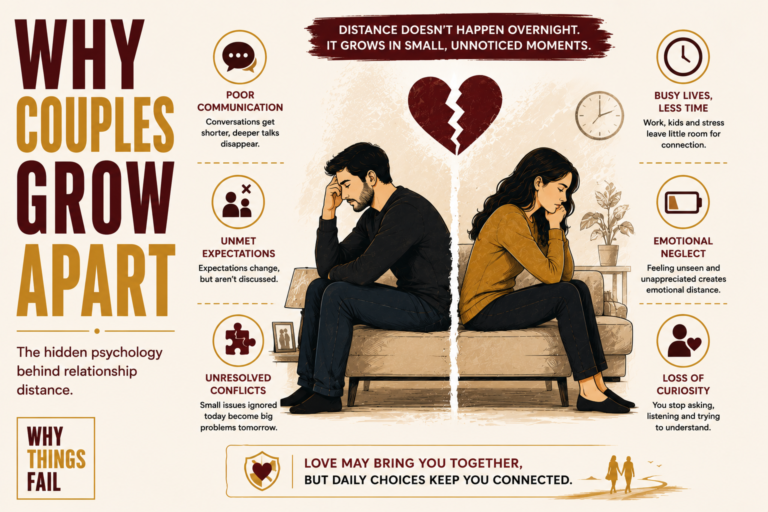
Couples rarely grow apart because of one major argument or a single life event. Most relationships weaken through small emotional disconnections, poor communication, unmet expectations, unresolved conflict and gradual behavioural changes that accumulate over time. Understanding these hidden patterns explains why relationship distance often develops long before either partner recognises it.
Introduction
Relationships rarely end the moment love disappears.
Instead, they often change so gradually that neither partner notices what is happening until emotional distance feels impossible to ignore.
Many couples begin their relationship with trust, excitement and shared dreams. They communicate openly, spend time together and believe their connection will naturally remain strong. Yet years later, they may feel like strangers living under the same roof.
This raises an important question.
Why do couples grow apart even when neither person intended to damage the relationship?
The common explanation focuses on arguments, busy schedules or changing personalities.
These factors certainly matter.
However, they rarely explain the deeper causes.
Relationships usually weaken through a series of small decisions, repeated behaviours and unspoken emotions that quietly reshape how partners think, communicate and respond to one another.
Understanding why couples grow apart is not simply about explaining relationship breakdown.
It is about understanding how human behaviour, emotional needs, psychological biases and everyday habits gradually influence the quality of connection between two people.
What Is Relationship Drift?
Growing apart does not necessarily mean two people stop loving each other.
It means the emotional connection that once brought them together becomes weaker over time.
Relationship drift occurs when emotional intimacy, trust and shared understanding gradually decline without either partner intentionally creating distance.
Some couples continue living together while feeling emotionally disconnected.
Others remain committed to the relationship but struggle to understand why conversations feel forced, affection becomes less frequent and shared experiences no longer create the same sense of closeness.
The relationship has not failed because of one event.
It has slowly changed because the emotional foundations supporting it have become weaker.
The Biggest Myth
One of the most common beliefs is that couples grow apart because people simply change.
While personal growth is inevitable, change alone rarely destroys healthy relationships.
People constantly change throughout life.
Careers evolve.
Priorities shift.
Children arrive.
Financial circumstances improve or decline.
Health challenges appear.
Successful relationships do not survive because change never occurs.
They survive because both partners continue adapting together.
The real danger is not change.
It is allowing change to happen without maintaining emotional connection.
When communication weakens, assumptions replace conversations.
When curiosity disappears, misunderstanding grows.
Over time, emotional distance becomes easier than emotional closeness.
The relationship does not collapse because people changed.
It weakens because they stopped understanding how those changes affected one another.
What Usually Happens?
Most relationships that grow apart follow a remarkably similar progression.
Life becomes busier.
Work responsibilities increase.
Children require attention.
Financial pressures demand focus.
Quality conversations become shorter.
Shared experiences become less frequent.
Small disappointments remain unspoken.
Minor misunderstandings remain unresolved.
Emotional intimacy gradually decreases.
Neither partner notices the shift because each individual change appears insignificant.
Months become years.
Eventually one partner says something that surprises the other.
“I feel like we are no longer connected.”
The emotional distance did not appear overnight.
It developed quietly through hundreds of ordinary moments that seemed too small to matter individually.
Why Does It Happen?
This is where the deeper investigation begins.
Relationships rarely fail because of one dramatic event.
They usually weaken because human psychology encourages behaviours that slowly reduce emotional connection while making those changes difficult to recognise.
The greatest threat to long term relationships is often not conflict.
It is emotional neglect that develops unnoticed.
Emotional Needs Change More Quickly Than Conversations
People naturally assume that if a relationship begins with strong communication, it will continue without deliberate effort.
Human psychology does not work this way.
As individuals experience different stages of life, their emotional needs evolve.
One partner may begin seeking greater emotional reassurance after becoming a parent.
The other may become increasingly focused on career responsibilities.
Neither response is wrong.
The problem begins when these changing needs remain unspoken.
Behavioural psychologists describe relationships as dynamic systems rather than fixed emotional states.
Every personal change influences the relationship.
When conversations fail to keep pace with those changes, emotional misunderstanding gradually replaces emotional understanding.
Partners stop responding to each other’s current needs because they continue reacting to the person their partner used to be.
Familiarity Reduces Appreciation
One of the most overlooked psychological patterns in long term relationships is familiarity.
The brain naturally adapts to repeated experiences.
What once felt exciting gradually becomes ordinary.
Psychologists refer to this process as hedonic adaptation.
Expressions of affection become expected rather than appreciated.
Acts of kindness receive less attention because they are no longer surprising.
Shared routines create stability, yet they also reduce conscious appreciation.
This does not mean love disappears.
It means gratitude gradually becomes less visible.
Without intentional appreciation, emotional connection quietly weakens even though daily life continues normally.
Assumptions Replace Curiosity
Strong relationships are built on curiosity.
Partners ask questions.
They listen carefully.
They remain interested in each other’s thoughts, concerns and ambitions.
As familiarity increases, curiosity often declines.
People begin believing they already know how their partner thinks or feels.
Instead of asking questions, they make assumptions.
These assumptions influence communication.
Conversations become shorter.
Misunderstandings increase.
Important emotions remain unspoken because each partner believes the other already understands.
Ironically, emotional distance often grows not because communication disappears completely but because meaningful communication is gradually replaced by routine conversation.
Emotional Safety Determines Honest Communication
Many couples believe communication problems begin when arguments increase.
In reality, communication often deteriorates long before visible conflict appears.
The deciding factor is emotional safety.
People share difficult emotions only when they believe they will be heard without criticism, judgement or dismissal.
When previous conversations have resulted in defensiveness or misunderstanding, partners begin protecting themselves.
They share less.
They avoid sensitive topics.
Silence slowly replaces honesty.
From the outside, the relationship may appear peaceful.
Internally, however, emotional distance continues expanding because important conversations never take place.
Conflict is not always the greatest threat.
The absence of honest communication can be even more damaging.
Stress Changes Relationship Behaviour
Modern relationships exist within demanding environments.
Financial pressure.
Career expectations.
Parenting responsibilities.
Health concerns.
Digital distractions.
Each source of stress influences emotional behaviour.
Behavioural research consistently shows that prolonged stress narrows attention.
People become increasingly focused on immediate problems while unintentionally neglecting emotional connection.
Acts of patience decline.
Empathy becomes more difficult.
Small frustrations receive stronger reactions.
The relationship begins operating in survival mode rather than connection mode.
Neither partner intentionally chooses emotional distance.
Stress simply redirects emotional energy towards solving external problems while internal relationship needs receive progressively less attention.
Unresolved Conflict Creates Emotional Withdrawal
Not every disagreement damages a relationship.
Unresolved disagreement does.
Many couples avoid difficult conversations because they fear creating conflict.
Unfortunately, avoiding conflict rarely removes it.
Instead, disappointment accumulates beneath the surface.
Small emotional injuries remain unresolved.
Trust gradually weakens.
Eventually withdrawal replaces discussion.
One partner stops expressing disappointment because previous conversations achieved little.
The other mistakes silence for acceptance.
Both individuals become increasingly disconnected while believing they are protecting the relationship from further conflict.
In reality, unresolved emotions continue shaping behaviour long after the original disagreement has been forgotten.
Relationships Reflect Daily Habits More Than Grand Gestures
Many people believe successful relationships depend on major romantic moments.
Psychological research suggests something different.
Long term relationships are shaped far more by ordinary daily behaviours than extraordinary occasions.
Brief conversations.
Expressions of gratitude.
Active listening.
Shared meals.
Small acts of kindness.
Consistent emotional availability.
These behaviours appear insignificant when viewed individually.
Together, they determine whether emotional intimacy strengthens or weakens over time.
Relationships rarely drift apart because extraordinary moments disappear.
They drift apart because ordinary moments slowly lose emotional meaning.
Warning Signs
Relationships rarely deteriorate without warning. The challenge is that the earliest signs often appear ordinary rather than alarming, allowing emotional distance to grow unnoticed.
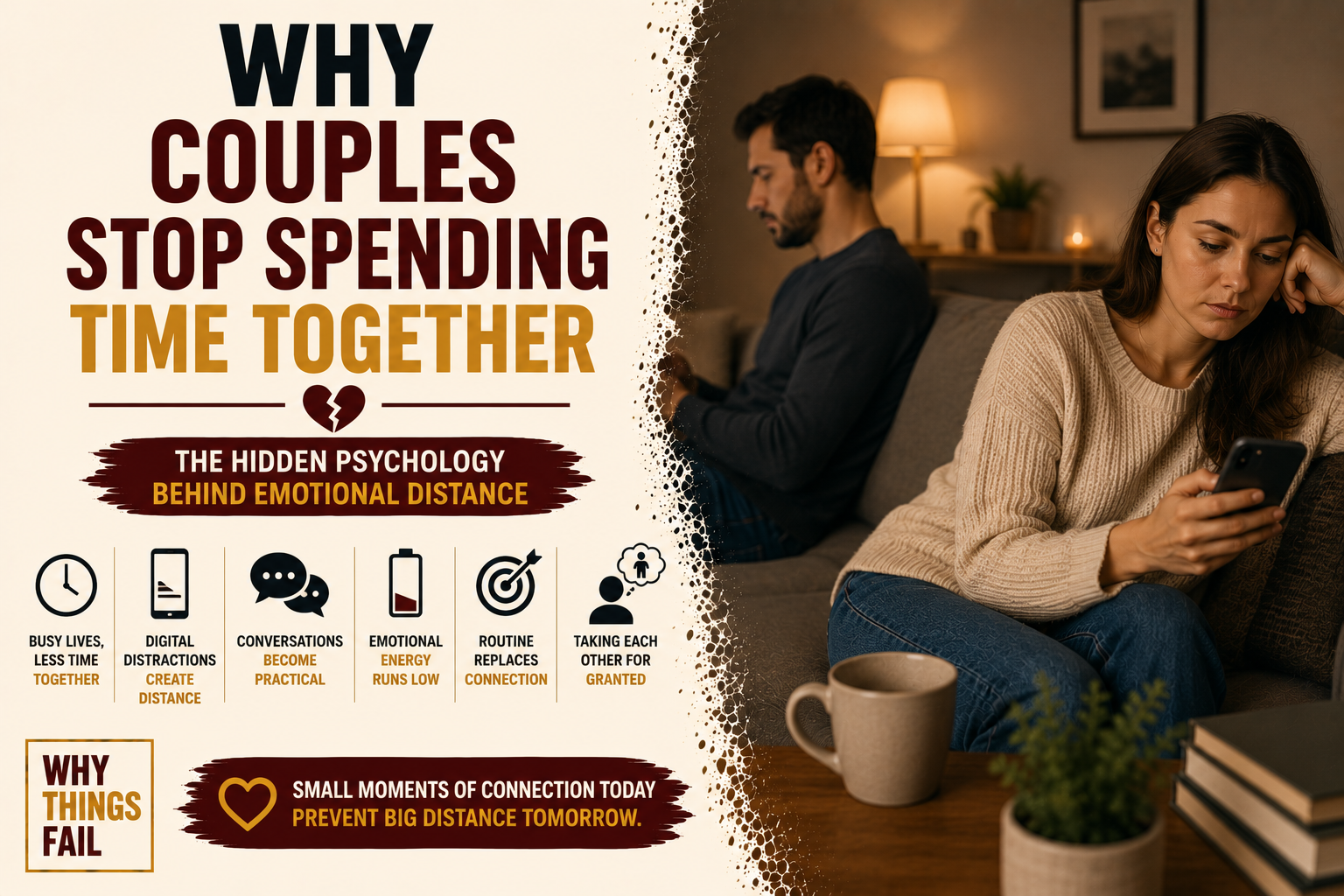
One warning sign is when conversations become purely functional. Partners begin discussing work schedules, household responsibilities and daily routines but stop sharing thoughts, worries and personal aspirations. Communication continues, yet emotional intimacy quietly fades.
Another warning sign is emotional withdrawal. One or both partners become less willing to express disappointment, affection or vulnerability. This silence is often mistaken for peace, when it actually reflects growing emotional disconnection.
A decline in curiosity is equally significant. Questions about each other’s experiences, ambitions and feelings become less frequent. Assumptions replace genuine interest, reducing opportunities to strengthen understanding.
Small unresolved conflicts also deserve attention. Rather than addressing disappointment directly, partners ignore uncomfortable conversations. Although this may reduce immediate tension, unresolved emotions gradually influence trust and emotional safety.
Perhaps the clearest warning sign is indifference. Disagreements no longer matter because emotional investment has weakened. The absence of conflict may appear positive, but in many relationships it signals emotional disengagement rather than harmony.
These warning signs are frequently ignored because they develop gradually. Each individual change feels insignificant, making the overall pattern difficult to recognise until emotional distance has become deeply established.
What Could Have Prevented It?
Growing apart is rarely prevented through dramatic gestures.
It is prevented through consistent emotional maintenance.
Healthy relationships require regular conversations about changing expectations, personal goals and emotional needs. These discussions allow partners to adapt together rather than growing in separate directions.
Emotional safety is equally important. People communicate honestly when they believe they will be heard with empathy rather than judgement. Creating an environment where both partners can express concerns without fear strengthens trust before problems become entrenched.
Shared experiences also help maintain connection. Spending meaningful time together encourages conversation, appreciation and emotional familiarity beyond the pressures of daily responsibilities.
Conflict should be approached as an opportunity to understand rather than to win. Relationships become stronger when disagreements reveal unmet needs instead of creating emotional distance.
Perhaps most importantly, successful couples continue choosing curiosity over assumption. They recognise that even after many years together, their partner continues to grow, change and develop. Remaining interested in that journey keeps emotional connection alive.
Lessons
The reasons couples grow apart reveal broader truths about human relationships.
The first lesson is that emotional connection requires continuous attention. Relationships do not remain healthy simply because they began with love and commitment.
The second lesson is that small behaviours often matter more than dramatic moments. Daily conversations, active listening and expressions of appreciation gradually strengthen or weaken emotional intimacy.
Another lesson is that avoiding difficult conversations rarely protects a relationship. Honest communication may create temporary discomfort, but silence often creates lasting emotional distance.
Perhaps the most important lesson is that successful relationships are built through adaptation. Life constantly changes, and couples who continue understanding each other’s evolving needs are far more likely to maintain long term emotional closeness.
Failure Pattern
The dominant pattern behind relationship failure is Emotional Disconnection caused by Poor Communication and Short Term Adaptation.
This pattern appears repeatedly because people naturally prioritise immediate responsibilities over long term relationship maintenance. Careers, finances, parenting and daily pressures demand attention, while emotional connection is often assumed to take care of itself.
Over time, emotional neglect creates misunderstanding. Misunderstanding reduces empathy. Reduced empathy weakens communication. Eventually both partners begin responding to assumptions rather than genuine understanding.
This same behavioural pattern appears in friendships, family relationships and professional partnerships. Systems weaken when maintenance is neglected, regardless of how strong they once appeared.
Hidden Lesson
Couples rarely grow apart because love suddenly disappears.
They grow apart because emotional connection is gradually replaced by routine.
The deeper truth is that relationships are shaped less by extraordinary moments than by ordinary daily choices. Every meaningful conversation, thoughtful question and small act of appreciation either strengthens or weakens the emotional foundation.
Distance is therefore not created by one defining event.
It is created by countless unnoticed moments in which connection was possible but never fully pursued.
Failure Scorecard
| Area | Score | Explanation |
| Emotional Communication | 4/10 | Conversations often become practical rather than emotionally meaningful. |
| Decision Making | 5/10 | Important relationship issues are frequently delayed instead of addressed directly. |
| Emotional Awareness | 4/10 | Partners often fail to recognise changing emotional needs. |
| Long Term Thinking | 5/10 | Immediate responsibilities regularly take priority over relationship maintenance. |
| Relationship Knowledge | 6/10 | Many couples understand the importance of communication but struggle to practise it consistently. |
| Emotional Control | 5/10 | Stress, frustration and disappointment often influence behaviour more than empathy. |
| Planning | 4/10 | Few couples intentionally plan time for emotional connection and meaningful conversations. |
| Adaptability | 6/10 | Relationships remain stronger when partners continue adapting to each other’s changing lives. |
Key Takeaways
- Couples usually grow apart through gradual emotional disconnection rather than one major event.
- Communication loses value when it becomes purely practical.
- Assumptions weaken relationships more than honest conversations.
- Stress often reduces emotional availability without either partner recognising it.
- Small daily habits influence long term relationship health more than occasional grand gestures.
- Emotional safety encourages openness and strengthens trust.
- Curiosity helps partners grow together instead of separately.
- Healthy relationships require continuous adaptation rather than relying on past closeness.
Frequently Asked Questions
Why do couples grow apart even when they still love each other?
Love alone does not maintain emotional intimacy. Poor communication, changing priorities, unresolved emotions and everyday stress can gradually weaken connection even when affection still exists.
What is the biggest reason couples become emotionally distant?
The biggest reason is the gradual decline in meaningful communication. When partners stop sharing thoughts, feelings and changing needs, emotional understanding slowly fades.
Can couples reconnect after growing apart?
Yes. Many couples rebuild emotional connection by improving communication, creating emotional safety and intentionally spending meaningful time together. The willingness of both partners to understand each other is usually more important than the length of the relationship.
Why are the warning signs often ignored?
The warning signs develop slowly. Small changes in communication, affection and shared experiences rarely seem serious on their own, making the overall pattern difficult to recognise until emotional distance has become significant.
How do everyday habits affect relationships?
Relationships are shaped by repeated daily interactions. Small acts of appreciation, listening and emotional support accumulate over time, just as neglect, assumptions and silence gradually weaken emotional closeness.
Conclusion
Couples rarely grow apart because one dramatic event suddenly destroys the relationship. More often, emotional distance emerges through ordinary decisions, changing priorities and unnoticed behavioural patterns that slowly replace connection with routine.
Understanding these patterns changes the way relationship failure is viewed. Instead of seeing growing apart as an unexpected outcome, it becomes clear that lasting relationships depend on recognising and responding to small emotional changes long before they become permanent.