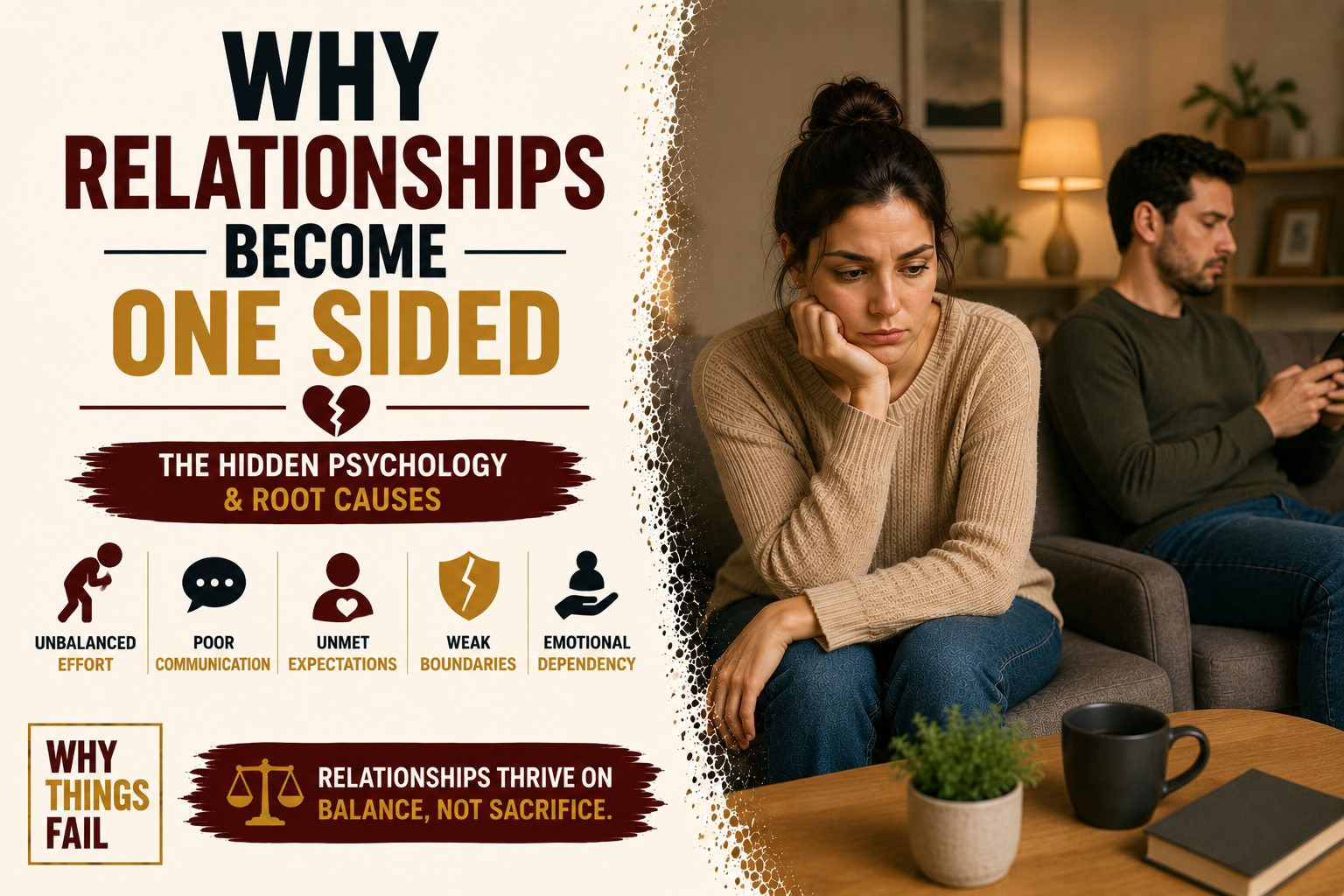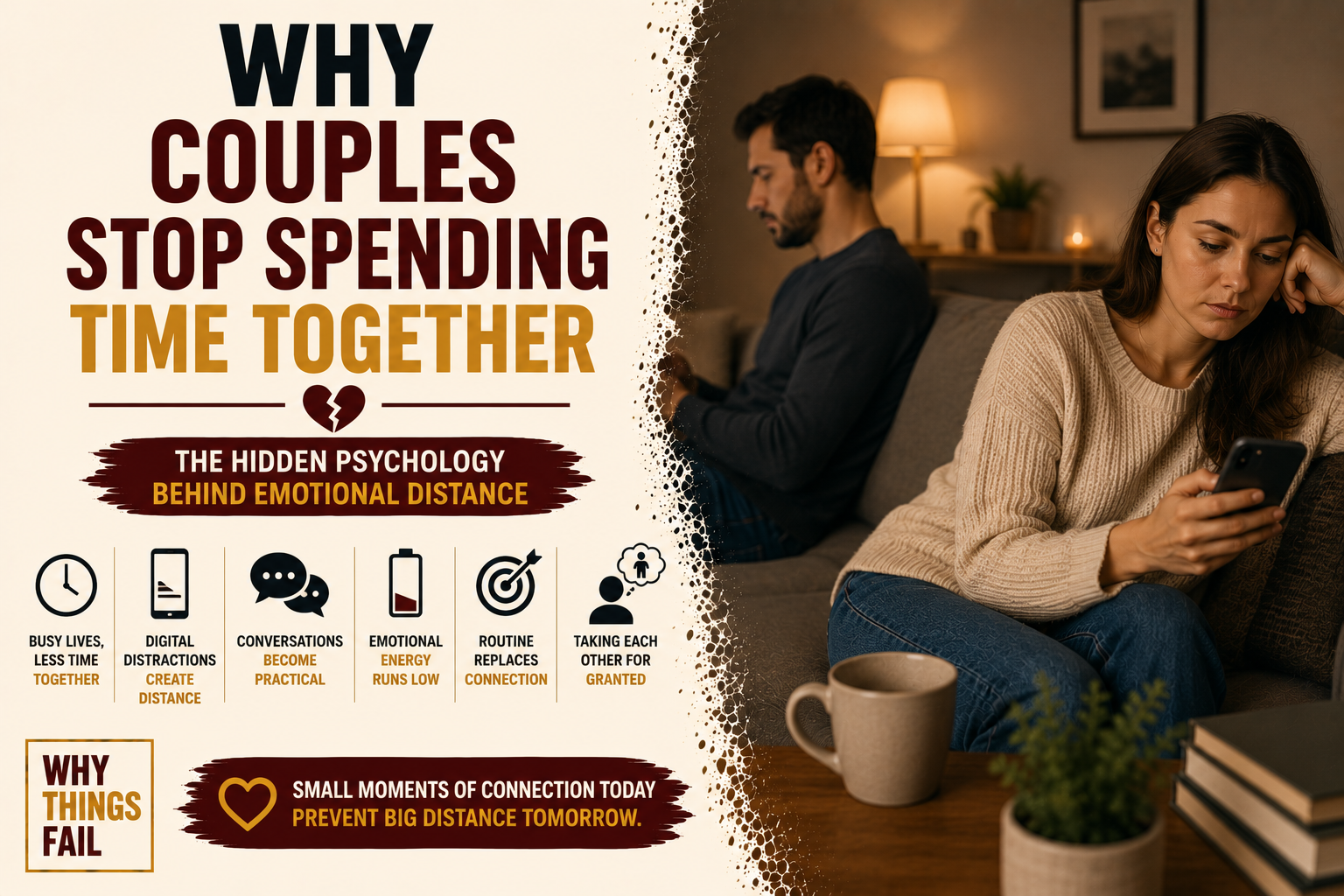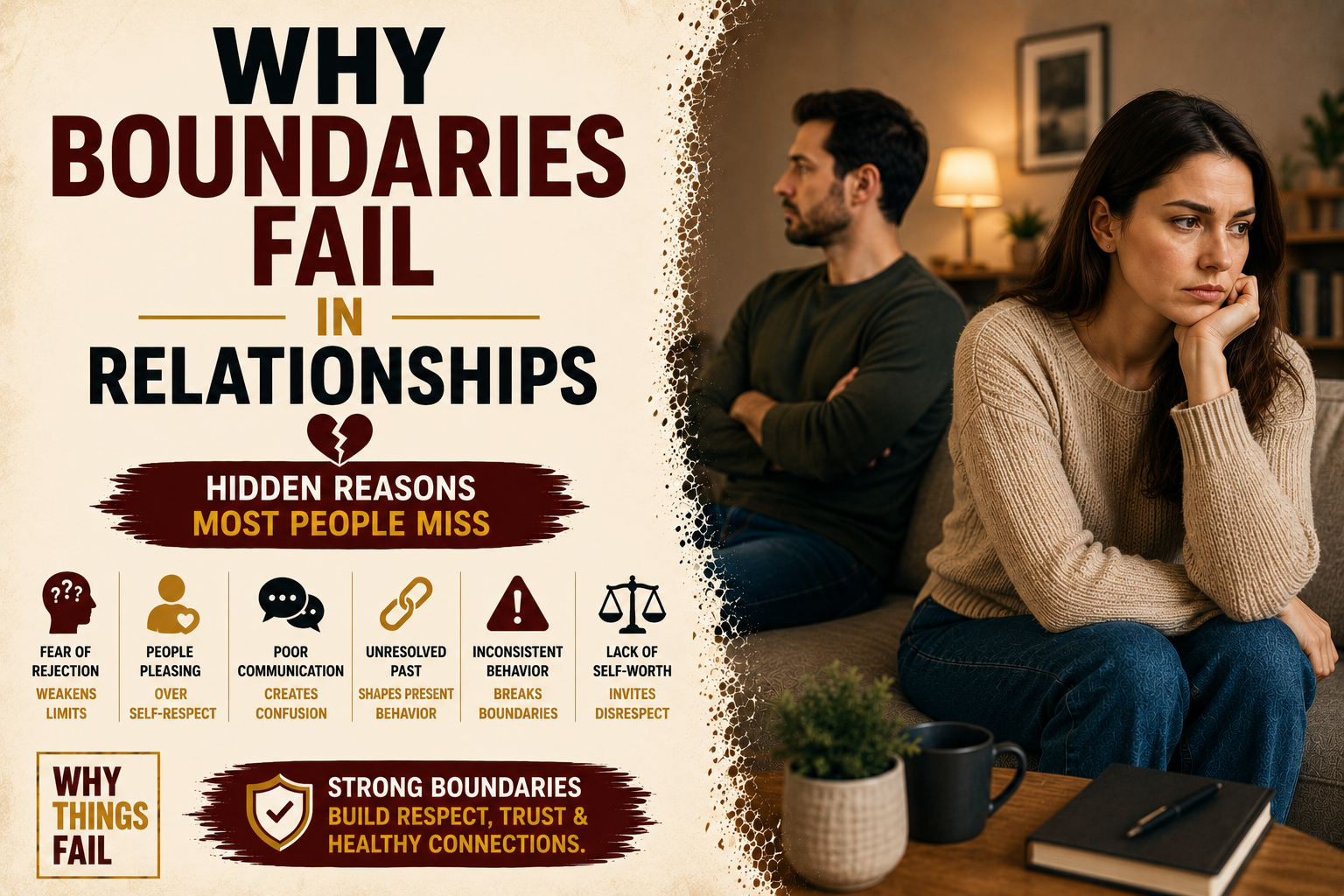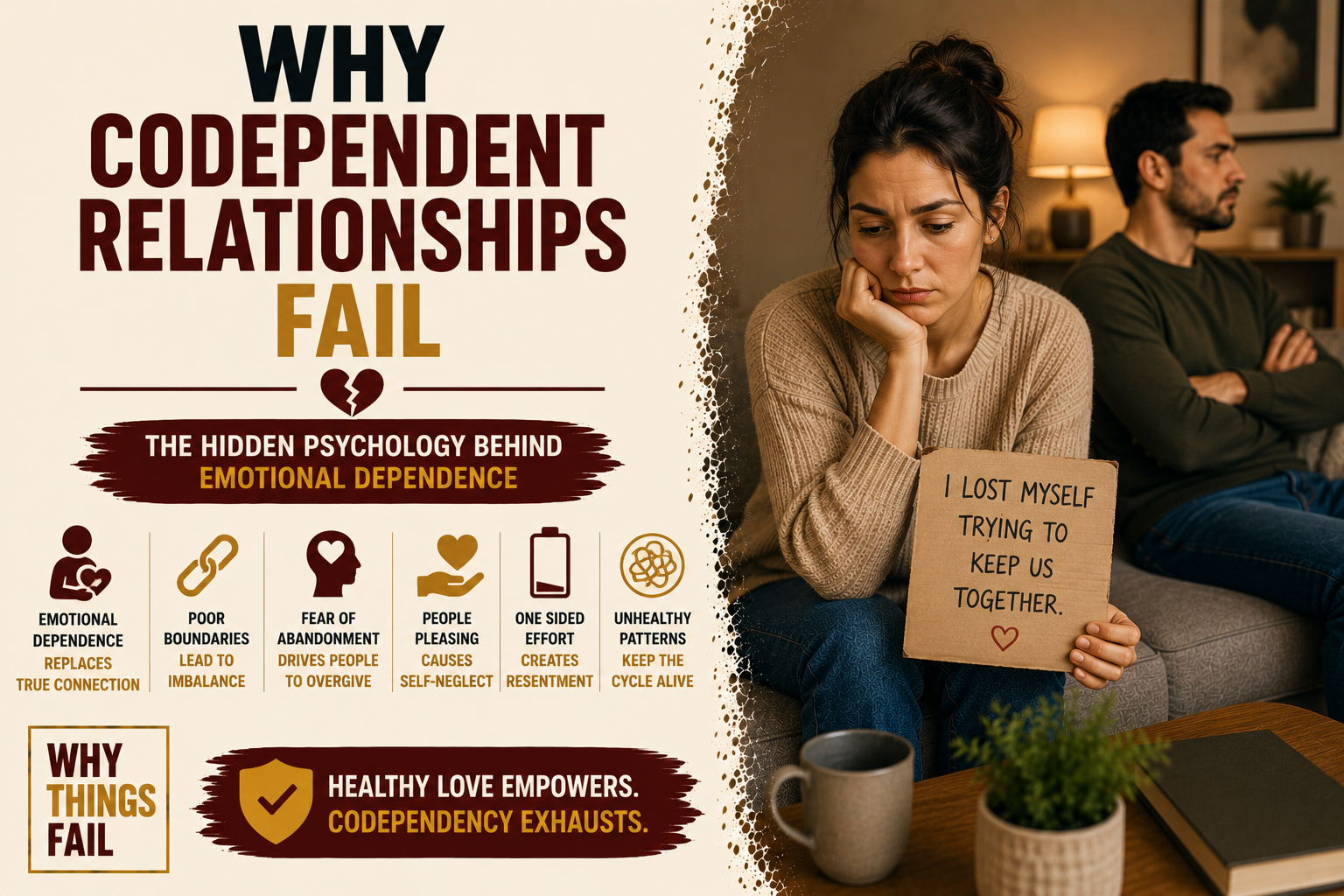
Quick Answer
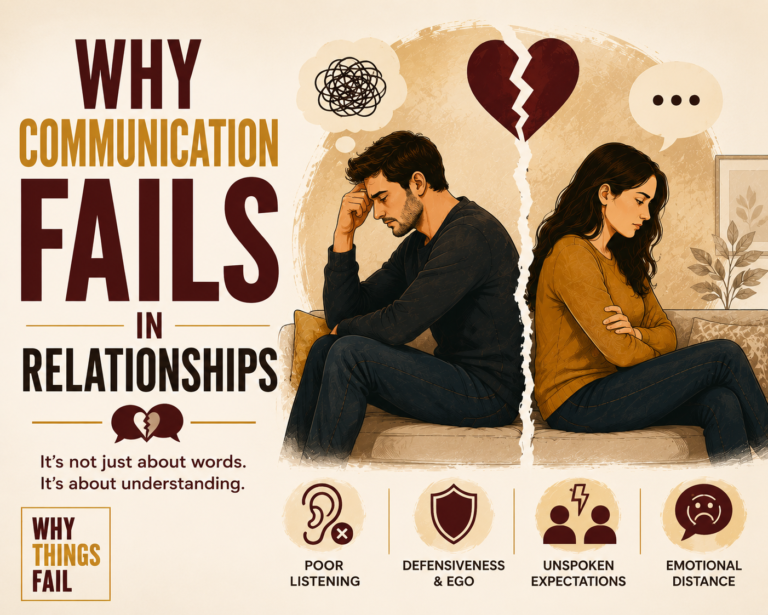
Communication fails in relationships because most problems are not caused by words alone. They develop through unspoken expectations, emotional reactions, poor listening, defensive behaviour and unresolved patterns that gradually replace understanding with misunderstanding.
Introduction
Every relationship depends on communication.
Whether between romantic partners, family members or close friends, communication shapes trust, emotional safety and long term connection. It allows people to express needs, resolve disagreements and understand one another beyond assumptions.
Yet communication is also one of the most common reasons relationships deteriorate.
Many couples begin their relationship believing they communicate well. Conversations feel effortless, disagreements seem manageable and emotional connection develops naturally. Over time, however, small misunderstandings become repeated arguments. Honest discussions become uncomfortable. Silence replaces curiosity, and assumptions replace genuine understanding.
The relationship may appear stable from the outside, but internally the connection begins to weaken.
This raises an important question.
Why does communication fail between two people who genuinely care about each other?
Many believe the answer is poor speaking skills or frequent arguments.
The deeper explanation is far more complex.
Communication rarely fails because people cannot talk.
It fails because emotions, expectations, past experiences and psychological defence mechanisms quietly change the way people interpret what is being said.
Understanding communication failure requires looking beyond conversations themselves. It requires understanding the hidden behavioural patterns that influence every interaction.
What Is Communication Failure in Relationships?
Communication failure is not simply the absence of conversation.
Many couples talk every day while feeling emotionally disconnected.
True communication failure occurs when messages are misunderstood, emotions remain unexpressed or both people leave conversations feeling unheard despite having spoken at length.
The issue is not the quantity of communication.
It is the quality of understanding.
Healthy relationships depend on mutual clarity, emotional awareness and active listening. When these elements begin to disappear, misunderstandings become more frequent and trust gradually weakens.
Communication failure therefore represents a breakdown in understanding rather than a lack of words.
The Biggest Myth
One of the most common beliefs is that successful couples never argue.
This misunderstanding causes many people to fear conflict instead of understanding its purpose.
Healthy relationships are not defined by the absence of disagreement.
They are defined by the ability to manage disagreement respectfully.
Conflict often reveals important differences in needs, expectations and values. When handled constructively, it creates opportunities for greater understanding.
The real danger is not arguing.
The real danger is avoiding meaningful conversations until resentment quietly replaces openness.
Many relationships fail not because conflict existed but because important issues remained unresolved for too long.
What Usually Happens?
Communication failure rarely begins with a major argument.
Instead, it develops through a predictable pattern.
A misunderstanding occurs.
One partner feels disappointed but says nothing.
Small frustrations accumulate.
Assumptions replace honest conversations.
Defensive reactions become more common.
Emotional distance increases.
Eventually, even minor disagreements trigger disproportionate emotional responses because they reflect months or years of unresolved frustration rather than a single incident.
By the time couples recognise communication has broken down, the problem has often been developing quietly for a long time.
Why Does Communication Fail in Relationships?
Communication problems are often explained as differences in personality or incompatible communication styles.
While these factors play a role, they rarely explain why healthy conversations gradually become difficult.
The deeper causes lie within human psychology.
People do not simply hear words.
They interpret words through emotions, memories, expectations and previous experiences.
Every conversation therefore becomes influenced by far more than the sentences being spoken.
Emotional Safety Disappears Before Communication Does
People communicate openly only when they feel emotionally safe.
Emotional safety allows individuals to express fears, admit mistakes and discuss sensitive topics without expecting humiliation, criticism or rejection.
When emotional safety weakens, communication changes immediately.
People begin filtering their thoughts.
Important feelings remain unspoken.
Difficult conversations are postponed.
Silence becomes a protective strategy rather than a sign of agreement.
Eventually, partners stop discussing the issues that matter most because avoiding discomfort feels easier than risking emotional pain.
Communication has not failed because people stopped talking.
It has failed because honesty no longer feels safe.
People Listen To Respond Instead Of Understanding
One of the most overlooked causes of communication failure is poor listening.
Many people assume listening simply means remaining silent while another person speaks.
In reality, genuine listening requires curiosity.
Instead of understanding the speaker’s perspective, people often spend conversations preparing their own response.
Psychologists describe this as defensive listening.
The objective quietly changes from understanding to self protection.
Each person becomes more concerned with explaining their own position than exploring the emotions behind the other person’s words.
As a result, conversations become debates rather than opportunities for connection.
Both individuals leave believing they communicated clearly.
Neither feels understood.
Assumptions Replace Curiosity
Healthy communication depends on asking questions.
Unhealthy communication depends on making assumptions.
As relationships mature, people often believe they already know how their partner thinks, feels and will respond.
Curiosity gradually disappears.
This creates a dangerous psychological shortcut.
Instead of asking why someone behaved in a particular way, people assume intention.
A forgotten message becomes evidence of not caring.
A quiet evening becomes proof of emotional distance.
A brief disagreement becomes interpreted as rejection.
Behavioural psychologists have consistently shown that people naturally interpret uncertain situations through existing beliefs and emotions.
Once negative assumptions become habitual, communication becomes increasingly distorted because conversations are shaped by imagined intentions rather than observable reality.
Fear Changes The Meaning Of Every Conversation
Fear influences communication more than most people recognise.
Some fear criticism.
Others fear rejection.
Some fear abandonment.
Others fear appearing vulnerable.
These emotional concerns influence what people choose to say and what they choose to hide.
Fear encourages indirect communication.
Instead of expressing disappointment honestly, people become sarcastic.
Instead of asking for reassurance, they become distant.
Instead of admitting emotional needs, they criticise their partner’s behaviour.
The visible conversation appears to concern household responsibilities, finances or daily routines.
The hidden conversation is often about feeling appreciated, respected, accepted or emotionally secure.
Until these deeper emotional needs are recognised, the same arguments continue repeating despite countless discussions.
Unresolved Experiences Shape Present Conversations
Every relationship is influenced by previous experiences.
Childhood family dynamics, earlier relationships and significant emotional events shape expectations about trust, conflict and communication.
Someone raised in a highly critical environment may interpret neutral feedback as personal rejection.
Another person who experienced emotional neglect may become unusually sensitive to perceived distance.
These responses are rarely deliberate.
They represent psychological patterns developed long before the current relationship began.
This explains why two people can experience the same conversation very differently.
One hears information.
The other experiences emotional threat.
Communication therefore becomes less about the words spoken and more about the meaning each person unconsciously assigns to those words.
Emotional Reactivity Weakens Rational Thinking
Strong emotions reduce the brain’s ability to process information objectively.
During moments of anger, frustration or disappointment, people focus on defending themselves rather than understanding another perspective.
Decision making becomes reactive instead of reflective.
Minor disagreements quickly expand into discussions about unrelated past events.
The original issue becomes secondary.
The emotional experience becomes primary.
This explains why many couples finish arguments without resolving the actual problem.
The conversation shifted from solving an issue to managing emotional discomfort.
Over time, repeated emotional reactions create predictable communication patterns that become increasingly difficult to break.
Warning Signs
Communication breakdown rarely begins with obvious conflict. It usually starts with subtle behavioural changes that become normal over time.
One warning sign is avoiding meaningful conversations. Partners continue discussing daily responsibilities but avoid topics involving emotions, expectations or unresolved concerns. Surface level conversations replace genuine connection.
Another warning sign is becoming defensive during ordinary discussions. Instead of trying to understand feedback, each person focuses on protecting themselves. Every conversation begins to feel like criticism rather than collaboration.
Constantly assuming negative intentions is another indicator. Instead of asking questions, partners begin believing they already know why the other person behaved in a certain way. Misunderstandings become accepted as facts.
A decline in active listening also signals deeper problems. Conversations become opportunities to interrupt, justify actions or prove a point rather than understand another perspective.
Perhaps the most significant warning sign is emotional withdrawal. One or both partners stop expressing disappointment, frustration or affection because previous attempts did not feel safe or productive. Silence creates the illusion of peace while unresolved issues continue accumulating beneath the surface.
These warning signs are often ignored because they develop gradually. Couples adapt to unhealthy communication patterns without recognising that emotional distance is steadily increasing.
What Could Have Prevented It?
Most communication failures cannot be prevented by learning better phrases or memorising relationship advice.
They are prevented by creating an environment where honesty feels emotionally safe.
Curiosity should replace assumption. Asking why someone feels a certain way produces greater understanding than assuming their motives. Questions create connection, while assumptions create distance.
Active listening also changes the quality of communication. Listening to understand rather than listening to respond allows both people to feel heard even when they disagree.
Regular conversations about expectations reduce the likelihood of resentment. Many conflicts develop because important needs remain unspoken until disappointment becomes overwhelming.
Emotional awareness is equally important. Recognising feelings before reacting allows people to express concerns calmly rather than emotionally. This reduces defensiveness and encourages constructive discussion.
Finally, both partners must accept that misunderstanding is inevitable. The objective is not perfect communication. It is creating a relationship where misunderstandings can be explored without damaging trust.
Lessons
Communication failure teaches lessons that extend beyond romantic relationships.
The first lesson is that understanding requires effort. Strong relationships are not built because people naturally communicate well. They are built because people remain curious even after years together.
Another lesson is that emotions influence conversations more than facts. People remember how conversations made them feel long after they forget the exact words that were spoken.
Communication also demonstrates that assumptions are among the greatest threats to healthy relationships. Once people stop asking questions, misunderstanding becomes increasingly likely.
Perhaps the most valuable lesson is that trust grows through consistent emotional safety. When people believe they can speak honestly without fear of judgement or rejection, communication becomes stronger even during disagreement.
Healthy communication is therefore less about speaking perfectly and more about creating conditions where honesty feels possible.
Failure Pattern
The dominant pattern behind communication failure is Emotional Decision Making combined with Poor Emotional Awareness.
This pattern appears repeatedly because people naturally react before they reflect.
Fear creates defensiveness.
Defensiveness reduces listening.
Poor listening increases misunderstanding.
Misunderstanding creates resentment.
Resentment weakens trust.
Reduced trust makes future communication even more difficult.
The cycle continues until ordinary conversations become emotionally exhausting.
This same behavioural pattern appears in friendships, families, workplaces and business partnerships because it reflects human psychology rather than relationship type.
Communication fails when emotional reactions consistently replace thoughtful understanding.
Hidden Lesson
Most relationships do not fail because people stop loving one another.
They fail because people gradually stop understanding one another.
Love alone cannot overcome repeated misunderstanding.
Without emotional safety, curiosity and honest conversation, even genuine affection struggles to survive.
The deeper truth is that communication problems rarely begin with words. They begin with emotions that remain unspoken until silence becomes more comfortable than vulnerability.
Failure Scorecard
| Area | Score | Explanation |
| Emotional Awareness | 4/10 | Many people recognise emotions only after reacting impulsively. |
| Decision Making | 5/10 | Conversations are frequently influenced by assumptions instead of evidence. |
| Emotional Regulation | 4/10 | Strong emotions often reduce the ability to communicate calmly. |
| Long Term Thinking | 5/10 | Immediate emotional relief is often prioritised over lasting relationship health. |
| Relationship Knowledge | 6/10 | Many understand the importance of communication but struggle to apply it consistently. |
| Active Listening | 4/10 | Listening to respond remains more common than listening to understand. |
| Planning | 5/10 | Few couples intentionally discuss expectations before problems emerge. |
| Adaptability | 6/10 | Healthy relationships improve when both partners remain willing to change unhealthy patterns. |
Key Takeaways
- Communication fails because emotions influence interpretation more than words.
- Emotional safety is the foundation of honest conversation.
- Assumptions damage relationships faster than disagreement.
- Listening to understand creates stronger connections than listening to reply.
- Small unresolved frustrations often become major conflicts over time.
- Defensiveness prevents understanding even when intentions are good.
- Curiosity strengthens relationships by replacing judgement with understanding.
- Lasting communication depends on consistent emotional trust rather than perfect conversations.
Frequently Asked Questions
Why does communication fail in relationships?
Communication usually fails because emotional reactions, assumptions and poor listening gradually replace honest understanding. The issue is rarely a lack of conversation but a lack of emotional connection during conversations.
What is the biggest communication mistake couples make?
The biggest mistake is assuming they already know what their partner means without asking clarifying questions. This allows misunderstandings to grow into long term resentment.
Why do small issues become major arguments?
Small issues often trigger unresolved emotions from previous experiences. The visible disagreement may concern a minor event, while the emotional reaction reflects months of accumulated frustration.
Can good communication prevent relationship problems?
Good communication cannot prevent every disagreement, but it allows couples to resolve conflict before it damages trust. Open discussion reduces misunderstanding and strengthens emotional connection.
How can couples improve communication?
Couples improve communication by listening with curiosity, expressing emotions honestly, avoiding assumptions and creating an environment where both people feel emotionally safe to speak openly.
Conclusion
Communication fails in relationships not because people forget how to speak but because they gradually lose the ability to understand one another beneath the surface of ordinary conversations. Emotional reactions, hidden expectations and unspoken fears quietly reshape the meaning of every interaction.
Recognising these deeper psychological patterns transforms communication from a simple exchange of words into a process of understanding human behaviour. The strongest relationships are not those without conflict. They are those where both people remain committed to understanding before reacting, ensuring that connection grows stronger instead of weaker over time.