Quick Answer
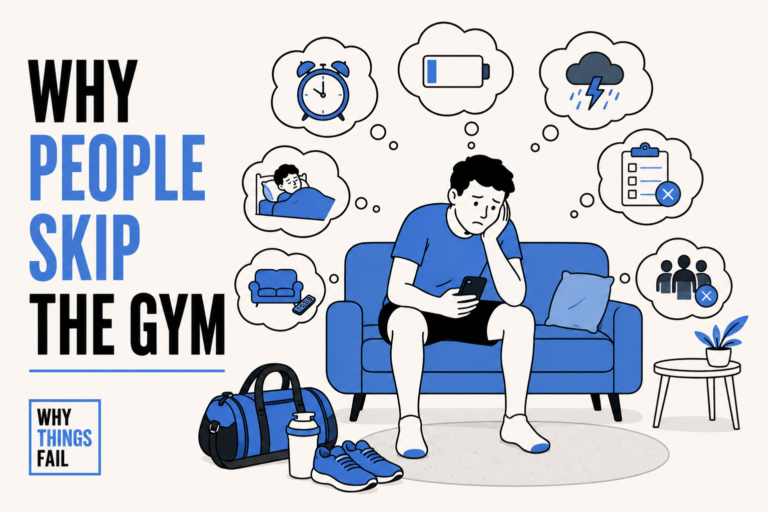
People skip the gym not because they are lazy or lack motivation. They stop exercising because human behaviour is shaped by habits, emotions, immediate rewards, environmental cues and decision fatigue. The real challenge is rarely physical ability. It is building a system that makes consistent exercise easier than avoiding it.
Introduction
Every January, gyms become crowded with new members.
People buy new training clothes, fitness trackers and nutrition plans. They promise themselves that this year will be different.
By March, many of those gyms are noticeably quieter.
The equipment has not changed.
Exercise science has not changed.
The health benefits remain as clear as ever.
Yet millions of people gradually stop showing up.
This pattern repeats every year across different countries, age groups and income levels.
The question is not whether exercise improves health. Scientific evidence has answered that for decades.
The more interesting question is why so many people fail to maintain a behaviour they know is beneficial.
Many explanations focus on motivation.
Others blame busy schedules or lack of discipline.
These explanations only describe the surface.
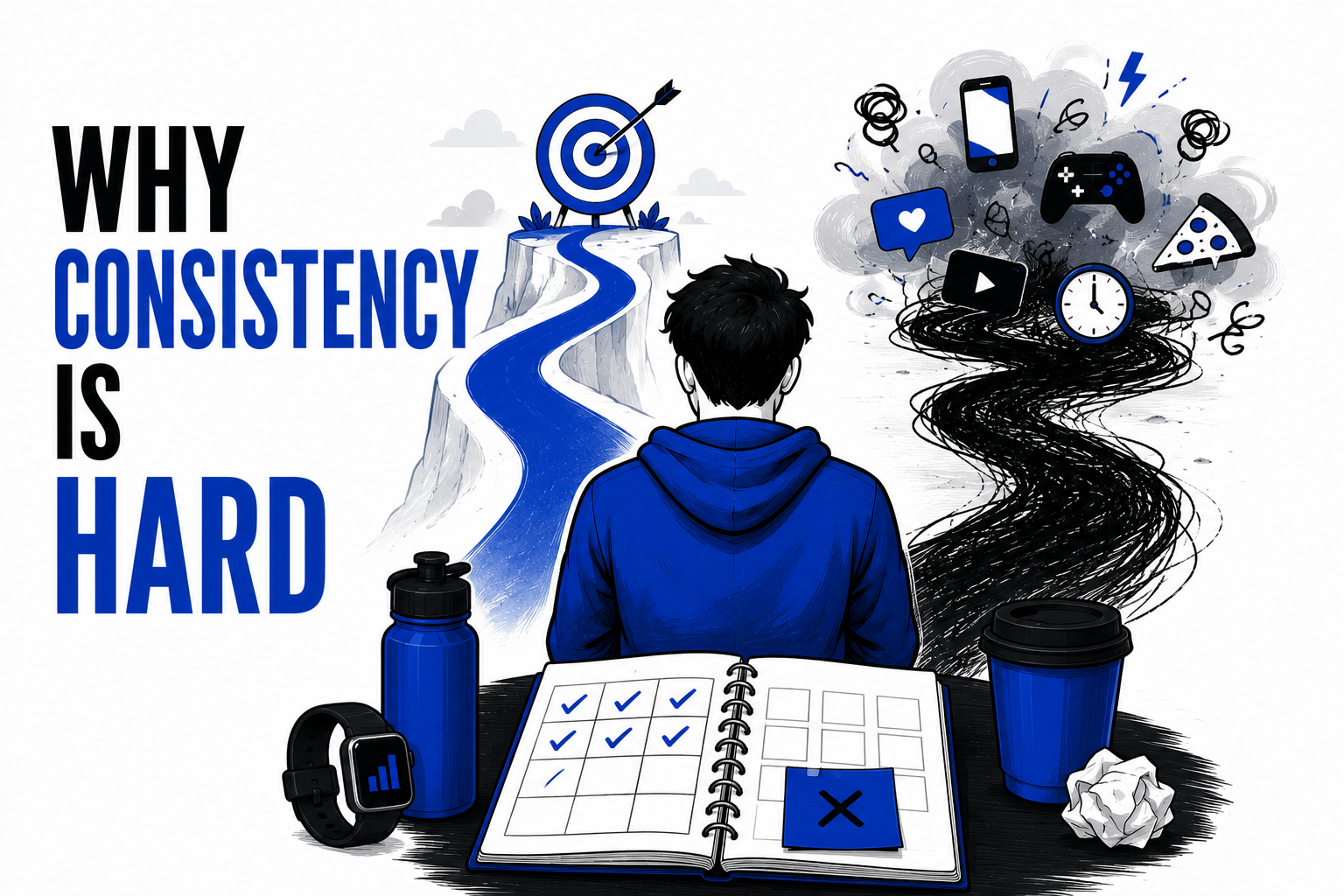
Skipping the gym is rarely the result of one decision. It is usually the outcome of repeated behavioural patterns shaped by psychology, environment and competing incentives.
Understanding why people skip the gym requires looking beyond fitness advice. It requires understanding how humans make decisions when immediate comfort competes with long term health.
What Is Exercise Failure?
Exercise failure does not mean missing one workout.
Everyone occasionally becomes ill, travels for work or experiences unexpected responsibilities.
The real failure occurs when temporary interruptions become permanent habits.
A person who exercises consistently for years may miss several sessions without losing the behaviour.
Another person may skip one workout and never return.
The difference is not physical fitness.
It is behavioural consistency.
Exercise failure develops when healthy routines gradually disappear and are replaced by behaviours that provide immediate comfort but weaker long term outcomes.
The issue is therefore not whether someone can exercise.
It is whether they can repeatedly choose exercise despite distractions, uncertainty and changing emotions.
The Biggest Myth
The most common belief is simple.
People skip the gym because they are lazy.
This explanation is attractive because it appears obvious.
If someone truly wanted better health, they would simply exercise.
Behavioural psychology tells a different story.
Humans regularly fail to perform behaviours they genuinely value.
People delay important work.
They postpone medical appointments.
They spend beyond their budgets.
They interrupt healthy sleep routines.
These behaviours rarely occur because people do not understand the benefits.
They occur because the human brain naturally prioritises immediate rewards over delayed outcomes.
Exercise illustrates this conflict perfectly.
The effort is immediate.
The reward is gradual.
The brain therefore treats the sofa as a more attractive option than the treadmill, even when the individual genuinely values long term health.
The problem is not laziness.
It is how human decision making responds to competing incentives.
What Usually Happens?
Most exercise failures follow a remarkably similar pattern.
A person begins with enthusiasm.
The first few weeks feel exciting.
Visible progress creates confidence.
Daily responsibilities gradually increase.
One workout is missed.
The missed workout becomes two.
Guilt begins replacing confidence.
Returning to the gym feels increasingly difficult.
Eventually the identity shifts.
Instead of saying, “I missed a workout,” the individual begins believing, “I am not someone who exercises.”
By this stage, the behavioural pattern has changed.
The gym is no longer simply a place.
It has become a reminder of perceived failure.
Why Does It Happen?
The reasons people skip the gym are far more complex than poor time management or lack of willpower.
Human behaviour is influenced by biological instincts, behavioural economics, environmental design and emotional decision making.
Exercise constantly competes against behaviours that provide immediate comfort with almost no effort.
This makes consistency psychologically difficult even for intelligent and highly motivated individuals.
Immediate Rewards Always Defeat Delayed Rewards
One of the strongest explanations comes from behavioural economics.
Humans naturally value immediate rewards more highly than future benefits.
Psychologists describe this tendency as present bias.
The benefits of exercise usually appear gradually.
Improved cardiovascular health.
Greater strength.
Better metabolic health.
Reduced disease risk.
These outcomes require weeks, months or years.
The cost, however, is immediate.
Physical effort.
Muscle fatigue.
Time commitment.
Discomfort.
When the brain compares these options, it often favours activities that provide instant satisfaction.
Watching television.
Scrolling social media.
Ordering takeaway food.
Sleeping longer.
The decision feels rational because the reward is immediate.
Repeated often enough, these choices gradually replace healthier routines.
Motivation Is Unreliable
Many people believe they should only exercise when they feel motivated.
This assumption creates one of the biggest obstacles to consistency.
Motivation is emotional.
Emotion changes daily.
Stress at work.
Poor sleep.
Family responsibilities.
Financial pressure.
Any of these can reduce motivation within hours.
People who depend entirely on motivation therefore exercise only when circumstances feel favourable.
Successful long term exercisers behave differently.
They rely less on emotion and more on established habits.
Behavioural scientists consistently find that habits reduce the mental effort required for repeated decisions.
The fewer decisions required, the greater the consistency.
The question therefore changes.
Instead of asking how to become more motivated, it becomes more useful to ask how to make exercise require fewer daily decisions.
Decision Fatigue Gradually Weakens Good Intentions
Every day requires hundreds of choices.
People decide what to wear.
What to eat.
How to respond to work demands.
How to manage family responsibilities.
Whether to complete household tasks.
Each decision consumes mental energy.
By the evening, many people experience decision fatigue.
The brain begins seeking the easiest available option.
Going directly home.
Ordering convenient food.
Watching entertainment.
Resting on the sofa.
Exercise requires additional effort at precisely the moment mental resources are lowest.
This explains why many people sincerely intend to visit the gym during the morning but abandon the plan later in the day.
Their priorities have not changed.
Their mental energy has.
Identity Shapes Behaviour More Than Goals
Many people set fitness goals without changing how they see themselves.
They say,
“I want to lose weight.”
“I want to build muscle.”
“I want better health.”
These goals are important.
However, behaviour becomes more sustainable when identity changes first.
Someone who believes they are an active person naturally makes different daily decisions from someone who believes exercise is something they occasionally attempt.
Identity influences behaviour because people seek consistency between their actions and their self perception.
When exercise becomes part of personal identity rather than a temporary project, consistency becomes significantly easier.
This explains why lasting fitness depends less on ambitious goals and more on developing an identity that supports healthy behaviour.
Warning Signs
People rarely stop going to the gym without warning. The behavioural changes usually appear long before the habit disappears.
One warning sign is beginning to negotiate with yourself before every workout. Instead of exercising at the planned time, the mind starts searching for reasons to delay it until tomorrow. Tomorrow eventually becomes next week.
Another warning sign is depending entirely on motivation. When exercise becomes optional rather than scheduled, emotions begin controlling behaviour. Good days produce workouts. Difficult days produce excuses.
Small compromises also signal a weakening routine. Skipping one session because of genuine commitments is normal. Repeatedly finding reasons to skip sessions shows that the habit is losing priority.
Comparing yourself with others creates another hidden warning sign. Social media often presents unrealistic fitness transformations, leading people to believe their own progress is too slow. Instead of appreciating gradual improvement, they become discouraged by unrealistic expectations.
Perhaps the clearest warning sign is changing the goal from building a lifelong habit to achieving quick results. Once immediate progress becomes the only measure of success, temporary plateaus feel like failure, increasing the likelihood of quitting.
These warning signs are frequently ignored because they seem insignificant. In reality, they represent small behavioural shifts that eventually reshape daily habits.
What Could Have Prevented It?
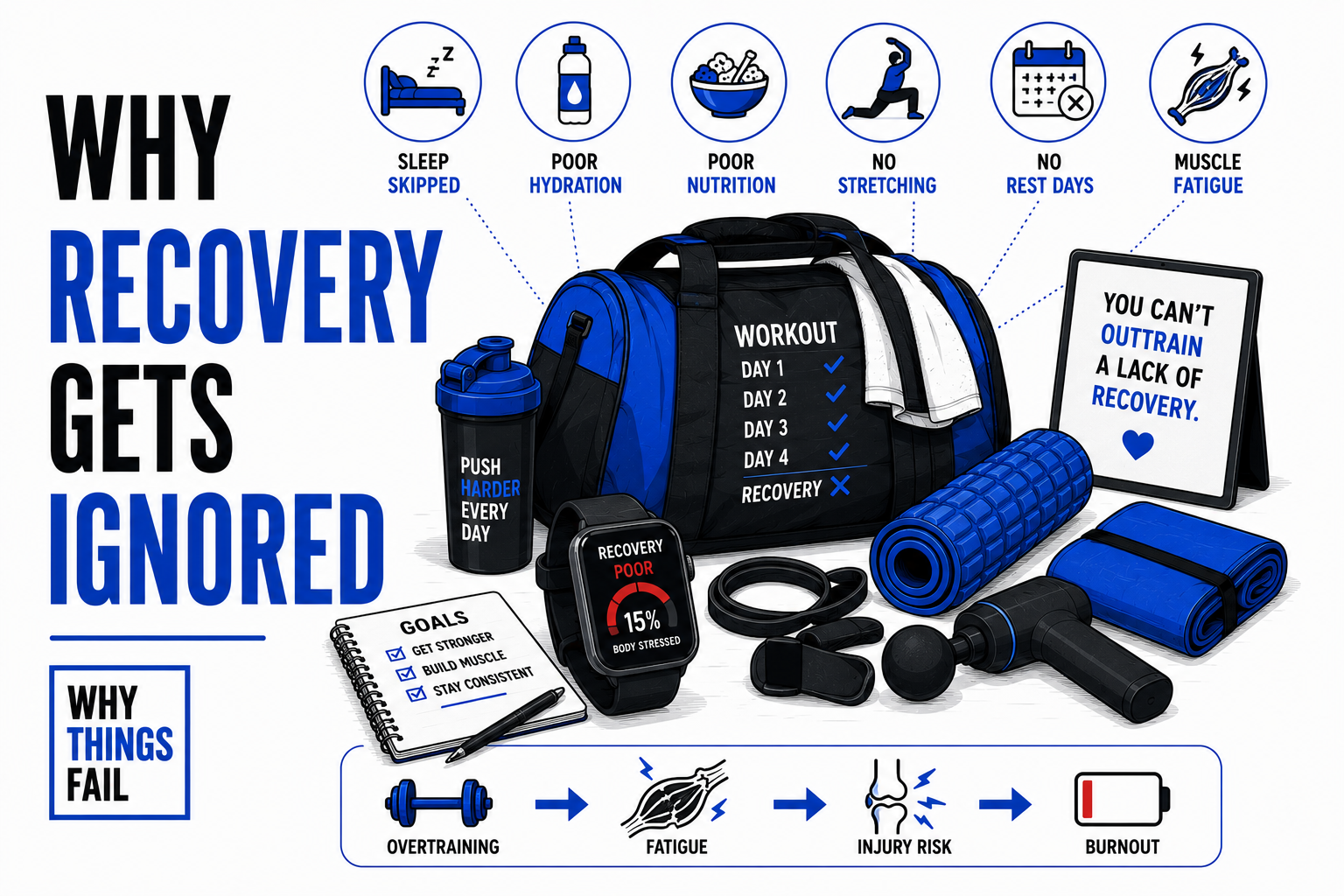
Most people do not need greater motivation. They need better systems.
One effective approach is reducing friction. Preparing gym clothes the night before, choosing a convenient gym and scheduling exercise at the same time each day reduces the number of decisions required. Simpler routines are easier to repeat.
Setting realistic expectations is equally important. Sustainable fitness is rarely created through dramatic effort. It develops through behaviours that remain manageable during busy periods, stressful weeks and changing life circumstances.
Environment also matters. People are more likely to exercise when healthy choices become convenient and unhealthy alternatives require greater effort. Behavioural scientists consistently show that surroundings influence behaviour as much as personal determination.
Tracking consistency rather than perfection also improves long term success. Missing one workout is rarely damaging. Allowing one missed workout to become a permanent interruption usually is.
Most importantly, exercise should become part of normal life rather than a temporary project. Habits survive because they fit naturally into daily routines instead of relying on continuous emotional enthusiasm.
Lessons
The reasons people skip the gym reveal broader truths about human behaviour.
The first lesson is that knowledge alone rarely changes behaviour. Most people understand the benefits of regular exercise, yet understanding does not automatically produce consistent action.
The second lesson is that habits outperform motivation. Motivation fluctuates with stress, sleep, mood and personal circumstances. Habits continue because they require fewer emotional decisions.
Another lesson is that small choices shape long term outcomes. Missing one workout rarely affects health. Repeating that decision over months gradually changes physical fitness, confidence and wellbeing.
Perhaps the most valuable lesson is that people succeed when they design environments that support good behaviour instead of depending on willpower alone. Strong systems consistently outperform strong intentions.
Failure Pattern
The dominant pattern behind skipping the gym is Short Term Thinking reinforced by Emotional Decision Making.
People naturally choose immediate comfort over delayed benefits. Resting today feels rewarding. Improved health feels distant.
This behavioural pattern appears in many areas of life.
People delay saving for retirement because spending produces immediate satisfaction.
Students postpone studying because entertainment offers instant enjoyment.
Businesses delay maintenance because the costs appear unnecessary until larger problems develop.
The pattern remains the same. Immediate rewards repeatedly outweigh future benefits until delayed consequences become unavoidable.
Skipping the gym is therefore not simply a fitness issue. It reflects a broader tendency within human decision making.
Hidden Lesson
The greatest obstacle to regular exercise is not physical fitness.
It is the belief that healthy behaviour should always feel effortless.
In reality, consistency is created before motivation appears.
People who maintain lifelong fitness rarely wake up inspired every day. They continue because exercise has become part of their identity and daily routine.
The deeper truth is that people rarely quit the gym because they dislike exercise. They quit because repeated behavioural decisions gradually weaken the habit until returning feels emotionally difficult.
Failure Scorecard
| Area | Score | Explanation |
| Self Discipline | 5/10 | Good intentions often weaken when routines are interrupted. |
| Decision Making | 5/10 | Immediate comfort frequently outweighs long term health benefits. |
| Habit Formation | 4/10 | Many people rely on motivation instead of consistent routines. |
| Long Term Thinking | 5/10 | Future health is often sacrificed for present convenience. |
| Health Knowledge | 8/10 | Awareness is generally high, but behaviour often fails to match knowledge. |
| Emotional Control | 5/10 | Stress, frustration and disappointment frequently influence exercise decisions. |
| Planning | 4/10 | Exercise is often treated as optional instead of scheduled. |
| Adaptability | 6/10 | Many people struggle to adjust routines when life circumstances change. |
Key Takeaways
- People skip the gym because of behavioural patterns rather than laziness.
- Immediate rewards often defeat long term health goals.
- Motivation is temporary, while habits create consistency.
- Decision fatigue makes healthy choices more difficult later in the day.
- Identity influences behaviour more strongly than short term goals.
- Small behavioural changes gradually become lasting habits.
- Well designed systems reduce the need for willpower.
- Long term fitness depends on consistency rather than perfection.
Frequently Asked Questions
Why do people skip the gym even when they want to be healthy?
People often prioritise immediate comfort over future health because the brain naturally values instant rewards more than delayed benefits. Behavioural psychology explains that this pattern is common across many areas of life.
Is lack of motivation the main reason people stop exercising?
No. Motivation changes from day to day. Long term exercise habits depend more on routines, environment and identity than temporary feelings of motivation.
Why is it difficult to build a consistent gym habit?
Building a habit requires repeating the same behaviour despite changing emotions, stress and daily responsibilities. Many people stop because they expect motivation to remain constant.
How does psychology affect exercise consistency?
Psychological factors such as present bias, decision fatigue, self identity and emotional decision making strongly influence whether people continue exercising over the long term.
Can missing one workout cause people to quit?
Missing one workout is not the problem. The problem occurs when one missed session changes into a repeated behavioural pattern that gradually replaces the exercise habit.
Conclusion
People do not usually skip the gym because they lack knowledge or physical ability. They skip because human behaviour is shaped by immediate rewards, emotional decision making and routines that gradually favour comfort over consistency.
Understanding these psychological patterns changes the conversation. The challenge is no longer about finding more motivation. It is about recognising that lasting fitness depends on designing behaviours and environments that make healthy choices easier to repeat long before results become visible.