Introduction
Millions of people start running every year.
Some begin to lose weight. Others want to improve their fitness, prepare for a marathon or simply build a healthier lifestyle. Running appears to be one of the simplest forms of exercise because it requires little equipment and can be done almost anywhere.
Yet enthusiasm often fades surprisingly quickly.
Many new runners stop within weeks, while others gradually reduce their training until running disappears from their routine altogether. Even experienced runners sometimes abandon a habit they once enjoyed.
This raises an important question.
Why do people stop running when they already understand its physical and mental benefits?
The obvious explanations include lack of time, injuries or busy schedules. These factors certainly matter, but they rarely tell the complete story.
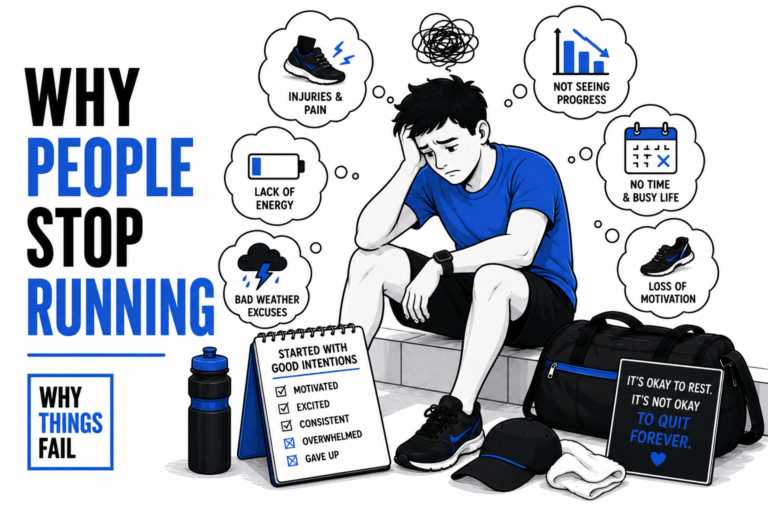
The deeper reasons lie in psychology, decision making and human behaviour. Running is not only a physical activity. It is a long term behavioural commitment that requires consistency despite discomfort, uncertainty and delayed rewards.
Understanding why people stop running helps explain far more than exercise habits. It reveals how people respond to effort, setbacks, expectations and long term goals. The same behavioural patterns often influence careers, businesses, education and personal finances.
What Is It?
Stopping running does not simply mean taking a short break because of illness or injury.
The failure occurs when a person gradually abandons a habit that was intended to become part of their long term lifestyle.
In most cases, the decision is not made on a single day.
It develops through a series of small choices.
One missed run becomes several.
Motivation begins to decline.
The routine weakens.
Eventually running no longer feels like part of the person’s identity.
The failure therefore is not physical.
It is behavioural.
The Biggest Myth
The most common belief is that people stop running because they lack motivation.
This explanation sounds reasonable, yet it overlooks a more important reality.
Motivation is naturally inconsistent.
No successful runner feels motivated every day.
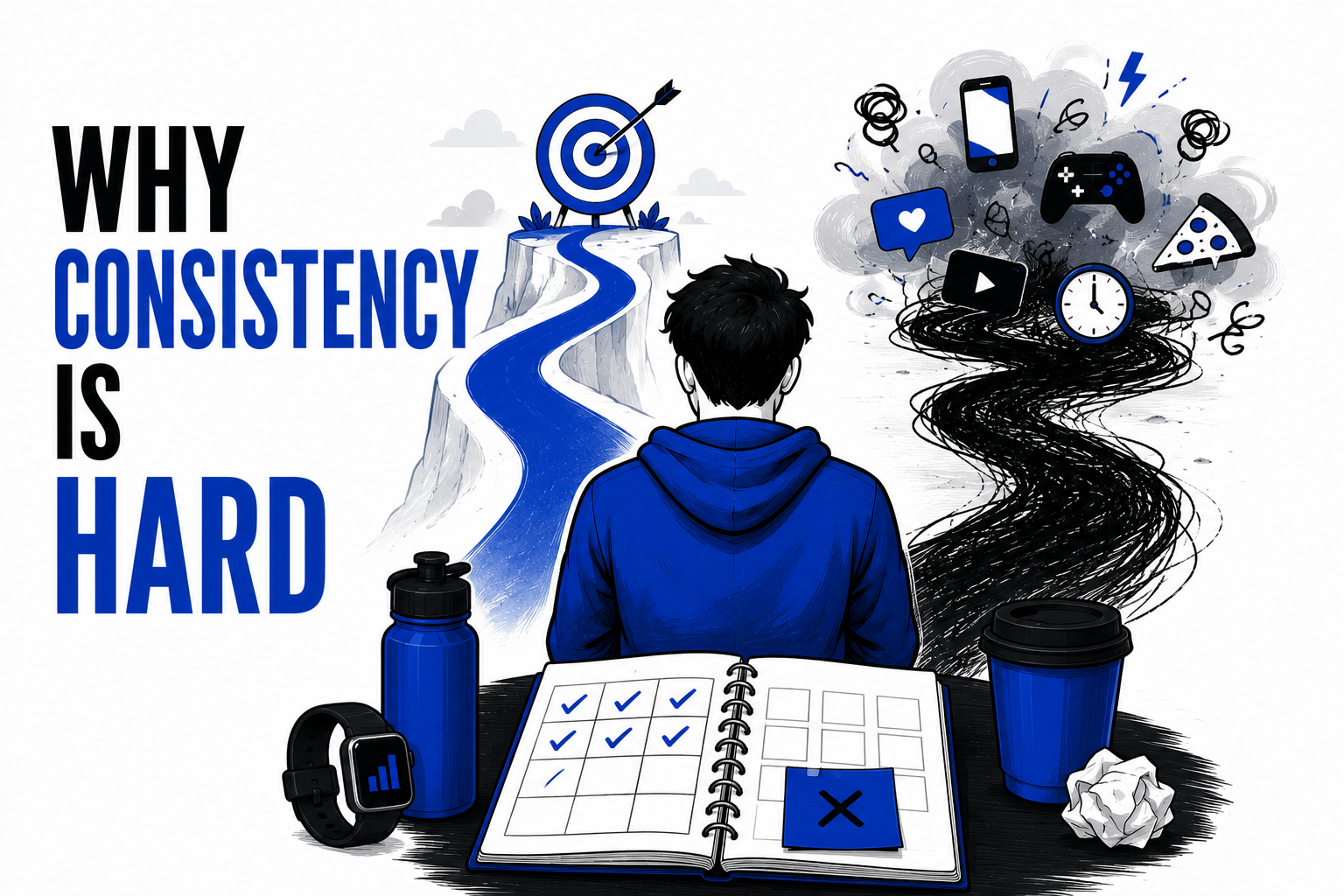
Those who continue running do not rely on constant enthusiasm. They rely on habits, routines and systems that continue working even when motivation disappears.
The real difference is not motivation.
It is behavioural consistency.
People who expect motivation to remain permanently high often become discouraged when excitement fades. They interpret this normal change as a sign that something is wrong.
In reality, declining motivation is not the problem.
Expecting motivation to remain constant is.
What Usually Happens?
Most running journeys follow a familiar pattern.
A person decides to improve their health.
The first few weeks feel exciting.
Progress arrives quickly.
Confidence grows.
Expectations become higher.
Eventually enthusiasm begins to decline.
Life becomes busier.
Minor discomfort appears.
One training session is skipped.
Soon another is missed.
Without realising it, consistency disappears.
Months later the person describes themselves as someone who “used to run.”
Although every individual experiences different circumstances, the overall pattern remains remarkably similar.
People rarely stop running because of one major event.
They stop because small behavioural changes accumulate over time.
Why Does It Happen?
Understanding why people stop running requires looking beyond physical fitness.
The human brain constantly evaluates effort against reward.
Running presents an unusual challenge because the effort is immediate while many of the benefits arrive gradually.
This creates a psychological conflict.
The body experiences fatigue today.
The improved health may not become visible for weeks or months.
Behavioural economists describe this as present bias.
People naturally give greater value to immediate comfort than delayed rewards.
Skipping one run provides instant relief.
Completing that same run provides benefits that feel distant and uncertain.
Over time, this small preference for immediate comfort quietly becomes a long term behavioural pattern.
The Reward System Changes Faster Than Most People Expect
Many new runners experience rapid progress during their first few weeks.
Weight may decrease.
Fitness improves.
Energy levels increase.
These early improvements create excitement because the brain receives clear evidence that effort produces results.
Eventually progress slows.
Weight loss becomes less noticeable.
Running feels routine rather than exciting.
Fitness improvements become gradual.
Psychologists refer to this as hedonic adaptation.
People quickly become accustomed to positive changes.
What once felt exciting becomes normal.
The activity itself has not become less valuable.
The emotional reward has simply become less intense.
Many runners mistakenly believe they have lost interest.
In reality, they have simply adapted to their new routine.
Identity Is Stronger Than Motivation
Long term habits are closely connected to personal identity.
People who think of themselves as runners usually continue running despite bad weather, busy schedules or temporary setbacks.
Others continue seeing themselves as someone who is merely trying to run.
This distinction matters.
When running is connected to identity, missing one session feels temporary.
When running is viewed only as a short term goal, each missed session makes quitting easier.
Behavioural scientists have repeatedly shown that people protect behaviours that reinforce their identity.
Those behaviours require less willpower because they become part of how individuals see themselves.
Unrealistic Expectations Create Early Failure
Many beginners expect continuous improvement.
They assume every week should feel easier than the last.
Reality rarely works that way.
Progress often slows.
Performance temporarily declines.
Fatigue increases after harder training sessions.
Small injuries occasionally interrupt consistency.
These experiences are completely normal.
Unfortunately many people interpret them as evidence that running is no longer working.
This misunderstanding encourages people to abandon healthy routines precisely when patience becomes most important.
Social Comparison Changes The Purpose Of Running
Modern technology has transformed the way people experience exercise.
Fitness applications and social media make it easy to compare distances, pace and achievements with others.
Comparison can inspire improvement.
It can also create dissatisfaction.
A runner who was once proud of completing five kilometres may suddenly feel unsuccessful after viewing faster performances online.
The purpose quietly changes.
Running shifts from personal improvement to external validation.
Psychologists describe this as extrinsic motivation replacing intrinsic motivation.
When external approval becomes the primary reward, satisfaction becomes increasingly difficult to maintain.
People begin running for recognition instead of enjoyment or health.
As recognition declines, commitment often declines with it.
Small Decisions Create Large Outcomes
People rarely decide to stop running altogether.
Instead, they postpone today’s run because they feel tired.
Tomorrow brings another excuse.
The following week becomes busy.
None of these decisions appears significant on its own.
Together they reshape behaviour.
This illustrates one of the most important principles in behavioural psychology.
Major lifestyle changes usually begin with repeated small decisions rather than dramatic events.
By the time someone believes they have stopped being a runner, the behavioural process responsible for that outcome has often been developing for months.
Warning Signs
The warning signs rarely appear suddenly. They develop gradually, making them easy to dismiss until running has already become an occasional activity instead of a consistent habit.
Running Begins To Feel Optional
One of the earliest warning signs is changing the priority of running. Sessions are no longer scheduled. Instead, people decide whether to run based on how they feel that day.
This approach allows emotions to dictate behaviour. Since motivation naturally fluctuates, running gradually becomes less frequent.
Small Excuses Become Permanent Habits
Busy schedules, poor weather or temporary fatigue are all reasonable explanations for missing an occasional run.
The problem begins when these explanations become recurring patterns.
The brain quickly learns that skipping a run produces immediate comfort with no immediate consequence. Over time, avoiding discomfort becomes easier than maintaining consistency.
Every Run Becomes A Performance Test
Some runners begin judging every session by pace, distance or calories burned.
A slower run feels like failure.
A shorter distance feels disappointing.
Instead of appreciating consistency, they become obsessed with performance.
This creates unnecessary pressure that gradually removes enjoyment from running.
Physical Discomfort Is Interpreted Incorrectly
Running naturally involves fatigue, muscle soreness and occasional setbacks.
Many beginners mistake these normal adaptations for signs that their bodies are not suited to running.
Rather than adjusting their routine, they stop completely.
The problem is often not the discomfort itself.
It is misunderstanding what that discomfort represents.
Identity Begins To Change
The final warning sign is often invisible.
People stop describing themselves as runners.
Instead they begin saying,
“I used to run.”
This change in language reflects a deeper behavioural shift.
Once identity changes, rebuilding the habit becomes significantly more difficult.
What Could Have Prevented It?
Preventing people from quitting running is not about increasing motivation.
It is about designing better behavioural systems.
The first step is creating realistic expectations. Progress in running is rarely linear. Some weeks feel productive while others feel challenging. Understanding this reduces disappointment when improvement temporarily slows.
Consistency should become the primary measure of success rather than speed or distance. Completing three manageable runs each week builds stronger habits than attempting ambitious training plans that cannot be sustained.
Behavioural psychology also suggests reducing decision fatigue. Scheduling runs at the same time and treating them as fixed appointments removes the need to repeatedly decid
e whether to exercise.
Another important factor is focusing on intrinsic rewards.
People who run because they enjoy better health, clearer thinking or reduced stress generally maintain the habit longer than those who run solely for appearance or social recognition.
Finally, flexibility matters.
Missing one session should never become permission to abandon the entire routine.
Long term success depends on returning quickly after interruptions rather than expecting perfect consistency.
Lessons
The reasons people stop running reveal important truths about human behaviour.
The first lesson is that habits are stronger than motivation. Motivation starts behaviours, but habits sustain them when enthusiasm naturally declines.
The second lesson is that immediate comfort often competes with long term wellbeing. Human psychology naturally favours rewards that can be experienced today, even when waiting produces greater benefits.
Another lesson is that identity influences behaviour more powerfully than goals. People who believe running reflects who they are continue despite temporary setbacks. Those who see running only as a short term project often stop once early excitement disappears.
Perhaps the most valuable lesson is that success depends on consistency rather than intensity. Small actions repeated over months produce greater results than occasional periods of extraordinary effort.
These lessons apply equally to education, business, investing and personal development because they reflect universal patterns of human decision making.
Failure Pattern
The dominant pattern behind quitting running is Short Term Thinking combined with Emotional Decision Making.
People begin with ambitious expectations.
Early success increases confidence.
Progress gradually slows.
Immediate discomfort becomes more noticeable than distant benefits.
Consistency weakens.
Identity changes.
The habit eventually disappears.
This pattern appears in many areas of life because humans naturally prioritise immediate emotional comfort over delayed rewards. Whether building a business, managing finances or developing healthy habits, abandoning consistent behaviour usually begins with small behavioural compromises rather than dramatic failures.
Hidden Lesson
People rarely stop running because their bodies cannot continue.
They stop because their decision making gradually changes.
Running exposes a fundamental characteristic of human behaviour.
When rewards become less visible and effort remains constant, commitment naturally declines unless supported by strong habits and personal identity.
The deeper lesson is that lasting success is rarely determined by enthusiasm.
It is determined by the systems people continue following after enthusiasm has disappeared.
Failure Scorecard
| Area | Score | Explanation |
| Discipline | 5/10 | Initial commitment is often strong but consistency weakens over time. |
| Decision Making | 5/10 | Short term comfort frequently overrides long term health goals. |
| Risk Management | 7/10 | Most runners avoid serious physical risks but often ignore behavioural risks. |
| Long Term Thinking | 4/10 | Many focus on immediate results rather than sustainable progress. |
| Knowledge | 6/10 | Most people understand the benefits of running but misunderstand how habits develop. |
| Emotional Control | 5/10 | Temporary frustration often influences long term decisions. |
| Planning | 4/10 | Running routines frequently depend on motivation instead of structured planning. |
| Adaptability | 6/10 | Successful runners adjust expectations while others abandon the habit entirely. |
Key Takeaways
- Most people stop running because of behavioural patterns rather than physical limitations.
- Motivation naturally declines, but well established habits continue.
- Present bias encourages immediate comfort over future health.
- Identity influences consistency more than temporary goals.
- Social comparison often reduces long term enjoyment.
- Small missed sessions gradually become permanent habits.
- Sustainable routines outperform ambitious short term plans.
- Running success depends more on consistency than intensity.
Frequently Asked Questions
Why do people stop running after a few weeks?
Most people stop running because the initial excitement fades while the effort remains. Behavioural biases such as present bias and unrealistic expectations make immediate comfort feel more rewarding than long term health benefits.
Is lack of motivation the main reason people stop running?
No. Motivation naturally rises and falls. The real difference is whether people rely on temporary motivation or build consistent habits that continue even when enthusiasm declines.
Why does running become harder over time?
Running often feels harder because early improvements slow and the brain becomes accustomed to progress. This psychological adaptation reduces excitement even though the health benefits continue.
How does psychology influence running habits?
Psychology shapes how people respond to discomfort, delayed rewards, setbacks and social comparison. These behavioural factors often determine whether someone continues running more than physical fitness alone.
Can someone start running again after quitting?
Yes. Most people who stop running can rebuild the habit by lowering expectations, creating consistent routines and focusing on gradual progress instead of immediate performance.
Conclusion
People do not usually stop running because they lack ability or determination. They stop because predictable psychological patterns slowly replace consistent behaviour with immediate comfort, unrealistic expectations and declining commitment.
Understanding these patterns changes the conversation. Quitting running becomes less about physical endurance and more about recognising how everyday decisions shape long term habits. The real challenge is not learning how to run. It is learning how human behaviour quietly determines whether running remains part of life.