Introduction
Most relationships do not end because of one dramatic event.
Instead, they change quietly.
The excitement that once made every conversation feel meaningful gradually becomes routine. Affection becomes less frequent. Small disagreements become more common. Two people who once felt deeply connected begin feeling emotionally distant, often without understanding when the change began.
This experience is remarkably common. Couples across different cultures, ages and backgrounds often describe the same question.
Why did the love disappear?
Many people assume that love simply fades with time. Others believe they chose the wrong partner or that lasting love exists only in films and novels.
Neither explanation tells the full story.
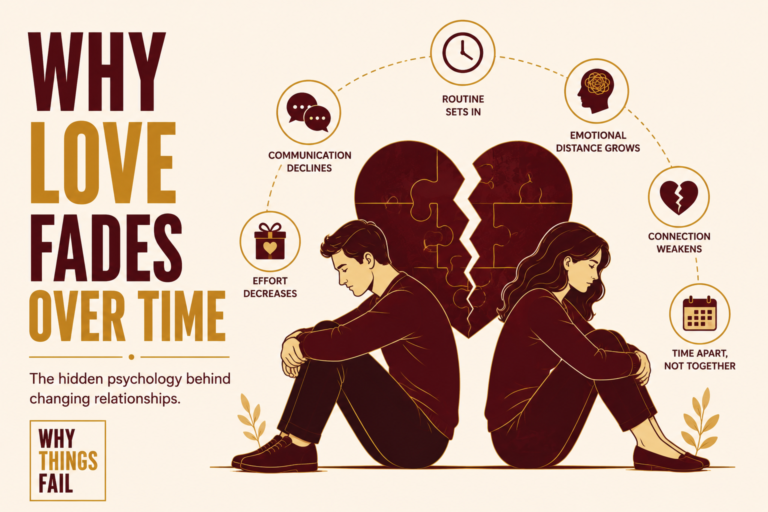
Love rarely disappears overnight. More often, emotional connection weakens through a series of small behavioural changes, psychological patterns and unspoken expectations that slowly reshape the relationship.
Understanding why love fades is not about assigning blame. It is about understanding how human behaviour, emotional needs, communication and daily decisions interact over months and years.
Only by examining these deeper causes can we understand why some relationships gradually lose their emotional closeness while others continue growing stronger despite facing similar challenges.
What Is Love Fading?
Love fading does not necessarily mean that affection completely disappears.
More often, it means the emotional intensity that once defined the relationship becomes weaker over time.
Partners may still care deeply for each other, yet they no longer experience the same excitement, curiosity or emotional connection they once shared.
Psychologists distinguish between the intense emotional attraction often experienced during early romance and the deeper attachment that develops through shared experiences, trust and commitment.
Problems arise when people expect the first stage to continue indefinitely.
When emotional intensity naturally changes, they mistake this normal transition for the end of love itself.
In reality, relationships rarely fail because emotions change.
They struggle because couples misunderstand what those changes actually mean.
The Biggest Myth
The biggest myth is simple.
If two people are truly in love, their feelings should never change.
This belief has been reinforced by popular culture, romantic films and social media, where relationships are often presented as permanent emotional highs.
Real relationships operate very differently.
Human emotions naturally evolve.
Novel experiences create excitement because the brain responds strongly to uncertainty and discovery. As relationships become familiar, the emotional response changes.
This does not automatically mean love has disappeared.
It means the relationship has entered a different psychological stage.
Unfortunately, many couples interpret this natural transition as evidence that something is wrong.
Instead of adapting their relationship, they begin questioning their compatibility.
The problem is often not the relationship itself.
It is the expectation that love should always feel exactly the same.
What Usually Happens?
Most relationships begin with excitement, curiosity and frequent emotional connection.
Partners invest significant time in each other. Conversations feel effortless. Small gestures create strong emotional rewards.
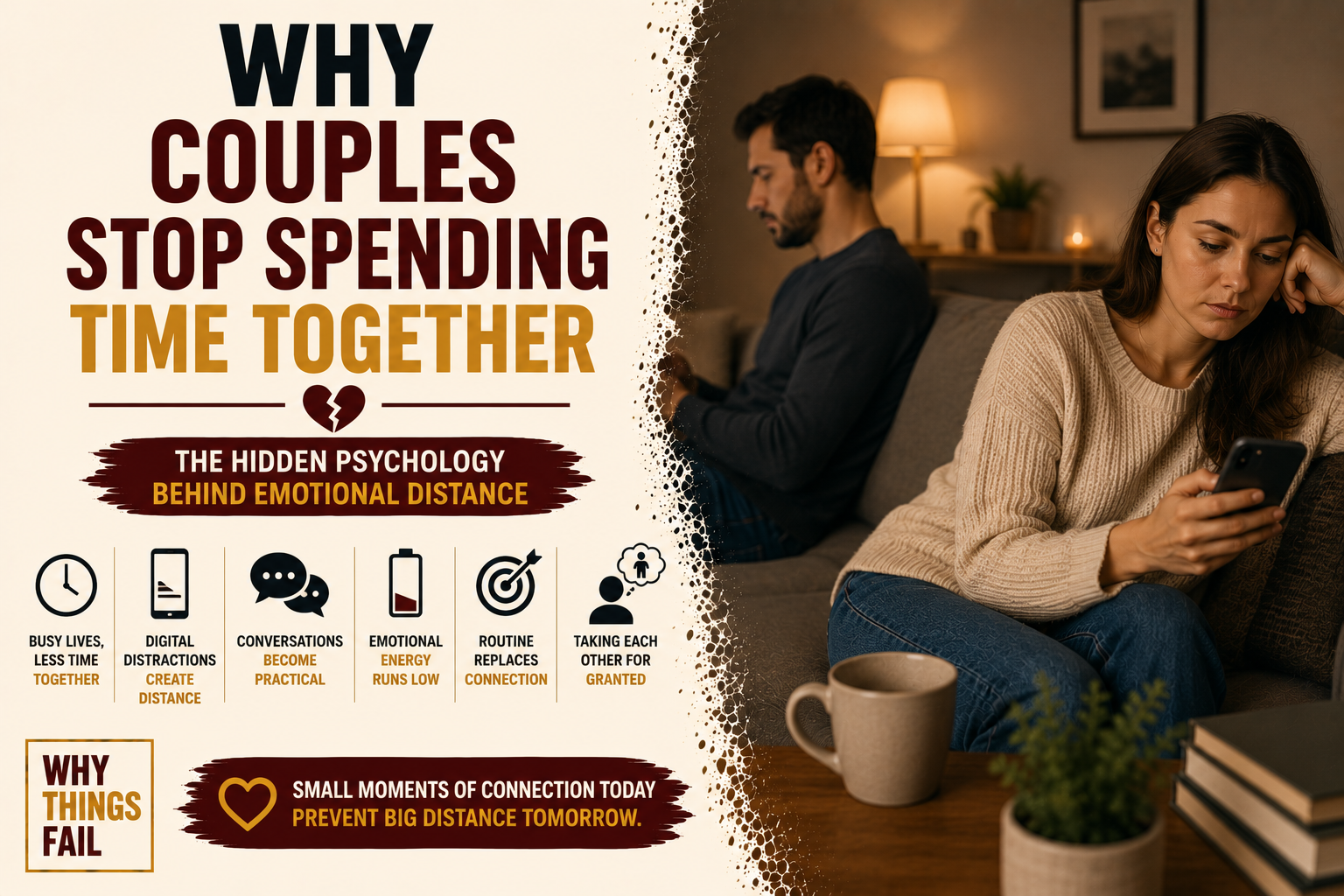
Gradually, daily responsibilities begin competing for attention.
Careers become demanding.
Financial responsibilities increase.
Children may arrive.
Household routines replace spontaneous experiences.
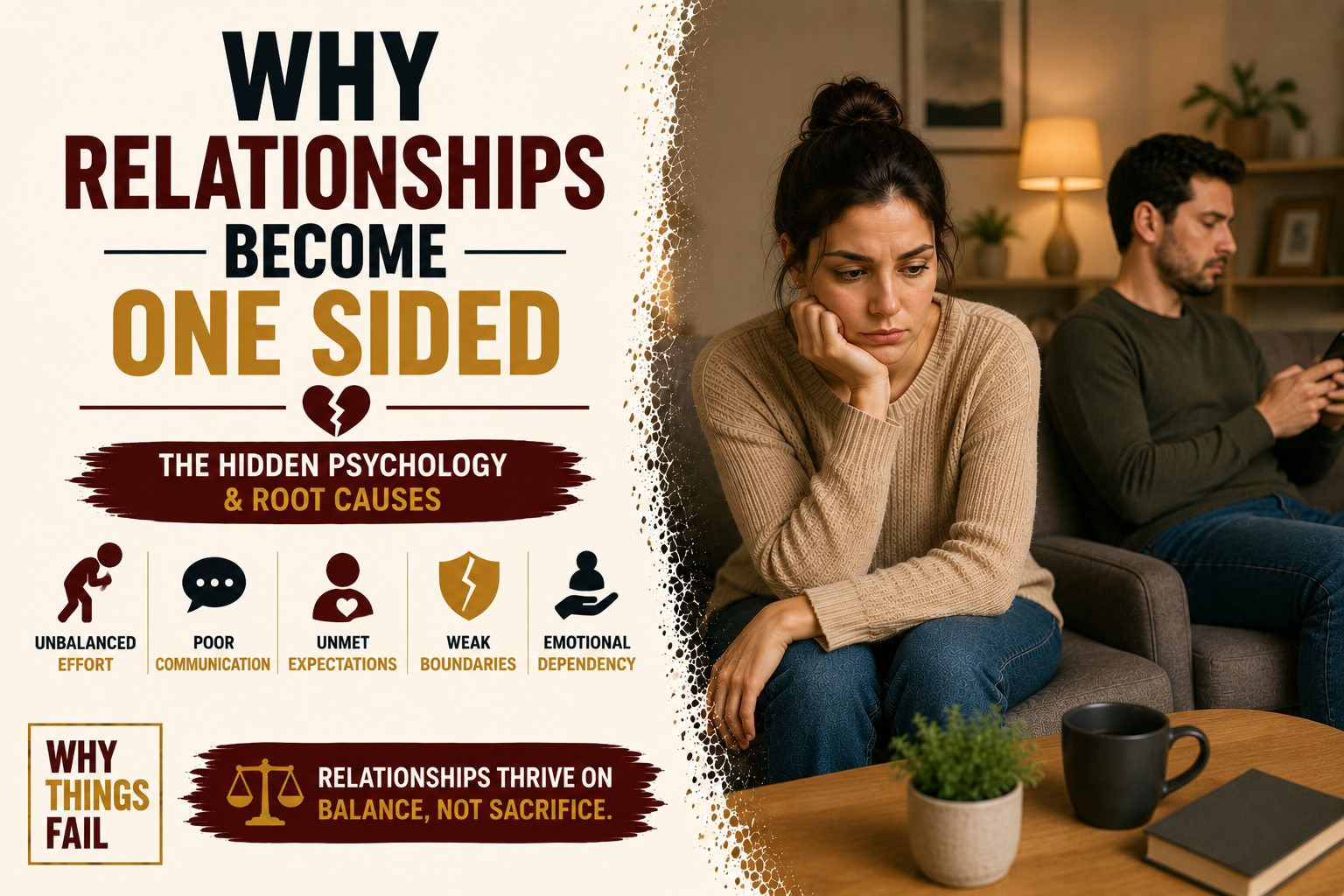
Communication becomes focused on responsibilities rather than emotional connection.
Neither partner intentionally withdraws.
Instead, emotional closeness slowly gives way to familiarity.
Without recognising this gradual shift, many couples believe love disappeared when, in reality, their relationship simply stopped receiving the attention that once allowed it to grow.
Why Does Love Fade Over Time?
The most important question is not whether love changes.
It is why those changes become emotionally damaging for some couples while strengthening others.
The answer lies in psychology, behaviour and the repeated choices people make throughout a relationship.
The Brain Cannot Sustain Constant Novelty
Early romantic attraction activates powerful reward systems within the brain.
Neurochemicals associated with attraction, excitement and anticipation create feelings of intense emotional connection. Every meeting feels rewarding because the relationship is new and unpredictable.
Over time, however, the brain adapts.
Psychologists refer to this process as hedonic adaptation.
Experiences that once felt extraordinary gradually become familiar.
The same phenomenon explains why people become accustomed to new homes, promotions or material possessions.
Relationships are no different.
The emotional excitement decreases not because the partner has become less valuable, but because the brain naturally adjusts to repeated experiences.
Many couples mistake this normal psychological process for falling out of love.
In reality, the challenge is not preventing adaptation.
It is creating new forms of emotional connection after adaptation occurs.
This isn’t just a theory psychologists Katherine Bao and Sonja Lyubomirsky developed what’s called the Hedonic Adaptation Prevention model, which identifies specific habits that slow this decline: increasing variety in shared experiences, actively noticing and appreciating a partner rather than taking them for granted, and keeping expectations realistic rather than entitled. Encouragingly, long-term research tracking couples for up to 20 years found that roughly two-thirds maintained high relationship satisfaction throughout fading connection is common, but far from inevitable.
Emotional Neglect Is Usually Unintentional
Few relationships fail because partners deliberately stop caring.
More commonly, emotional neglect develops through competing priorities.
Work deadlines replace meaningful conversations.
Parenting responsibilities reduce private time together.
Digital distractions consume moments that once belonged to the relationship.
Each individual change appears insignificant.
Collectively, they reshape the emotional environment.
Relationships depend upon repeated emotional investment.
Without consistent attention, emotional closeness gradually weakens.
The decline often feels mysterious because neither partner can identify one defining moment when everything changed.
Communication Slowly Changes
Communication is often measured by frequency.
Its quality matters far more.
During the early stages of a relationship, conversations focus on dreams, values, fears and personal experiences.
Partners actively seek to understand each other.
As relationships mature, conversations frequently become transactional.
Who will collect the children?
What should we buy?
Have the bills been paid?
These discussions are necessary.
However, when practical conversations replace emotional conversations, intimacy gradually declines.
People begin sharing information without sharing themselves.
The relationship continues functioning.
The emotional connection quietly weakens.
Unspoken Expectations Create Silent Disappointment
Every person enters a relationship carrying expectations shaped by childhood, family experiences, previous relationships and cultural influences.
Many of these expectations remain unspoken.
One partner may expect frequent affection.
The other may express love through practical support rather than physical closeness.
Neither behaviour is necessarily wrong.
The difficulty arises when expectations remain invisible.
Psychologists often describe this as an expectation gap.
People become disappointed not because their partner intended to hurt them, but because each person defines love differently.
Without open communication, these misunderstandings accumulate over time.
Eventually, disappointment becomes emotional distance.
Familiarity Can Reduce Appreciation
Human beings naturally pay greater attention to change than consistency.
During the beginning of a relationship, every positive quality feels noticeable.
Kindness feels extraordinary.
Thoughtfulness feels memorable.
Shared experiences feel exciting.
As familiarity increases, many of these qualities become expected rather than appreciated.
People stop recognising behaviours they once valued deeply.
This psychological tendency influences relationships in the same way it influences many areas of life.
What remains constant gradually becomes invisible.
Love often fades not because positive qualities disappear, but because they are no longer consciously acknowledged.
Emotional Safety Can Create Complacency
One of the most surprising findings in relationship psychology is that emotional security sometimes reduces intentional effort.
When people feel confident their partner will remain committed, they may invest less energy into maintaining emotional closeness.
Date nights become less frequent.
Expressions of gratitude become less common.
Small acts of affection gradually disappear.
This behaviour rarely reflects a lack of love.
Instead, it reflects a common assumption that stable relationships will maintain themselves without ongoing attention.
Like trust, emotional intimacy requires regular reinforcement.
Without it, connection slowly weakens despite good intentions.
Conflict Is Often Avoided Instead Of Resolved
Many people believe avoiding arguments protects relationships.
Research suggests the opposite.
Healthy relationships are not defined by the absence of disagreement.
They are defined by the ability to resolve disagreement constructively.
When difficult conversations are repeatedly avoided, unresolved frustrations accumulate beneath the surface.
Resentment grows quietly.
Communication becomes increasingly cautious.
Emotional honesty declines.
Eventually, partners stop discussing meaningful concerns because they no longer believe those conversations will improve the relationship.
At that stage, emotional distance often becomes far more difficult to reverse.
Warning Signs
Relationships rarely become emotionally distant without giving subtle signals first. The difficulty is that these signals often appear ordinary, making them easy to dismiss as temporary stress or the natural result of busy lives.
One warning sign is the gradual decline of meaningful conversations. Partners continue discussing work, responsibilities and daily routines, yet they stop sharing their fears, ambitions and personal thoughts. Communication continues, but emotional intimacy begins to disappear.
Another warning sign is emotional indifference. Small disagreements no longer lead to healthy discussions because one or both partners stop caring enough to resolve them. Silence replaces curiosity and emotional withdrawal replaces engagement.
A loss of appreciation is equally significant. Acts of kindness that once received gratitude become expected. Compliments become rare. Expressions of affection gradually disappear because each partner assumes the other already knows how they feel.
Avoiding conflict instead of resolving it also signals deeper problems. Unspoken frustrations accumulate over months or years until emotional distance feels safer than honest conversation.
Perhaps the most overlooked warning sign is taking the relationship for granted. When partners assume love will continue without consistent effort, emotional investment slowly declines. The relationship remains functional, but its emotional foundation weakens.
These warning signs are often ignored because they develop gradually. People adapt to small changes without recognising that those changes collectively reshape the relationship.
What Could Have Prevented It?
Most relationships cannot avoid change because people naturally evolve over time. What prevents emotional decline is not preserving the excitement of the beginning but adapting together as life changes.
Intentional communication remains one of the strongest protective factors. Couples who regularly discuss emotions, expectations and future goals are more likely to recognise problems before resentment develops.
Shared experiences also play an important role. Novel activities create opportunities for curiosity, laughter and emotional connection. The objective is not constant excitement but creating moments that interrupt routine and strengthen shared memories.
Emotional appreciation should also become a deliberate habit. Simple expressions of gratitude, respect and affection reinforce emotional security. People rarely stop needing appreciation simply because they have been together for many years.
Conflict should be approached as an opportunity to understand rather than to win. Relationships become stronger when disagreements reveal unmet needs instead of creating permanent resentment.
Perhaps most importantly, couples should accept that love requires ongoing attention. Emotional closeness is not maintained by memories of the past but by repeated actions in the present.
Lessons
The reasons love fades reveal broader lessons about human behaviour and long term relationships.
The first lesson is that feelings alone cannot sustain emotional connection. Strong relationships depend upon repeated behaviours that reinforce trust, communication and mutual respect.
The second lesson is that familiarity should not replace appreciation. The people who become part of everyday life often deserve the greatest recognition because their presence gradually becomes easy to overlook.
Another lesson is that emotional distance usually develops through small neglected moments rather than dramatic events. A series of missed conversations, unspoken disappointments and forgotten expressions of affection often has greater impact than one major disagreement.
Perhaps the most enduring lesson is that lasting relationships are not created by avoiding change. They are created by adapting to change together.
Failure Pattern
The dominant pattern behind fading love is Emotional Complacency combined with Poor Communication.
This pattern appears repeatedly because emotional security often creates the illusion that relationships no longer require intentional effort.
Partners gradually prioritise careers, responsibilities, children or personal ambitions while assuming emotional closeness will remain unchanged.
Over time, routine replaces curiosity.
Assumptions replace communication.
Comfort replaces appreciation.
Eventually, emotional distance becomes normal because it developed slowly enough to avoid immediate attention.
The same behavioural pattern appears in friendships, family relationships, business partnerships and organisations. Systems that receive little maintenance gradually weaken, regardless of how strong they once were.
Hidden Lesson
The greatest threat to lasting love is rarely conflict.
It is complacency.
Relationships usually do not end because people stop loving each other overnight. They weaken because repeated opportunities to strengthen emotional connection are quietly overlooked.
The deeper truth is that love fades less because of time itself and more because time gradually changes priorities, habits and behaviours. Time only exposes whether two people continue investing in their emotional connection as deliberately as they once invested in creating it.
Failure Scorecard
| Area | Score | Explanation |
| Emotional Discipline | 5/10 | Emotions are often influenced by routine rather than intentional connection. |
| Communication | 4/10 | Practical discussions frequently replace meaningful emotional conversations. |
| Conflict Resolution | 5/10 | Many couples avoid difficult conversations instead of resolving underlying issues. |
| Long Term Thinking | 6/10 | Relationships often receive less attention as other life priorities increase. |
| Emotional Awareness | 5/10 | Many people notice emotional distance only after it has become significant. |
| Appreciation | 4/10 | Familiarity gradually reduces conscious gratitude and recognition. |
| Planning | 5/10 | Few couples intentionally plan for maintaining emotional intimacy over time. |
| Adaptability | 6/10 | Successful relationships adapt together, while struggling relationships resist necessary change. |
Key Takeaways
- Love rarely fades because of one dramatic event.
- Emotional neglect is usually gradual rather than intentional.
- Familiarity can reduce appreciation if gratitude is not expressed consistently.
- Strong communication protects relationships more effectively than constant romance.
- Unspoken expectations often create silent disappointment.
- Healthy conflict strengthens relationships when handled with honesty and respect.
- Emotional connection requires continuous attention rather than occasional effort.
- Lasting love depends more on consistent behaviours than changing feelings.
Frequently Asked Questions
Why does love fade over time?
Love often appears to fade because emotional habits change. Routine, reduced communication, unmet expectations and lack of intentional connection gradually weaken emotional intimacy more than time itself.
Is it normal for feelings to change in a long term relationship?
Yes. Emotional intensity naturally changes as relationships mature. Healthy long term relationships replace constant excitement with trust, security and deeper emotional attachment.
Can love return after it fades?
In many cases, emotional connection can strengthen again when both partners recognise the underlying causes, improve communication and consistently invest in rebuilding intimacy.
What is the biggest reason relationships lose emotional connection?
The most common reason is emotional complacency. Partners often assume love will maintain itself without ongoing effort, allowing routine to replace intentional connection.
Does conflict cause love to fade?
Not necessarily. Unresolved conflict is more damaging than conflict itself. Couples who address disagreements honestly often strengthen trust, while those who avoid important conversations may gradually become emotionally distant.
Conclusion
Love does not usually disappear because time destroys it. It changes because human behaviour changes. Priorities shift, routines develop and emotional investment gradually becomes less intentional.
Understanding why love fades reveals that the greatest challenge is not preserving the excitement of the beginning. It is continuing to choose curiosity, appreciation and emotional connection long after familiarity has replaced novelty. That is where lasting relationships are quietly strengthened or slowly allowed to fade.