Quick Answer
Divorce rarely happens because of one argument or one major mistake. It usually results from years of unmet emotional needs, poor communication, unresolved conflict, changing expectations and repeated decisions that gradually weaken trust, commitment and emotional connection.
Introduction
Divorce is often described as the end of a marriage, but that definition overlooks a more important question.
Why do relationships that once appeared loving and committed gradually fall apart?
Every year, millions of couples marry believing their relationship will last a lifetime. They begin with shared goals, emotional connection and confidence in their future together. Yet many eventually separate despite once believing divorce would never happen to them.
This raises an important question.
Why do intelligent, caring and well intentioned people struggle to maintain long term relationships?
The common explanation is that couples simply grow apart.
That answer explains what happened but not why it happened.
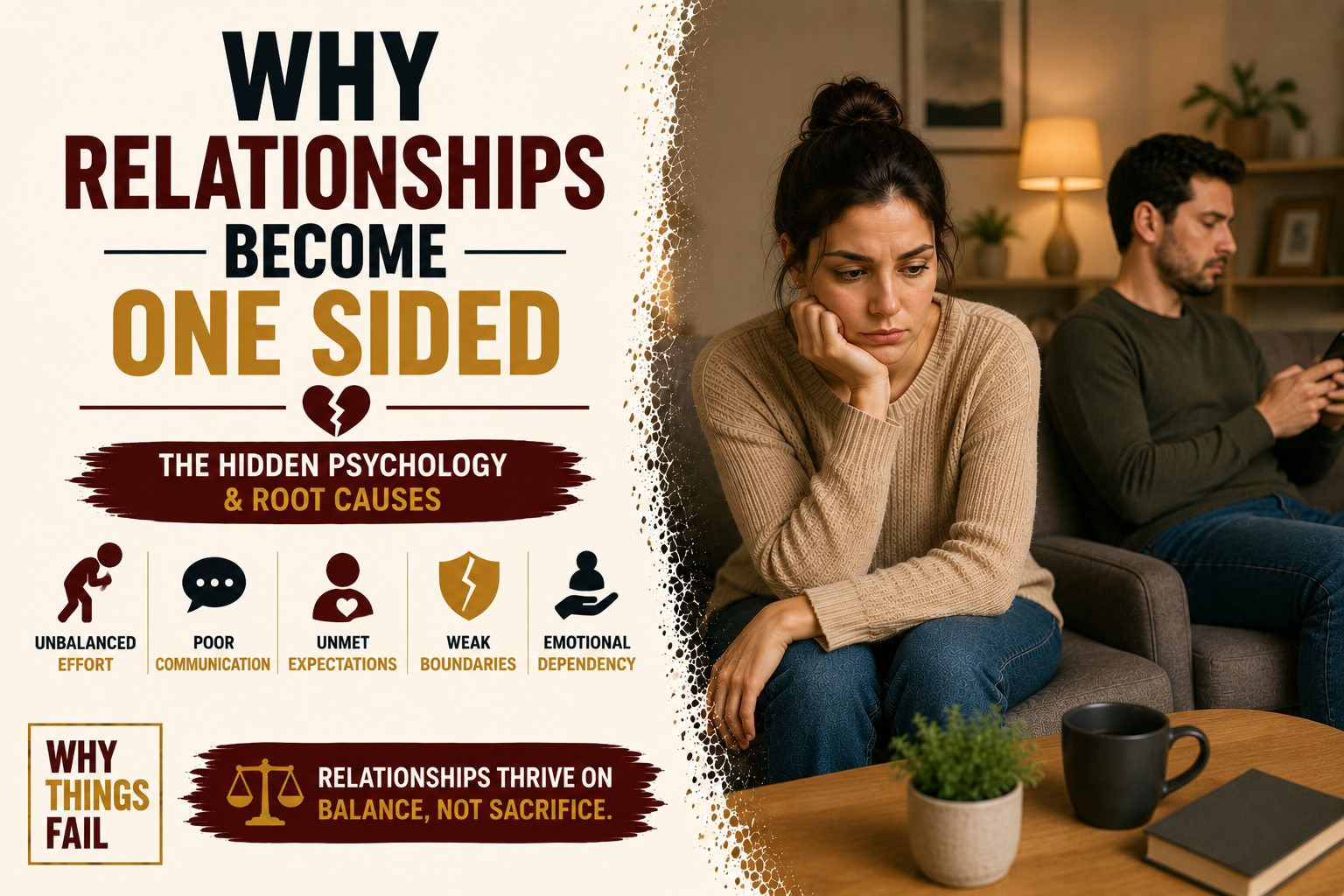
Relationship breakdown is rarely caused by one dramatic event. More often, it develops through hundreds of small interactions, emotional responses and behavioural patterns that slowly weaken trust and intimacy. By the time divorce becomes a serious consideration, the relationship has often been deteriorating for years.
Understanding why divorce happens requires looking beyond legal processes and personal disagreements. It requires examining human behaviour, emotional decision making, communication patterns, expectations and the psychological forces that influence long term relationships.
What Is Divorce?
Divorce is the legal ending of a marriage, but emotionally it represents the breakdown of a relationship that was once built on trust, commitment and shared expectations.
Many people assume divorce begins when legal papers are filed.
In reality, the process often starts much earlier.
It begins when communication becomes less honest, emotional needs remain unmet, conflicts remain unresolved and both partners slowly withdraw from one another.
The legal process simply formalises changes that have already taken place within the relationship.
Understanding divorce therefore means understanding the gradual erosion of emotional connection rather than focusing only on the final decision.
The Biggest Myth
One of the most common beliefs is that divorce is usually caused by one major problem such as infidelity, financial hardship or constant arguments.
While these events can contribute to relationship breakdown, they are rarely the entire explanation.
Research in relationship psychology suggests that divorce is more often the result of accumulated behavioural patterns rather than isolated incidents.
Small disappointments that remain unresolved become resentment.
Poor communication becomes emotional distance.
Avoiding difficult conversations creates misunderstanding.
Over time these patterns reduce trust, weaken commitment and make conflict increasingly difficult to resolve.
The final event that leads to divorce is often only the point at which deeper problems become impossible to ignore.
What Usually Happens?
Most divorces follow a similar progression.
Small disagreements become recurring conflicts.
Communication becomes less open.
Emotional connection begins to decline.
Assumptions replace honest conversations.
Partners stop feeling understood.
Resentment quietly grows.
Attempts to solve problems become less frequent because previous discussions appeared unsuccessful.
Eventually both people begin protecting themselves emotionally instead of strengthening the relationship.
By the time divorce is discussed, emotional separation has often existed long before physical separation.
The relationship does not suddenly collapse.
It gradually loses the qualities that once held it together.
Why Does Divorce Happen?
Understanding divorce requires moving beyond obvious explanations and examining the psychological processes that shape long term relationships.
Relationships are dynamic systems.
Every conversation, decision and emotional response influences future interactions.
When healthy patterns are repeated, relationships become stronger.
When unhealthy patterns continue unchecked, emotional distance gradually replaces emotional security.
The causes of divorce therefore lie less in individual events and more in repeated behavioural patterns.
Emotional Disconnection Develops Gradually
Many couples believe love disappears suddenly.
In reality, emotional disconnection usually develops over months or years.
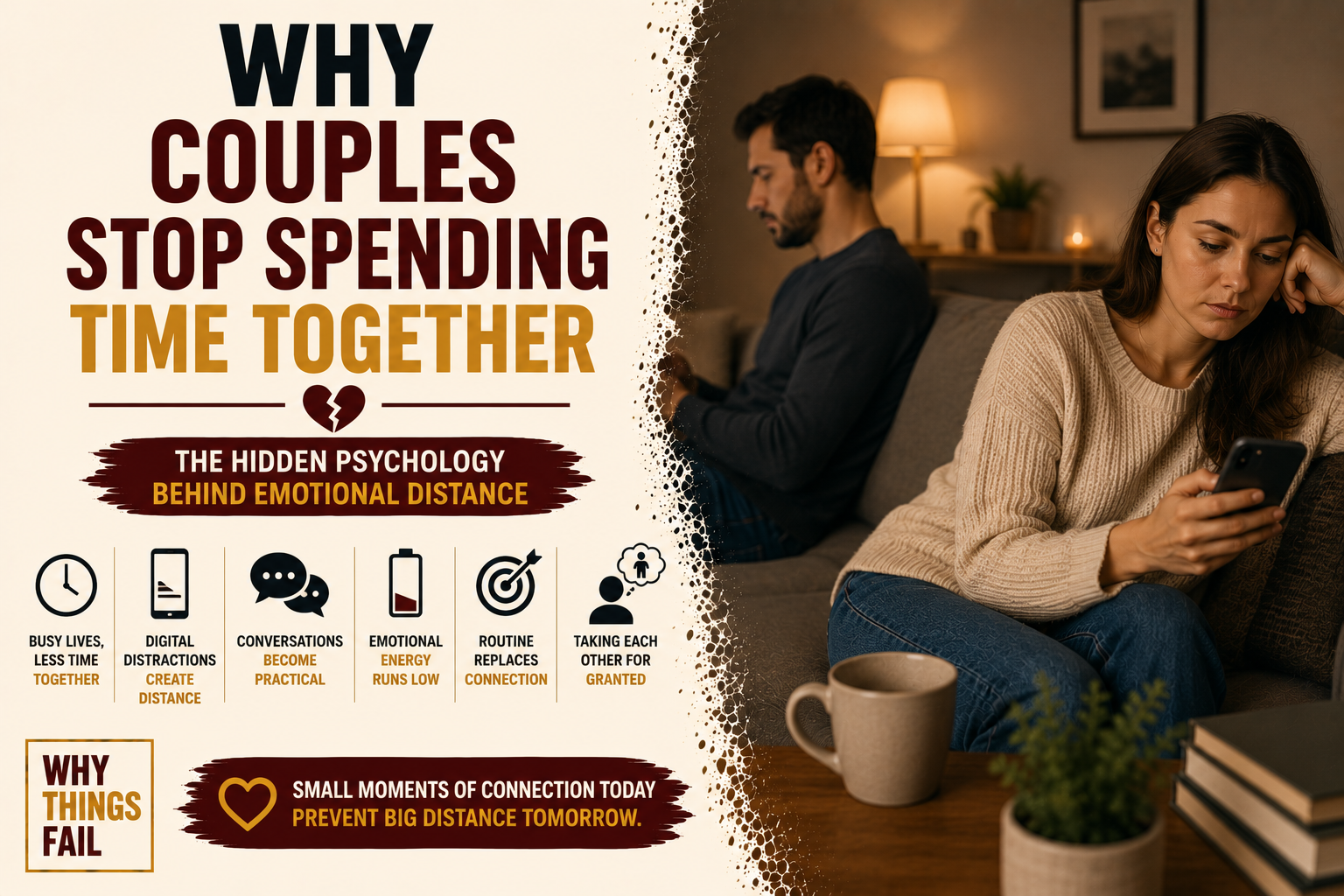
Daily conversations become shorter.
Expressions of appreciation become less frequent.
Quality time becomes increasingly rare.
Partners begin discussing responsibilities instead of emotions.
Although each change appears insignificant on its own, together they reduce emotional intimacy.
Humans naturally seek emotional security.
When that security weakens, feelings of loneliness can develop even while living in the same home.
Emotional distance therefore becomes one of the strongest predictors of relationship breakdown.
Poor Communication Creates Misunderstanding
Communication problems are frequently identified as a cause of divorce.
The deeper issue is not simply talking less.
It is failing to communicate emotional needs clearly.
Many people expect their partner to recognise frustration, disappointment or sadness without openly expressing those feelings.
When expectations remain unspoken, misunderstandings become inevitable.
Over time each partner develops assumptions about the other’s intentions.
Instead of asking questions, they interpret behaviour through previous disappointments.
Behavioural psychologists describe this as negative attribution.
Neutral actions become interpreted as criticism, rejection or lack of care.
This cycle gradually damages trust because both partners begin reacting to assumptions rather than reality.
Emotional Decision Making Replaces Rational Discussion
Conflict itself does not destroy relationships.
How couples respond to conflict often determines whether the relationship becomes stronger or weaker.
During emotionally charged conversations, people naturally become defensive.
Instead of listening to understand, they listen to respond.
The objective quietly changes.
Finding solutions becomes less important than protecting personal identity or proving a point.
Fear of criticism encourages silence.
Frustration encourages anger.
Pride discourages apology.
Each emotional response increases psychological distance, making future conversations even more difficult.
Eventually conflict is avoided altogether because discussing problems feels emotionally exhausting.
Unfortunately, avoiding conflict rarely removes problems.
It simply delays them until they become more difficult to resolve.
Changing Expectations Create Hidden Pressure
Relationships evolve as people grow older.
Careers develop.
Children arrive.
Financial responsibilities increase.
Health changes.
Personal ambitions shift.
The expectations that existed at the beginning of a marriage may no longer reflect the realities of later life.
Problems arise when couples fail to adapt together.
One partner may prioritise career growth while the other values family time.
One may seek financial security while the other pursues personal fulfilment.
Neither objective is necessarily wrong.
The challenge arises when changing priorities are never openly discussed.
Over time each partner begins believing they are sacrificing more than they receive.
Resentment develops not because expectations changed, but because those changes remained unspoken.
Stress Weakens Relationship Quality
External pressures often expose weaknesses that already exist within a relationship.
Financial pressure, parenting responsibilities, career uncertainty, illness and family obligations all increase emotional stress.
Stress reduces patience.
It narrows attention.
It makes empathy more difficult.
Couples who previously communicated well may begin reacting impulsively because emotional resources become limited.
The important point is that stress rarely creates relationship problems on its own.
Instead, it magnifies communication habits, conflict patterns and emotional behaviours that already existed.
This explains why two couples can experience the same financial hardship while producing very different relationship outcomes.
The difference lies not in the challenge itself but in how each couple responds to it.
Unresolved Resentment Becomes The Root Cause
Many divorces appear to result from one significant event.
In reality, that event often represents years of unresolved disappointment.
Each ignored concern adds another layer of resentment.
Each broken promise reduces trust.
Each avoided conversation increases emotional distance.
Eventually partners stop expecting improvement because previous attempts have failed.
Hope gradually gives way to emotional withdrawal.
At this stage, divorce often feels less like a sudden decision and more like the conclusion of a process that has been unfolding quietly for years.
The relationship does not end because one person stops caring.
It often ends because both people lose confidence that the relationship can return to the emotional connection it once provided.
Warning Signs
Relationship breakdown rarely begins with dramatic conflict. More often, it begins with subtle behavioural changes that gradually become normal.
One warning sign is the decline of meaningful communication. Conversations become limited to daily responsibilities rather than emotions, aspirations or concerns. Partners may still speak frequently, but genuine understanding becomes increasingly rare.
Another warning sign is emotional withdrawal. Instead of seeking comfort from one another, each person begins managing stress independently. Emotional independence may appear healthy, yet within a marriage it can signal a weakening emotional bond.
Recurring unresolved arguments also indicate deeper problems. Couples often debate the same issues repeatedly because they address the immediate disagreement rather than the underlying emotional need. Over time, frustration replaces problem solving.
Loss of trust is another important indicator. Trust is not only damaged by major betrayals. It also declines when promises are repeatedly broken, responsibilities are ignored or emotional support becomes inconsistent.
Perhaps the most overlooked warning sign is indifference. Constant arguments still reflect emotional investment. Indifference often suggests that one or both partners have stopped believing the relationship can improve.
These warning signs are frequently ignored because they develop slowly. Couples adapt to declining relationship quality without recognising how far emotional connection has deteriorated.
What Could Have Prevented It?
Most divorces cannot be prevented through one conversation or one grand gesture. Healthy relationships are strengthened through consistent behaviours rather than occasional efforts.
Open communication provides one of the strongest forms of prevention. Discussing expectations, disappointments and changing priorities before resentment develops allows couples to solve problems while trust remains strong.
Emotional awareness is equally important. Recognising fear, frustration or disappointment before those emotions become anger helps prevent unnecessary conflict. Understanding personal emotional reactions also improves empathy towards a partner.
Regular relationship maintenance often receives less attention than careers, finances or parenting. Yet successful marriages usually involve deliberate effort to preserve emotional connection through shared experiences, appreciation and honest conversations.
Conflict should also be viewed differently. Disagreement does not automatically threaten a relationship. Avoiding disagreement often creates greater damage because unresolved issues accumulate over time.
Perhaps the most realistic prevention is accepting that relationships continuously evolve. Couples who adapt together as circumstances change are generally more resilient than those who expect early relationship dynamics to remain unchanged throughout life.
Lessons
The causes of divorce extend beyond marriage. They reveal broader truths about human relationships, communication and decision making.
The first lesson is that strong relationships are built through ordinary daily behaviours rather than extraordinary moments. Trust grows through consistency, honesty and reliability over long periods.
Another lesson is that emotional needs rarely disappear simply because they remain unspoken. Ignoring concerns does not resolve them. It usually allows them to become more difficult to address.
Relationships also demonstrate that intentions and outcomes are not always the same. Many people genuinely care for their partners yet unintentionally weaken the relationship through poor communication, emotional avoidance or unrealistic expectations.
Perhaps the most enduring lesson is that healthy relationships depend less on finding perfect compatibility and more on maintaining habits that strengthen trust, understanding and mutual respect as life changes.
Failure Pattern
The dominant pattern behind divorce is Emotional Disconnection combined with Poor Communication and Short Term Decision Making.
This pattern repeats because relationships naturally require continuous attention. When communication declines, misunderstandings increase. When misunderstandings remain unresolved, resentment develops. Resentment gradually weakens trust, making future conversations more defensive and less productive.
The same behavioural pattern appears in business partnerships, friendships and professional relationships. Small unresolved problems accumulate until the relationship becomes too fragile to withstand additional pressure.
Divorce therefore reflects a systemic breakdown rather than one isolated event.
Hidden Lesson
The greatest threat to a marriage is rarely one dramatic mistake.
It is the gradual belief that small moments no longer matter.
Relationships are strengthened or weakened through everyday interactions that appear insignificant on their own. A missed conversation, an unspoken concern or an unresolved disappointment rarely ends a marriage immediately. Yet repeated over months and years, these moments quietly reshape the relationship.
By the time divorce occurs, the legal decision often reflects emotional changes that happened long before anyone recognised them.
Failure Scorecard
| Area | Score | Explanation |
| Communication | 4/10 | Honest conversations become less frequent as misunderstandings increase. |
| Decision Making | 5/10 | Emotional reactions often replace thoughtful discussion during conflict. |
| Emotional Management | 4/10 | Fear, pride and frustration frequently influence relationship decisions. |
| Long Term Thinking | 5/10 | Immediate disagreements often receive more attention than long term relationship health. |
| Relationship Knowledge | 6/10 | Many couples understand the importance of communication but struggle to apply it consistently. |
| Emotional Control | 4/10 | Defensive behaviour and unresolved emotions increase conflict over time. |
| Planning | 5/10 | Few couples regularly discuss changing expectations, financial priorities and future goals. |
| Adaptability | 6/10 | Successful relationships evolve together, while struggling relationships often resist necessary change. |
Key Takeaways
- Divorce usually results from long term behavioural patterns rather than one isolated event.
- Emotional disconnection often begins long before couples recognise the seriousness of the problem.
- Poor communication creates misunderstandings that gradually reduce trust.
- Unresolved resentment becomes increasingly difficult to reverse over time.
- External pressures expose existing relationship weaknesses rather than creating them.
- Emotional awareness is just as important as practical problem solving.
- Healthy relationships require continuous adaptation as circumstances change.
- Small daily interactions often determine long term relationship quality more than major life events.
Frequently Asked Questions
Why do most divorces happen?
Most divorces happen because emotional connection, communication and trust gradually decline over time. The final decision usually reflects years of unresolved behavioural patterns rather than one specific incident.
Is poor communication the main cause of divorce?
Poor communication is one of the strongest contributing factors because it allows misunderstandings, resentment and unmet emotional needs to accumulate without resolution.
Can financial problems lead to divorce?
Financial stress can increase conflict, but it is rarely the sole cause. It often exposes existing weaknesses in communication, trust and shared decision making.
What is the earliest warning sign of divorce?
One of the earliest warning signs is emotional withdrawal. When partners stop sharing thoughts, concerns and feelings openly, emotional distance often begins to grow.
Can divorce be prevented?
Many relationship breakdowns become less likely when couples maintain honest communication, address conflict early, adapt to changing circumstances and consistently strengthen emotional connection.
Conclusion
Divorce is rarely the result of one moment of failure. It is usually the outcome of countless decisions, conversations and emotional responses that gradually reshape the relationship until trust and connection become difficult to restore.
Understanding why divorce happens shifts attention away from blaming one event or one person. It reveals that lasting relationships depend on the daily habits, emotional awareness and communication patterns that quietly determine whether two people continue growing together or slowly drift apart.