Introduction
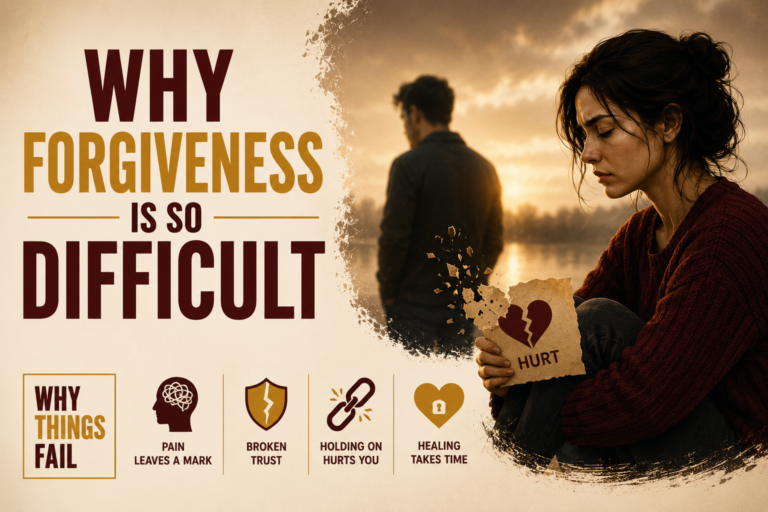
Forgiveness is often described as one of the greatest strengths a person can possess. It is praised by psychologists, philosophers, religious traditions and relationship experts as a path towards emotional healing and healthier relationships. Yet despite understanding its benefits, many people struggle to forgive those who have hurt them.
This contradiction raises an important question.
If forgiveness improves emotional wellbeing, reduces stress and helps people move forward, why does it remain one of the hardest human behaviours?
The answer is more complex than simply refusing to let go.
Forgiveness challenges deeply rooted psychological processes that evolved to protect people from future harm. It influences trust, identity, memory, justice and emotional security. Every painful experience leaves behind more than an unpleasant memory. It changes how people perceive risk, relationships and the intentions of others.
Understanding why forgiveness is so difficult therefore requires looking beyond emotions alone. It requires examining human behaviour, decision making, cognitive psychology and the systems that shape how people respond to betrayal, disappointment and conflict.
Forgiveness is not simply an emotional choice.
It is a psychological process that forces the mind to balance self protection with emotional recovery.
What Is Forgiveness?
Forgiveness is frequently misunderstood.
Many people believe forgiving someone means forgetting what happened, excusing harmful behaviour or pretending that the pain never existed.
None of these definitions fully explain forgiveness.
Forgiveness is the conscious decision to release persistent resentment and the desire for revenge while accepting that the past cannot be changed. It does not require rebuilding trust, restoring a relationship or removing accountability.
A person can forgive while still maintaining healthy boundaries.
Likewise, someone may stop speaking about an event without ever truly forgiving it.
The distinction matters because forgiveness is primarily an internal psychological process rather than an agreement between two people.
It changes the relationship with the memory more than the relationship with the person who caused it.
The Biggest Myth
The most common misconception is simple.
Forgiveness means weakness.
Many people fear that forgiving someone signals acceptance of unfair treatment or invites future harm.
This belief creates resistance.
If forgiveness appears to reduce personal protection, refusing to forgive seems like the safer option.
Behavioural psychology suggests the opposite.
People often hold on to anger because it creates a temporary sense of control. Anger makes the mind feel prepared for future threats, even when no practical action is being taken.
In this way, resentment becomes a psychological defence mechanism.
The problem is that what protects us in the short term can quietly prolong emotional suffering over the long term.
Forgiveness therefore should not be confused with surrender.
It represents a change in emotional processing rather than a removal of personal boundaries.
What Usually Happens?
Most experiences of forgiveness follow a familiar pattern.
A person experiences betrayal, rejection, dishonesty or emotional harm.
The emotional response is immediate.
Anger develops.
Trust disappears.
The mind repeatedly replays the event in search of answers.
Questions begin to dominate thinking.
Why did this happen?
Could I have prevented it?
Will this happen again?
Over time, the emotional pain becomes connected to personal identity. The event is no longer remembered as something that happened.
It becomes part of how the individual understands themselves and other people.
Some eventually forgive.
Others remain emotionally connected to the event for years.
The difference is rarely explained by the seriousness of the event alone.
It is more often explained by how the human mind interprets the experience.
Why Does It Happen?
This is where the deeper investigation begins.
Forgiveness is difficult because the human brain is designed to remember experiences that threaten survival.
From an evolutionary perspective, remembering betrayal increased the chances of avoiding future danger.
Someone who forgot harmful experiences too quickly became more vulnerable to repeated exploitation.
The modern world has changed dramatically, but the brain still responds to emotional betrayal in remarkably similar ways.
Pain becomes information.
Memory becomes protection.
This explains why emotional wounds often remain vivid long after physical injuries have healed.
The Brain Prioritises Emotional Survival
The human brain does not store all memories equally.
Emotionally significant experiences receive greater attention because they may contain information important for future safety.
Betrayal, humiliation and deception activate emotional centres of the brain that strengthen memory formation.
This is why people often remember painful conversations in extraordinary detail while forgetting ordinary daily events.
The memory itself becomes a warning system.
Forgiveness requires reducing the emotional intensity attached to that memory.
The brain naturally resists this process because weakening the emotional response may feel like weakening personal protection.
Trust Is Difficult To Rebuild Because It Is Based On Prediction
Trust allows people to predict how others are likely to behave.
When trust is broken, uncertainty replaces confidence.
The injured person no longer questions only the individual who caused the harm.
They begin questioning their own judgement.
How did I fail to recognise the warning signs?
Can I trust my instincts again?
Could someone else do the same thing?
The psychological damage therefore extends beyond the original event.
It affects future decision making.
Forgiveness becomes difficult because restoring emotional balance requires rebuilding confidence in one’s own ability to judge people accurately.
Identity Often Becomes Attached To Pain
One of the least recognised reasons forgiveness is difficult involves identity.
People naturally create stories about themselves.
These stories explain who they are, what they value and how they understand the world.
A painful betrayal can become integrated into that story.
Instead of saying,
“Someone betrayed me.”
The internal narrative gradually changes to,
“I am someone who cannot trust people.”
This shift is subtle but powerful.
The emotional injury stops being a memory.
It becomes part of personal identity.
Once this happens, forgiveness feels threatening because letting go may appear to erase an important part of one’s life experience.
In reality, forgiveness does not erase identity.
It allows identity to develop beyond the original wound.
The Desire For Justice Delays Emotional Recovery
Another reason forgiveness remains difficult is the human desire for fairness.
Behavioural economists have repeatedly demonstrated that people willingly sacrifice personal benefit to punish behaviour they perceive as unfair.
Justice provides psychological balance.
When that balance is absent, emotional discomfort persists.
Many people delay forgiveness because they believe the other person has not suffered enough consequences.
The mind therefore links emotional healing to external events that may never occur.
This creates a painful cycle.
Recovery becomes dependent upon another person’s behaviour rather than one’s own emotional processing.
Forgiveness becomes postponed while waiting for justice that may never arrive.
Rumination Keeps Emotional Pain Alive
Not every painful memory continues to cause suffering.
The difference often lies in rumination, the repeated mental replaying of distressing experiences.
Rumination creates the illusion of solving the problem.
The mind believes that analysing the event repeatedly will eventually produce clarity or emotional relief.
Instead, repeated reflection strengthens emotional pathways associated with anger, sadness and resentment.
Each replay reinforces the original emotional response.
Rather than becoming weaker over time, the memory remains psychologically active.
This is why forgiveness is often less about forgetting what happened and more about interrupting the cycle of repetitive emotional processing.
Fear Of Future Harm Creates Resistance
At its deepest level, forgiveness challenges one of the brain’s strongest priorities.
Self protection.
People frequently believe that remaining emotionally guarded reduces the possibility of future disappointment.
Holding on to resentment therefore feels practical.
It appears to reduce vulnerability.
Yet prolonged emotional vigilance carries its own costs.
It increases stress.
It weakens relationships.
It encourages suspicion.
It makes genuine trust increasingly difficult.
The irony is that the psychological system designed to prevent future pain can quietly create new forms of emotional isolation.
In trying to protect itself from another betrayal, the mind sometimes prevents itself from experiencing future connection.
Warning Signs
Forgiveness rarely becomes difficult overnight. The struggle usually begins with subtle psychological patterns that gradually become deeply rooted.
One warning sign is repeatedly replaying the same event. Instead of learning from the experience, the mind continually revisits the conversation, betrayal or disappointment in search of a different outcome. This repeated mental rehearsal strengthens emotional pain rather than reducing it.
Another warning sign is allowing one negative experience to shape every future relationship. A person who was once betrayed may begin expecting betrayal from everyone. Healthy caution gradually becomes chronic distrust.
Emotional avoidance is another early indicator. Some people insist they have moved on because they no longer discuss what happened. Yet the event continues influencing their decisions, relationships and emotional reactions. Silence is often mistaken for healing when unresolved resentment still exists.
A growing desire for revenge also signals that emotional recovery has stalled. Revenge promises psychological balance by making another person experience similar pain. In reality, it often prolongs emotional attachment because the injured person remains focused on the past rather than rebuilding the future.
Perhaps the clearest warning sign is when personal identity becomes permanently connected to victimhood. Every new situation is interpreted through the lens of the original injury. Instead of becoming one chapter in life, the experience becomes the entire story.
These warning signs are commonly ignored because they appear protective. People believe constant vigilance prevents future harm, even when it quietly prevents emotional recovery.
What Could Have Prevented It?
Many situations requiring forgiveness cannot be prevented because human relationships inevitably involve misunderstanding, disappointment and conflict.
However, the long term psychological damage can often be reduced through healthier emotional systems and better communication.
One important factor is emotional awareness. People who recognise anger, disappointment and fear early are less likely to suppress emotions until resentment becomes deeply established. Naming emotions accurately allows them to be processed instead of silently accumulating.
Healthy boundaries also play a crucial role. Forgiveness becomes more difficult when people repeatedly tolerate behaviour that violates their values. Clear expectations and respectful communication reduce the likelihood of repeated emotional injury.
Another protective factor is recognising that forgiveness and reconciliation are different decisions. Someone can release resentment without restoring trust or continuing a harmful relationship. Understanding this distinction removes much of the fear surrounding forgiveness.
Reflection is equally valuable. Instead of repeatedly asking, “Why did this happen to me?” a more productive question becomes, “What does this experience teach me about relationships, judgement and boundaries?” This shifts attention from the unchangeable past towards future decision making.
Finally, stronger emotional education would help people understand conflict before it becomes permanent resentment. Schools often teach mathematics and science but devote little attention to emotional regulation, conflict resolution and psychological resilience. These skills influence relationships throughout life.
Lessons
Forgiveness offers lessons that extend far beyond personal relationships. It reveals how the human mind responds to uncertainty, injustice and emotional pain.
One lesson is that emotional memory serves a purpose. The brain is not trying to create suffering. It is attempting to reduce future risk. Understanding this changes resentment from a personal weakness into a predictable psychological response.
Another lesson is that justice and healing do not always occur together. Waiting for another person to apologise, admit fault or experience consequences often delays personal recovery. Emotional wellbeing becomes dependent upon circumstances beyond individual control.
The investigation also shows that identity is remarkably flexible. Painful experiences influence identity, but they do not have to define it permanently. Growth occurs when people integrate difficult experiences without allowing those experiences to become their entire sense of self.
Perhaps the most enduring lesson is that forgiveness is less about changing another person and more about changing one’s relationship with the past. The event remains part of history, but it no longer controls future thinking, relationships or decisions.
Failure Pattern
The dominant pattern behind the difficulty of forgiveness is Fear combined with Emotional Decision Making and Short Term Thinking.
The process usually begins with emotional pain.
Pain creates distrust.
Distrust encourages emotional protection.
Emotional protection gradually becomes permanent emotional distance.
The individual believes holding on to resentment reduces vulnerability, yet prolonged resentment often increases stress, weakens relationships and limits emotional growth.
This same pattern appears in families, workplaces, friendships and even organisations. Leaders refuse to trust former colleagues. Businesses remain trapped by previous failures. Individuals avoid meaningful relationships because past experiences continue influencing present decisions.
The common thread is not the original event.
It is the long lasting behavioural response to that event.
Hidden Lesson
The greatest obstacle to forgiveness is rarely the person who caused the pain.
It is the belief that remaining emotionally attached to the pain provides protection.
The mind often mistakes resentment for resilience.
In reality, forgiveness does not remove the lesson. It removes the unnecessary emotional burden attached to the lesson.
The deepest truth is that people do not suffer only because they were hurt. They often continue suffering because the brain keeps reliving the injury long after the event has ended.
Failure Scorecard
| Area | Score | Explanation |
| Emotional Discipline | 4/10 | Strong emotions often dominate objective thinking after betrayal or conflict. |
| Decision Making | 5/10 | Emotional memories frequently influence future relationships and choices. |
| Risk Management | 6/10 | People naturally become more cautious, but excessive caution can limit healthy relationships. |
| Long Term Thinking | 4/10 | Immediate emotional protection often outweighs long term emotional wellbeing. |
| Emotional Knowledge | 5/10 | Many people understand forgiveness conceptually but struggle to apply it psychologically. |
| Emotional Control | 4/10 | Anger, resentment and fear often remain active for long periods. |
| Planning | 6/10 | Few people intentionally develop healthy strategies for resolving emotional conflict. |
| Adaptability | 5/10 | Some individuals grow after painful experiences, while others remain emotionally trapped by them. |
Key Takeaways
- Forgiveness is difficult because the brain treats emotional pain as information for future survival.
- Holding on to resentment often feels safer than becoming emotionally vulnerable again.
- Trust is damaged not only by betrayal but also by losing confidence in one’s own judgement.
- Rumination strengthens emotional pain by repeatedly activating the same memories.
- Forgiveness does not require forgetting, excusing or rebuilding every relationship.
- Emotional healing becomes difficult when identity becomes permanently connected to past pain.
- Healthy boundaries make forgiveness easier because they reduce the fear of repeated harm.
- Lasting emotional recovery begins when people stop allowing the past to determine every future decision.
Frequently Asked Questions
Why is forgiveness so difficult for most people?
Forgiveness is difficult because the brain naturally remembers painful experiences to reduce future risk. Emotional memories involving betrayal, rejection or injustice become strongly embedded, making them difficult to release.
Does forgiving someone mean trusting them again?
No. Forgiveness and trust are different. Forgiveness involves releasing resentment, while trust depends on consistent behaviour, accountability and reliability over time.
Why do people hold on to resentment?
Many people believe resentment protects them from future emotional harm. Although it creates a temporary sense of control, prolonged resentment often increases stress and prevents emotional recovery.
Can someone forgive without forgetting?
Yes. Forgiveness does not erase memory. It changes the emotional relationship with the memory so that it no longer dominates thoughts, decisions or relationships.
Is forgiveness always the right choice?
Forgiveness can support emotional healing, but it does not require reconciliation or continued contact with someone who remains harmful. Healthy boundaries remain essential.
Conclusion
Forgiveness is difficult not because people enjoy holding on to pain, but because the human mind is designed to protect itself from future harm. Every betrayal, disappointment and injustice teaches the brain to become more cautious, making emotional release feel psychologically risky.
Understanding this changes the conversation. Forgiveness is no longer a simple moral decision but a complex psychological process shaped by memory, identity, trust and self protection. The greatest challenge is not forgetting what happened. It is ensuring that yesterday’s pain no longer determines tomorrow’s relationships and decisions.