Quick Answer
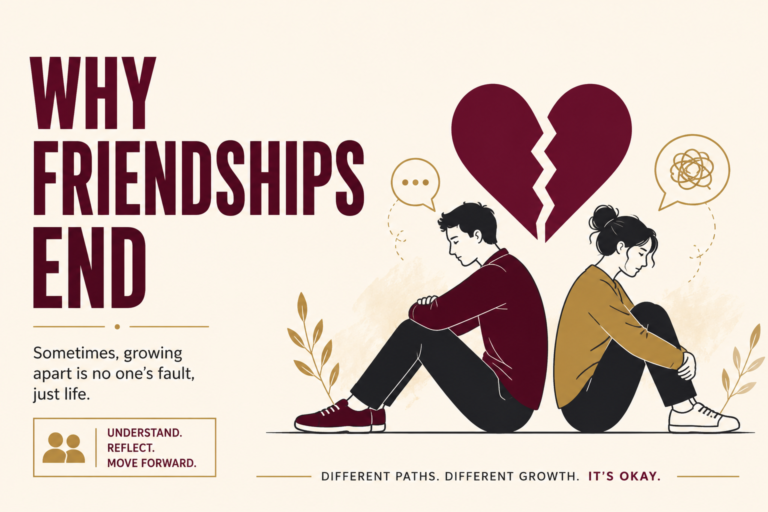
Friendships rarely end because of one argument or one mistake. Most friendships gradually weaken through unmet expectations, poor communication, changing priorities, emotional distance and unresolved conflict. Understanding these deeper patterns explains why some friendships survive for decades while others quietly disappear.
Introduction
Most people expect romantic relationships to require effort.
Far fewer people expect the same from friendships.
Friendships often begin naturally. Two people meet through school, work, family or shared interests. Conversations flow easily. Trust develops without much planning. Over time, the friendship becomes part of everyday life.
Because the relationship feels effortless, many people assume it will always remain that way.
Yet countless friendships eventually fade.
Some end after a serious disagreement.
Others disappear without any obvious conflict.
Messages become less frequent.
Plans are postponed.
Conversations become shorter.
Eventually, two people who once knew everything about each other become strangers.
This raises an important question.
Why do friendships end when neither person intended to lose the relationship?
Many people blame distance, busy schedules or changing lifestyles.
These explanations describe what happened.
They rarely explain why it happened.
The deeper causes often lie within human behaviour, emotional expectations and the way people respond to change. Friendships rarely collapse overnight. They usually weaken through small decisions, unnoticed assumptions and emotional patterns that quietly accumulate over time.
Understanding why friendships end is not simply about preserving relationships.
It is about understanding how trust, communication and human connection gradually change throughout life.
What Is Friendship Failure?
Friendship failure is often misunderstood as a dramatic argument or complete betrayal.
In reality, most friendships do not end through one defining event.
They end because the relationship slowly loses the qualities that once sustained it.
Trust becomes weaker.
Communication becomes less meaningful.
Emotional support becomes inconsistent.
Shared experiences become less frequent.
Neither person intentionally chooses to end the friendship.
Instead, both gradually invest less time, attention and emotional energy until the relationship no longer feels natural.
This process explains why many friendships end without either person clearly recognising when the relationship changed.
The friendship does not disappear suddenly.
It slowly loses its place in both people’s lives.
The Biggest Myth
The most common belief is that real friendships never change.
People often assume that genuine friends will remain close regardless of time, distance or personal change.
This belief sounds comforting.
It is also misleading.
Friendships exist within constantly changing lives.
Careers develop.
Families grow.
Responsibilities increase.
Personal values evolve.
These changes affect relationships whether people recognise them or not.
Strong friendships are not relationships that never experience change.
They are relationships that successfully adapt to change.
When adaptation stops, emotional distance often replaces emotional closeness.
The problem is therefore not change itself.
It is the inability of the friendship to evolve alongside the people within it.
What Usually Happens?
Most friendships follow a remarkably similar pattern before they end.
Communication becomes less frequent.
Small disappointments remain unspoken.
Misunderstandings increase.
Assumptions replace honest conversations.
Emotional support gradually declines.
Eventually, both people begin investing their energy elsewhere.
By the time the friendship officially ends, the relationship has often been weakening for months or even years.
The ending simply makes an existing reality visible.
Why Does It Happen?
Friendships rarely fail because of one disagreement.
Most failures develop through a combination of psychological, emotional and behavioural factors that quietly reshape the relationship over time.
Understanding these deeper causes reveals why friendship endings are often predictable long before either person recognises them.
Changing Identity Changes Relationships
People rarely remain the same throughout life.
Experiences influence priorities.
Success changes ambitions.
Failure changes perspectives.
Marriage, parenthood, career changes and personal growth all reshape identity.
Friendships formed during one stage of life may struggle when both people begin moving in different directions.
This does not necessarily mean either person has changed for the worse.
It simply means they have changed differently.
Many friendships quietly fade because the shared experiences that originally connected two people no longer exist.
The relationship loses the common ground that once made communication effortless.
Unspoken Expectations Create Invisible Conflict
Every friendship contains expectations.
Some are openly discussed.
Most are never spoken aloud.
People expect loyalty.
They expect emotional support during difficult periods.
They expect honesty.
They expect effort to be mutual.
Problems emerge when expectations remain invisible.
One friend believes regular communication demonstrates care.
The other believes true friendship does not require frequent contact.
Neither expectation is unreasonable.
The conflict arises because neither expectation has been expressed.
Behavioural psychologists describe this as expectation mismatch.
People evaluate relationships according to personal standards while assuming others share the same understanding.
Disappointment therefore develops long before either person realises the friendship is under pressure.
Communication Slowly Becomes Transactional
Healthy friendships are built upon meaningful conversations.
People share concerns, achievements, fears and everyday experiences.
Over time, some friendships become increasingly transactional.
Messages focus only on practical matters.
Birthdays.
Favours.
Quick updates.
The emotional depth gradually disappears.
This change often goes unnoticed because communication still exists.
However, the quality of communication has changed significantly.
Trust grows through emotional openness.
Without meaningful conversations, emotional connection gradually weakens even if contact continues.
Emotional Reciprocity Begins To Disappear
Balanced friendships involve mutual investment.
Both people listen.
Both people support.
Both people make an effort.
Problems begin when this balance changes.
One person consistently initiates conversations.
One person always adjusts their schedule.
One person provides emotional support while receiving very little in return.
At first, these imbalances appear temporary.
Over time, they begin changing how each person experiences the relationship.
The friendship starts feeling like responsibility rather than connection.
Resentment rarely begins with major betrayals.
It usually develops through repeated small imbalances that remain unresolved.
Avoiding Difficult Conversations Allows Small Problems To Grow
Conflict is often viewed as the greatest threat to friendship.
Ironically, avoiding conflict can be even more damaging.
Many people remain silent to protect the relationship.
They ignore hurt feelings.
They minimise disappointment.
They convince themselves the issue is unimportant.
The intention is usually positive.
The outcome is often destructive.
Unresolved emotions rarely disappear.
Instead, they quietly influence future interactions.
Eventually, frustration becomes too large to ignore.
What appears to be a sudden ending is often the result of many conversations that never happened.
Social Comparison Quietly Changes Friendships
Behavioural economists have shown that people naturally compare themselves with those around them.
Friendships are no exception.
Career success.
Financial security.
Relationships.
Lifestyle.
Personal achievements.
These differences do not automatically damage friendships.
The problem emerges when comparison creates feelings of envy, insecurity or resentment.
One friend may feel left behind.
Another may feel guilty about their success.
Rather than discussing these emotions openly, both gradually become emotionally distant.
The friendship weakens not because success changed the relationship, but because comparison changed how the relationship was experienced.
Life Becomes Busier But Priorities Reveal The Deeper Truth
Many friendships are explained away with one simple phrase.
“We’ve both been busy.”
Sometimes this is true.
Often it explains only part of the story.
Everyone experiences limited time.
Yet people usually make time for relationships they continue to prioritise.
The deeper issue is rarely a lack of available hours.
It is changing priorities.
Friendships naturally compete with careers, families, romantic relationships and personal ambitions.
Without conscious effort, emotional connection gradually gives way to convenience.
The friendship does not end because life became busy.
It ends because maintaining the relationship slowly became less important than everything else.
Warning Signs
Friendships rarely end without warning. The signs usually appear long before the relationship officially ends, but they are often dismissed as temporary changes rather than symptoms of a deeper problem.
One of the earliest warning signs is inconsistent communication. Conversations become shorter, replies take longer and meaningful discussions are replaced by brief updates. Both people remain connected, but the emotional connection begins to disappear.
Another warning sign is one sided effort. One friend always initiates conversations, arranges meetings or checks on the other person’s wellbeing. When effort becomes consistently unequal, the relationship gradually feels less like friendship and more like obligation.
Repeated disappointment is another important indicator. Promises are forgotten, important moments are missed and emotional support becomes unreliable. Individually these events appear minor. Together they slowly weaken trust.
Avoiding honest conversations is equally damaging. Rather than discussing hurt feelings, both people choose silence to avoid conflict. The relationship appears peaceful, but unresolved emotions continue accumulating beneath the surface.
Perhaps the clearest warning sign is emotional indifference. Disagreements no longer matter because neither person feels motivated to repair the relationship. Once emotional investment disappears, the friendship often ends quietly rather than dramatically.
These warning signs are frequently ignored because people assume time alone will repair the relationship. In reality, unresolved issues rarely improve without intentional communication and mutual effort.
What Could Have Prevented It?
Many friendships cannot be preserved forever because people naturally grow in different directions. However, many unnecessary endings could have been prevented through better communication and realistic expectations.
Open conversations create clarity before misunderstandings become resentment. Expressing disappointment respectfully allows problems to be addressed while they remain manageable.
Equally important is accepting that friendships evolve. Expecting a friendship to remain identical throughout different stages of life often creates unrealistic pressure. Healthy friendships adapt to changing circumstances instead of resisting them.
Mutual effort also protects relationships. Friendships become stronger when both people consistently invest time, attention and emotional support rather than assuming the relationship will maintain itself.
Another important factor is recognising conflict as a normal part of close relationships. Honest disagreement handled with respect often strengthens trust because it demonstrates that both people value the friendship enough to resolve difficult issues.
Finally, empathy reduces unnecessary distance. Understanding that another person’s behaviour may reflect stress, personal challenges or changing responsibilities encourages curiosity instead of immediate judgement.
Lessons
The reasons friendships end reveal broader truths about human relationships.
The first lesson is that trust requires continuous maintenance rather than occasional gestures. Strong relationships are built through consistent behaviour over long periods.
The second lesson is that assumptions often create greater damage than disagreements. Many friendships fail because expectations remain unspoken until disappointment becomes resentment.
Another lesson is that emotional investment matters more than frequency of contact. Some lifelong friendships survive long periods apart because both people remain emotionally committed to the relationship.
Perhaps the most important lesson is that relationships reflect priorities. Time is limited for everyone, but where people consistently invest their attention reveals what they value most.
Healthy friendships survive change because both people continue choosing the relationship despite changing circumstances.
Failure Pattern
The dominant pattern behind friendship failure is Poor Communication combined with Emotional Avoidance.
Most friendships do not collapse because of one major event. They weaken through repeated small moments where honesty is replaced by assumption, disappointment remains unspoken and emotional effort gradually declines.
This same behavioural pattern appears in families, workplaces, business partnerships and romantic relationships. Small unresolved issues accumulate until trust becomes difficult to restore.
The relationship fails not because one conversation occurred, but because many important conversations never happened.
Hidden Lesson
The greatest threat to a friendship is rarely conflict.
It is emotional neglect.
People often believe relationships end because someone made a serious mistake. More often, they end because both people slowly stopped investing in the connection.
Friendship is not maintained by history alone.
It is maintained by continued attention, mutual respect and shared emotional effort.
When these gradually disappear, the friendship often ends long before either person admits it has changed.
Failure Scorecard
| Area | Score | Explanation |
| Communication | 4/10 | Important conversations are often avoided until misunderstandings become resentment. |
| Decision Making | 6/10 | Many people delay addressing problems because avoiding discomfort feels easier. |
| Emotional Awareness | 5/10 | Feelings are recognised but not always expressed openly. |
| Long Term Thinking | 5/10 | Friendships are often assumed to maintain themselves without continued effort. |
| Relationship Understanding | 6/10 | People understand the value of friendship but frequently underestimate the work required to sustain it. |
| Emotional Control | 5/10 | Pride, insecurity and fear of rejection often influence behaviour. |
| Planning | 4/10 | Few people intentionally make time to strengthen important friendships. |
| Adaptability | 6/10 | Some friendships evolve successfully while others struggle to adjust to changing lives. |
Key Takeaways
- Most friendships end gradually rather than suddenly.
- Unspoken expectations often create hidden disappointment.
- Honest communication prevents small issues from becoming lasting resentment.
- Emotional reciprocity is essential for lasting trust.
- Conflict handled respectfully often strengthens relationships.
- Shared history alone cannot sustain a friendship.
- Priorities shape relationships more than intentions.
- Lasting friendships adapt as people change.
Conclusion
Friendships rarely end because of one conversation, one disagreement or one disappointing moment. They usually end through a series of unnoticed behavioural changes that gradually reduce trust, communication and emotional connection.
Understanding these patterns reveals that friendship is not sustained by shared memories alone. It survives through continued effort, honest communication and the willingness to grow together. The end of a friendship is therefore less a sudden event than the final result of many small decisions that quietly reshaped the relationship over time.