Introduction
Marriage is often viewed as one of life’s strongest commitments. It begins with hope, shared ambitions and the belief that love alone can overcome future challenges. Yet millions of marriages end in separation or divorce every year, while many others continue without genuine emotional connection.
This raises an important question.
Why do marriages fail despite the commitment, effort and good intentions that usually exist at the beginning?
Many people assume a marriage ends because of one major event such as infidelity, financial hardship or constant arguments. While these events can contribute to relationship breakdown, they are rarely the complete explanation.
In most cases, marriage does not collapse overnight. It weakens through hundreds of small decisions, overlooked emotions and unresolved conflicts that gradually erode trust, communication and mutual understanding.
Understanding why marriages fail therefore requires looking beyond individual incidents. It requires examining human behaviour, emotional psychology, relationship dynamics and the systems that allow small problems to become permanent ones.
The objective is not to assign blame.
It is to understand why relationship failure becomes predictable when certain patterns continue unchecked.
What Is Marriage Failure?
Marriage failure is often misunderstood as divorce.
Divorce is simply one possible outcome.
A marriage can fail long before legal separation occurs.
Failure begins when trust declines, communication weakens, emotional safety disappears and partners gradually stop working as a team.
Some couples remain married for decades while living emotionally separate lives. Others end their marriage after recognising that the relationship has become unhealthy for both people.
Marriage failure is therefore not defined by a legal document.
It is defined by the gradual loss of connection, respect, cooperation and shared purpose that once held the relationship together.
The Biggest Myth
One of the most common beliefs is that marriages fail because couples fall out of love.
Research in relationship psychology suggests something more complex.
Love rarely disappears without reason.
Instead, it is gradually weakened by repeated behaviours that reduce emotional connection over time.
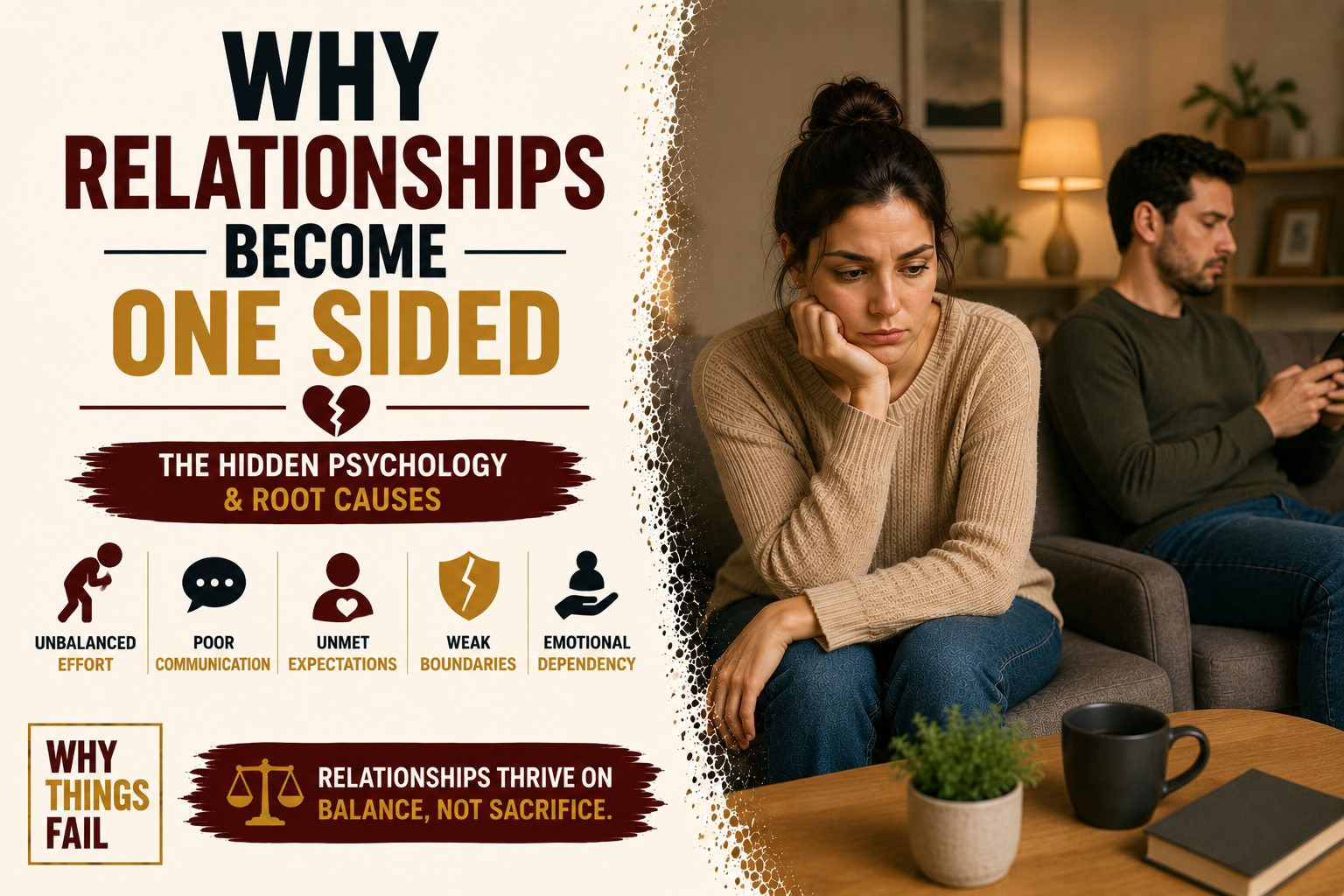
Poor communication.
Unresolved resentment.
Lack of appreciation.
Avoiding difficult conversations.
Ignoring emotional needs.
Each behaviour appears relatively small in isolation.
Together they slowly reshape the relationship until emotional distance replaces emotional intimacy.
The real problem is not that love suddenly ends.
The problem is that the conditions allowing love to grow gradually disappear.
What Usually Happens?
Most marriages follow a surprisingly similar pattern before serious difficulties emerge.
The relationship begins with excitement and shared optimism.
Partners naturally focus on each other’s strengths while overlooking weaknesses.
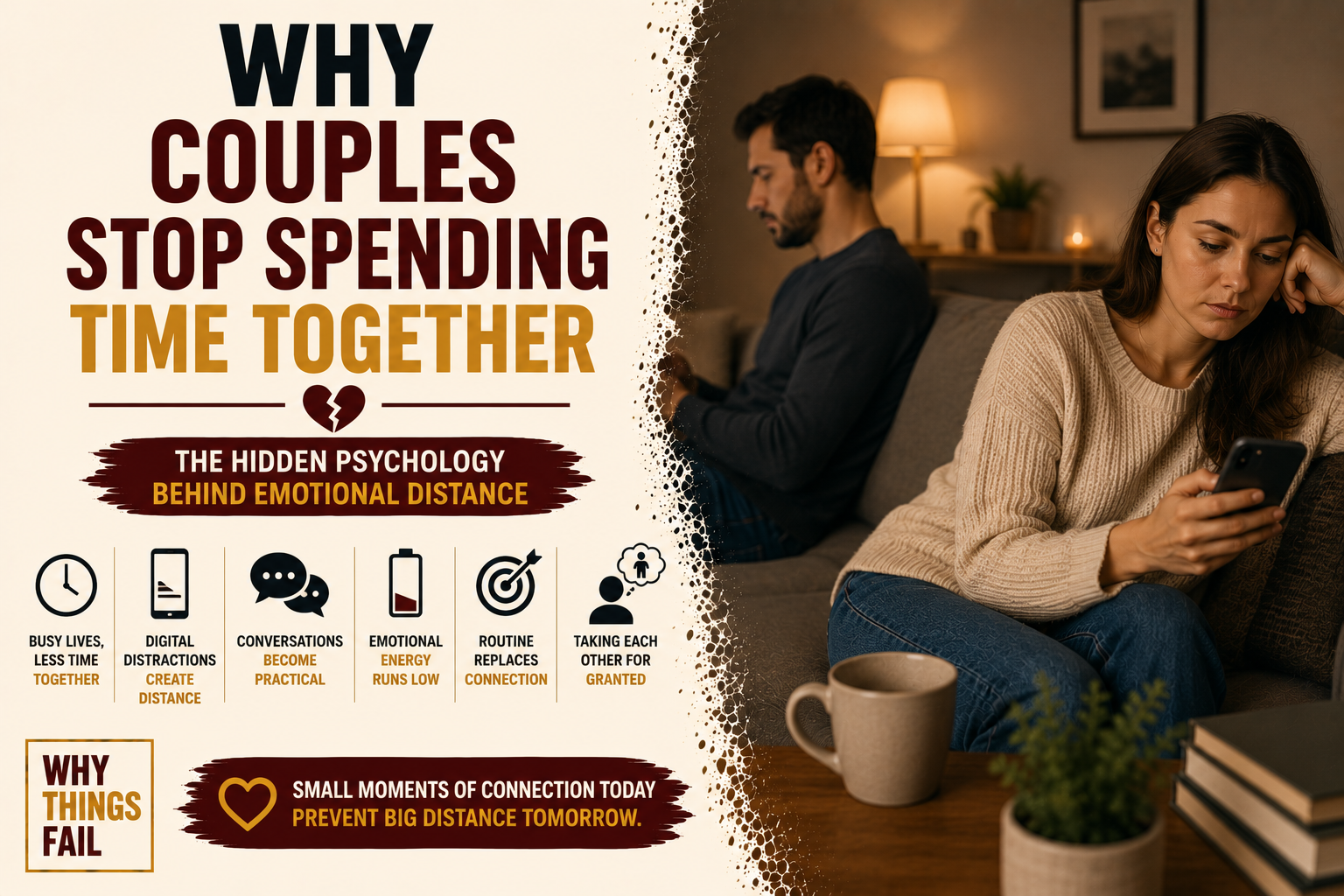
As responsibilities increase through careers, finances, parenting and daily routines, attention gradually shifts from nurturing the relationship to managing life.
Small disappointments begin accumulating.
Important conversations are postponed.
Misunderstandings remain unresolved.
Emotional distance slowly increases.
Neither partner notices the full impact because the changes occur gradually rather than suddenly.
Eventually a significant disagreement, financial challenge or personal crisis exposes problems that have been developing for years.
What appears to be the cause of the marriage ending is often only the event that revealed much deeper issues.
Why Do Marriages Fail?
Understanding why marriages fail requires moving beyond obvious explanations.
Financial pressure, parenting disagreements, work related stress and infidelity certainly influence relationships.
However, these factors often expose existing weaknesses rather than creating them.
The deeper causes are usually psychological, behavioural and systemic.
Emotional Communication Gradually Breaks Down
Healthy marriages depend upon communication that creates emotional safety.
Many couples continue talking every day while slowly losing the ability to communicate honestly.
Conversations become transactional rather than meaningful.
Discussions focus on responsibilities instead of emotions.
Partners begin assuming rather than asking.
Misunderstandings become more frequent.
Over time both individuals stop expressing disappointment because previous attempts produced arguments, criticism or emotional withdrawal.
Silence gradually replaces openness.
This silence is dangerous because unresolved emotions rarely disappear.
They accumulate beneath the surface until relatively small disagreements trigger disproportionately strong reactions.
The argument is rarely about the dishes, the holiday or household expenses.
Those issues simply activate emotions that have remained unresolved for months or even years.
People React To Feelings Rather Than Facts
Marriage is not governed entirely by logic.
It is influenced by perception.
One partner may believe they are working hard to support the family.
The other may experience that same behaviour as emotional absence.
Both perspectives can exist simultaneously.
Behavioural psychology shows that people respond more strongly to how situations make them feel than to objective reality.
If one partner consistently feels ignored, criticised or unappreciated, those emotions gradually shape future interactions regardless of the original intention.
Repeated emotional disappointment changes expectations.
Partners begin anticipating conflict before conversations even begin.
Eventually defensive behaviour replaces curiosity.
Understanding becomes less important than protecting oneself from further disappointment.
Assumptions Replace Curiosity
One of the least recognised causes of marriage failure is certainty.
Long term partners often believe they already know how the other person thinks, feels and will respond.
Curiosity slowly disappears.
Questions become assumptions.
Listening becomes waiting to reply.
This creates a dangerous cycle.
Each misunderstanding reinforces previous assumptions.
Communication becomes increasingly selective because people hear information that confirms existing beliefs while ignoring evidence that challenges them.
Psychologists describe this as confirmation bias.
Instead of discovering who their partner is becoming, couples continue responding to who they believe their partner has always been.
The relationship gradually stops evolving.
Unresolved Conflict Creates Emotional Debt
Every disagreement leaves either resolution or residue.
Couples who resolve disagreements strengthen trust because difficult conversations demonstrate that problems can be solved together.
Couples who avoid conflict often believe they are protecting the relationship.
The opposite frequently occurs.
Each unresolved disagreement creates emotional debt.
Resentment quietly accumulates.
Future disagreements become more intense because they carry the weight of previous unresolved issues.
Eventually the relationship reaches a point where one conversation contains years of disappointment.
The discussion appears to concern one specific problem.
Emotionally, it concerns many.
External Pressure Exposes Internal Weaknesses
Financial difficulties, career changes, parenting responsibilities, illness and family obligations place enormous pressure on marriages.
These situations are often blamed for relationship failure.
In reality they function more like stress tests.
Healthy relationships experience stress without losing their foundation.
Relationships already weakened by poor communication, emotional distance and unresolved conflict often struggle to adapt.
The external challenge reveals vulnerabilities that already existed.
The financial problem was not necessarily the cause.
The inability to solve problems together became the cause.
Taking The Relationship For Granted
Another behavioural pattern appears repeatedly across struggling marriages.
Partners gradually invest less attention in the relationship because its existence feels secure.
People naturally devote energy towards urgent responsibilities such as careers, children, financial commitments and daily obligations.
The relationship quietly becomes something assumed rather than intentionally maintained.
Appreciation becomes less frequent.
Quality time becomes less intentional.
Acts of kindness become less visible.
None of these changes appear significant individually.
Collectively they reduce emotional connection until both partners begin feeling more like housemates than life partners.
This shift rarely happens because love disappears.
It happens because consistent emotional investment gradually declines.
Short Term Comfort Creates Long Term Distance
Many difficult conversations are avoided because they create immediate discomfort.
Discussing disappointment feels uncomfortable.
Addressing unmet expectations feels uncomfortable.
Acknowledging emotional loneliness feels uncomfortable.
Avoidance therefore provides short term emotional relief.
However, behavioural psychology shows that avoiding discomfort today often creates greater problems tomorrow.
Every postponed conversation increases uncertainty.
Every ignored issue becomes more emotionally charged.
Eventually the cost of avoidance exceeds the discomfort of honest communication.
Unfortunately many couples reach this point only after emotional trust has already weakened significantly.
The relationship did not fail because one conversation happened.
It failed because many necessary conversations never happened.
Warning Signs
Marriage failure rarely begins with a dramatic event. It usually starts with subtle behavioural changes that seem insignificant in isolation but become destructive when repeated over time.
One warning sign is when conversations become purely functional. Partners discuss work, children, finances and household responsibilities but rarely share thoughts, fears or aspirations. Communication continues, yet emotional connection gradually disappears.
Another warning sign is persistent defensiveness. Instead of trying to understand each other, both partners begin protecting themselves from criticism. Every disagreement becomes a debate about who is right rather than an opportunity to solve a problem together.
Emotional withdrawal is equally concerning. One or both partners stop expressing disappointment because previous attempts led to arguments or indifference. Silence begins replacing honesty, creating emotional distance that is difficult to recognise until it has become deeply rooted.
A lack of appreciation is another early indicator. Expressions of gratitude become less frequent because daily contributions are taken for granted. Over time, both individuals begin feeling unseen despite continuing to fulfil their responsibilities.
Perhaps the most dangerous warning sign is believing that problems will resolve themselves. Small misunderstandings rarely disappear without communication. They often become larger because each unresolved issue influences the next interaction.
These warning signs are commonly ignored because life remains busy. Careers, parenting, financial responsibilities and daily routines create the illusion that relationship concerns can be addressed later. Unfortunately, emotional distance often grows quietly while attention is directed elsewhere.
What Could Have Prevented It?
Most marriages cannot be protected by avoiding challenges because every relationship experiences periods of stress, disagreement and uncertainty.
What strengthens a marriage is not the absence of conflict but the ability to respond constructively when conflict occurs.
Open communication is one of the most effective protective factors. Couples who discuss concerns early prevent small frustrations from developing into long term resentment. Honest conversations may feel uncomfortable in the moment, yet they often prevent much greater emotional damage later.
Emotional curiosity is equally important. People continue changing throughout life. Successful marriages recognise that understanding a partner is an ongoing process rather than something achieved once at the beginning of the relationship.
Shared decision making also strengthens resilience. Whether discussing finances, parenting, careers or future goals, couples who approach problems as a team reduce the likelihood of blame replacing cooperation.
Regular expressions of appreciation create another protective layer. Feeling valued reinforces emotional security and reminds both partners that their efforts are recognised rather than expected.
Finally, recognising warning signs early allows relationships to adapt before emotional distance becomes permanent. Preventing marriage failure rarely depends upon one major solution. It depends upon consistently maintaining habits that strengthen trust, respect and communication.
Lessons
Marriage failure offers lessons that extend beyond relationships.
It demonstrates that strong systems are built through consistent attention rather than occasional effort. Small positive behaviours repeated over many years often influence relationship quality more than dramatic romantic gestures.
Another lesson is that emotional intelligence matters as much as practical responsibility. Providing financial security or meeting daily obligations cannot fully replace empathy, listening and emotional presence.
Marriage also reveals the importance of addressing problems while they remain manageable. Delayed conversations often create delayed consequences. What appears to be a sudden relationship breakdown is frequently the result of years of unresolved emotions.
Perhaps the most important lesson is that relationships rarely fail because of one mistake. They usually weaken through repeated behavioural patterns that slowly reshape trust, communication and mutual understanding.
Failure Pattern
The dominant pattern behind marriage failure is Emotional Disconnection Caused by Poor Communication and Unresolved Conflict.
This pattern appears repeatedly because people naturally seek immediate emotional comfort. Difficult conversations are postponed, uncomfortable feelings remain unspoken and assumptions gradually replace honest dialogue.
As emotional distance increases, trust begins to weaken. Both partners become more focused on protecting themselves than understanding each other. Over time, cooperation is replaced by defensiveness and emotional investment steadily declines.
This pattern extends beyond marriage. Business partnerships, friendships and family relationships often deteriorate through the same behavioural process. The underlying issue is not conflict itself but the failure to address conflict before it becomes emotionally overwhelming.
Hidden Lesson
The greatest threat to a marriage is rarely one major event.
It is the gradual loss of emotional connection that occurs when small moments of understanding are repeatedly replaced by small moments of neglect.
Relationships do not suddenly become distant.
Distance is created one ignored conversation, one unresolved disappointment and one missed opportunity for empathy at a time.
By the time many couples recognise the seriousness of the problem, the emotional habits responsible for that distance have already become deeply established.
Failure Scorecard
| Area | Score | Explanation |
| Communication | 4/10 | Honest conversations gradually become less frequent as emotional distance increases. |
| Decision Making | 5/10 | Important relationship decisions are often delayed or influenced by assumptions rather than discussion. |
| Conflict Management | 4/10 | Unresolved disagreements accumulate into long term resentment. |
| Long Term Thinking | 5/10 | Daily responsibilities often receive greater attention than maintaining the relationship itself. |
| Emotional Awareness | 5/10 | Emotional needs are frequently misunderstood or left unspoken. |
| Emotional Control | 4/10 | Defensive reactions often replace empathy during conflict. |
| Planning | 6/10 | Couples often plan careers and finances more carefully than the health of their relationship. |
| Adaptability | 5/10 | Many relationships struggle to adjust to changing life circumstances and personal growth. |
Key Takeaways
- Most marriages fail gradually rather than suddenly.
- Emotional communication is more important than avoiding conflict.
- Small unresolved issues often create significant long term consequences.
- Assumptions weaken relationships while curiosity strengthens them.
- External pressures usually expose existing weaknesses instead of creating them.
- Appreciation must remain consistent even during busy stages of life.
- Trust is maintained through repeated daily behaviours rather than occasional grand gestures.
- Lasting relationships depend upon continuous emotional investment and shared problem solving.
Frequently Asked Questions
Why do most marriages fail?
Most marriages fail because emotional connection gradually weakens through poor communication, unresolved conflict, unmet expectations and declining trust rather than one single event.
Is lack of communication the biggest reason marriages fail?
Communication is one of the most significant factors because it influences trust, emotional safety, conflict resolution and mutual understanding. When communication weakens, many other relationship problems become more difficult to resolve.
Can a marriage fail even without constant arguments?
Yes. Emotional withdrawal and silence can be more damaging than open disagreement. Couples who stop discussing important feelings often become emotionally disconnected over time.
Does financial stress cause marriages to fail?
Financial pressure can increase tension, but it is often a stress test rather than the root cause. Healthy relationships usually address financial challenges through cooperation, while weaker relationships may struggle because communication and trust were already declining.
What is the earliest warning sign of marriage failure?
One of the earliest warning signs is the gradual loss of meaningful conversation. When partners stop sharing emotions and begin communicating only about daily responsibilities, emotional distance often starts to develop.
Conclusion
Marriages rarely fail because love disappears overnight. They fail because the behaviours that sustain love gradually become less consistent while the behaviours that weaken trust become more common. The final separation often appears sudden, yet the underlying causes have usually been developing for years.
Understanding why marriages fail shifts the focus from dramatic events to everyday decisions. It reveals that lasting relationships are shaped less by extraordinary moments and more by the repeated choices that either strengthen or slowly erode emotional connection.