Introduction
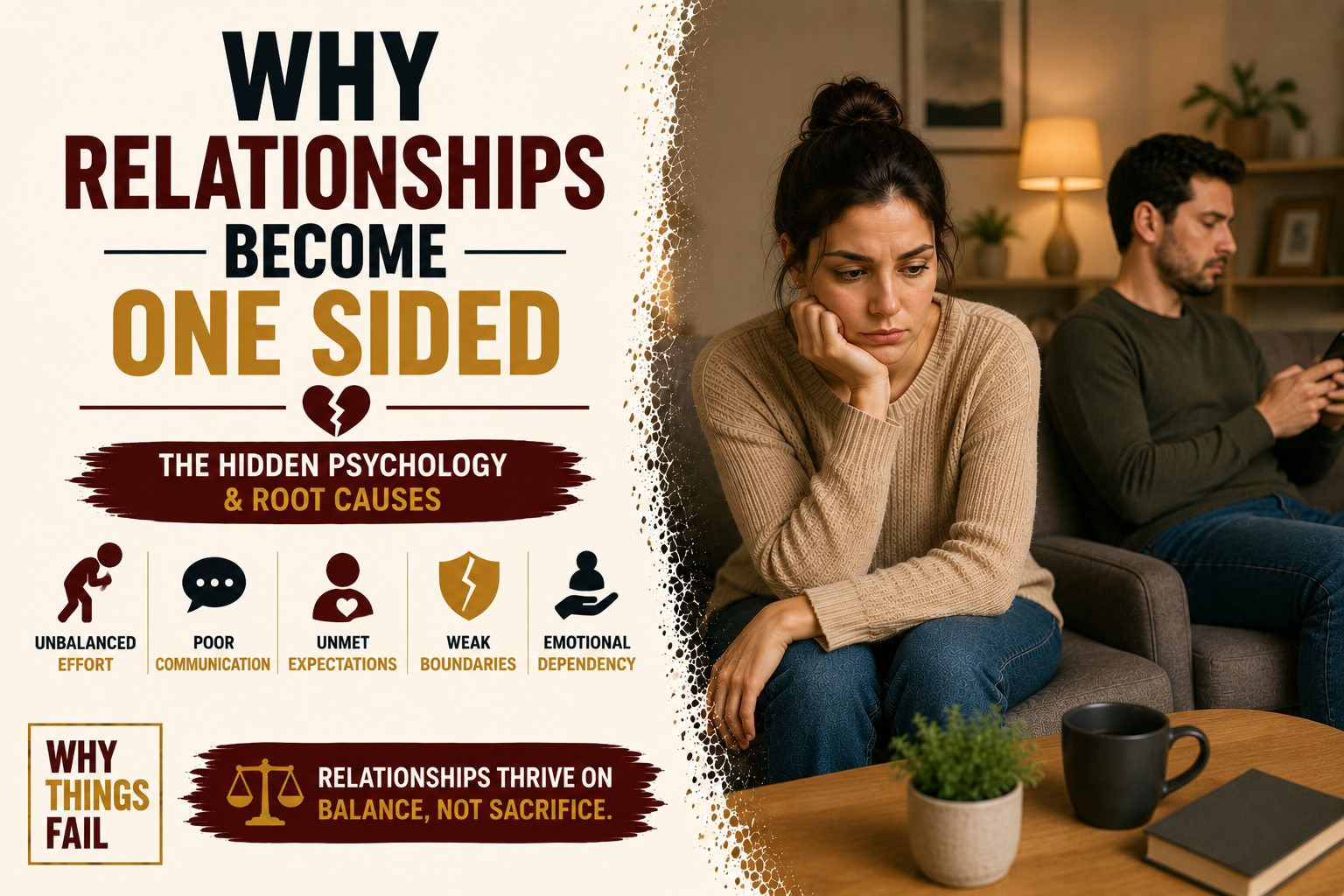
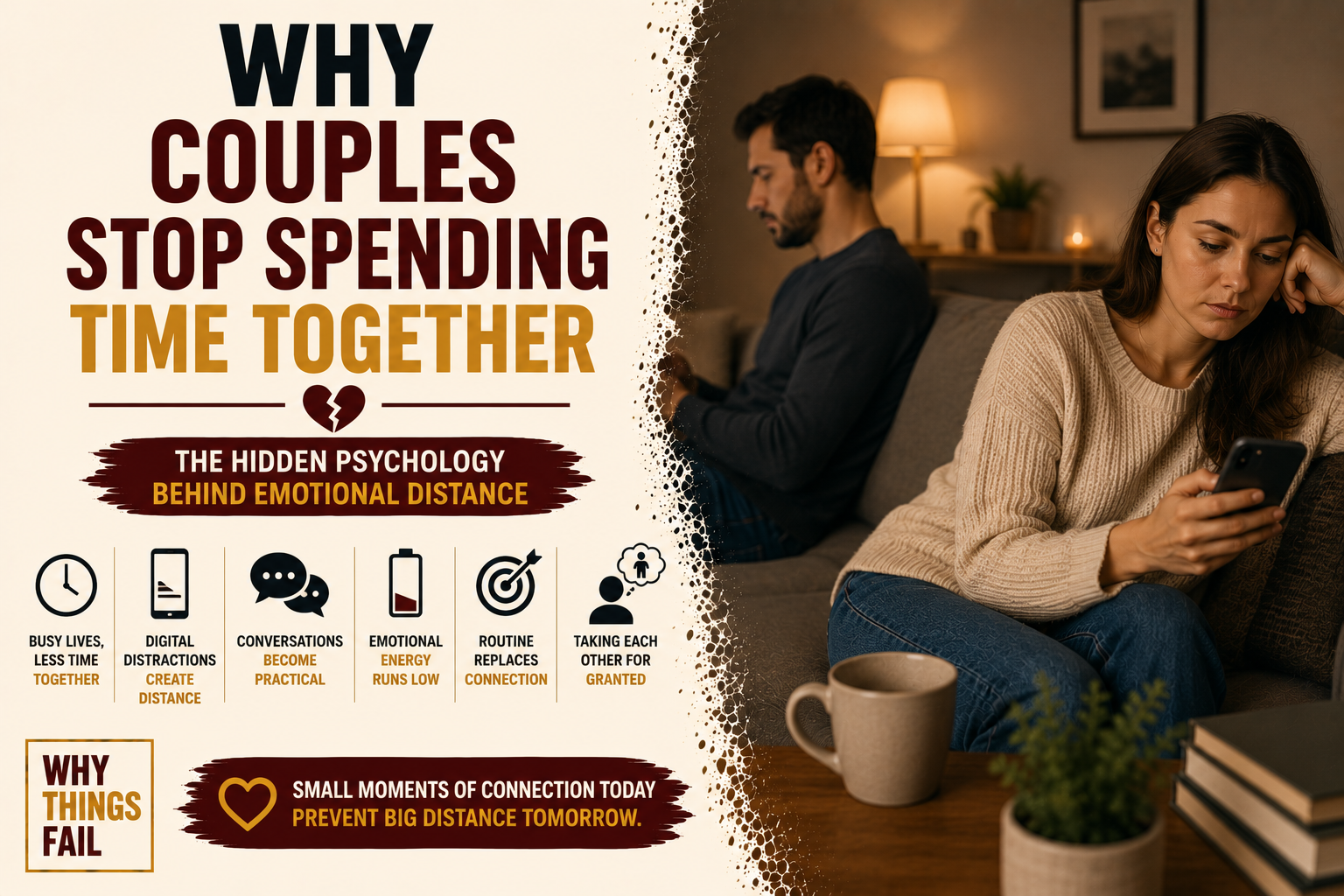
Most people believe relationship failure is caused by choosing the wrong partner.
At first glance, this explanation seems convincing. Someone experiences heartbreak, enters a new relationship and promises not to make the same mistakes again. Yet months or years later, the outcome often looks remarkably familiar.
The names change.
The circumstances change.
The relationship itself changes.
But the emotional pattern remains the same.
Some people repeatedly choose emotionally unavailable partners. Others continue trusting people who ignore boundaries or fail to communicate honestly. Some remain in unhealthy relationships far longer than they intended, while others leave healthy relationships because emotional discomfort feels unfamiliar.
This raises an important question.
Why do intelligent, caring and emotionally aware people continue repeating relationship mistakes despite painful past experiences?
The answer is rarely found in one poor decision or one unsuitable partner.
Relationship patterns are shaped by psychology, emotional conditioning, decision making and behavioural habits that develop over many years. These patterns often operate beneath conscious awareness, quietly influencing whom we trust, how we communicate and what feels emotionally familiar.
Understanding why people repeat relationship mistakes is therefore not simply about understanding relationships.
It is about understanding how human behaviour shapes emotional decisions long before a relationship begins.
What Is Repeating Relationship Mistakes?
Repeating relationship mistakes does not mean experiencing more than one unsuccessful relationship.
Every relationship teaches lessons, and not every separation represents failure.
The problem arises when the same unhealthy behaviours, emotional responses or partner choices continue appearing despite previous experience.
Someone who repeatedly ignores warning signs before becoming emotionally attached.
Someone who continually sacrifices personal boundaries to avoid conflict.
Someone who mistakes emotional intensity for genuine compatibility.
These patterns represent behavioural repetition rather than unfortunate coincidence.
Relationship failure often begins long before the relationship itself becomes unhealthy. It begins with repeated decisions that feel emotionally comfortable even when they consistently produce disappointing outcomes.
The Biggest Myth
The most common belief is that people repeat relationship mistakes because they simply fail to learn from experience.
This explanation is appealing because it appears logical.
If painful experiences teach valuable lessons, then repeating those experiences must reflect poor judgement.
Behavioural psychology suggests something far more complex.
Human beings do not always choose what is healthiest.
They often choose what feels familiar.
Familiarity creates a sense of emotional safety, even when previous experiences associated with that familiarity caused disappointment or distress.
As a result, people frequently mistake emotional familiarity for emotional compatibility.
This explains why someone can recognise unhealthy relationship patterns intellectually while continuing to repeat them emotionally.
The challenge is therefore not always a lack of knowledge.
It is the powerful influence of unconscious behavioural conditioning.
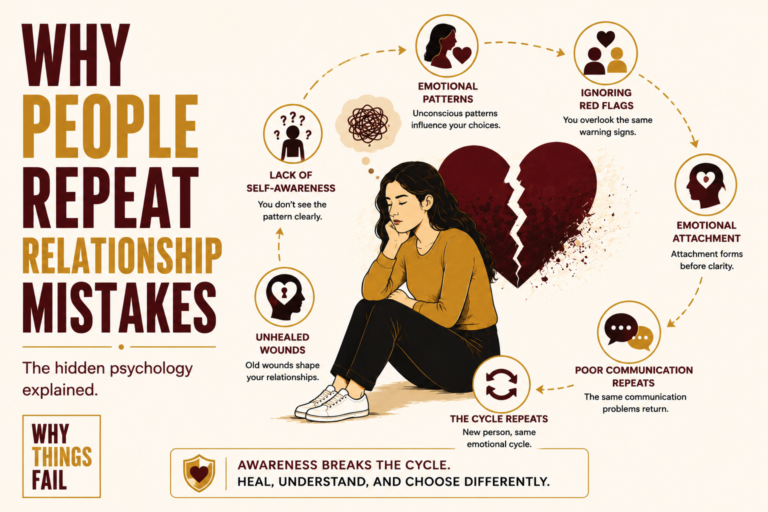
What Usually Happens?
Most repeated relationship mistakes follow a predictable pattern.
A relationship begins with optimism and emotional connection.
Small concerns appear but are dismissed.
Emotional attachment grows stronger.
Personal boundaries become less important.
Communication gradually weakens.
Conflict increases.
Warning signs become more obvious.
Instead of reassessing the relationship objectively, emotional investment encourages hope that circumstances will improve.
Eventually the relationship ends.
After a period of recovery, a new relationship begins.
Although the partner is different, many of the same emotional patterns quietly return.
The cycle repeats because the underlying behaviour has remained unchanged.
Why Does It Happen?
Understanding repeated relationship mistakes requires looking beyond individual relationships.
The deeper causes often exist within psychological patterns that influence decision making long before people recognise them.
Relationships do not simply reflect compatibility.
They reflect emotional expectations, learned behaviours and unconscious beliefs about love, trust and personal worth.
Familiarity Often Feels Safer Than Change
One of the strongest influences on relationship decisions is familiarity.
People naturally move towards situations that resemble previous emotional experiences.
This does not necessarily mean those experiences were healthy.
It simply means they are familiar.
Someone raised in an environment where affection was unpredictable may later feel unusually attracted to emotionally inconsistent partners.
Another person who experienced constant criticism during childhood may unconsciously accept criticism within adult relationships because it feels normal.
The emotional brain frequently values familiarity above wellbeing.
This explains why unhealthy relationships can sometimes feel strangely comfortable while healthy relationships initially feel unfamiliar or even unsettling.
Emotional Decisions Often Override Logical Thinking
People rarely choose partners through objective analysis alone.
Relationships involve hope, attraction, trust, vulnerability and emotional connection.
These experiences activate emotional decision making rather than purely rational thinking.
Behavioural scientists have shown that emotions strongly influence judgement, particularly when decisions involve uncertainty.
During the early stages of a relationship, optimism often encourages people to focus on positive qualities while overlooking behaviours that may later become significant problems.
Once emotional attachment develops, objectivity becomes increasingly difficult.
People begin protecting the relationship rather than evaluating it.
Instead of asking whether the relationship remains healthy, they begin asking how they can preserve it.
Attachment Patterns Shape Adult Relationships
Many repeated relationship mistakes can be understood through attachment theory.
Early relationships with parents or caregivers influence how people experience trust, security and emotional closeness throughout adulthood.
Individuals with secure attachment generally find it easier to establish healthy communication, maintain appropriate boundaries and resolve conflict constructively.
Those with anxious attachment may fear abandonment, seek constant reassurance or remain in unhealthy relationships because being alone feels more frightening than remaining unhappy.
People with avoidant attachment often struggle with emotional closeness, creating distance whenever relationships become increasingly intimate.
These attachment patterns are not permanent.
However, without awareness they quietly influence relationship choices throughout life.
Confirmation Bias Reinforces Existing Beliefs
Once people develop beliefs about themselves or relationships, they naturally begin searching for evidence that confirms those beliefs.
Someone who secretly believes they are difficult to love may unconsciously notice rejection while overlooking genuine affection.
Someone convinced that relationships always end badly may interpret ordinary disagreements as proof that failure is inevitable.
Psychologists describe this tendency as confirmation bias.
Rather than changing beliefs, people often interpret new experiences in ways that strengthen existing assumptions.
This creates self reinforcing emotional patterns that become increasingly difficult to recognise.
Fear Often Disguises Itself As Love
Fear influences relationships in subtle ways.
Fear of loneliness.
Fear of rejection.
Fear of change.
Fear of starting again.
These fears frequently encourage people to remain in relationships that no longer support their emotional wellbeing.
Instead of asking whether a relationship is healthy, they begin asking whether they can survive without it.
This shift in thinking changes the purpose of the relationship.
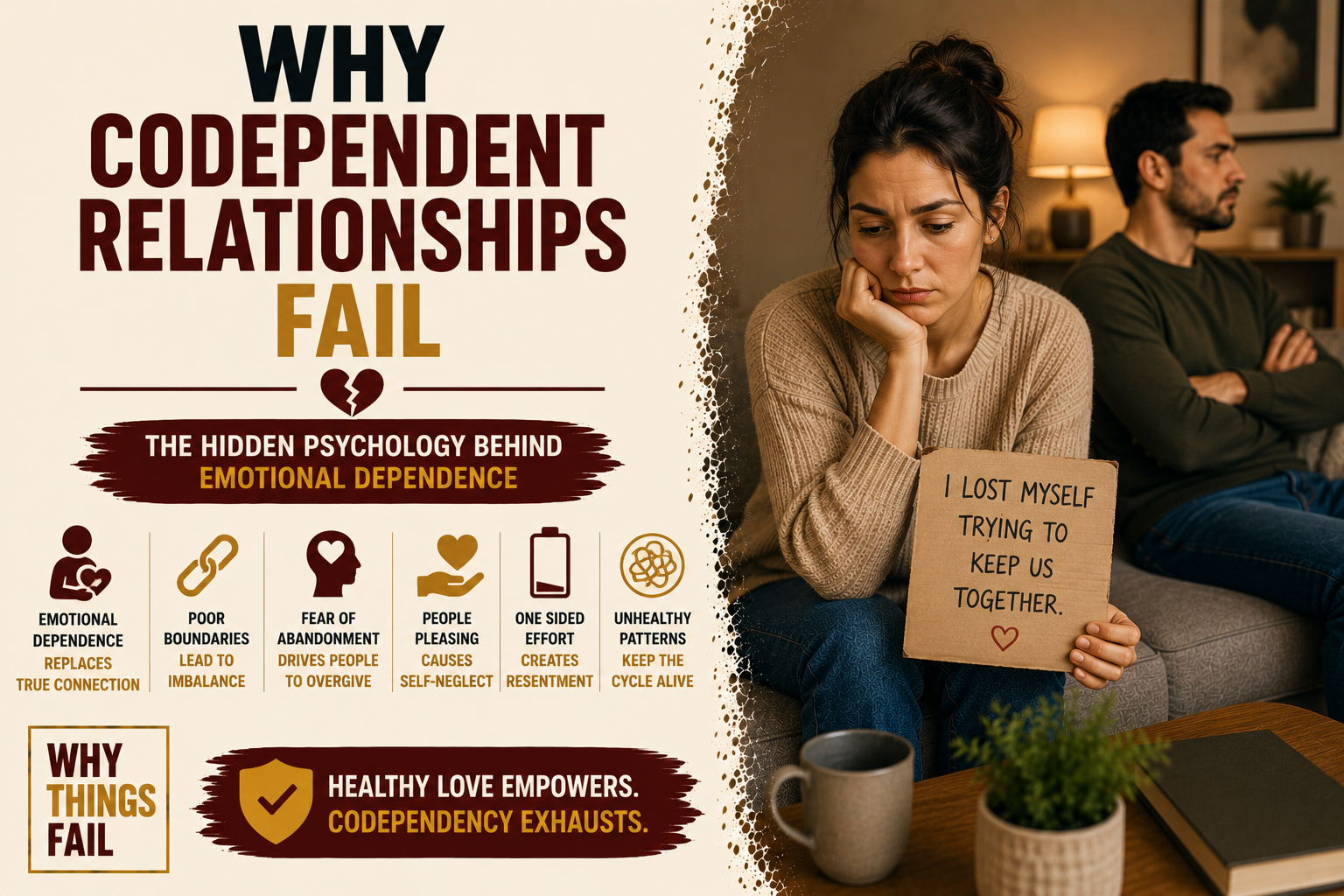
Love gradually becomes replaced by emotional dependence.
The relationship continues not because it creates happiness, but because it reduces uncertainty.
Fear therefore becomes one of the strongest forces sustaining repeated relationship mistakes.
Short Term Comfort Often Creates Long Term Pain
Human beings naturally seek immediate emotional relief.
Avoiding difficult conversations feels easier than confronting conflict.
Ignoring warning signs feels more comfortable than accepting uncomfortable truths.
Forgiving repeated unhealthy behaviour feels less painful than ending an important relationship.
These decisions provide temporary emotional comfort.
However, they often increase long term emotional costs.
Behavioural economists describe this tendency as present bias, where immediate emotional rewards receive greater importance than future wellbeing.
Relationship mistakes therefore rarely occur because people deliberately choose unhappiness.
They occur because short term emotional comfort consistently outweighs long term emotional thinking until the consequences become impossible to ignore.
Warning Signs
Repeated relationship mistakes rarely appear without warning. The challenge is that these warning signs often emerge during periods of emotional excitement, when objective judgement becomes more difficult.
One of the earliest signs is consistently ignoring behaviours that previously caused problems in past relationships. People convince themselves that this situation is different, even when the emotional pattern feels remarkably familiar.
Another warning sign is making important relationship decisions very quickly. Emotional intensity is mistaken for compatibility, creating a false sense of certainty before trust has been established.
Poor personal boundaries also signal increasing risk. Someone who repeatedly sacrifices their values, friendships or emotional needs to preserve a relationship gradually loses the ability to judge whether the relationship remains healthy.
Another overlooked warning sign is believing that love alone can change another person’s behaviour. While people can grow and mature, lasting change usually comes from personal responsibility rather than external encouragement.
Perhaps the clearest warning sign is repeatedly explaining away behaviour that consistently creates emotional pain. Rationalising dishonesty, disrespect or poor communication often reflects emotional attachment rather than objective judgement.
These warning signs are frequently ignored because hope is emotionally rewarding. People naturally focus on who they believe their partner could become instead of honestly assessing who that person consistently is.
What Could Have Prevented It?
Most repeated relationship mistakes cannot be prevented by finding the perfect partner.
They are prevented by changing the decision making process that occurs before emotional attachment becomes deeply established.
Greater self awareness is one of the strongest protective factors. People who understand their emotional triggers, attachment patterns and behavioural tendencies are better equipped to recognise unhealthy dynamics before they become emotionally invested.
Healthy boundaries also reduce repeated mistakes. Boundaries are not barriers against intimacy. They create clarity about mutual respect, communication and shared expectations. They allow people to evaluate relationships without sacrificing their own emotional wellbeing.
Developing emotional patience is equally important. Trust requires consistent behaviour observed over time. Rushing commitment often prevents people from recognising important information about compatibility and character.
Honest communication also changes relationship outcomes. Addressing concerns early prevents small misunderstandings from becoming established behavioural patterns. Difficult conversations may create temporary discomfort, but avoiding them often produces much greater emotional costs later.
Finally, accepting that ending an unhealthy relationship is sometimes healthier than preserving it allows better decisions to replace emotional dependence. The objective is not to avoid emotional pain altogether. It is to avoid repeating decisions that predictably create deeper emotional harm.
Lessons
Repeated relationship mistakes reveal important lessons that extend beyond personal relationships into business, leadership and everyday decision making.
The first lesson is that experience alone does not create wisdom. People can repeat the same experience many times without learning if they never examine the psychological patterns behind their decisions.
The second lesson is that emotions strongly influence judgement. Understanding this influence allows people to pause before making decisions driven primarily by fear, loneliness or unrealistic optimism.
Another lesson is that familiarity should never be confused with compatibility. Emotional comfort often reflects past conditioning rather than present suitability.
Perhaps the most important lesson is that sustainable relationships depend less on finding perfect people and more on recognising unhealthy behavioural patterns before they become established habits.
Failure Pattern
The dominant pattern behind repeated relationship mistakes is Emotional Decision Making reinforced by Familiarity and Fear of Change.
People naturally return to emotional environments that resemble previous experiences because familiarity creates psychological comfort. Unfortunately, familiar patterns are not always healthy patterns.
Fear of loneliness encourages people to ignore warning signs.
Fear of rejection weakens personal boundaries.
Hope delays difficult decisions.
Confirmation bias strengthens unrealistic expectations.
Together these behavioural forces create a repeating cycle where emotional comfort receives greater priority than long term relationship health.
This same pattern appears in financial decisions, business partnerships and organisational leadership. Human beings often repeat familiar systems until they consciously challenge the beliefs sustaining them.
Hidden Lesson
The greatest relationship mistake is rarely choosing the wrong person.
It is repeatedly choosing familiar emotional patterns without recognising them.
Most people believe they are searching for love.
In reality, they are often searching for emotional experiences that match unconscious expectations developed long before adulthood.
The deeper lesson is that lasting relationship change begins not by changing partners but by changing the patterns that influence partner selection, communication and emotional decision making.
Until those patterns become visible, different relationships frequently produce remarkably similar outcomes.
Failure Scorecard
| Area | Score | Explanation |
| Decision Making | 5/10 | Emotions frequently outweigh objective judgement during important relationship decisions. |
| Emotional Control | 4/10 | Fear, insecurity and emotional attachment often influence behaviour more than rational thinking. |
| Risk Management | 5/10 | Warning signs are commonly overlooked because hope feels more rewarding than caution. |
| Long Term Thinking | 5/10 | Immediate emotional comfort often receives greater priority than lasting compatibility. |
| Self Awareness | 6/10 | Many people recognise unhealthy relationships only after significant emotional investment. |
| Planning | 5/10 | Relationship decisions are frequently reactive rather than intentional. |
| Adaptability | 6/10 | Some people learn from experience while others repeat familiar behavioural patterns. |
| Communication | 5/10 | Difficult conversations are often avoided until problems become much harder to resolve. |
Key Takeaways
- Most relationship mistakes begin with repeated behavioural patterns rather than bad luck.
- Emotional familiarity should not be mistaken for genuine compatibility.
- Attachment styles quietly influence partner selection and relationship behaviour.
- Hope should never replace objective observation.
- Healthy boundaries strengthen relationships rather than weaken them.
- Self awareness is one of the strongest protections against repeating unhealthy patterns.
- Long term relationship success depends on consistent behaviour rather than emotional intensity.
- Changing internal decision making patterns is often more important than changing partners.
Frequently Asked Questions
Why do people keep repeating the same relationship mistakes?
People often repeat relationship mistakes because unconscious emotional patterns, attachment styles and behavioural conditioning influence decisions more strongly than past experience alone.
Can childhood experiences affect adult relationships?
Yes. Early relationships with parents or caregivers shape beliefs about trust, emotional security and communication, which can influence adult relationship choices for many years.
Why do people ignore obvious red flags?
Emotional attachment, optimism and fear of losing the relationship frequently encourage people to explain away behaviours that would appear concerning from an objective perspective.
Can people break unhealthy relationship patterns?
Yes. Greater self awareness, healthier boundaries, emotional patience and honest reflection can gradually replace repeating behavioural patterns with healthier relationship decisions.
Is emotional compatibility more important than attraction?
Initial attraction may begin a relationship, but emotional compatibility, trust, communication and shared values usually determine whether the relationship remains healthy over time.
Conclusion
People rarely repeat relationship mistakes because they enjoy emotional pain or fail to care about healthy relationships. They repeat them because unconscious behavioural patterns quietly shape decisions long before those decisions become visible. The partner may change, but the psychology often remains the same.
Understanding these hidden patterns transforms relationship failure from a series of unfortunate events into something more revealing. It shows that lasting change begins not with finding different people, but with recognising the emotional decisions, learned behaviours and psychological systems that have quietly guided relationship choices all along.