
Introduction
Most relationships do not end because of one dramatic argument or a single act of betrayal. More often, they weaken quietly through ordinary moments that seem too small to matter. A forgotten conversation, a lack of appreciation, emotional distance or the assumption that a partner will always be there can slowly erode even the strongest bond.
This makes taking a partner for granted one of the most common yet least recognised forms of relationship failure.
At first glance, it appears to be a simple problem of carelessness or poor communication. In reality, it is far more complex. It is shaped by human psychology, behavioural patterns, emotional adaptation and the way people respond to familiarity over time.
Understanding why people take their partners for granted is not simply about improving relationships. It reveals how human beings gradually stop noticing what once brought them happiness and why emotional security can unintentionally create emotional neglect.
The question is therefore not whether people love their partners.
The deeper question is why love alone is often insufficient to protect a relationship from slow emotional decline.
What Is Taking a Partner for Granted?
Taking a partner for granted is the gradual process of undervaluing someone’s presence, effort and emotional contribution because it becomes familiar and expected.
It rarely begins with bad intentions.
Most people do not consciously decide to appreciate their partner less. Instead, appreciation slowly fades as routines become predictable and emotional effort decreases.
Acts of kindness that once felt meaningful become ordinary.
Daily conversations become shorter.
Expressions of gratitude become less frequent.
Quality time is replaced by responsibilities and distractions.
Eventually, the relationship shifts from active appreciation to passive expectation.
The greatest danger is that this transition often happens so slowly that neither partner notices until emotional distance has already developed.
The Biggest Myth
The most common belief is that people take their partners for granted because they no longer love them.
This explanation is appealing because it is simple.
It is also incomplete.
Many people who neglect their relationships still genuinely love their partners.
The problem is not always the absence of love.
It is often the absence of conscious attention.
Behavioural psychology suggests that human beings naturally become less responsive to experiences that remain constant over time. This process, known as hedonic adaptation, helps people adjust to positive changes but also causes them to overlook things they once deeply valued.
In relationships, familiarity gradually reduces emotional awareness.
People stop noticing the small acts of care, patience and support that quietly sustain the relationship.
Love may remain.
Appreciation gradually disappears.
What Usually Happens?
The pattern is remarkably consistent.
A relationship begins with curiosity.
Both partners invest time, attention and emotional energy into understanding each other.
Small gestures receive genuine appreciation.
Communication feels effortless.
As the relationship becomes secure, routines replace novelty.
Daily responsibilities increase.
Work, financial pressures, children and personal commitments begin competing for attention.
Neither partner intends to neglect the relationship.
Instead, emotional effort slowly declines because the relationship feels permanent.
One partner begins feeling unnoticed.
The other assumes everything is fine because no major conflict exists.
By the time dissatisfaction becomes visible, emotional distance has often been developing for months or even years.
Why Does It Happen?
Understanding why people take their partners for granted requires looking beyond communication problems.
The deeper causes lie within human behaviour, emotional psychology and the way people adapt to stability.
Relationship failure rarely begins with conflict.
It often begins with comfort.
Comfort creates security.
Security reduces urgency.
Reduced urgency gradually weakens appreciation.
The relationship does not suddenly become less valuable.
The mind simply becomes less aware of its value.
Familiarity Reduces Emotional Attention
Human attention naturally focuses on change rather than consistency.
Unexpected events capture the brain’s attention because they may require action.
Predictable experiences demand much less mental energy.
This explains why people immediately notice a new colleague, a new phone or a new opportunity while rarely noticing the partner who has quietly supported them for years.
The partner has not become less valuable.
They have simply become familiar.
This psychological tendency encourages people to notice what is missing instead of recognising what already exists.
Over time, emotional attention shifts away from the relationship without either partner consciously choosing that outcome.
Hedonic Adaptation Changes Perception
One of the strongest explanations comes from behavioural psychology.
People quickly adapt to positive experiences.
The excitement of a new relationship naturally fades as familiarity increases.
The affectionate messages, thoughtful surprises and meaningful conversations that once created happiness gradually become expected.
This does not mean the relationship has become weaker.
It means the emotional impact of familiar experiences has decreased.
The danger arises when people mistake reduced excitement for reduced value.
Instead of appreciating emotional stability, they begin searching for novelty elsewhere through work, hobbies, friendships or digital distractions.
The relationship quietly moves from being a source of gratitude to becoming part of everyday routine.
Emotional Investment Becomes Unequal
Relationships remain healthy when both partners continue investing emotional energy.
That investment includes listening, appreciation, curiosity, affection and shared experiences.
When one partner gradually reduces that effort, emotional balance begins shifting.
The partner who continues investing may initially compensate by giving more attention.
Eventually, however, repeated emotional imbalance creates exhaustion.
They no longer feel valued.
Resentment begins replacing appreciation.
Importantly, this rarely happens because someone intentionally chooses selfish behaviour.
It happens because people often underestimate how much emotional maintenance healthy relationships require.
The Brain Rewards Immediate Priorities
Modern life constantly competes for attention.
Career goals.
Financial responsibilities.
Social media.
Family obligations.
Personal ambitions.
Each of these demands immediate responses.
Healthy relationships usually do not.
Because the relationship appears stable, the brain unconsciously assigns greater importance to urgent problems.
Behavioural economists describe this tendency as present bias.
People naturally prioritise immediate demands over long term wellbeing.
Ironically, the relationship that provides emotional security often receives the least daily attention precisely because it feels secure.
Over months and years, this pattern quietly weakens emotional connection.
Overconfidence Creates Emotional Blindness
People often assume strong relationships can survive without continuous effort.
This belief reflects a form of emotional overconfidence.
Just as investors become overconfident after financial success, partners sometimes become overconfident after years of relationship stability.
They assume love alone guarantees permanence.
As a result, appreciation becomes less intentional.
Conversations become shorter.
Affection becomes less frequent.
Acts of gratitude become increasingly rare.
The relationship begins operating on assumptions instead of conscious care.
This confidence feels harmless because no immediate consequences appear.
Yet relationships often fail through delayed consequences.
By the time emotional distance becomes visible, the behaviours responsible for creating it have already become everyday habits.
Emotional Needs Become Invisible
One of the most overlooked reasons people take their partners for granted is that emotional needs are rarely visible.
Physical needs usually demand immediate attention.
Emotional needs often remain silent.
A partner may continue fulfilling responsibilities, smiling during conversations and supporting the family while quietly feeling ignored.
Because no obvious conflict exists, the other partner assumes everything is healthy.
This creates a dangerous feedback loop.
The absence of complaints is interpreted as satisfaction.
In reality, silence often reflects disappointment rather than contentment.
Many relationships therefore deteriorate not because problems were impossible to identify, but because the most important signals were emotional rather than verbal.
These invisible changes gradually reshape the relationship long before either partner recognises that something valuable is slipping away.
Warning Signs
Relationships rarely deteriorate without warning. The challenge is that the warning signs often appear so gradually that they become normal before they become concerning.
One of the earliest signs is the disappearance of gratitude. Expressions such as “thank you” and “I appreciate you” become less frequent because both partners begin assuming their efforts are simply expected. Appreciation quietly turns into obligation.
Another warning sign is the decline of meaningful conversations. Discussions become centred on daily responsibilities instead of personal thoughts, emotions and shared experiences. Partners continue talking, yet they stop feeling understood.
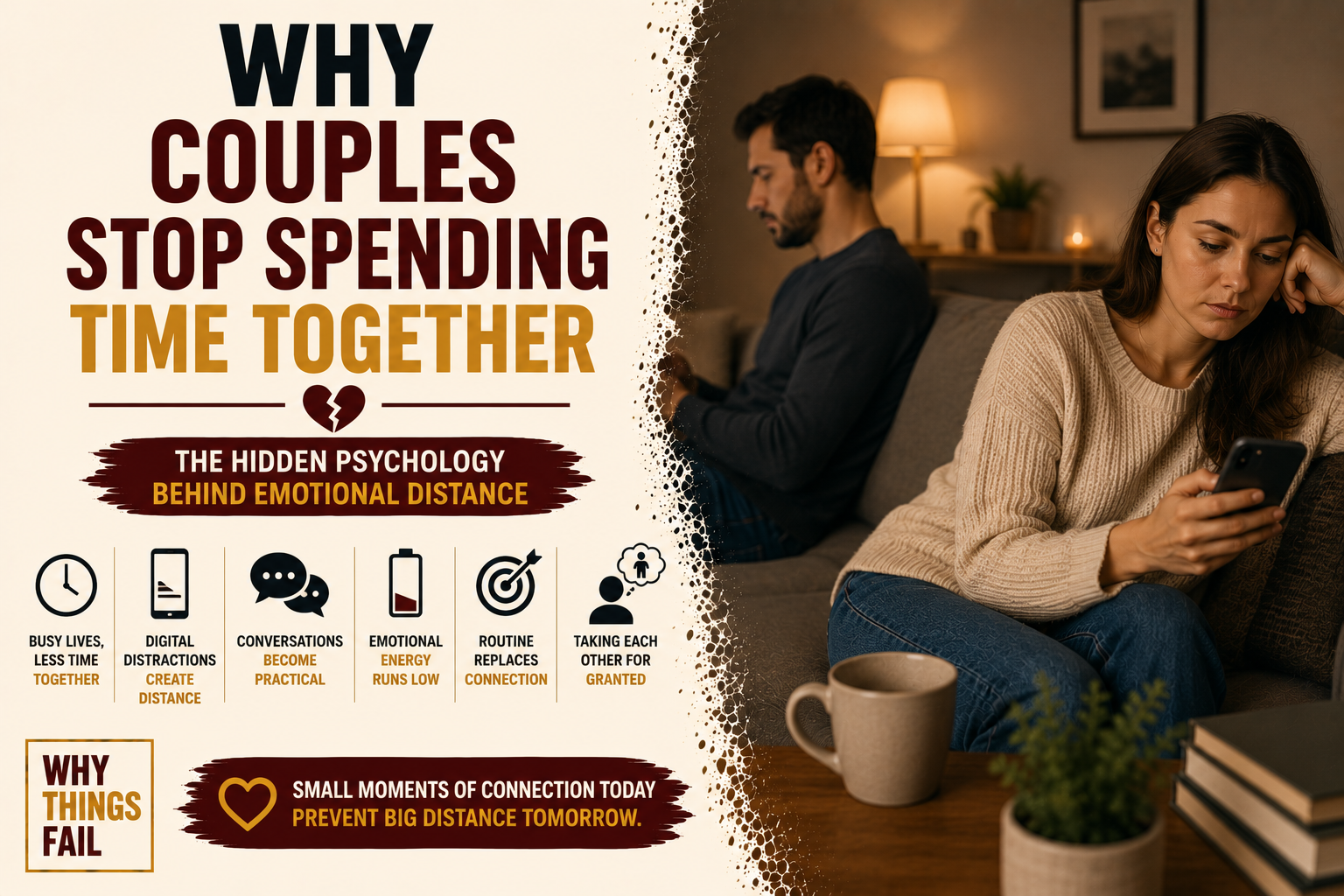
Emotional availability also begins to decline. One partner becomes distracted by work, digital devices or personal responsibilities while the other quietly accepts less attention. Neither intends to create distance, but repeated moments of emotional absence gradually weaken intimacy.
Another important warning sign is believing the relationship no longer requires effort because it feels stable. This assumption often causes people to invest more energy in careers, friendships or personal ambitions while unintentionally reducing investment in the person who supports them most.
Perhaps the most overlooked warning sign is emotional predictability. When partners stop expressing curiosity about each other’s lives, celebrating achievements or recognising everyday sacrifices, the relationship begins operating on routine rather than connection.
These signals are often ignored because no major crisis exists. The absence of conflict creates the illusion that everything is healthy, even as emotional closeness slowly declines.
What Could Have Prevented It?
Most relationships do not require dramatic changes to prevent emotional neglect.
They require consistent awareness.
The most effective safeguard is recognising that emotional security should never become emotional certainty. Every relationship continues to require attention regardless of how many years have passed.
Regular expressions of gratitude strengthen emotional connection because they remind both partners that their efforts remain visible. Appreciation prevents familiarity from becoming indifference.
Intentional communication is equally important. Conversations that explore feelings, goals and personal experiences help partners remain emotionally connected instead of becoming administrative companions focused only on daily responsibilities.
Shared experiences also protect relationships from emotional stagnation. New activities, meaningful traditions and quality time interrupt routine and restore curiosity. Novel experiences encourage partners to see each other with fresh attention rather than through habitual expectations.
Healthy relationships also benefit from self reflection. Instead of asking whether a partner has changed, individuals should occasionally ask whether they have stopped noticing the value their partner continues to bring into their life.
Most importantly, partners should recognise that love is not a permanent emotional state maintained automatically. It is strengthened through repeated behaviours that communicate appreciation, respect and emotional presence.
Lessons
Taking a partner for granted teaches lessons that extend beyond romantic relationships.
The first lesson is that familiarity changes perception without changing value. People often overlook what remains constant while pursuing what appears new. This tendency influences relationships, careers, businesses and personal happiness.
Another lesson is that emotional neglect is usually unintentional. Most people do not damage relationships through deliberate cruelty. They do so through repeated inattention, delayed appreciation and unconscious assumptions.
The article also reveals that relationships depend more on consistent behaviours than occasional grand gestures. Small moments of appreciation repeated over many years often create stronger emotional foundations than infrequent dramatic expressions of affection.
Perhaps the most important lesson is that people rarely recognise the importance of something while it feels guaranteed. Human psychology naturally values certainty less than scarcity. Unfortunately, many relationships become appreciated fully only after emotional distance has already developed.
Failure Pattern
The dominant pattern behind this relationship failure is Short Term Thinking combined with Emotional Complacency.
People naturally focus on urgent responsibilities while postponing emotional investment because its consequences appear delayed. Careers, financial pressures and daily obligations receive immediate attention because they produce immediate outcomes.
Relationships rarely demand such urgency.
This encourages people to believe that emotional connection will remain strong without continuous care.
Over time, appreciation declines, communication becomes functional and emotional presence weakens. The relationship gradually shifts from active partnership to passive coexistence.
This same behavioural pattern appears in businesses that neglect loyal customers, organisations that ignore successful employees and investors who stop managing risk after periods of success.
The underlying issue is identical.
People often neglect what appears secure until security begins disappearing.
Hidden Lesson
People rarely take their partners for granted because they stop loving them.
They take them for granted because the human mind gradually stops recognising what remains consistently available.
The greatest threat to a relationship is therefore not conflict.
It is unnoticed familiarity.
Relationships often fail quietly because appreciation fades long before affection disappears. By the time someone realises what has been lost, emotional distance has usually been growing for much longer than either partner recognised.
Failure Scorecard
| Area | Score | Explanation |
| Emotional Awareness | 4/10 | Many people fail to recognise their partner’s changing emotional needs. |
| Decision Making | 5/10 | Daily priorities often outweigh long term relationship investment. |
| Emotional Risk Management | 4/10 | Small signs of disconnection are frequently ignored until they become serious. |
| Long Term Thinking | 5/10 | Relationships are often assumed to be permanent rather than continuously maintained. |
| Relationship Knowledge | 6/10 | Most people understand love but underestimate the importance of consistent appreciation. |
| Emotional Control | 6/10 | Stress, frustration and routine frequently reduce emotional availability. |
| Planning | 4/10 | Few couples intentionally create habits that strengthen long term connection. |
| Adaptability | 6/10 | Healthy relationships evolve, but many partners continue relying on habits that no longer meet changing emotional needs. |
Key Takeaways
- People usually take their partners for granted gradually rather than intentionally.
- Familiarity reduces attention, not necessarily love.
- Emotional appreciation must be maintained through consistent behaviour.
- Small daily interactions often shape relationships more than major life events.
- Delayed consequences make emotional neglect difficult to recognise.
- Security should encourage gratitude rather than complacency.
- Strong relationships require ongoing emotional investment, even when everything appears stable.
- Lasting relationships depend less on finding the right partner and more on continuing to value the partner already present.
Frequently Asked Questions
Why do people take their partners for granted?
People often take their partners for granted because familiarity reduces emotional attention. Over time, consistent love and support become expected rather than consciously appreciated.
Is taking someone for granted intentional?
Usually not. It is more often the result of routine, emotional adaptation and competing life priorities than deliberate neglect.
Can a relationship recover after emotional neglect?
Yes. Many relationships improve when both partners recognise the underlying behavioural patterns, restore appreciation and intentionally rebuild emotional connection through consistent actions.
Why does familiarity reduce appreciation?
Behavioural psychology shows that people adapt to positive experiences over time. As relationships become stable, the brain notices them less frequently, even though their importance remains unchanged.
What is the biggest mistake couples make?
The biggest mistake is assuming that love can sustain itself without continued attention, gratitude and emotional investment.
Conclusion
People rarely lose meaningful relationships through one defining moment. More often, they lose them through countless ordinary moments in which appreciation quietly gives way to expectation and emotional presence gradually yields to routine.
Understanding why people take their partners for granted reveals a broader truth about human behaviour. We are not naturally inclined to value what remains constant. We notice change more readily than stability, yet the relationships that shape our lives most profoundly are built not on dramatic moments but on the quiet decision to keep recognising the value that familiarity so easily hides.