Introduction
Most relationships do not end because of one dramatic argument or a single act of betrayal.
Instead, intimacy often fades so gradually that neither partner notices the change until the emotional distance feels impossible to ignore.
Conversations become shorter. Affection becomes less frequent. Small misunderstandings remain unresolved. Partners who once felt deeply connected begin living alongside each other rather than truly together.
This pattern appears across marriages, long term relationships and even close friendships. Yet many people struggle to explain why intimacy disappears despite genuine love and good intentions.
The common assumption is that relationships lose intimacy because people fall out of love.
Human behaviour suggests something more complex.
Intimacy is rarely destroyed by one event. It is usually weakened through repeated patterns of communication, emotional responses, unmet needs and unconscious habits that quietly reshape the relationship over time.
Understanding why relationships lose intimacy therefore requires looking beyond romance. It requires examining psychology, behavioural science, emotional safety, trust and the everyday decisions that either strengthen or weaken human connection.
What Is Relationship Intimacy Loss?
Relationship intimacy loss is the gradual decline of emotional, physical and psychological closeness between two people.
It does not necessarily mean that love has disappeared.
Many couples continue caring deeply for one another while feeling emotionally disconnected.
Intimacy exists when both partners feel understood, emotionally safe, respected and valued. It grows through honest communication, vulnerability, trust, shared experiences and mutual support.
When these foundations begin to weaken, intimacy slowly gives way to emotional distance.
The relationship may still appear healthy from the outside.
Responsibilities are shared.
Conversations continue.
Daily routines remain unchanged.
Yet beneath the surface, the emotional connection that once held the relationship together becomes increasingly fragile.
Relationship failure therefore begins long before separation. It begins when emotional closeness quietly gives way to emotional survival.
The Biggest Myth
The most common belief is that intimacy naturally disappears as relationships become older.
This idea encourages people to accept emotional distance as an unavoidable stage of long term commitment.
Research in relationship psychology suggests otherwise.
Time alone does not reduce intimacy.
Behaviour does.
Healthy relationships continue developing emotional closeness over many years because both partners intentionally maintain trust, communication and emotional responsiveness.
Relationships that lose intimacy usually experience gradual changes in daily behaviour rather than sudden changes in feelings.
Small moments become missed opportunities.
Conversations become transactional instead of meaningful.
Affection becomes assumed instead of expressed.
The relationship slowly shifts from emotional connection towards routine management.
The myth is not that time destroys intimacy.
The myth is believing that intimacy can survive without continuous emotional investment.
What Usually Happens?
The process usually begins quietly.
Life becomes busier.
Work responsibilities increase.
Children, finances and daily obligations consume attention.
Partners spend less time talking about emotions and more time discussing schedules.
Small disappointments remain unresolved.
Emotional vulnerability becomes less frequent.
Physical affection gradually declines.
Neither partner intends to create distance.
Both believe the relationship will improve once life becomes less stressful.
Unfortunately, emotional disconnection often grows during this waiting period.
As intimacy decreases, misunderstandings become easier to create and harder to resolve.
Silence gradually replaces curiosity.
Assumptions replace conversations.
Eventually, two people who once shared everything begin feeling emotionally isolated despite living under the same roof.
Why Do Relationships Lose Intimacy?
Understanding intimacy loss requires examining human behaviour rather than blaming individual personalities.
Relationships are dynamic systems.
Every interaction influences future interactions.
Small emotional experiences accumulate over time until they shape how partners think, communicate and respond to one another.
The gradual nature of this process explains why many couples cannot identify exactly when intimacy began disappearing.
Emotional Safety Begins To Disappear
Intimacy depends on emotional safety.
People naturally become vulnerable only when they believe their thoughts, emotions and imperfections will be accepted without judgement.
When criticism, defensiveness or repeated disappointment become common, emotional safety begins to weaken.
Partners stop expressing concerns because previous conversations felt dismissive or emotionally painful.
Instead of discussing fears openly, they remain silent.
Silence reduces understanding.
Reduced understanding increases emotional distance.
Over time, protecting oneself becomes more important than connecting with one’s partner.
The relationship shifts from openness towards emotional self preservation.
Familiarity Creates Emotional Complacency
Behavioural psychology shows that people naturally become accustomed to repeated experiences.
This process is known as hedonic adaptation.
The excitement that accompanies new relationships gradually becomes familiar.
Acts of kindness that once felt meaningful begin to feel expected.
Expressions of appreciation become less frequent.
Attention shifts towards daily responsibilities rather than emotional connection.
The relationship itself becomes part of everyday routine.
This does not mean love disappears.
It means intentional appreciation quietly declines.
Without conscious effort, familiarity often creates emotional complacency.
Partners continue sharing their lives while gradually forgetting to nurture the emotional bond that made the relationship meaningful.
Poor Communication Is Rarely The Root Cause
Communication problems are frequently blamed for relationship difficulties.
In reality, communication is often a symptom rather than the original cause.
People communicate poorly when they no longer feel emotionally understood.
A partner who feels criticised may become defensive.
A partner who feels ignored may withdraw emotionally.
Another may avoid difficult conversations altogether to prevent conflict.
Each response reduces genuine communication even further.
The deeper issue is not vocabulary or conversation skills.
It is the emotional environment in which communication takes place.
Healthy communication grows where trust already exists.
When trust weakens, even simple conversations become emotionally difficult.
Unspoken Expectations Create Silent Disappointment
Every relationship contains expectations.
Some are openly discussed.
Many remain unspoken.
Partners often assume the other person naturally understands what makes them feel loved, respected or emotionally supported.
When these expectations remain unmet, disappointment quietly develops.
Because the expectations were never clearly expressed, neither partner fully understands why emotional satisfaction continues declining.
Behavioural economists describe this as an expectation gap.
People evaluate outcomes not only by reality but by comparing reality with what they expected to happen.
The greater the gap, the greater the dissatisfaction.
Relationships are no different.
Partners rarely become disconnected because expectations exist.
They become disconnected because expectations remain invisible.
Stress Changes Relationship Behaviour
External pressures rarely stay outside the relationship.
Financial concerns, career uncertainty, parenting responsibilities and health problems all influence emotional availability.
Stress narrows attention.
People naturally prioritise solving immediate problems.
Emotional connection becomes secondary.
Partners become task focused instead of relationship focused.
Conversations revolve around responsibilities rather than emotional experiences.
Physical presence remains.
Emotional presence gradually disappears.
The danger is that prolonged stress slowly changes relationship habits.
What begins as temporary survival can eventually become the normal way the relationship functions.
Emotional Neglect Happens Quietly
Very few relationships lose intimacy because one partner consciously decides to become emotionally distant.
The more common explanation is emotional neglect.
Small moments of connection are repeatedly overlooked.
Listening becomes distracted.
Affection becomes inconsistent.
Curiosity about one another gradually disappears.
Each missed moment appears insignificant on its own.
Together, they create a relationship where emotional needs receive less attention than practical responsibilities.
This is why intimacy rarely disappears overnight.
It fades through ordinary moments that slowly reshape how two people experience one another.
Warning Signs
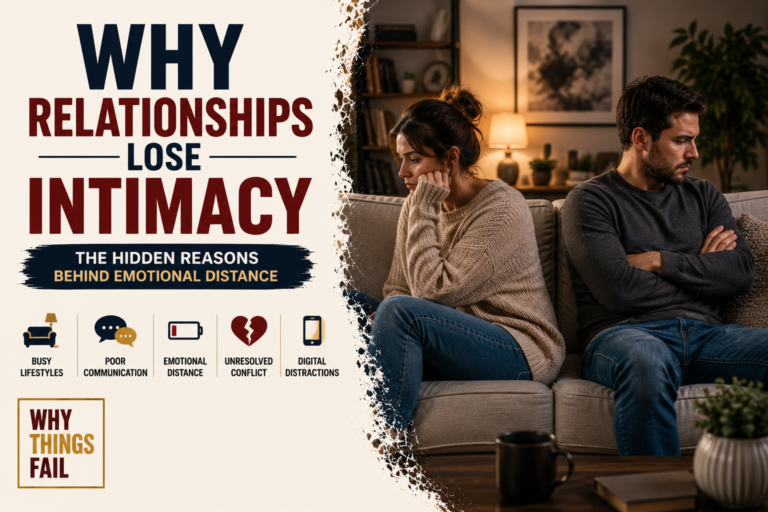
Relationship intimacy rarely disappears without warning. The challenge is that the warning signs often seem ordinary, making them easy to dismiss as temporary stress or the natural result of a busy life.
One of the earliest signs is the loss of meaningful conversation. Partners continue talking about work, bills, children or daily routines, but they stop discussing their thoughts, fears, ambitions and emotions. Communication becomes practical rather than personal.
Another warning sign is reduced curiosity. In healthy relationships, people continue learning about one another because individuals constantly change. When curiosity disappears, partners begin assuming they already know everything about each other. This assumption quietly limits emotional growth.
Emotional withdrawal is another important indicator. One partner may stop sharing personal concerns because previous attempts resulted in criticism, indifference or misunderstanding. Silence gradually replaces vulnerability.
Physical affection often changes as well. Small gestures such as holding hands, hugging or expressing appreciation become less frequent. These behaviours may appear minor, yet they reinforce emotional security and connection.
Conflict avoidance can also signal declining intimacy. Many couples believe arguing less means the relationship is improving. In reality, complete avoidance of difficult conversations may indicate emotional disengagement. Partners stop addressing problems because they no longer believe meaningful change is possible.
These warning signs are frequently ignored because they develop gradually. Both partners adapt to small changes until emotional distance begins feeling normal.
What Could Have Prevented It?
Most relationships do not require extraordinary solutions to preserve intimacy.
They require consistent attention to ordinary moments.
Emotional connection grows when partners regularly create opportunities for honest conversation rather than waiting for serious problems to appear. Discussing emotions, concerns and expectations before frustration accumulates strengthens trust and reduces misunderstanding.
Expressing appreciation also protects intimacy. People naturally notice problems more easily than positive behaviour. Deliberately recognising kindness, effort and support reminds both partners that they remain valued.
Healthy conflict is equally important. Addressing disagreements with respect prevents resentment from becoming permanent. Difficult conversations may create temporary discomfort, but unresolved disappointment creates lasting emotional distance.
Shared experiences also strengthen relationships. Spending intentional time together creates new memories and reinforces emotional connection. Relationships become stronger when partners continue growing together instead of merely managing daily responsibilities.
Finally, recognising that intimacy requires maintenance changes expectations. Emotional closeness should not be viewed as something achieved once and preserved automatically. Like trust, it depends upon repeated actions that reinforce safety, understanding and connection.
Lessons
Relationships lose intimacy because human behaviour naturally follows habits unless those habits are intentionally examined.
One important lesson is that emotional connection depends upon attention rather than assumption. Love alone does not maintain intimacy. Daily behaviour determines whether emotional closeness grows or declines.
Another lesson is that unresolved emotions rarely disappear. They usually become quieter while continuing to influence behaviour beneath the surface. Small disappointments accumulate into emotional distance when they remain unspoken.
The investigation also demonstrates that communication reflects relationship health rather than creating it. Strong communication develops where emotional safety already exists.
Perhaps the most important lesson is that successful relationships prioritise small, consistent investments in connection instead of relying on occasional grand gestures.
Failure Pattern
The dominant pattern behind intimacy loss is Emotional Neglect combined with Short Term Thinking.
Partners often focus on immediate responsibilities while assuming emotional connection will remain unchanged. Practical demands gradually replace emotional presence.
As communication becomes less meaningful, assumptions replace curiosity. Appreciation becomes less frequent. Vulnerability decreases. Emotional safety weakens.
This pattern extends beyond romantic relationships. Friendships, families, workplaces and business partnerships experience similar declines when people stop investing in trust, communication and shared understanding.
The underlying pattern is remarkably consistent.
Relationships rarely fail because of one defining moment.
They fail because repeated moments of emotional neglect quietly become normal.
Hidden Lesson
The greatest threat to intimacy is not conflict.
It is indifference.
Arguments often indicate that both people still care enough to seek understanding. Indifference reflects something deeper. It suggests emotional investment has begun to fade.
The deeper truth is that relationships usually lose intimacy long before either partner recognises the loss. Emotional distance develops through hundreds of ordinary interactions where connection was possible but never fully created.
By the time intimacy feels absent, the behavioural patterns responsible have often existed for months or even years.
Failure Scorecard
| Area | Score | Explanation |
| Emotional Discipline | 5/10 | Emotions are often managed through avoidance rather than honest expression. |
| Decision Making | 6/10 | Daily choices frequently prioritise routine over emotional connection. |
| Conflict Management | 5/10 | Difficult conversations are commonly delayed until frustration becomes resentment. |
| Long Term Thinking | 4/10 | Many couples assume intimacy will maintain itself without continued effort. |
| Relationship Knowledge | 6/10 | People understand love but often underestimate the psychology of lasting intimacy. |
| Emotional Control | 5/10 | Fear of rejection or criticism frequently limits vulnerability. |
| Planning | 4/10 | Few couples intentionally plan time to strengthen emotional connection. |
| Adaptability | 6/10 | Strong relationships evolve together while weaker ones become trapped in routine. |
Key Takeaways
- Intimacy usually fades gradually rather than disappearing suddenly.
- Emotional safety is the foundation of lasting closeness.
- Love alone cannot maintain intimacy without consistent emotional investment.
- Unspoken expectations often create silent disappointment.
- Meaningful conversations strengthen relationships more than frequent conversations.
- Small moments of appreciation have lasting psychological value.
- Conflict avoidance may signal emotional distance rather than relationship health.
- Relationships grow stronger when partners remain curious about one another.
- Emotional neglect is usually a process rather than a single event.
Frequently Asked Questions
Why do relationships lose intimacy over time?
Relationships lose intimacy because emotional connection is gradually replaced by routine, stress, poor communication and unspoken expectations. Without consistent emotional investment, closeness naturally declines.
Can intimacy return after emotional distance?
Yes. Intimacy can often be rebuilt when both partners recognise the underlying behavioural patterns, restore emotional safety and consistently invest in honest communication and shared experiences.
Is losing intimacy the same as falling out of love?
Not necessarily. Many couples continue loving one another while feeling emotionally disconnected. Intimacy reflects the quality of emotional connection rather than the presence of love alone.
What is the biggest cause of emotional distance?
The biggest cause is usually emotional neglect. Small missed opportunities for listening, appreciation, vulnerability and meaningful conversation gradually weaken trust and closeness.
How can couples protect intimacy?
Couples protect intimacy by maintaining emotional safety, communicating openly, expressing appreciation regularly, resolving disagreements respectfully and continuing to prioritise their relationship despite changing life responsibilities.
Conclusion
Relationships rarely lose intimacy because love suddenly disappears. They lose intimacy because everyday behaviours quietly reshape emotional connection until distance begins to feel normal. Understanding this process reveals that lasting relationships are not sustained by powerful emotions alone but by the repeated decisions that make two people feel understood, valued and emotionally safe.