Introduction
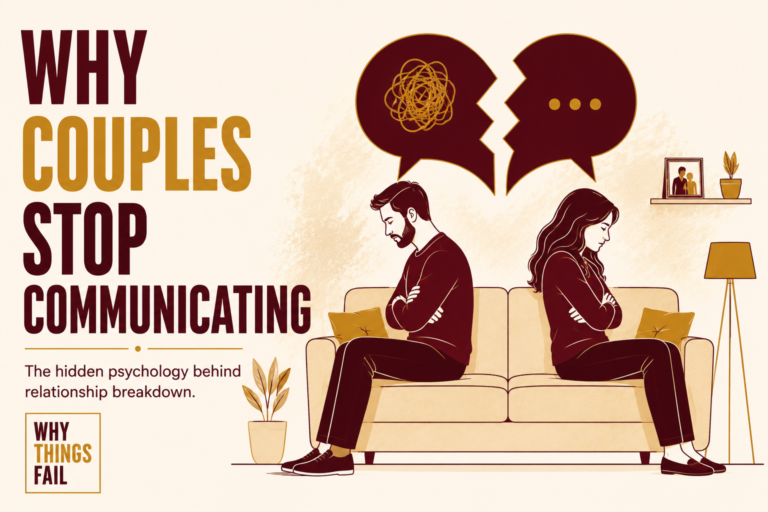
Every lasting relationship depends on communication. It allows couples to build trust, resolve disagreements and understand each other’s needs. Yet many relationships begin to struggle long before either partner considers separation. The first sign is often not a dramatic argument or a major betrayal. Instead, conversations become shorter, misunderstandings become more frequent and silence slowly replaces connection.
This matters because communication is more than exchanging words. It reflects emotional safety, mutual respect and the willingness to remain connected during both good and difficult times. When communication weakens, many other relationship problems begin to grow unnoticed.
A common assumption is that couples stop communicating because they no longer love each other. The reality is usually more complex. Most relationships do not fail because people suddenly stop caring. They fail because repeated behaviours, emotional reactions and unresolved conflicts gradually make communication feel difficult, unproductive or emotionally exhausting.
Understanding why couples stop communicating requires looking beyond individual conversations. It requires examining the psychological patterns, emotional needs and relationship dynamics that quietly shape everyday interactions.
What Is Communication Breakdown In A Relationship?
Communication breakdown occurs when partners stop expressing their thoughts, feelings and concerns in an open and constructive way. This does not necessarily mean they stop talking altogether.
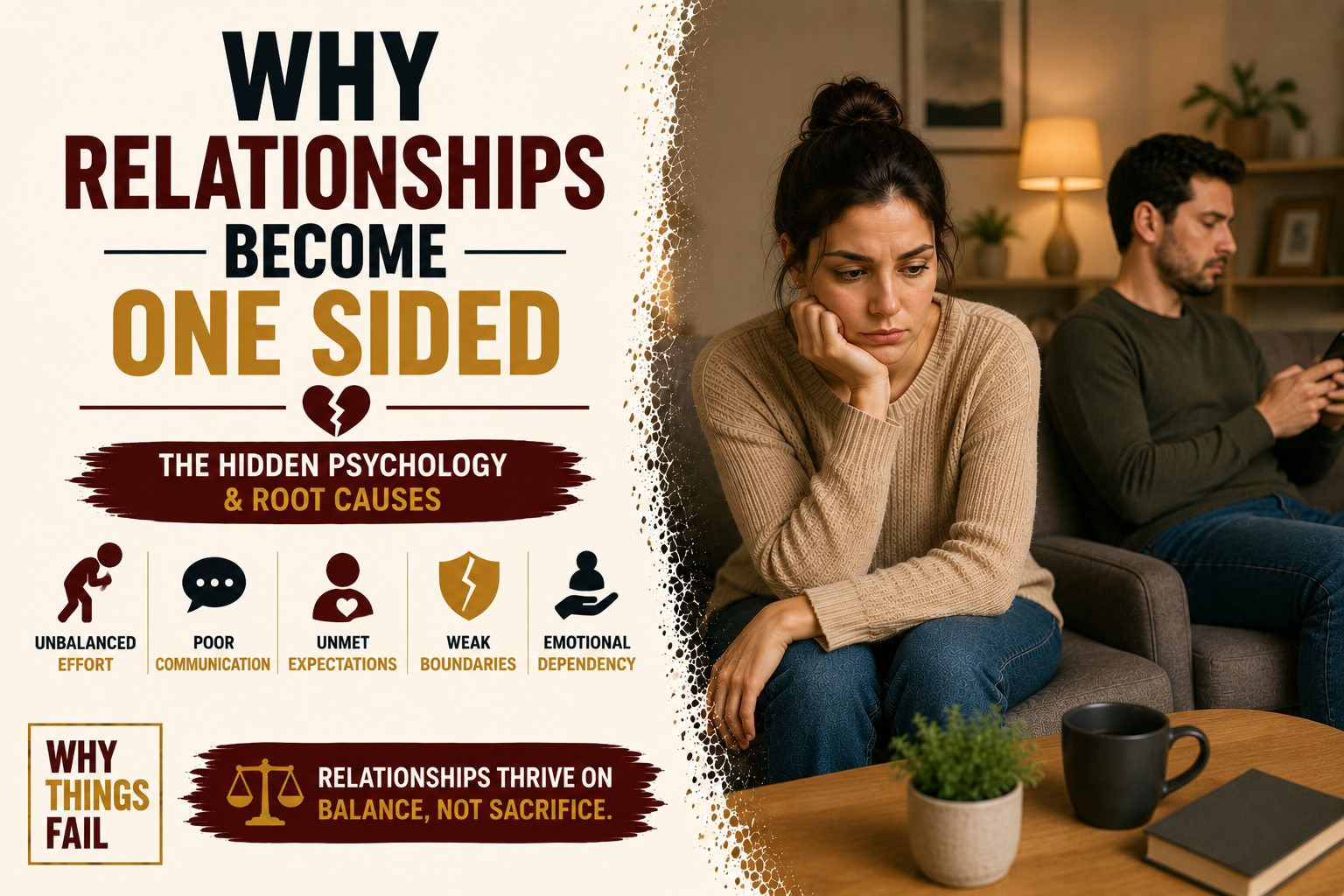
Many couples continue discussing work, children, finances and household responsibilities while avoiding meaningful emotional conversations. Daily interaction continues, but emotional connection gradually disappears.
This distinction is important because relationships rarely deteriorate overnight. Communication usually weakens through small changes that accumulate over time. Unspoken frustrations replace honest conversations. Assumptions replace curiosity. Silence replaces vulnerability.
The result is not simply fewer conversations but a gradual loss of emotional understanding.
The Biggest Myth
One of the most common beliefs is that couples stop communicating because they have fallen out of love.
Research in relationship psychology suggests something different.
In many cases, emotional distance develops before love disappears. People often stop communicating because conversations repeatedly lead to criticism, disappointment, conflict or emotional discomfort.
Over time, avoiding difficult conversations begins to feel easier than having them.
This creates a dangerous misunderstanding.
One partner interprets silence as indifference.
The other experiences silence as self protection.
Both believe they are responding reasonably, yet neither recognises that avoidance is quietly weakening the relationship.
Communication therefore does not disappear because love ends.
Love often struggles because communication gradually disappears.
What Usually Happens?
Communication breakdown usually follows a predictable pattern.
Small disagreements remain unresolved.
Emotional needs are left unspoken.
Minor frustrations accumulate.
Conversations become increasingly defensive.
Partners begin avoiding sensitive topics.
Meaningful discussions occur less frequently.
Eventually, silence becomes the normal way of managing conflict.
At this stage, the relationship may still appear stable from the outside. Daily routines continue and responsibilities are fulfilled. Internally, however, emotional connection continues to weaken because important conversations are no longer taking place.
Why Do Couples Stop Communicating?
This question lies at the centre of understanding relationship failure.
Communication problems rarely begin with words.
They begin with emotion.
People communicate openly when they feel emotionally safe. When safety disappears, communication changes. Thoughts remain unspoken, emotions become guarded and vulnerability begins to feel risky.
The conversation itself is rarely the real problem.
The emotional experience surrounding the conversation is.
Fear Of Conflict Encourages Emotional Avoidance
Many people believe avoiding arguments protects a relationship.
In reality, avoiding conflict often protects discomfort rather than connection.
When previous discussions have ended with criticism, anger or disappointment, the brain begins associating important conversations with emotional pain.
Behavioural psychology explains this through avoidance behaviour. People naturally avoid experiences they believe will create stress or rejection.
Instead of discussing concerns openly, they remain silent.
Initially this appears to reduce conflict.
Over time it increases misunderstanding.
The relationship becomes peaceful on the surface while unresolved issues continue growing beneath it.
When someone withdraws from conversation entirely rather than engaging, even defensively, Gottman calls this stonewalling and identifies it as one of the strongest predictors that a relationship is in serious trouble.
Emotional Safety Determines Honest Communication
One of the strongest predictors of healthy communication is emotional safety.
People speak honestly when they believe they will be heard rather than judged.
When conversations repeatedly involve blame, interruption or dismissal, emotional safety gradually declines.
Partners begin filtering their thoughts before speaking.
Questions become shorter.
Opinions become less honest.
Important feelings remain hidden.
Eventually communication becomes functional rather than emotional.
The relationship continues operating, but emotional intimacy steadily declines.
Assumptions Replace Curiosity
Healthy communication depends upon curiosity.
Partners ask questions because they genuinely want to understand each other’s perspective.
Communication begins breaking down when assumptions replace curiosity.
Instead of asking,
“What do you mean?”
People assume they already know.
Instead of listening carefully, they prepare their response before the other person finishes speaking.
Confirmation bias strengthens this pattern.
Once someone believes their partner is always critical, dismissive or uninterested, they naturally notice evidence supporting that belief while overlooking moments that contradict it.
The relationship slowly becomes shaped by expectations rather than reality.
Emotional Exhaustion Reduces Communication
Communication requires emotional energy.
When individuals experience chronic stress from work, parenting, financial pressure or personal challenges, they often have fewer psychological resources available for meaningful conversations.
This does not necessarily mean they care less about their partner.
It means emotional fatigue reduces patience, empathy and active listening.
Small misunderstandings become larger disagreements because both people are operating with limited emotional capacity.
The issue is therefore not simply poor communication skills.
It is emotional overload.
Poor Listening Creates Invisible Distance
Many communication problems begin long before anyone speaks.
Listening is often treated as a passive activity.
In reality, effective listening requires attention, empathy and genuine curiosity.
People frequently listen with the intention of defending themselves rather than understanding another perspective.
Behavioural psychologists describe this as defensive processing.
The brain treats criticism as a personal threat.
Instead of processing information objectively, it immediately searches for explanations, excuses or counterarguments.
As this pattern repeats, conversations become competitions rather than opportunities for understanding.
Both partners feel unheard.
Neither feels understood.
Relationship researcher John Gottman identified this defensive pattern as one of what he calls the “Four Horsemen“ communication behaviors (criticism, contempt, defensiveness, and stonewalling) that he found could predict relationship breakdown with striking accuracy in his long-term studies of couples. Defensiveness and stonewalling shutting down and withdrawing from conversation entirely are two of the four, and both appear throughout the pattern this article describes.
Small Problems Become Large Problems Through Delay
Few relationship issues begin as major crises.
Most begin as ordinary disappointments.
An unmet expectation.
A forgotten promise.
A misunderstanding.
A careless comment.
Individually these moments appear insignificant.
Collectively they reshape the emotional climate of the relationship.
Delayed conversations allow emotional resentment to accumulate.
The longer concerns remain unspoken, the more emotionally charged they become.
When they finally emerge, the discussion is rarely about one incident.
It becomes a conversation about months or even years of accumulated disappointment.
This explains why seemingly minor disagreements sometimes produce unexpectedly intense emotional reactions.
The argument is not about the present moment.
It is about every unresolved moment that came before it.
Warning Signs
Communication rarely disappears without warning. Most relationships provide subtle signals long before emotional distance becomes obvious.
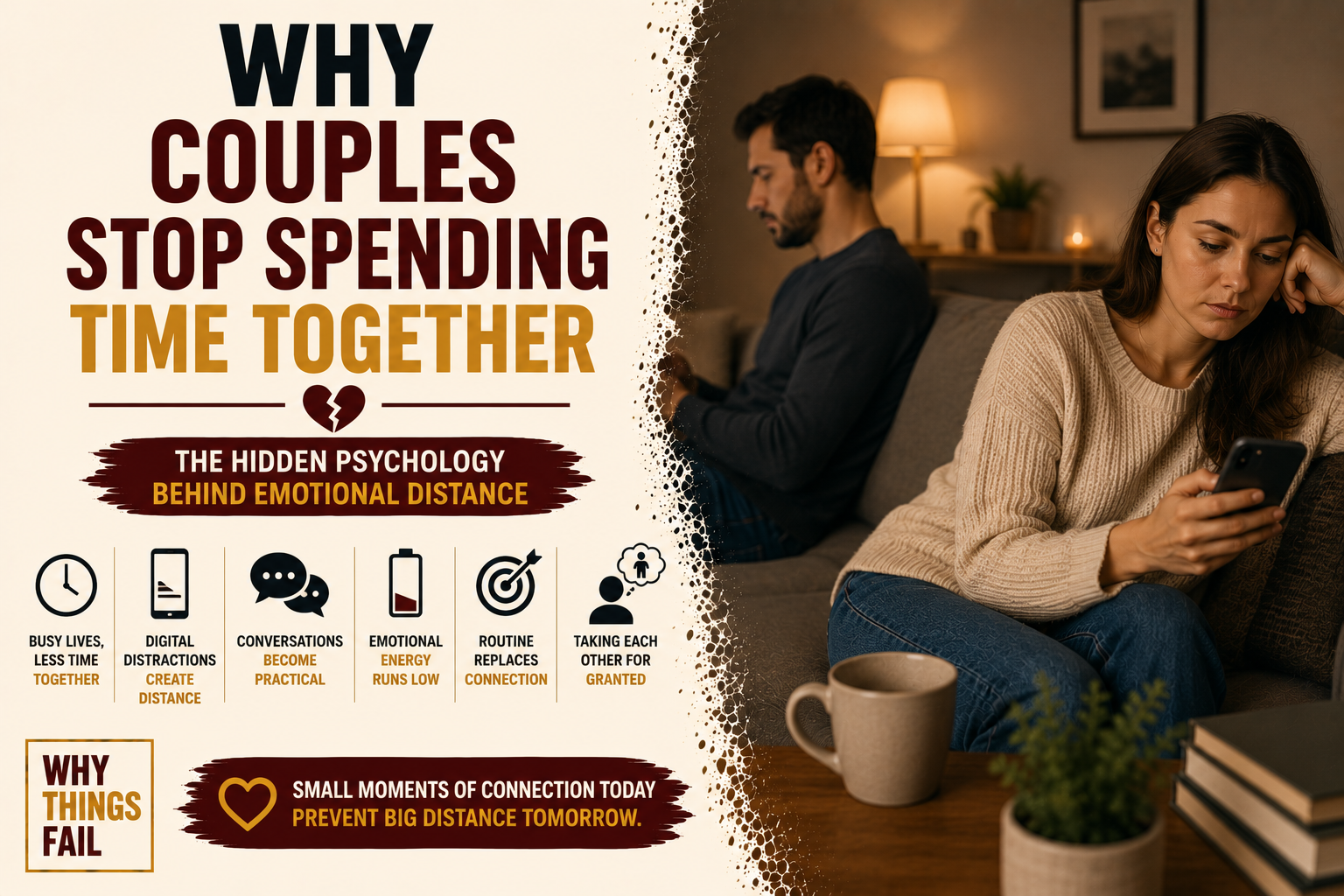
One warning sign is when conversations become purely transactional. Partners discuss responsibilities, schedules and finances but rarely share their thoughts, worries or aspirations. The relationship continues functioning, but emotional intimacy steadily declines.
Another warning sign is avoiding difficult conversations. Sensitive topics are repeatedly postponed because both partners expect disagreement or disappointment. While this may reduce immediate conflict, it also prevents emotional repair.
Defensiveness is another early indicator. Instead of listening to understand, each partner listens to protect themselves. Every conversation begins feeling like a debate rather than an opportunity to strengthen the relationship.
Emotional withdrawal also deserves attention. One partner gradually shares less about their daily experiences, feelings or personal challenges. This silence is often misunderstood as indifference when it is frequently a response to feeling unheard or misunderstood.
Perhaps the strongest warning sign is emotional loneliness despite spending time together. Two people can share the same home while gradually feeling like strangers because meaningful conversations have quietly disappeared.
These warning signs are often ignored because they develop slowly. Couples adapt to reduced communication without recognising that emotional distance is steadily becoming the new normal.
What Could Have Prevented It?
Communication breakdown is rarely prevented through better speaking alone.
It is prevented by creating conditions where honest conversation feels emotionally safe.
The first requirement is addressing concerns while they remain small. Difficult conversations become significantly more manageable when handled early rather than after months of accumulated resentment.
Active listening also changes the quality of communication. Partners who focus on understanding rather than responding create an environment where openness becomes easier. Feeling understood often matters more than immediately finding solutions.
Emotional validation plays an equally important role. People are more willing to communicate when their emotions are acknowledged rather than dismissed. Validation does not require agreement. It simply demonstrates respect for another person’s experience.
Healthy relationships also benefit from intentional communication. Modern life creates constant distractions through work, technology and family responsibilities. Couples who regularly make time for meaningful conversation are less likely to allow emotional distance to develop unnoticed.
Most importantly, successful communication requires recognising that conflict itself is not the greatest threat.
Unresolved conflict is.
Disagreements handled with respect often strengthen relationships because they increase understanding rather than reducing it.
Lessons
Communication is not maintained by chance. It is maintained through consistent attention, emotional maturity and mutual effort.
One lesson is that silence should never be mistaken for peace. Many relationships appear calm while emotional distance continues growing beneath the surface.
Another lesson is that understanding matters more than winning. Conversations become productive when both people seek clarity rather than victory.
The investigation also reveals that communication is shaped more by emotional safety than vocabulary. People naturally become honest when they believe vulnerability will be respected instead of criticised.
Perhaps the most important lesson is that healthy relationships depend upon continuous maintenance. Emotional connection weakens gradually when curiosity, empathy and meaningful conversations are replaced by routine and assumption.
Failure Pattern
The dominant pattern behind communication breakdown is Emotional Avoidance reinforced by Defensive Behaviour and Short Term Comfort.
Couples often avoid difficult conversations because silence appears easier than temporary discomfort. This provides immediate emotional relief but creates greater problems over time.
As avoidance increases, assumptions replace dialogue. Emotional needs remain hidden. Trust gradually weakens because partners begin interpreting silence according to their own fears rather than shared understanding.
This behavioural pattern extends beyond relationships.
Families avoid difficult discussions.
Business leaders delay uncomfortable decisions.
Teams ignore growing conflict.
In each situation, avoiding discomfort today creates greater complexity tomorrow.
Hidden Lesson
The greatest threat to communication is not disagreement.
It is the gradual loss of emotional safety.
People rarely stop communicating because they have nothing to say.
They stop communicating because they no longer believe speaking will improve the situation.
The deeper truth is that communication breakdown begins long before conversations stop. It begins the moment vulnerability starts feeling more dangerous than silence.
Failure Scorecard
| Area | Score | Explanation |
| Emotional Communication | 4/10 | Honest conversations gradually decline as emotional distance increases. |
| Decision Making | 5/10 | Couples often avoid difficult discussions instead of resolving them together. |
| Conflict Management | 4/10 | Small disagreements remain unresolved until they become emotionally significant. |
| Long Term Thinking | 5/10 | Immediate comfort is often prioritised over long term relationship health. |
| Relationship Understanding | 6/10 | Many couples understand the importance of communication but underestimate gradual emotional change. |
| Emotional Control | 5/10 | Fear, frustration and defensiveness frequently influence conversations. |
| Planning | 4/10 | Very few couples intentionally create time for meaningful communication. |
| Adaptability | 6/10 | Healthy relationships adapt through honest dialogue, while struggling relationships often resist necessary conversations. |
Key Takeaways
- Couples usually stop communicating gradually rather than suddenly.
- Emotional safety is the foundation of honest conversation.
- Avoiding conflict often creates greater conflict over time.
- Listening with empathy strengthens trust more than offering immediate solutions.
- Small unresolved issues accumulate into significant emotional distance.
- Assumptions weaken relationships because they replace curiosity.
- Meaningful communication requires intention rather than convenience.
- Strong relationships are maintained through consistent emotional connection, not the absence of disagreement.
Frequently Asked Questions
Why do couples stop communicating even when they still love each other?
Love and communication are not the same. Many couples still care deeply for one another but stop communicating because previous conversations have become emotionally painful, defensive or unproductive.
What is the biggest reason communication breaks down?
The most common reason is emotional avoidance. Partners begin avoiding difficult conversations to prevent conflict, but this gradually increases misunderstanding and emotional distance.
Can poor communication destroy a healthy relationship?
Yes. Without open communication, trust, emotional intimacy and mutual understanding slowly decline. Even strong relationships become vulnerable when important conversations stop.
Why do small problems become major relationship issues?
Small problems often remain unresolved for long periods. As disappointment accumulates, later disagreements carry the emotional weight of many previous experiences rather than one isolated event.
Can communication improve after years of silence?
Yes, provided both partners are willing to rebuild emotional safety, listen without judgement and address underlying issues honestly. The process requires consistent effort rather than one meaningful conversation.
Conclusion
Couples rarely stop communicating because they suddenly stop loving one another. More often, they stop because repeated emotional experiences teach them that silence feels safer than vulnerability. What appears to be a communication problem is often the visible result of deeper psychological patterns involving fear, avoidance and unmet emotional needs.
Understanding these patterns changes how relationship breakdown is viewed. Communication is not simply about speaking more often. It is about creating an environment where honesty feels safe, understanding becomes more important than being right and small conversations prevent larger emotional distances from taking root.