Quick Answer
Healthy habits rarely fail because people lack motivation or willpower. They fail because human behaviour is shaped by emotions, environment, immediate rewards and deeply rooted psychological patterns. Long term habit formation depends more on designing sustainable systems than relying on temporary motivation.
Introduction
Every January, millions of people promise themselves that this year will be different.
They commit to exercising regularly, eating healthier meals, sleeping earlier, reducing stress or losing weight. Gym memberships increase, healthy recipes trend online and fitness trackers record impressive activity during the first few weeks of the year.
Yet within a few months, many of these habits quietly disappear.
The gym visits become less frequent.
Healthy meals are replaced by convenient choices.
Morning walks become occasional.
The routines that once felt exciting slowly become difficult to maintain.
This pattern is remarkably consistent across different countries, cultures and age groups.
The obvious explanation is that people simply lose motivation.
The deeper explanation is far more complex.
Healthy habits rarely disappear because individuals suddenly stop caring about their health. More often, they collapse because human behaviour naturally favours immediate comfort over long term rewards.
Understanding why healthy habits do not last requires looking beyond nutrition plans and workout schedules. It requires examining how the human brain responds to effort, reward, uncertainty and routine.
Behavioural scientists have shown that lasting habits are not created through motivation alone. They emerge from the interaction between psychology, environment, identity and decision making.
The question is therefore not why people start healthy habits.
It is why maintaining them becomes so difficult.
What Is Habit Failure?
Habit failure is often misunderstood as a lack of discipline.
In reality, it is the repeated inability to maintain behaviours that support long term health despite genuinely wanting positive outcomes.
A person may successfully follow a healthy eating plan for several weeks before gradually returning to previous eating patterns.
Another individual may exercise consistently for months before stopping after a busy period at work.
Others repeatedly restart the same habits every few months without ever making them a permanent part of daily life.
The failure does not occur because one workout is missed or one unhealthy meal is eaten.
It occurs when temporary interruptions become permanent abandonment.
The important distinction is that healthy habits are not defeated by isolated setbacks.
They fail when small behavioural changes slowly replace consistent routines.
The Biggest Myth
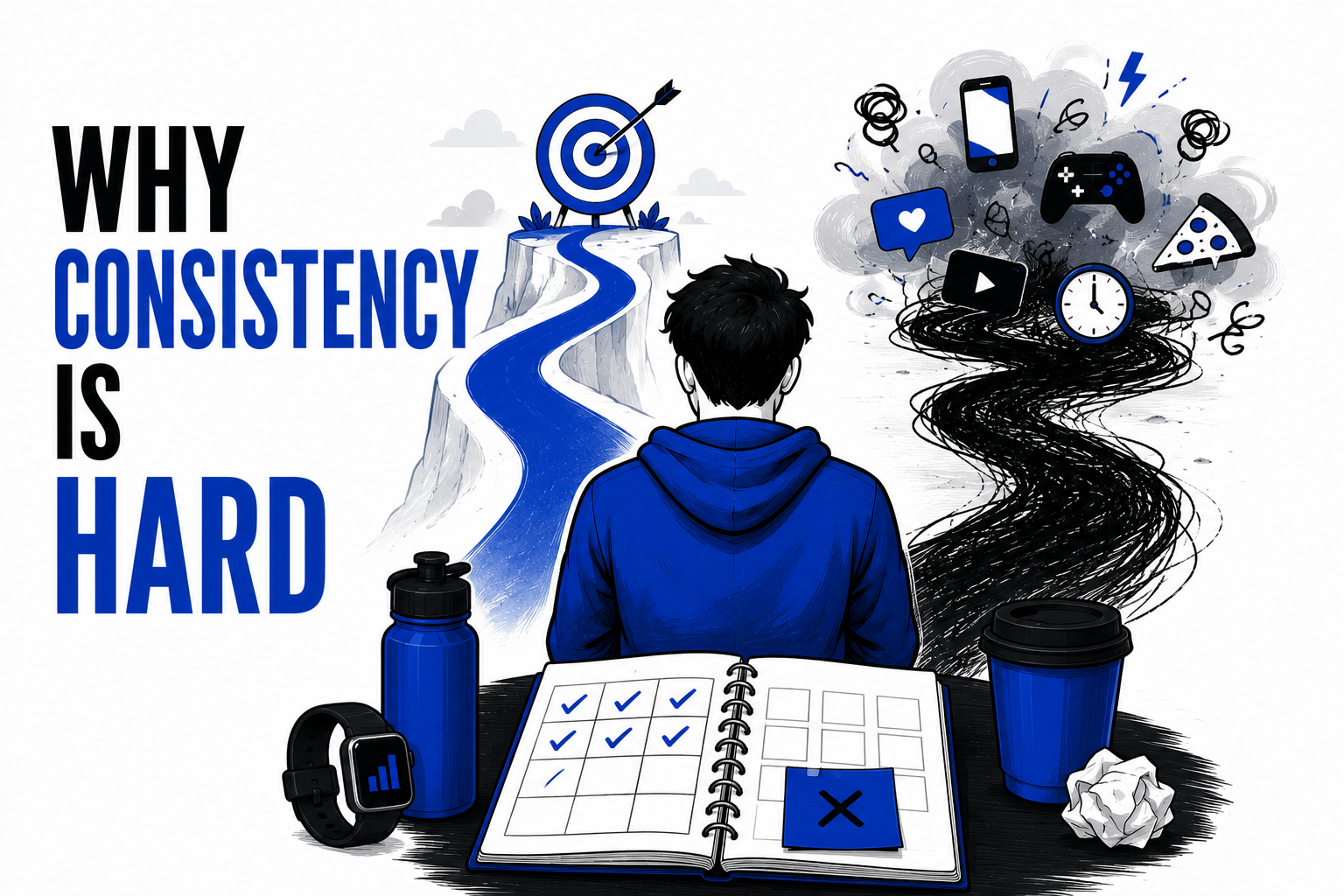
The most common belief is that healthy habits depend primarily on willpower.
This idea appears everywhere.
People admire individuals who wake up early every day, exercise consistently and maintain balanced diets. Their success is often explained through discipline and determination.
Behavioural psychology tells a different story.
Willpower is a limited mental resource.
It fluctuates throughout the day and is influenced by stress, sleep quality, emotional state and cognitive workload.
People who maintain healthy habits for years are not constantly exercising extraordinary self control.
Instead, they reduce the number of decisions requiring willpower.
Healthy behaviour becomes automatic because it is supported by routines, environments and identities rather than daily motivation.
The question is therefore not how to become more disciplined.
It is how to make healthy decisions require less mental effort.
What Usually Happens?
The pattern rarely changes.
Someone feels inspired to improve their health.
They begin exercising several times each week.
They replace processed foods with healthier alternatives.
Progress appears quickly.
Confidence grows.
Then daily life begins to interfere.
Work becomes busier.
Family responsibilities increase.
Unexpected events disrupt routines.
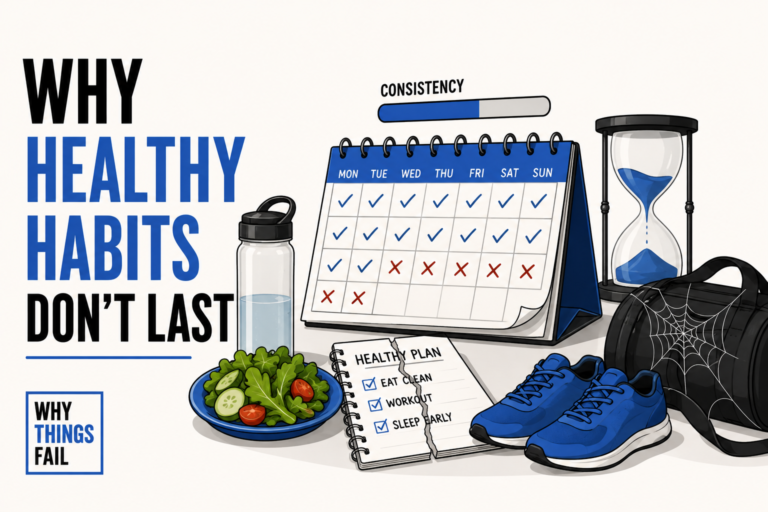
Missing one workout becomes missing an entire week.
One unhealthy meal becomes several.
Motivation gradually declines because the initial excitement disappears.
Instead of adjusting the routine, many people abandon it completely and promise themselves they will start again later.
The cycle repeats year after year.
The behaviour changes.
The underlying psychology remains the same.
Why Do Healthy Habits Don’t Last?
The failure of healthy habits is rarely caused by a lack of knowledge.
Most people already understand that regular exercise, balanced nutrition, adequate sleep and stress management improve long term health.
The real challenge lies in consistently choosing behaviours whose rewards may not become visible for months or even years.
Human psychology evolved to prioritise immediate survival rather than distant benefits.
This creates a conflict between what feels good today and what creates better health tomorrow.
The Brain Prefers Immediate Rewards
Behavioural economists describe this tendency as present bias.
People naturally value immediate rewards more highly than future benefits.
Eating a sugary dessert produces instant pleasure.
Skipping a morning workout provides immediate comfort.
Watching another episode of a favourite television series feels rewarding now.
The benefits of exercising or eating nutritious food often remain invisible for weeks or months.
The brain therefore compares a guaranteed reward today with an uncertain reward in the future.
Without recognising this psychological tendency, short term comfort repeatedly wins.
Motivation Is Temporary
Many healthy habits begin with strong emotional motivation.
A medical diagnosis.
An upcoming holiday.
A wedding.
The beginning of a new year.
These events create powerful emotional energy that encourages immediate action.
The problem is that motivation naturally declines.
Behavioural science shows that emotions fluctuate continuously.
When healthy routines depend entirely on feeling motivated, consistency becomes impossible.
Long lasting habits are sustained through routines rather than emotional enthusiasm.
Successful behaviour becomes something people do regardless of how motivated they feel on a particular day.
Decision Fatigue Gradually Weakens Good Intentions
Every day people make hundreds of decisions.
Work responsibilities.
Family commitments.
Financial choices.
Social interactions.
Each decision consumes mental energy.
By evening, many individuals experience decision fatigue, making it more difficult to choose healthy behaviours.
Preparing a nutritious meal requires effort.
Ordering fast food requires very little.
Going for a walk after work demands energy.
Remaining on the sofa feels easier.
This explains why many healthy intentions disappear later in the day.
The problem is not laziness.
The problem is that mental resources become depleted after repeated decision making.
Identity Often Conflicts With Behaviour
One of the least understood reasons healthy habits fail is identity conflict.
People often attempt to change behaviour without changing the way they see themselves.
Someone may try to exercise regularly while continuing to believe they are “not a fitness person.”
Another individual may attempt healthy eating while identifying as someone who always enjoys unhealthy comfort food.
Behaviour that conflicts with identity requires continuous psychological effort.
Behaviour that supports identity becomes natural.
Lasting habits emerge when actions reinforce the type of person someone believes they are becoming rather than simply the results they hope to achieve.
The Environment Quietly Shapes Behaviour
People often believe habits are determined entirely by personal choices.
Behavioural psychology suggests otherwise.
The environment constantly influences decisions.
A kitchen filled with processed snacks encourages unhealthy eating.
A mobile phone beside the bed encourages late night scrolling.
A workplace where everyone orders takeaway lunches makes healthy eating more difficult.
Conversely, environments designed around healthy behaviour reduce the need for constant self control.
The human brain responds to convenience.
The easier a behaviour becomes, the more likely it is to continue.
The more friction it requires, the more likely it is to disappear.
Research by USC psychologist Wendy Wood shows how much daily behaviour runs on autopilot. In her study, participants were beeped once an hour and asked what they were doing and thinking. About 43% of the behaviours they reported were done almost every day in the same circumstances, without thinking about them. This is why routines and surroundings often matter more than motivation
Perfectionism Creates Repeated Failure
Many people abandon healthy habits after making one mistake.
Missing one workout becomes an excuse to stop exercising entirely.
Eating one unhealthy meal becomes a reason to abandon healthy eating for the rest of the week.
Psychologists describe this as all or nothing thinking.
Perfectionism creates unrealistic standards that normal life cannot sustain.
The most successful habits are not maintained through perfection.
They survive because people recover quickly after temporary setbacks instead of treating every interruption as complete failure.
Warning Signs
Healthy habits rarely disappear without warning. The signs usually emerge long before people realise they are drifting away from their goals.
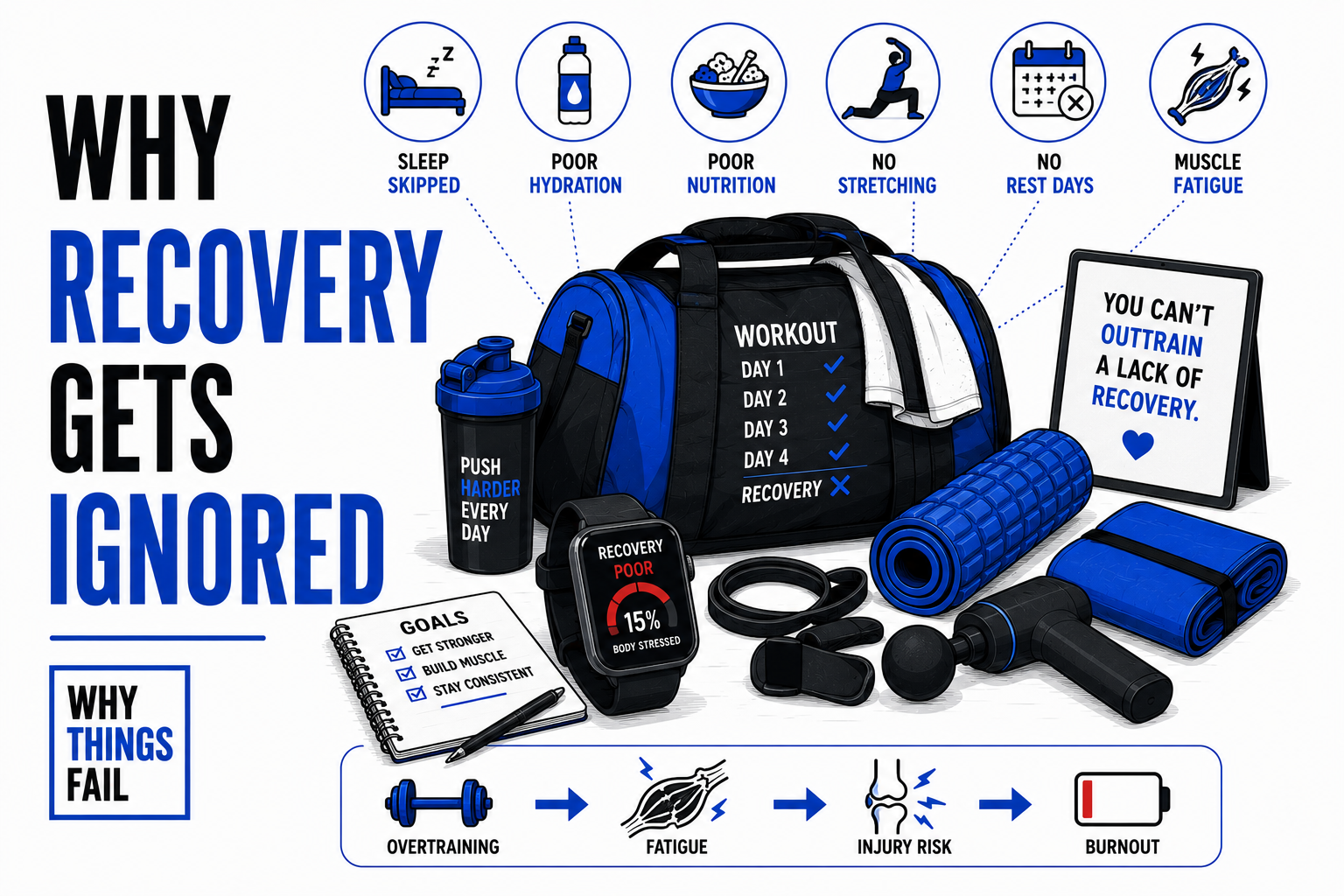
One warning sign is relying entirely on motivation. When someone exercises only because they feel inspired, consistency becomes dependent on emotions rather than routine. Since motivation naturally rises and falls, the habit becomes unstable.
Another warning sign is creating goals without a realistic system. Many people focus on outcomes such as losing weight or becoming fit but never define the daily behaviours that lead to those outcomes. Without a clear process, healthy intentions gradually become vague ambitions.
Constantly making exceptions is another early indicator. Missing one workout because of a busy day may seem harmless, but repeated exceptions slowly become the new routine. Behaviour changes gradually, making the decline difficult to notice.
Social environments can also signal future habit failure. Spending time with people whose lifestyles conflict with healthy behaviours often creates subtle pressure to return to old routines. Humans naturally seek belonging, even when it comes at the expense of personal goals.
Perhaps the most overlooked warning sign is expecting visible results too quickly. When progress slows after the initial weeks, many people wrongly conclude that their efforts are no longer working. They abandon behaviours that were actually beginning to produce long term benefits.
These warning signs are frequently ignored because they feel temporary. In reality, they represent gradual behavioural shifts that eventually become permanent.
What Could Have Prevented It?
Healthy habits become sustainable when they are designed around human behaviour instead of fighting against it.
The first step is creating systems rather than relying on motivation. A person who schedules exercise at the same time each day removes the need to make repeated decisions. Routine gradually replaces willpower.
Reducing friction is equally important. Healthy food should be easier to access than unhealthy alternatives. Exercise equipment should be visible rather than hidden away. Desired behaviours should require less effort than undesirable ones.
Planning for setbacks also strengthens long term consistency. Illness, travel, family responsibilities and stressful periods are inevitable. People who expect interruptions prepare simple ways to restart rather than viewing setbacks as complete failure.
Another important factor is measuring progress through behaviour instead of immediate results. Improved energy, better sleep and greater consistency often appear before visible physical changes. Focusing only on weight or appearance can reduce motivation when progress naturally slows.
Finally, lasting habits develop when they become part of personal identity. Instead of trying to exercise, people begin seeing themselves as individuals who value movement. Instead of attempting healthy eating, they become people who care for their long term wellbeing. Identity creates consistency because behaviour begins supporting how people see themselves.
Lessons
Healthy habits reveal an important truth about human behaviour.
People rarely fail because they lack knowledge. They fail because knowledge alone cannot overcome automatic psychological patterns.
Another lesson is that consistency matters far more than intensity. Extreme routines often produce rapid short term progress but rarely survive everyday life. Sustainable behaviours outperform temporary bursts of perfection.
The investigation also shows that environments influence behaviour more than motivation. People often blame themselves for weak discipline while overlooking how daily surroundings quietly shape every decision they make.
Perhaps the most valuable lesson is that lasting change depends on systems rather than emotions. Motivation may begin a journey, but structured routines keep it moving when enthusiasm disappears.
These lessons apply beyond health. Businesses, investors, entrepreneurs and families all succeed more consistently when they build reliable systems instead of depending on temporary motivation.
Failure Pattern
The dominant pattern behind healthy habit failure is Short Term Thinking reinforced by Emotional Decision Making.
People naturally choose immediate comfort over distant rewards. The brain values certainty today more than uncertain benefits tomorrow. This encourages decisions that feel satisfying in the moment but gradually weaken long term health.
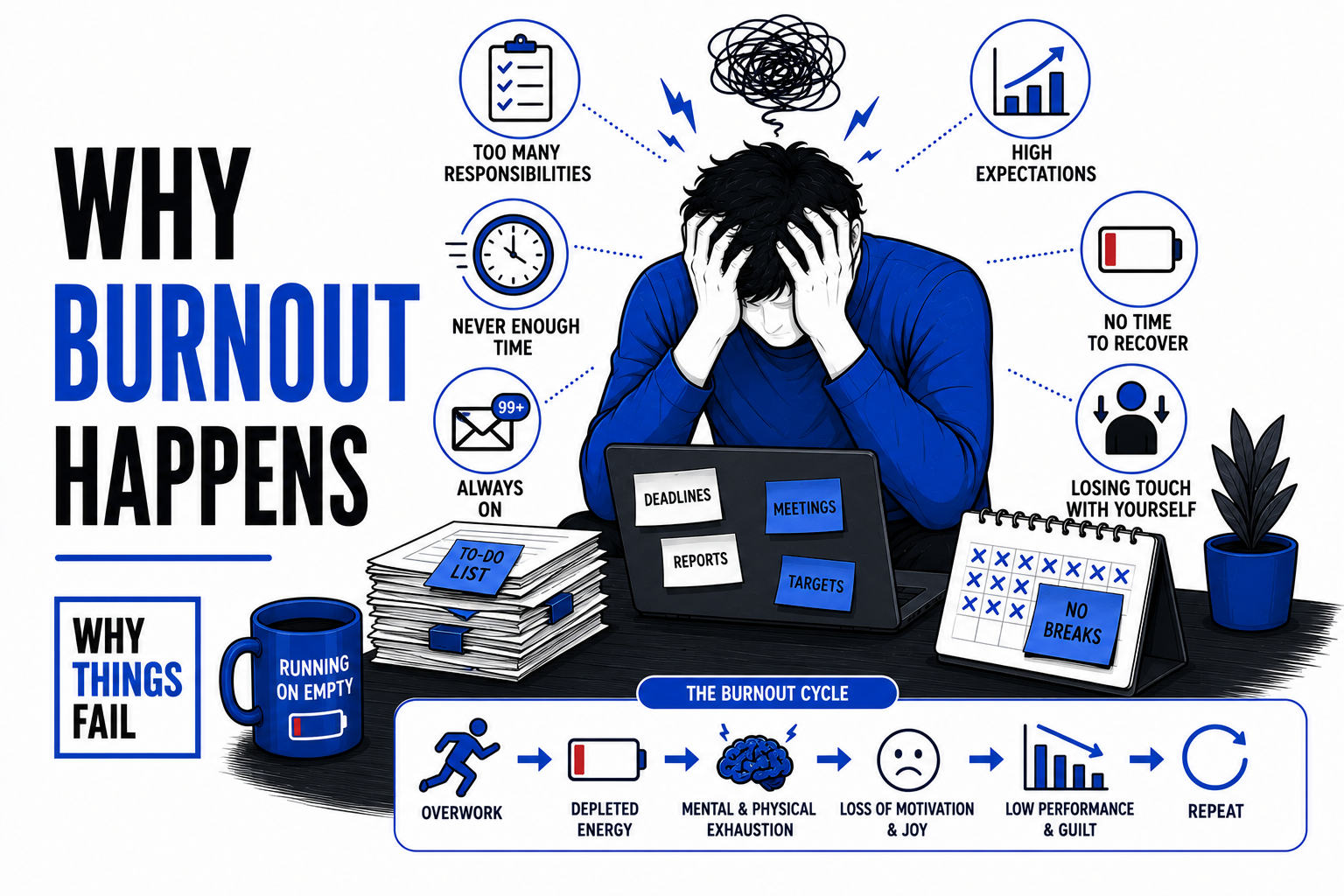
Perfectionism strengthens this pattern. Missing one healthy meal or one workout creates guilt. Guilt reduces motivation. Reduced motivation leads to abandoning the routine altogether.
The same behavioural pattern appears in personal finance, investing and business. People repeatedly sacrifice long term value for immediate satisfaction because the future feels psychologically distant while present comfort feels certain.
Hidden Lesson
Healthy habits do not usually fail because people become weaker.
They fail because the systems supporting those habits become weaker.
This distinction changes everything.
Most people search for greater motivation when they should be improving their environment, routines and decision making processes. The real challenge is not creating stronger intentions. It is creating systems that continue working when motivation inevitably fades.
The deeper truth is that successful habits become invisible. They require very little daily effort because they have become part of ordinary life rather than constant self improvement.
Failure Scorecard
| Area | Score | Explanation |
| Discipline | 5/10 | Good intentions often decline when routines depend only on motivation. |
| Decision Making | 5/10 | Daily choices are strongly influenced by convenience and immediate rewards. |
| Risk Management | 6/10 | Many people underestimate how small behavioural changes accumulate over time. |
| Long Term Thinking | 4/10 | Immediate comfort frequently takes priority over future health benefits. |
| Knowledge | 8/10 | Most people understand what healthy habits are but struggle to maintain them consistently. |
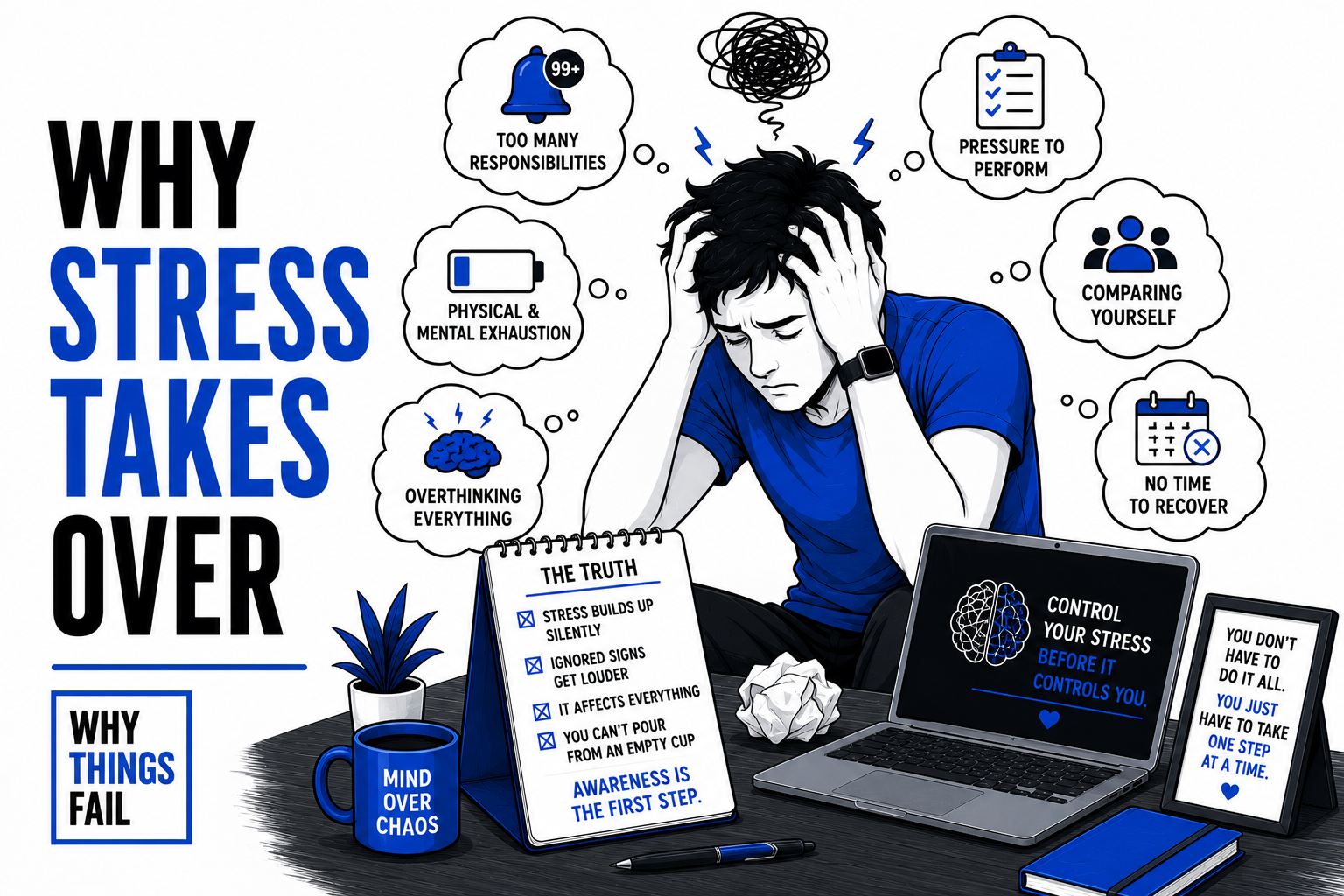
| Emotional Control | 5/10 | Stress, frustration and disappointment often interrupt positive routines. |
| Planning | 4/10 | Healthy habits frequently begin without realistic systems for long term maintenance. |
| Adaptability | 6/10 | Successful individuals recover from setbacks while others abandon their routines completely. |
Key Takeaways
- Healthy habits usually fail because of behavioural patterns rather than lack of knowledge.
- Motivation begins change but cannot sustain it over time.
- Present bias encourages immediate comfort instead of future wellbeing.
- Consistent systems outperform temporary enthusiasm.
- Identity influences behaviour more powerfully than short term goals.
- Small daily decisions shape long term health outcomes.
- Perfectionism often destroys habits that could have succeeded through consistency.
- Sustainable habits require environments that make healthy choices easier.
Frequently Asked Questions
Why do healthy habits not last?
Healthy habits often fail because people depend on motivation instead of creating sustainable systems. Behaviour is shaped by psychology, environment and immediate rewards rather than knowledge alone.
Is willpower enough to build lasting habits?
No. Willpower is limited and changes throughout the day. Long term habits are maintained through routines, supportive environments and automatic behaviours.
Why do people return to unhealthy habits?
People often return to familiar behaviours because they provide immediate comfort during stress, fatigue or emotional pressure. Existing routines feel easier than building new ones.
How does psychology influence healthy habits?
Psychological factors such as present bias, decision fatigue, identity conflict and emotional decision making strongly influence whether healthy behaviours continue or disappear.
Can healthy habits survive setbacks?
Yes. Lasting habits are not built through perfection. They succeed because people recover quickly after interruptions instead of abandoning their routines completely.
Conclusion
Healthy habits rarely disappear because people stop caring about their health. They disappear because human behaviour naturally favours immediate comfort, familiar routines and emotional certainty over distant rewards. The failure begins long before the habit is abandoned, developing through small decisions that gradually reshape behaviour.
Understanding these hidden psychological patterns changes the conversation. The question is no longer why people lack discipline. It becomes how everyday decisions, environments and behavioural systems quietly determine whether healthy habits become temporary ambitions or lasting parts of everyday life.