
Introduction
Healthy relationships influence almost every aspect of life. They shape emotional wellbeing, mental health, family stability, career success and even physical health. Yet despite recognising their importance, many people repeatedly experience conflict, emotional distance, broken trust or failed relationships.
This pattern appears across friendships, romantic relationships, marriages, families and workplaces. The people involved often have good intentions. They want to be understood, respected and loved. Nevertheless, the same problems continue to appear.
Many believe unhealthy relationships happen because people choose the wrong partner or encounter difficult personalities. While these factors can contribute, they rarely explain why similar problems occur repeatedly across different relationships.
The deeper explanation lies within human behaviour.
Relationships are not simply built on love or compatibility. They are built on communication, emotional regulation, trust, expectations and decision making. When these foundations weaken, even strong relationships begin to struggle.
Understanding why people struggle to build healthy relationships requires looking beyond individual arguments or isolated mistakes. It requires examining the psychological patterns and behavioural habits that quietly influence every interaction.
What Is A Healthy Relationship?
A healthy relationship is not one without disagreement.
Conflict exists in every meaningful relationship because individuals bring different personalities, experiences and expectations.
A healthy relationship is one where trust, respect, honesty and communication remain stronger than temporary conflict.
People feel emotionally safe expressing opinions without fear of constant judgement. Boundaries are respected. Problems are discussed rather than ignored. Decisions are made with consideration for both individuals rather than one person’s interests alone.
Relationship failure therefore is not defined by occasional disagreements.
It occurs when repeated behaviours gradually weaken trust, communication and emotional security until the relationship becomes difficult to sustain.
The Biggest Myth
One of the most common beliefs is that successful relationships happen naturally.
Many people assume that finding the right partner automatically creates a lasting relationship.
This belief oversimplifies human behaviour.
Compatibility certainly matters, but compatibility alone cannot sustain trust, communication or emotional connection over many years.
Healthy relationships are maintained through consistent decisions rather than permanent feelings.
Love may create a relationship.
Behaviour determines whether it survives.
This distinction explains why relationships sometimes fail despite strong emotional attachment.
The challenge is often not finding someone to love.
It is consistently making decisions that protect the relationship during periods of stress, disagreement and uncertainty.
What Usually Happens?
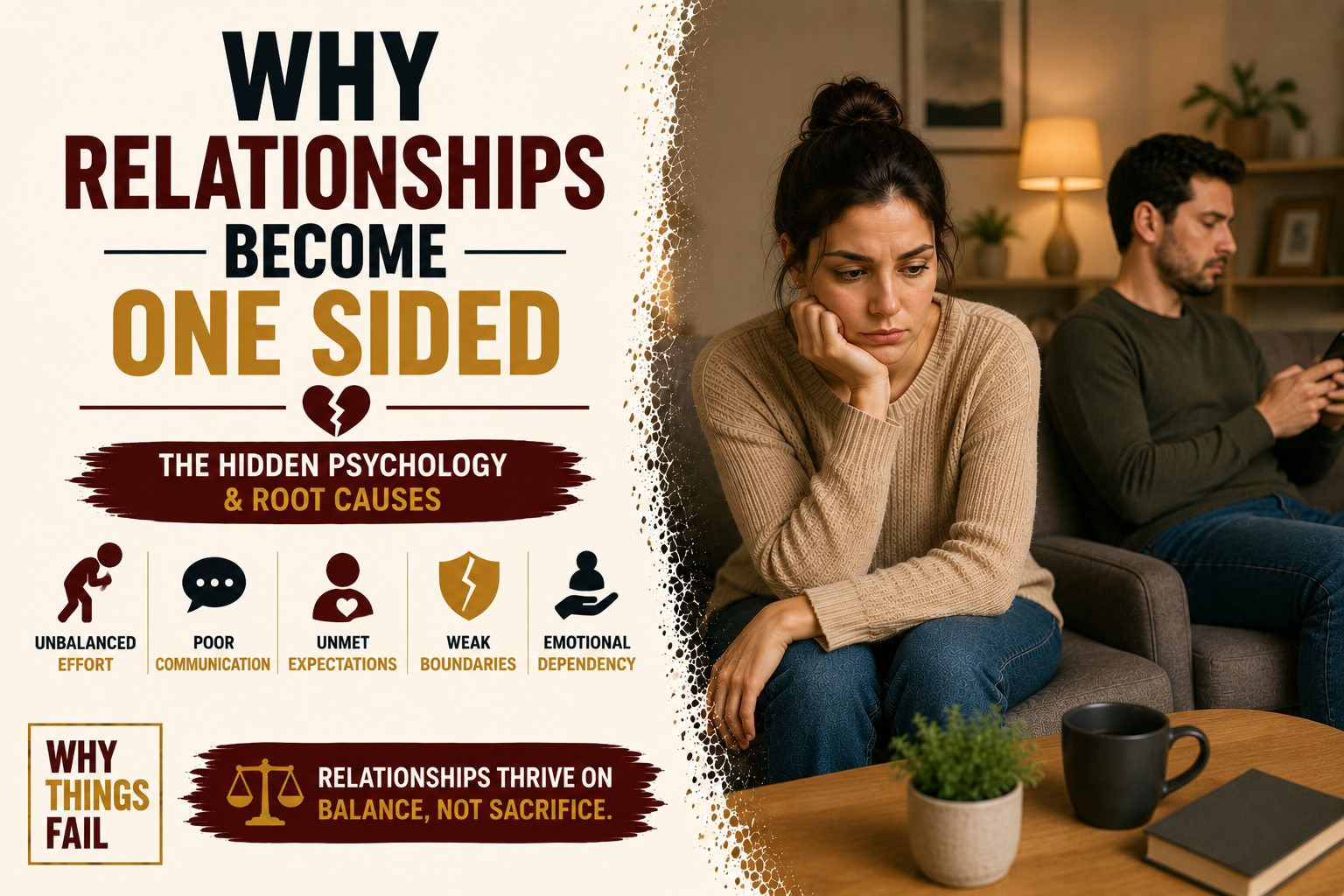
Relationship difficulties often develop gradually rather than suddenly.
Communication becomes less open.
Small disappointments remain unresolved.
Assumptions replace honest conversations.
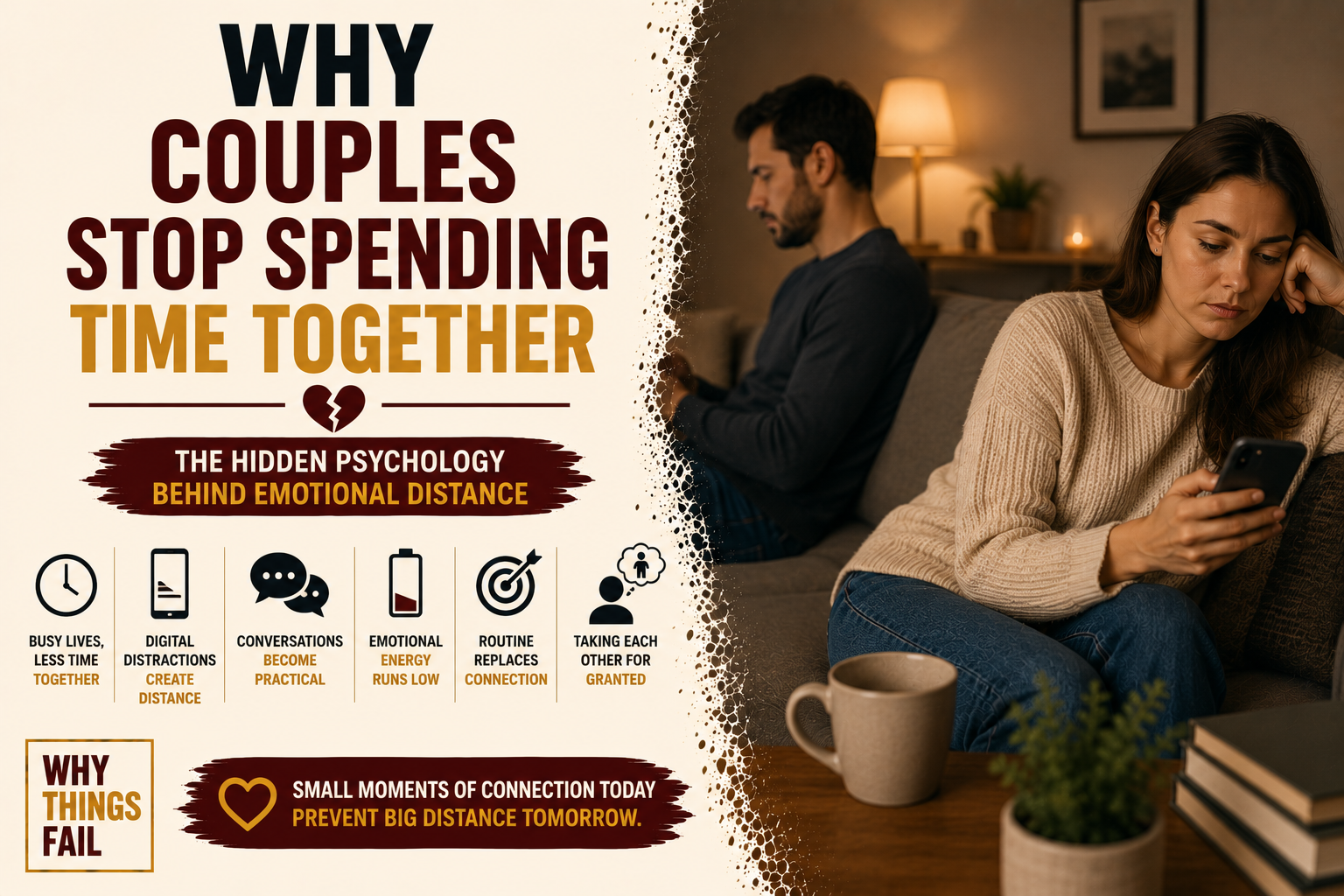
Emotional distance slowly increases.
Each individual begins interpreting the other’s behaviour through frustration rather than understanding.
Minor misunderstandings become recurring arguments.
Trust weakens.
Resentment quietly accumulates.
Eventually the visible conflict appears.
By this stage many people believe the relationship failed because of one major event.
In reality, that event usually revealed problems that had been developing for months or even years.
Why Do People Struggle To Build Healthy Relationships?
Most relationship problems are symptoms rather than root causes.
Arguments about money, household responsibilities, communication or personal habits often receive the blame.
Yet these issues frequently expose deeper psychological patterns that existed long before the disagreement itself.
Understanding these hidden influences explains why similar problems continue appearing across different relationships.
Emotional Reactions Often Replace Rational Communication
Relationships involve emotional investment.
Because people care deeply about the outcome, emotions naturally influence behaviour.
When individuals feel criticised, rejected or misunderstood, the brain often reacts defensively before rational thinking has time to respond.
Instead of listening carefully, people prepare counterarguments.
Instead of asking questions, they assume intentions.
Instead of solving problems together, they begin protecting themselves emotionally.
Behavioural psychology suggests that emotional reactions are designed to reduce immediate discomfort rather than improve long term relationships.
Unfortunately, protecting feelings in the short term often creates greater conflict in the future.
Unspoken Expectations Create Invisible Conflict
Every person enters relationships carrying expectations shaped by childhood, family experiences, culture and previous relationships.
Many of these expectations remain unspoken.
One person expects frequent communication.
Another values independence.
One believes affection should be expressed verbally.
Another believes actions matter more than words.
Neither expectation is necessarily wrong.
The difficulty arises when people assume their expectations are obvious.
Disappointment follows because each individual believes the other should naturally understand what was never clearly communicated.
The conflict therefore is not created by different expectations.
It is created by assumptions.
Fear Quietly Influences Behaviour
Fear rarely appears openly in relationships.
Instead it disguises itself through behaviour.
Fear of rejection may prevent honest conversations.
Fear of abandonment may create excessive reassurance seeking.
Fear of vulnerability may encourage emotional distance.
Fear of conflict may cause important problems to remain unspoken.
Ironically these protective behaviours often create the very outcomes people hope to avoid.
Avoiding honest communication weakens trust.
Avoiding vulnerability limits emotional intimacy.
Avoiding disagreement prevents genuine problem solving.
The relationship becomes increasingly fragile because important conversations never occur.
Poor Emotional Awareness Leads To Repeated Mistakes
Many people recognise what they feel but struggle to understand why they feel it.
Anger may actually reflect disappointment.
Withdrawal may reflect anxiety.
Criticism may reflect insecurity.
Without emotional awareness people react to surface emotions rather than underlying needs.
This creates repetitive cycles.
The same disagreement returns repeatedly because neither person addresses the deeper emotional cause.
The conversation focuses on behaviour instead of motivation.
The visible problem changes.
The underlying pattern remains unchanged.
Short Term Thinking Weakens Long Term Trust
Healthy relationships depend upon consistent decisions made over time.
Many people unknowingly prioritise immediate emotional satisfaction above long term relationship health.
Winning an argument feels rewarding.
Proving a point provides temporary validation.
Ignoring uncomfortable conversations creates immediate relief.
Yet each short term decision may gradually weaken trust, respect and emotional safety.
Behavioural economists describe this tendency as present bias, where immediate emotional rewards receive greater attention than future consequences.
Relationships often suffer not because people intentionally damage them but because they repeatedly choose temporary comfort instead of long term connection.
Communication Problems Are Usually Decision Problems
Poor communication is one of the most frequently cited reasons relationships fail.
However communication itself is rarely the root cause.
Communication reflects deeper decisions.
People decide whether to listen patiently or interrupt.
They decide whether to assume intentions or ask questions.
They decide whether to respond with empathy or defensiveness.
These decisions occur repeatedly throughout every relationship.
Over time they establish patterns.
Healthy relationships are rarely built through extraordinary conversations.
They are built through thousands of ordinary interactions where respect, curiosity and emotional maturity consistently guide behaviour.
The quality of communication therefore depends less on speaking ability and more on the quality of decisions made before words are spoken.
Warning Signs
Healthy relationships rarely break down without warning. The challenge is that these warning signs often appear so gradually that they become normalised.
One of the earliest signs is avoiding honest conversations. Difficult topics are postponed because discussing them feels uncomfortable. Silence appears to preserve peace, but it quietly allows misunderstandings to grow.
Another warning sign is becoming more focused on winning arguments than understanding each other. Conversations shift from solving problems to defending personal positions. Each discussion becomes a competition instead of an opportunity to strengthen the relationship.
Emotional withdrawal is another significant indicator. People stop sharing thoughts, feelings and daily experiences because they believe they will not be understood. As communication decreases, emotional intimacy gradually disappears.
Small acts of appreciation also become less frequent. Gratitude is replaced by expectation. Positive behaviours receive little recognition while mistakes receive immediate attention. This imbalance slowly changes how each person experiences the relationship.
Perhaps the most dangerous warning sign is assuming that problems will resolve themselves with time. Relationships improve through intentional effort, not passive hope. Ignoring recurring issues allows resentment to replace trust.
These warning signs are often ignored because they do not create immediate consequences. The relationship continues functioning on the surface while its emotional foundation quietly weakens.
What Could Have Prevented It?
Most relationship failures could not have been prevented through perfect compatibility alone.
They could have been reduced through better habits, better communication and better emotional awareness.
One important safeguard is recognising that assumptions create more conflict than differences. Regular conversations about expectations, priorities and concerns prevent misunderstandings from becoming long term resentment.
Emotional regulation is equally important. Strong emotions should not determine important decisions. Taking time to understand personal reactions before responding allows conversations to remain constructive rather than destructive.
Healthy boundaries also strengthen relationships. Respecting personal space, individual identity and emotional needs reduces unnecessary conflict while encouraging mutual respect.
Another protective factor is accepting that conflict itself is not the problem. The way conflict is managed determines whether relationships become stronger or weaker. Disagreements approached with curiosity and respect often increase understanding rather than damage trust.
Finally, relationships benefit from consistent maintenance rather than occasional repair. Small daily acts of appreciation, honesty, empathy and accountability strengthen emotional resilience long before major challenges appear.
Lessons
Healthy relationships are built through repeated behaviour rather than occasional grand gestures.
One lesson is that communication succeeds when understanding becomes more important than being correct. People who genuinely seek to understand each other’s perspective usually resolve conflict more effectively than those seeking to prove a point.
Another lesson is that trust develops gradually but weakens through repeated inconsistency. Small actions repeated over time influence relationship quality far more than isolated dramatic events.
The investigation also shows that emotional maturity often matters more than emotional intensity. Deep affection cannot compensate for poor communication, unresolved insecurity or persistent defensiveness.
Perhaps the most valuable lesson is that relationships reflect personal habits. Improving communication, emotional awareness and accountability strengthens not only one relationship but every meaningful relationship throughout life.
Failure Pattern
The dominant pattern behind relationship failure is Emotional Decision Making combined with Poor Communication and Avoidance.
This pattern repeats because people naturally protect themselves from emotional discomfort. They avoid vulnerable conversations, assume intentions instead of asking questions and react emotionally instead of responding thoughtfully.
Over time these behaviours reduce trust, increase misunderstanding and weaken emotional safety.
The same behavioural pattern appears in families, friendships, workplaces and business partnerships because it reflects universal aspects of human psychology rather than specific relationship circumstances.
Hidden Lesson
People rarely lose healthy relationships because they stop caring.
More often, they lose them because they repeatedly choose behaviours that protect their own emotions in the present while quietly damaging trust in the future.
The deeper truth is that relationships are shaped far more by ordinary daily decisions than extraordinary moments.
A relationship usually ends long before it officially ends.
The emotional distance develops through hundreds of small interactions where understanding was replaced by assumption, patience by frustration and communication by silence.
Failure Scorecard
| Area | Score | Explanation |
| Emotional Awareness | 5/10 | Many people recognise emotions but struggle to understand their deeper causes. |
| Decision Making | 5/10 | Emotional reactions frequently influence relationship choices during conflict. |
| Communication | 4/10 | Honest conversations are often delayed until problems become difficult to resolve. |
| Long Term Thinking | 5/10 | Immediate emotional comfort is commonly prioritised over lasting relationship health. |
| Relationship Knowledge | 6/10 | People understand the importance of trust but often underestimate the habits required to maintain it. |
| Emotional Control | 4/10 | Defensiveness, frustration and fear regularly influence behaviour during disagreements. |
| Planning | 5/10 | Few people intentionally discuss expectations, boundaries or future challenges early in relationships. |
| Adaptability | 6/10 | Strong relationships adapt through open communication, while struggling relationships often resist necessary change. |
Key Takeaways
- Healthy relationships depend more on daily behaviour than occasional expressions of love.
- Emotional reactions often create conflict when thoughtful communication could resolve it.
- Assumptions damage trust more quickly than honest conversations.
- Fear of vulnerability frequently prevents genuine emotional intimacy.
- Small unresolved problems become significant when ignored repeatedly.
- Trust grows through consistency rather than promises.
- Listening with curiosity strengthens relationships more than arguing with certainty.
- Long term relationship success depends upon emotional maturity, accountability and consistent communication.
Frequently Asked Questions
Why do people struggle to build healthy relationships?
People often struggle because emotional reactions, unspoken expectations, poor communication and unresolved personal insecurities influence behaviour more than they realise. These patterns gradually weaken trust and emotional connection.
What is the biggest reason relationships fail?
The biggest reason is usually not one major event but repeated patterns of poor communication, emotional avoidance and unresolved conflict that slowly erode trust over time.
Can healthy relationships exist without conflict?
No. Conflict is a natural part of every meaningful relationship. Healthy relationships are defined by how disagreements are managed rather than whether disagreements occur.
Why do people repeat the same relationship mistakes?
Behavioural patterns formed through childhood experiences, previous relationships and emotional habits often remain unchanged unless people consciously recognise and address them.
How can people build healthier relationships?
Healthier relationships develop through honest communication, emotional awareness, mutual respect, consistent trust building, clear expectations and a willingness to understand before seeking to be understood.
Conclusion
People struggle to build healthy relationships not because healthy relationships are impossible, but because they require behaviours that often conflict with natural emotional instincts. Fear encourages avoidance, pride encourages defensiveness and assumptions replace genuine understanding.
Looking beneath everyday disagreements reveals a deeper pattern. Relationship failure is rarely caused by one conversation or one mistake. It is the cumulative result of repeated decisions that gradually weaken trust, communication and emotional safety. Understanding these hidden behavioural patterns transforms relationship failure from a mystery into something far more predictable and, therefore, far more preventable.